

- You are here:
- Home »
- Blog

Which Do You Prefer: Experiences or Things?
 The following post is by MPFJ staff writer, Melissa Batai. Melissa is a freelance writer who covers topics ranging from personal finance to business to organics to food. She blogs at Mom’s Plans where she shares her family’s journey to healthier living and paying down debt.
Growing up, my family didn’t have much money. Many of my clothes came from my three older cousins as hand-me-downs. One time, I hit the mother lode—a pair of Gloria Vanderbilt jeans was in the bag of clothes.
Woo hoo!
I finally had a pair of designer jeans. I wore them almost every day and felt like a million bucks. Once, my best friend asked to wear them, and I let her.
When they came back to me, they were covered with big white splotches. My friend had “accidentally” washed them when there was bleach in the washer. My jeans were ruined, and I was devastated.
Back to my unbranded jeans and my hand-me-down fashion.
In that instant, I learned how quickly the joy from material items can fade.
I’ve always been too cheap to buy designer anything. Why waste the money when the clothes will only last a little while? After my Gloria Vanderbilt jeans debacle, I never worried much about designer clothes.
In fact, I have decidedly not kept up with the Jones’ for much of my life. I drove a Toyota Tercel until it had 150,000 miles on it. Our current Toyota Sienna has 152,500 miles on it, and I have no plan to replace it any time soon.
I now regularly buy my clothes second hand, and in the world of big screen TVs, we make do with our 24 inch screen. Oh, we only have one television in our house.
My kids don’t have or play video games, and they have a very limited number of toys.
My husband and I have cheap flip cell phones with pay as you go minutes. No smart phones here.
We live a simple life, free of much materialism.
Sure, we’re on a tight budget, but mostly, my husband and I agree that we’d like to spend money on experiences rather than things.
I often feel alone in this thought process because many of the families around me have nice things—designer clothes, iPhones, new cars, etc. Yet, one researcher argues that my family and I are on to something:
“There’s a very logical assumption that most people make when spending their money: that because a physical object will lasts longer, it will make us happier for a longer time than a one-off experience like a concert or vacation. According to recent research, it turns out that assumption is completely wrong.
“‘One of the enemies of happiness is adaption,’ says Dr. Thomas Gilovich, a psychology professor at Cornell University who has been studying the question of money and happiness for over two decades. ‘We buy things to make us happy, and we succeed. But only for a while. New things are exciting to us at first, but then we adapt to them’” (FastCoExist.com).
This phenomenon explains why some people are always chasing the latest technology. You know the type. (Maybe you are one of them.) Even though your electronic gizmo, whether it be a phone, computer, video game, etc., is working just fine, you’ll put down your hard earned money to buy the next version. It’s a never ending quest to have the latest and greatest. I once worked with a man who had to get a part-time job on the side just to feed his technology habit.
However, Gilovich suggests, “Rather than buying the latest iPhone or a new BMW, you’ll get more happiness spending money on experiences like going to art exhibits, doing outdoor activities, learning a new skill, or traveling” (FastCoExist.com).
Even better, you won’t have a lot of clutter in your home because you’re not buying stuff.
Travel Experiences
In the year in between my undergraduate and graduate education, I had the opportunity to go to Switzerland to become a nanny for six weeks. I had never been outside the United States before. While being a nanny was pretty much a disaster (that could be an entirely different post!), I LOVED everything about traveling.
I can still remember my flight to Switzerland. I sat next to a man from Croatia who was a ship captain, and we talked almost the entire flight.
I had the chance to walk through downtown Zurich multiple times with the children, and I also took a trip by myself to the border of Italy. The journey was amazing.
Two years later, my cousin and I had the chance to go to China with one of my friends. We got to climb the Great Wall of China and visit Harbin for the annual ice sculpture exhibit. We rode a train for 20+ hours to get there. It was an experience I’ll never forget. To this day, my cousin and I can talk about that trip and instantly feel like we’re right back there again.
Dr. Thomas Gilovich acknowledges, “Shared experiences connect us more to other people than shared consumption. You’re much more likely to feel connected to someone you took a vacation with in Bogota than someone who also happens to have bought a $4,000 TV” (FastCoExist.com).
Two years after my trip to China, my husband and I traveled to Japan to visit his family before we became engaged. I’ll never forget walking out of the train station in Osaka and being fascinated by the busy traffic and all the different hair and fashion styles. I saw beautiful mountains and golden temples. It was definitely a trip to remember.
Family Experiences
Now that I’m older and have a family, worldwide travel isn’t as easy or as practical as it used to be. Instead, we try to travel locally and spend time showing the kids places rather than buying them things.
Since we moved to Tucson last summer, we’ve taken the kids to many different sites such as local missions, Old Tucson, and Tombstone. These trips weren’t always cheap, but they created memories that bond us as a family.
Why Are Experiences So Much Better than Things?
Think about your things. How many do you truly value? I can think of sentimental things that I love like a few of my late grandma’s possessions that I have or the ring I bought in Ireland, but honestly, there are not many material things that I’m attached to.
By contrast, I think fondly on all of my vacations, even a trip to Ireland where we stayed in a dank, damp cottage and found, in our beds that were so old that they sunk in the middle, many spiders. It wasn’t a good time while I was there, but now, all of us who went look back on the trip fondly and with laughter.
The Atlantic supports this idea, arguing, “Looking back on purchase made, experiences make people happier than do possessions. It’s kind of counter to the logic that if you pay for an experience, like a vacation, it will be over and gone; but if you buy a tangible thing, a couch, at least you’ll have it for a long time. Actually most of us have a pretty intense capacity for tolerance, or hedonic adaptation, where we stop appreciating things to which we’re constantly exposed. iPhones, clothes, couches, et cetera, just become background. They deteriorate or become obsolete. It’s the fleetingness of experiential purchases that endears us to them. Either they’re not around long enough to become imperfect, or they are imperfect, but our memories and stories of them get sweet with time. Even a bad experience becomes a good story.”
How about you all? What do you prefer? Possessions or experiences? Did you prefer one previously and now you prefer the other?
Share your experiences by commenting below!
***Photo courtesy https://www.flickr.com/photos/brianauer/2112309566/

Nine Things To Make Next Year’s Taxes Easier

 The following post is by MPFJ staff writer Travis, who blogs at Enemy of Debt where he candidly shares his family’s financial struggles, failures and successes. As a father and husband, he provides a unique perspective on balancing debt, finances, and family.
This year’s tax deadline has passed, and unless you’ve got some extenuating circumstances your taxes are filed and either a refund has been deposited in your account, or you’ve written a check out to the IRS. Each year I do exactly the same thing after completing my tax return as required by the government.
First I breath a sigh of relief, then I start getting ready for next year’s tax return.
There’s no time to waste. Here’s nine things that should be done immediately to help make filing next year’s tax return as stress free as possible.
Change Your Withholdings
The first thing to be done is to analyze the results of this year’s return. If you underpaid or overpaid your taxes during the year, you may want to consider changing your tax withholdings with your employer to prevent the same outcome. Some people like getting a sizable tax return because it forces them to save money. That may seem like an interest free loan to the government, but it may actually be a great idea for people that have a hard time forcing themselves to save. The interest rate of a savings account these days is a fraction of a percent, so you’re not losing out on much interest accumulation. If you want a different outcome next year, change your withholdings now.
Label A Manilla Envelope
I keep all my important tax documents in a manilla envelope labeled with the tax year they pertain to. Right after filing my taxes for the previous year, I get a new envelope and write the next year in big numbers on the front. I then make a checklist of everything I need to prepare my tax return such as W2s, 1099s, charitable contribution statements, property tax statements and more.
Print a Physical Copy Of This Year’s Return
A physical copy of my tax return (federal and state) along with all the worksheets is printed and placed in the current year’s manilla envelope. I have an electronic version stored on my computer, and backed up to a USB drive as well. But I like to have a physical copy printed out and filed with all my other tax documentation. Electronic data loss happens, and your tax returns would be invaluable if you were ever audited.
Find Your Property Tax Statement
How a county handles property taxes may differ across the country, but in my area we have our property tax payment coupons for the year already at this point. I don’t actually need them since my mortgage holder takes care of payment, so I put the entire statement in the manilla envelope. Otherwise, it may end up hiding at the bottom of some drawer, or even accidentally thrown away. I can then check that item off on the front of the envelope.
Copy Your Vehicle Registration Receipt
In some states part or all of the yearly vehicle registration fee is tax deductible. My family has two vehicles, one of which we’ve already paid this year’s registration fee. I make a copy of the receipt, since the original should be kept in the vehicle, and put the copy in the envelope. Another item checked off the list!
Get Ready For Medical Receipts
I label a normal mailing envelope with the words, “Medical Receipts,” and put that into the larger manilla envelope. Receipts for each medical expense incurred throughout the year will be put into the envelope for possible use while doing our taxes next year.
Business Documentation
I label another envelope with the word, “Business” Since I’m a freelance writer, I have business expenses during the year that may be tax deductible. I also will put a copy of my monthly invoices into the envelope. Having a place to store them all together ensures I don’t have to hunt for them when tax season rolls around at the beginning of next year.
Additional Items
The Manilla envelope will serve as your central repository for tax documentation. If anything happens during the year that may affect my taxes, the documentation goes in this envelope. For example, if I sell, buy, or refinance a home, or liquidate some investments, the documentation goes immediately into this envelope, and it gets listed on the front.
File It
Take the envelopes from both this year and next year and file them away in your filing cabinet, your fire-proof safe,or wherever you store your important documents. Put them to place so you know where they’re at when you need to find them again.
You may not feel like worrying about next year’s taxes now, but it’s the perfect time to start when the items needed are fresh in your memory. These activities will take very little time, and will get you started on the road to a successful tax filing next year.
Happy Tax Season 2016, now you’re ready!
How about you all? Do you have any other tips or tricks that you use to help make your next years taxes easier?
Share your experiences by commenting below!
***Photo courtesy Robert Cochrane at FreeDigitalPhotos.net

Getting Calls from Debt Collectors at Work or Home at All Hours of the Day or Night? You Do Have Options to Make Them Stop

 The following is a guest post by Paul Smith. He is an attorney with an interest in personal finance. He blogs at insideconsumerfinance.blogspot.com.
The Fair Debt Collection Practices Act (FDCPA) is a federal statute that protects consumers from abusive debt collection practices. It was passed by Congress to “eliminate abusive debt collection practices by debt collectors, to insure that those debt collectors who refrain from using abusive debt collection practices are not competitively disadvantaged, and to promote consistent State action to protect consumers against debt collection abuses.”
What can debt collectors not do under the FDCPA?
The FDCPA sets forth strict guidelines concerning the methods that debt collectors can use against consumers in an effort to collect on debts.
For instance, the debt collectors cannot contact a consumer by telephone before 8:00 a.m. or after 9:00 local time. The debt collector also cannot contact the consumer at their place of employment if the debt collector knows that the employer knows (or has reason to know) the employer prohibits the consumer from receiving those communications. (In plain English this means that the debt collector cannot contact you at work if they know your employer says you can’t receive those types of communications at work).
Debt collectors also cannot harass or abuse consumers. Forms of harassment or abuse that are specifically prohibited under the Fair Debt Collection Practices Act include threatening to arrest someone, beat them up, curse the consumer, or repeatedly calling someone without identifying that the person calling is a debt collector in an effort to get the person to pay the debt.
What can you do if a debt collector is violating these rules?
Let’s say you keep getting calls at 10:00 p.m., well after your children are asleep. Well, you have options.
One of the best and least known options a consumer has under the Fair Debt Collection Practices Act permits a consumer to request that a debt collector cease ALL communication with the consumer, a request the debt collector MUST honor or else they are in violation of the law.
Under this provision, a debt collector cannot contact a consumer by any means: phone, letter, electronic communications, etc. once the consumer has given the debt collector written notice that either (i) the consumer refuses to pay the debt or (ii) the consumer wants the debt collector to cease all communication with him or her.
The key here MUST give written notice he or she wishes to receive no further communication from the debt collector. If you don’t then, the debt collector can keep calling you (between the hours of 8:00 a.m. and 9:00 p.m.) or emailing you, sending you letters, etc.
Once the written notice has been given, the debt collector can only communicate with the consumer to confirm that the debt collector will stop communicating with him or her or to notify the consumer that the debt collector is going to sue for non-payment of the debt.
And, once a lawsuit is filed, the debt collector cannot contact a consumer directly except through his or her attorney once the lawsuit has been filed (by either side).
Does this actually work?
Unfortunately many times debt collectors simply ignore this provision of the law and will continue to harass people even if they receive these notices. However, they do so at their peril-any communications after the written notice has been sent are continuing violations of the Fair Debt Collections Practices Act, each of which would entitle the consumer to sue the debt collector for money damages and attorney’s fees.
Having seen these kinds of cases while working in the court system, many debt collectors act in really outrageous ways that violate just about every provision in the FDCPA. However, this is almost better for a consumer who decides to challenge the debt collector in court, because they debt collection will have a very hard time winning the case if they’re engaging in that type of behavior.
What’s the bottom line?
If you’re being harassed by a debt collector, and no matter whether they are doing so within the bounds of the FDCPA, you do have options. I recognize that filing a lawsuit is a big investment of time, energy and money, but sending written notice is easy, painless and will only cost you the price of a stamp.
If you decide to take that route, then the written notice doesn’t need to be lengthy or very formal; just say your name, your account number (if applicable) and that you no longer wish to receive any communications from the debt collector. (I personally don’t recommend sending a letter saying you refuse to pay the debt because that will just encourage to get really aggressive and file a lawsuit).
If you feel like it, you could also say that if they continue to communicate with you after having received the notice, then you will consider that a violation of the Fair Debt Collection Practices Act and you will file a lawsuit against the debt collector if they continue to contact you in an attempt to collect the debt.
How about you all? Do you have any experience getting debt collectors to stop calling or know someone that has? Have you tried a strategy not discussed here that worked for you?
Share your experiences by commenting below!
***Photo courtesy https://www.flickr.com/photos/meddygarnet/3186273338

How To Save Money on Gas

 The following is a post by MPFJ staff writer, Jeff. Jeff writes about reducing waste, saving money and building freedom at his website, Sustainable Life Blog.
I remember when I got my first car, I ended up with a cheap, used, gas guzzling SUV. It was around 2002, and gas was cheap (under $2) and I didn’t really care how bad my MPG was. Not long later, gas prices began to march up, and I started feeling the pinch. Instead of drive less, I just complained about the price and it didn’t really force any habit changes.
Not long after that I moved to go to school, and didn’t take car with me, I started to ride the bus or my bike everywhere. While I watched gas prices go up from the sidelines, it made me pretty happy that I didn’t have to pay them and I was left out of all the complaining about prices going up. Unfortunately, after I got my first job it was quite a ways away from where I lived, and I was once again bowing to the mercy of the gas prices. I was driving 100+ miles per day, so even small fluctuations could have a deep impact on what I was able to pay down in debt that month.
During that time, I figured out quite a few different ways to save money on gas, so here they are.
Drive Less
This is probably the most obvious, but no one ever takes it seriously. Think about how many trips you make that are less than a mile or 2 – those can easily be walked (if the environments are right) or they can be combined with other errands into one trip instead of multiple trips. If the distance is over 2 miles but less than 5 or so, look into hopping on your bike and running your errands. Most things that you head out to get can probably be put in a backpack for the trip home.
I’ve started doing this, and have really enjoyed it so far. In 2014, I bought approximately 7 tanks of gas, and 3 of those were purchased (and used) specifically so I could travel to the airport.
Driving less may seem odd at first, but it’s easy to get used to and it’s a great money saver. It will insulate you from price shocks when gas goes back up – and it will at some point.
Use the Cruise
When you’re driving at highway speeds, it can be tempting to sit and keep your foot on the gas and constantly adjust your speed. This is bad for gas consumption as it makes the engine work harder and use more fuel. Set the cruise control to a reasonable speed (at or near the speed limit) and enjoy the fuel savings from a consistent engine RPM.
Watch your In Town Driving
When I’m biking to work in the morning, I have about a mile commute, and since I’m traveling from a neighborhood to the CBD in my town, I go to a lot of the same places cars are going. You’d think that over that distance they would get there much quicker than I do, but I can beat them or get there at the same time because I don’t stop nearly as much as they do. Many cars floor it after the light turns green, only to advance a block or two and then come to a complete stop and wait, while I’m slowly pedaling towards them.
I time it perfectly so that when I get to the light the signal changes from red to green and I don’t have to stop on my bike at all. It takes a lot of power to get a vehicle moving again, and if you just drive a bit slower from one signal to the next and make sure you didn’t have to stop between them, you’ll save a bit of gas every time.
These are the three things that I’ve found are the most worth watching if you’re looking to save money on gas. They helped me during the times I was commuting long distances to work (I bike now) and were able to give me the cash to keep my debt repayment on track.
How about you all? What are your favorite gas saving tips? How much have you been able to save by implementing your own gas saving tips?
Share your experiences by commenting below!
***Photo courtesy https://www.flickr.com/photos/dok1/13229214115/

Consider These Factors Before You Leave Your Job for a New One

 The following is a post by MPFJ staff writer, Derek Sall. Derek is the owner of the blog, LifeAndMyFinances.com, where he teaches people how to get out of debt, save money, and become wealthy.
Have you ever considered leaving the company you’re currently with to venture off into an exciting new career? I think we all have at some point. In the past couple of years, I have probably thought about working elsewhere four or five times. But, when I review the pros and cons, I ultimately end up sticking it out with my current employer.
When considering a new job, what are some of the most important factors to consider? In my mind, I have six important areas that I consult and that have ultimately kept me in my current job.
1) Salary
This is honestly the first thing everyone looks at – probably because it’s an easy comparison and it makes up the bulk of your work benefits. If the new job pays $150k compared to your current $50k salary, then an extra 401k contribution in your old job probably isn’t going to matter that much. But, if the new job promises to pay $55,000 compared to your current salary of $50,000, then you might want to take your comparison a bit further.
2) 401k Contributions
The 401k contribution is a wonderful perk that’s offered by many companies. Often, if you agree to contribute 3% of your salary into your company sponsored 401k, then they will likely match 100% of your contribution. So, by putting in $100 a month and getting a full match on that money, $200 is actually going into your account. Obviously, the higher the match, the better. If the new company does not offer a match on your investment contributions, then you might need to figure out how much this impacts your overall “pay” for the year.
3) Bonuses
As a means to incentivize their employees to work hard, some employers offer a performance-based bonus each quarter or year. If your company very regularly hits their bonus targets and pays out extra money because of it, be sure to factor this into your overall yearly pay. The same is true for the new company where you’re thinking about working. Toward the latter stages of the interview process, it would be an excellent idea to ask about the possibility of a bonus payout to see if that would alter your thoughts about taking on this new role.
4) Medical Benefits
Over the past few years, the costs of healthcare have soared – sometimes showing cost increases of 40% or more year-over-year. As these costs have continued to rise, the importance of checking into the medical benefits of the new company sometimes ranks right up there with salary. After all, if you’re left paying out $200 per paycheck compared to your last job where you only owed $20, that’s going to impact your life severely! Before you sign that contract, be sure to ask for the medical options and the amount that it would cost you per paycheck in premiums.
5) Atmosphere/Culture
During your interview process with that new company, do your best to scope out what the culture is like. It can be difficult, but ask anyone you can about how they like working the job they do, or better yet, ask them what the best aspect of their job is. If they stand there with a blank look on their face, then the culture is probably terrible.
Culture can mean a wide variety of things. It could mean flexibility, it could mean the number of hours that your boss expects you to work, it could even mean the mood of the place of employment. An excellent culture is hard to find, so if you sense that a place of employment has a good one, jump on it.
6) Location
I didn’t realize how important the location of my work was until I started interviewing with a company that was 45 minutes away (compared to my current 10 minute commute). The pay was about $20,000 better, but the drive-time would add more than an hour to every single working day! At 5 hours per week, and 52 weeks a year, this equates to over 250 extra hours “worked”. It just wasn’t worth it to me. I absolutely love living close to work. It clears up my mornings and my evening to do whatever it is that I want to do.
Before you hop into a new career with a new company, be sure to consider all of the factors above.
How about you all? Have you ever taken a new job without considering all the factors? What other factors should you consider before taking a new job that aren’t listed in this post?
Share your experiences by commenting below!
***Photo courtesy http://commons.wikimedia.org/wiki/File:Embl%C3%A8me_de_la_Justice.jpg

How I Earn Extra Income By Renting Out Extra Space

 The following is a guest post by Bryn Wied. Bryn is a stay at home mom whose love of travel and budgeting needs only grew when the kids started coming. You can find more thrifty travel parenting stories, ideas and tips at her blog at http://www.ihavekidswilltravel.com/. Enjoy!
Landlording on the side can be a quite profitable side gig and another way to add a couple hundred extra dollars to the travel fund. The great part it is it can almost border on passive income, meaning it doesn’t take a lot of extra work or time, especially if you can land yourself a full time boarder position. You get to meet new people, make some money from home, and walk away with a couple of good stories and a few lessons learned along the way.
These days, you don’t need to be a millionaire with an entire house to rent out to become a landlord or to make money renting out to borders. Any extra space you may have, from a house, guest cottage, tent, or even an extra couch, can be up for grabs as a potential to bring in some extra cash.
My husband and I first moved across the country in an RV. After upgrading to an apartment, we weren’t able to sell our camper because we still owed money on it from when we first bought it. So we decided to become “landlords” and rent out our extra space instead! Not only did we immediately start making money off of it, but we have since paid it off and now have a steady stream of side income coming in with little to no work involved.
Attracting Business
Utilizing online resources will probably be the best way to attract business when you are first starting out renting. By all means spread the news through word of mouth, because you never know where networking can lead you. But unless you happen to know someone who is actively looking for a place to rent, there are a handful of great websites that are already set in place to help you start renting as soon and hassle free as possible.
I briefly dabbled in airbnb.com. It was very easy to use, and much easier to protect yourself by collecting information ahead of time, secured payments, etc. I also received quite a few inquiries, although the clientele consisted mainly of occasional vacationers who needed a night or two, so if you are looking for a steady renter you should probably try elsewhere. The key is to under price the competition; I consistently do research for similar finds or even just all finds in my area and underbid them by $5. You wouldn’t believe how much business I have attracted simply by underbidding the competition. The same people who look for alternative housing tend to be the same people who think outside the box and are always on the lookout for a deal.
I also used craigslist.com, and have found the most success for long term renters here. The obvious drawback is Craigslist is sketchy. I only did month to month rentals, nothing shorter so as to attract only people who were going to be there for a while and less likely to bounce without paying. I met potential renters with my husband, never alone, and always in a public place first. It helped that the RV we were renting out was stored in a very active and well maintained RV Resort, so there were always lots of people around and a good security system in place. Do what makes sense for you, but just be smart.
We also found a fair amount of business through local church bulletin listings and newsletters. There were a few people who were in need of housing in-between moves or were looking for a place to stay while they looked for more permanent housing in the area.
Safety
Obviously as a stay at home mom, safety of my daughter is a big deal to me. In our specific situation, we didn’t have anyone staying with us, so it wasn’t as if I was sharing my house with someone. We still did face some issues, like renters not paying on time, and the possibility that someone could show up and literally drive off with our RV in the middle of the night and we would have no idea.
The first safety measure that should be put in place is collect money UP FRONT. I know this sounds like Captain Obvious, but we admit we made this mistake, and unfortunately with a long term renter. It took us 2 months to kick him out, and in the end I still don’t think we were ever fully paid. He was also an incredibly sweet guy, which only made it more awkward. My advice would be to avoid that whole situation and just get paid up front and on time.
A great way to make sure this happens, and another step to have in place to protect yourself, is get something in writing. You don’t have to have a law degree to write up a very functional agreement or contract that will protect you in the case of a misunderstanding down the road. Be sure to include:
- Everyone’s name
- Date
- How long the agreement is valid for
- When rent is due and what sort of fine/termination is allowed should rent not be paid on time
- What your responsibilities as landlords are (who pays utilities? What if something breaks?) and what is the responsibility of the tenant
- Any safety deposits needed and their return time
- Move out date
You can add additional information if needed. The important part is to print it out, and have everyone involved sign and date it. Make sure to make 2 copies, one for you and one for the tenant.
Another good idea if you are renting out a larger space such as a guest house, room or RV is to take pictures of the area before your rent it out. That where there is no confusion as to who is responsible for the stained carpet or the broken mirror.
Live Long and Prosper
Hopefully none of the above scares you away from renting out extra space for supplemental income. As a stay at home mom, I can take care of collecting rent and do nothing else while still earning an extra $300-500 a month consistently for the past year and a half. That’s around $4000 a year of extra income we get to use traveling! If we ever get sick of renting, we can turn around and sell the camper for an extra couple thousand. As a bonus, our current renters have become great friends and now are permanently renting the RV.
***Photo courtesy of http://www.flickr.com/photos/106574022@N04/11415400896/in/

The Pitfalls of Bad Credit

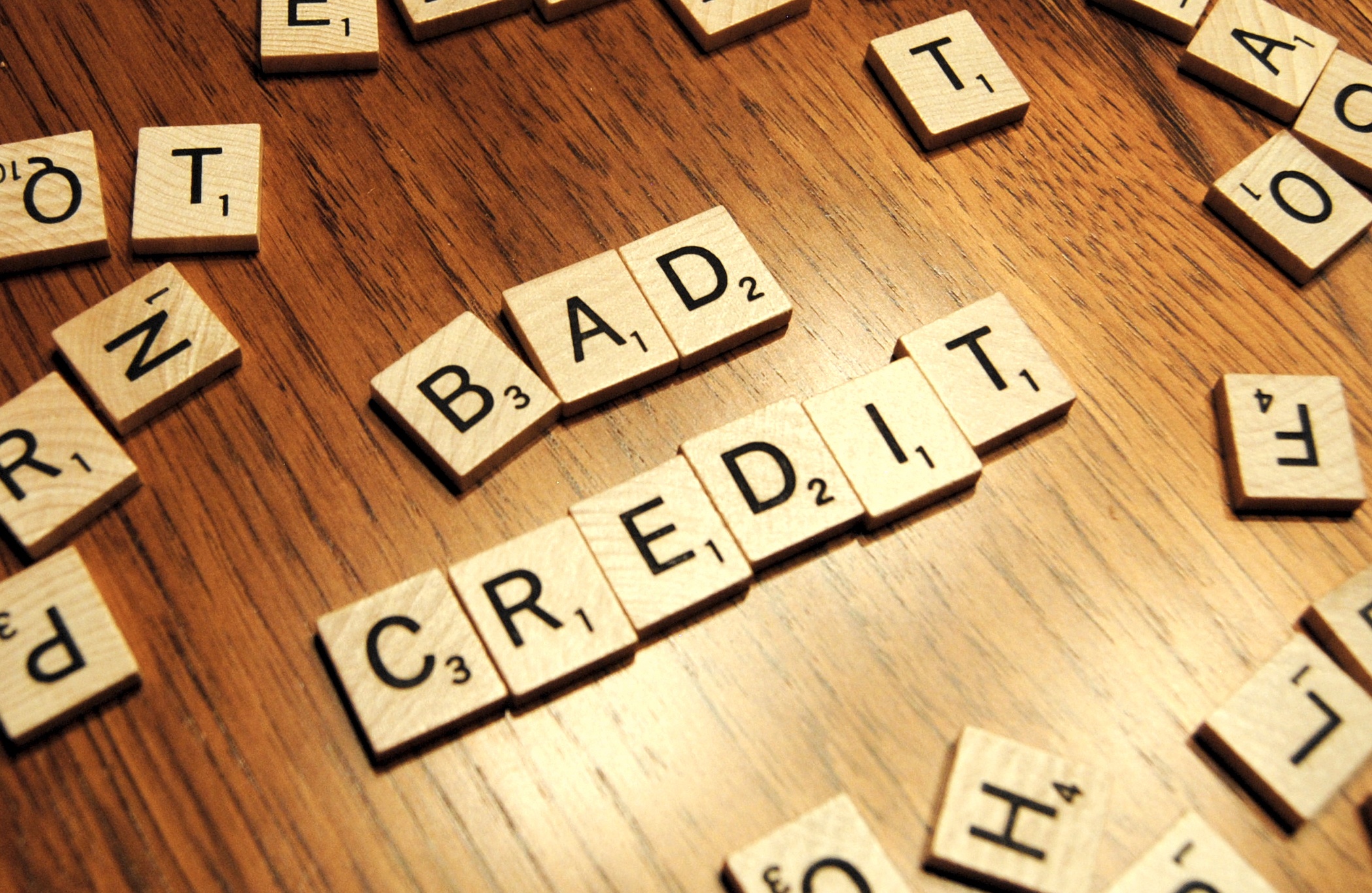 More and more in today’s economy, we hear of people and businesses alike getting behind on their loans and bills, and even having to default / go bankrupt. This obviously can be devastating for a person’s credit rating, report, and score.
Along with the psychological impact, there are some pretty detrimental material ramifications of having bad credit as well. Let’s walk through a couple of these common pitfalls today to see what sort of benefits can come from potentially repairing your credit.
1. Employment
Back in November of 2014, I started a new job after finishing graduate school. After going through the interview process and accepting the job offer, one of the final paperwork items I had to fill out was a release for the company to perform a background and credit search, if they desired.
Since most jobs in today’s society involve some sort of interaction with monetary / budget management, you can imagine that if an employer pulled your credit report and saw a bunch of overdue loan and bill payments and delinquent accounts, it just might jeopardize your job chances.
2. Mortgage Approval
On December 30th, 2014, my wife and I closed on a single family home purchase in Colorado. Prior to even really talking seriously with a real estate agent, the first step was that he connected us with a mortgage lender to secure home loan pre-approval. During this process, our ability and history to repay debts, credit card balances, and utility bills was scrutinized.
Along with the ability to actually secure a home loan in the first place, having bad credit history can drive up your interest rate and/or add mortgage origination points (to mitigate the bank’s risk), which can increase the cost of your home ownership.
3. Having Your Dream Business Flourish
Do you have a dream of owning your own business? If so, having bad credit can be a pitfall to this plan as well.
First, unless you are planning to open up a virtual business, most brick-and-mortar businesses require a fair amount of capital investment in the first phase of operation. If this capital investment exceeds the amount you can personally round up from friends, family, and investors, you will probably be looking at obtaining a business loan from a bank or grant from a small business association. Both of these routes will involve a thorough investigation of your credit history, and therefore, having bad credit can be quite detrimental.
Next, if certain contract businesses, clients can demand the right to perform a background check on you and your company. If this happens, you want to make sure your credit history is positive.
So there we have it – three fairly significant pitfalls of having bad credit. If you feel like any of these may be important to you, repairing your credit may be a very logical, important, and beneficial next step. Good luck!
***Photo courtesy of https://www.flickr.com/photos/jakerust/16610023059/in/

The Hidden Cost of Hybrids

 The following is a post by MPFJ staff writer, Derek Sall. Derek is the owner of the blog, LifeAndMyFinances.com, where he teaches people how to get out of debt, save money, and become wealthy.
Hybrids first went mainstream with the introduction of the Toyota Prius that boasted an impressive fuel efficiency of 42 miles per gallon in the city and 41 mpgs on the highway. Compared to the typical average of well below 30mpgs, this car was simply amazing. It was quiet, high tech, surprisingly spacious, and had some decent power considering its efficiency. Obviously, this car would save money in gas, but were there additional costs associated with the hybrid that few car-buyers would notice before the purchase? As with most purchases, unfortunately yes, there are costs that may hurt your ability to save money in the long run.
1) The Higher Initial Costs
When purchasing a newer model, many dealers like to talk in term of payments, rather than the actual total that the car is selling for. Often, this is because they do not want their customers to experience sticker shock. It’s much easier to wrap your head around a $300 a month payment than it is to spend a total of $28,000. Also, to make the costs between gasoline-powered vehicles and hybrids seem negligible, they can extend the time frame of payments on the hybrid so that the per-month price is basically the same.
In reality though, the sticker price on the hybrid model is often much more expensive than the non-hybrid – typically $2,500-$5,000 more expensive. So immediately you are starting in the hole by purchasing a hybrid vehicle, just hoping that you can make up the difference in fuel savings.
2) Variable Fuel Prices
One of the biggest selling factors for hybrid vehicles in 2013 and much of 2014 was the steep cost of gas. If you typically spent $2,000 a year at the pump, purchasing a hybrid could immediately save you $750 a year, which would cover the initial purchase costs in just five years!
However, at the surprise to many, gas prices actually started going down in the fall of 2014 and they still remain relatively low today. With these reduced running costs, the break-even time frame extends beyond the five-year mark and is now more like eight or nine years! It becomes a little more difficult to justify a purchase when it won’t start saving you money until a decade after the purchase.

Source: GasBuddy.com
3) Highway Trips
The people that are typically the most interested in hybrid vehicles are the ones that travel great distances to work. It certainly makes sense that they would be looking for better fuel efficiency with the miles that they’re racking up each year, but the only problem is that the hybrid vehicle isn’t really built to save as much fuel with long highway trips. In actuality, the hybrid actually gets better fuel efficiency with more starts and stops in the city (which is why they often boast a higher city efficiency rating). And on the flip side, gasoline-powered vehicles often get better gas mileage on the highway, so the divide between the gas mileage of the hybrid vs. the gasoline model isn’t that great.
As an example, let’s compare my 2001 Honda Civic to the 2000 Toyota Prius. My Honda gets 27mpg city, and 34 mpg highway. As we stated before, the Prius gets 42mpg city and 41mpg highway. If I drive mostly long distances, then I’m likely taking the highway almost everywhere I go, and the fuel efficiency is only a slight amount better than my non-hybrid vehicle, so the savings is even less than you might initially think.
4) The Cost of the Battery
Hybrid vehicles have a specially made battery that is powerful enough to power the entire car for periods of time. This amount of power is impressive, but it doesn’t come without a hefty price tag. If a hybrid car needs a battery replacement, it can often cost between $1,000 and $6,000 dollars. Yikes! If your car is eight years old at this point, then it might not even be worth the amount of the replacement!
Because people are scared of this cost, used hybrid vehicles can often be more difficult to sell. So, even if your battery doesn’t fail, you will still be eating some of the cost because you’ll have to sell the car for cheaper than a run-of-the-mill gas-powered model.
Before your next car purchase, be sure to review the hidden costs!
How about you all? What hidden costs did you encounter when purchasing your last car (regardless of what kind it was)?
Share your experiences by commenting below!
Save Money on Food with Your Own Garden

 The following is a post by MPFJ staff writer, Jeff. Jeff writes about reducing waste, saving money and building freedom at his website, Sustainable Life Blog.
My wife and I have had our fixed expenses (aka our monthly nut) under control for quite a while now, but occasionally we still spend way too much in the non-fixed categories, which can break the budget and really cut into the savings we want to put away to reach our goals.
The category can change based on things going on (such as house renovations) but typically the one expense that can always blow the budget is food.
One of our favorite ways to combat this is to plant a garden. Planting a garden doesn’t cost a lot, and can be a great hobby that many people will enjoy. Not only do people enjoy it, but aside from a few things the hobby is free and should keep you from spending money in other areas!
You don’t need a lot of skills for gardening, and in some areas you can garden almost all year long. Even in Wyoming where I live, you can garden from early April to late October as long as you’re planting the right things at the right time.
Look at What You Already Buy
The first way that we saved some money with a garden was to look at what we buy at the grocery store. During the summer, my wife & I like to eat salads with a bit of protein (chicken, fish, etc) on them, so we started there. Our first try at a garden included salad fixings, such as tomatoes, cucumbers, carrots and kale. We knew that we would eat these things once they grew, so all we had to do now is not kill them.
We got a packet of seeds for each of the items we wanted at the local flower store and our total cost was about $10. After that, it was simply labor that we did to get the garden going. We watered daily and waited until the fall to reap what we had sown.
After The First Season
Our first season in the garden was not all that successful, but we still were able to recoup all of our costs and save quite a bit of money on our food that fall. While our grocery budget didn’t go down for every single month of the year, we were able to make quite a bit of progress during the 3 months that we harvested stuff from the garden. We were able to lower our grocery bill by 20% or so each month, which was quite nice.
No Yard? No Problem!
For you apartment dwellers: don’t despair! You can give your own veggies a try in some pots on the patio or deck, but I suggest starting with herbs.
Herbs typically cost quite a bit of money at the grocery store and I can never seem to use them all before they go bad. Having them in pots out on the porch will allow you access to fresh herbs all the time, and you can even move them inside when the weather goes bad. A few of my favorites are basil (for pizza, salads and more) and mint (for mojitos!).
So if you’re looking to get started, think about what vegetables that you eat frequently and give some of those a try. All you need is some seeds and the willingness to do a little work outside in the summer time – which shouldn’t be too difficult.
How about you all? Do you have a garden? If so, what do you put in there? Has having a garden saved you money at the grocery store?
Share your experiences by commenting below!
***Photo courtesy mym [CC BY-SA 2.0 (http://creativecommons.org/licenses/by-sa/2.0)], via Wikimedia Commons

4 Solid Reasons Why You and Your Spouse Should Share One Bank Account

 The following is a post by MPFJ staff writer, Derek Sall. Derek is the owner of the blog, LifeAndMyFinances.com, where he teaches people how to get out of debt, save money, and become wealthy.
Throughout the past couple years of chatting with various couples about money, I have noticed a shift from the words, “our money” to “his money” and “her money”. It seems that fewer and fewer people are combining their bank accounts and have instead decided to keep them separate.
When you stop and think about, it kind of makes sense I guess. People are waiting longer to get married and have therefore become self-reliant for many years. And, many more people are living together before marriage (with separate accounts still) and just continue to live the same way even after they do eventually get hitched. One of them covers the mortgage, the other pays for groceries, and when they go out to eat it might be a toss-up for who covers the bill. This method seems to work well for some, but I’m still a promoter of shared finances.
Why I Believe in a Joint Bank Account
When I was growing up, I remember my parents sitting down at the table once a month to do two things. One was to type up sales receipts for the cars my Dad had sold (he owned a car dealership as his side-business), and the other was to pay the bills and balance the checkbook. They held the belief that since they were married, they therefore agreed to share their possessions, which simply meant to place both of their incomes into the same account. After viewing this first-hand as a child, I have seen four positive outcomes stem from their joint account.
1) It Encourages a Common Goal
When people have separate accounts, it is less likely that the two individuals share a common goal. If I would split them up and take them into separate rooms to ask the question, “What are your goals 10 years from now? How about 30 years from now?” it is very unlikely that they would provide the same answer.
A shared account encourages a common goal between the two individuals. If they commonly spend all of their money each month and contribute nothing to savings, they will probably ask each other the question, “What are we doing? And why are we not saving for something in the future?” In other words, “What are our goals?” As they both view the account, it is more likely that they would come together and spend (or rather, not spend) with a purpose for the future.
2) It Yields Built-In Accountability
If I were married (it’s happening soon by the way) and my spouse and I decided to try and save $300 each month, but instead, I had a bad habit of spending this money on random magazines, candy, and coffee, then this would be a serious problem. The joint account would probably make me think twice about spending the money on pointless things, and would instead provide me with a new accountability partner, my spouse. This might be a nuisance in the present, but it will create a much brighter future.
3) His/Her Money Becomes “Our” Money
Adults are sounding more and more selfish these days. Wives want more appealing décor in their house and men want new fishing rods, but each of them say, “I’m not wasting my money on that purchase. Why don’t you use your money?” When you spoke your vows at the wedding, didn’t you both agree that what’s yours is hers and hers is yours? Then what’s this “my money” and “your money” business? Simply put, it’s just a whole bunch of childishness.
If, however, you both have a mindset of that pot of money being both of yours, then you’ll have to come together and decide what’s stupid for your future and what’s smart. If you both can’t come together on a decision, then you don’t purchase the item. Simple as that. Let me tell you, stupid purchases occur much less frequently this way.
4) No Hidden Purchases
When you’re married to someone, there should be no secrets. No hidden relationships, no hidden actions, and no hidden purchases. If you’re trying to hide something, then you probably shouldn’t be doing it in the first place. Joint accounts leave everything out in the open, which will encourage each of you to stay on the straight and narrow and if that happens, it should bring you both closer together.
Many couples say that they fight much less frequently since they separated their finances, and I believe them. The only problem is that instead of being one in their marriage, they have now made themselves into two individuals that live under the same roof. Sure, there are less fights, but I believe that separate accounts are actually distancing both of you from one another. If you want to truly care for each other and build up your common goals, then I think a joint account is the ticket to get there.
What do you think? Are you an advocate of a joint bank account?
Share your experiences by commenting below!
***Photo courtesy of https://www.flickr.com/photos/exalthim/3800467037/in/