

Category Archives for Saving Money & Frugal Living

Control Your Food Spending with These Tips
 This following is a post by MPFJ staff writer, Jeff. Jeff writes about sustainable living and finances at his website, Sustainable Life Blog. Jeff really enjoys traveling with his wife as much as he can, to wherever he can.
For the longest time, my wife and I couldn’t get our food spending under control. While our food spending seemed to go up and down at times, it was always higher than we’d like. We were never as bad as one blogger who used to spend $600 per month on fast food but we still seemed to spend quite a bit.
The worst part about our food spending is that when our fast food spending would go up, our grocery budget would stay the same – we expected it to go down as we were eating less at home, but it wouldn’t budge. We’d end up spending more money on fast food when we were over-scheduled or too busy, but that’s not a great excuse to spend $200-300 per month – I’d much rather have the money. We had to find a strategy to lower our spending and eventually settled in on a few good ideas that have helped us.
First, we figured out when we were hitting up the local fast food joints – it was mainly non-breakfast meals on the weekend (both days), and weeknights when we didn’t have a meal planned or some protein needed to be defrosted and was not or something like that. Once we identified when we were doing all this extra spending, we were working towards figuring out why were doing all that extra spending – it was simple. We didn’t plan and we didn’t make time to cook.
Get a Crock Pot
Our first step was to start taking the time to prep a few meals ahead. We noticed we were always busy (though self imposed, and we’ve been working on that too). We’ve gotten into a great routine on Sundays where we get both of our crock pots going. One crock pot has a meal for dinner that day (something like a soup) and let that cook all day. Usually if we get it in early enough we can eat it for lunch, but that doesn’t always happen. Since we have 2 crock pots, the other one gets filled with another recipe that I let cook all day and portion it out at the end of the night for lunches for the week.
Whatever is leftover from crock pot 1 also gets portioned out individually for lunches for the week. So with relatively little effort, We have 10+ servings of food for lunches for the week, as well as dinner (and sometimes lunch). This is a great and easy way to save some money and avoid eating out.
Here’s a few simple recipes for the crock pot – Barbacoa & Pulled Pork.
Set a Budget
The most important thing that we did to reduce our spending on fast food and dining out was to go all cash. My wife and I have been using credit cards for all spending (and paying them off every month, of course) but we switched to cash for this category. We set a monthly limit of $50, and at the beginning of the month I go to the ATM and get that amount of cash from our checking account and we set it on the counter. We both decide on when we will use it, and it has worked really well for us so far. We even seem to have more money left over at the end of the month from our $50! We were spending well over $150 before, and now we’ve got leftovers off of $50! So crazy!
If you aren’t sure what amount to budget, look at where you’ve been spending and set something lower than that. It needs to be low enough to make a difference and hurt a bit. Keep cash and stick to your budget and reap the savings.
Plan Your Meals
Our third breakdown was when we didn’t have a plan for what we were going to do for dinner, so we would just default to running out and picking something up quick. That’s not the cheapest option or the healthiest, so we were really working to cut that out. We’ve started planning our meals bi-weekly and have been going to the grocery store once per week to keep up on food. The planning really makes it easy as we go home and don’t have the “what’s for dinner” conversation.
How about you all? Do you plan your meals or budget your dining out expenses? Or what other tricks do you have to keep dining out spending low?
Share your experiences by commenting below!
***Photo courtesy: https://www.flickr.com/photos/59937401@N07/5930043516/

Traveling By Train: An Alternative to Expensive Air Travel

 This following is a post by MPFJ staff writer, Jeff. Jeff writes about sustainable living and finances at his website, Sustainable Life Blog. Jeff really enjoys traveling with his wife as much as he can, to wherever he can.
While I was traveling to visit family over Christmas, my family and I were able to experience something that we’ve never been able to do before: take a train to get to our destination. My wife’s sister lives in western New York State, and we were headed out to stay with the family in the Finger Lakes region. Unfortunately, all of the flights to nearby airports were about $450 per PERSON, round trip and much more than I was willing to pay.
After talking with my wife, we decided to take a flight for $200 (going into NYC and out of Buffalo), save ourselves a ton of money and then take Amtrak from NYC to the Finger Lakes. I’d never been on a train before and was quite excited. We ended up being rather late due to track sharing & a disabled train headed the other direction that we had to pick up, but I was still impressed and left wanting more.
Travel By Train
I’ve always wanted to take the train, and when I look at the prices it makes me want to even more. At first though, I was wondering how people were able to take so much time off to take the train from point A to point B (a few days) and then spend time enjoying point B before returning home (on an airplane). The train seemed like so much fun and would be a great trip, and I mentioned that to a friend of mine who’s a huge travel guy. He said they were fun and worthwhile, but that I was thinking about them all wrong. Make the train THE trip, instead of making it a mode of transportation to where you want to go.
So for example, instead of taking the train to Chicago to see Chicago, I should take the train to see what is between here and Chicago.
Even though the train is slower, I found the travel to be much more comfortable than most of my recent plane flights. The seats are comfortable and wide, and something that I didn’t mind sitting in for 8 hours. There are enough electrical outlets on the train, as well as WiFi, so you can be productive while you ride as well. You’re able to move, and you can go get food from the cafe car on the train after it opens. It’s a much more comfortable experience than air travel, and I look forward to getting to take the train over a longer trip (2-3 days).
Cost
One nice thing about traveling by train is that it’s often fairly cheap. The ticket may seem a bit more expensive than it is to fly, but keep in mind that you’re also using this as sleeping quarters for 2-3 days as well, meaning you wont have to pay for a hotel or other place to stay while there.
The sleeper rooms, while not huge, look good enough, and they have huge windows that you’ll be able to look out of. I hear that the Amtrak Empire Builder serves up a pretty nice ride as it goes from Chicago through Minnesota, Wisconsin, North Dakota, Montana (including Glacier National Park), Idaho, and then to a final destination of Portland (OR) or Seattle (WA).
Final Thoughts
While it’s probably not the first idea you had in mind for a family vacation, I’d strongly encourage you to look at the train routes as a vacation idea next time you’re planning. You’ll have the opportunity to see some amazing parts of the country that are typically considered “flyover” and most people don’t get the chance to see. While it wont be the fastest way from point A to point B, its a good value and will provide you and your family with lasting memories for years to come.
How about you all? Do you have any plans to travel by train anywhere? Have you done it before? If so, what do you enjoy about it?
Share your experiences by commenting below!
***Photo courtesy http://www.flickr.com/photos/springfieldhomer/12580852/

Can Public Transportation Replace A Car?

 The following post is by MPFJ staff writer Travis. Travis is a customer blogger for Care One Debt Relief Services, and also appears weekly at Enemy of Debt. Travis candidly shares his personal journey to pay off $109,000 of credit card debt and the tips he’s learned along the way. As a father and husband he provides a unique perspective on balancing debt, finances, and family.
I stop at the corner at the end of my block to talk to my neighbor almost every day at the conclusion of my morning run. It’s always at roughly the same time because I have to be home in time to make sure my kids get up for school, and my neighbor is waiting for the city bus to pick him up and take him to work.
For as long as I’ve known him, his family has owned a single car and his wife drove it to her job, requiring him to use alternate methods to get to work. I figured that they just prioritized other things financially over owning a second car. When the weather is nice, sometimes he rides his bike, most of the time he takes the city bus.
Recently they purchased a second car, but I still find him standing on the street corner at 6:00am waiting for the bus. I asked him why he still rides the bus, even though they now had two cars. He gave the following answers:
- Finding parking downtown is difficult and time consuming
- The cost of parking adds up quickly
Our conversation piqued my interested, and prompted me to do some investigation into using alternate means of transportation as well. My son is turning sixteen soon, and there may be times when he may want or need to drive to school. Neither he or I are in the position to buy another car right now, so we may be left with my wife, my son, and I all needing to drive, and only two cars.
Since my office is less than five miles away from my home I wondered how much it would cost for me to use an alternate method of transportation to get to and from work, and if it would work within my schedule to do so.
Bicycle:
Cost:
I used to have a bike, but it was stolen a decade ago. I’d incur a one time cost of a bike and a bike lock. I could spend $80 on a bike, or I could spend $1000 or more. I’d likely try to find something in the $300 price range.
Convenience:
With a bike, I would be free to come and go as I pleased. However, weather conditions could play a major detracting role in this as well. I would also have to get some kind of rack to transport my lunch and laptop. It would take me about 20 minutes to get to work, which isn’t that much longer than driving myself.
Analysis:
Using a bike to get to work would be much cheaper in the long run than buying another car, but there are times when the weather could be a factor in being able to get to and from work.
Public Transportation:
Cost:
I took a look at my city’s public transportation website and found the following pricing:
- $2 per ride
- $26 for a 20 ride ticket
- $48 for a monthly pass
- $480 for a yearly pass ($40 a month)
Convenience:
A bus line runs along the street at the end of my cul-de-sac, and as mentioned the bus actually stops at that intersection. The bus comes every 30 minutes starting at 6am until 8:30am. It goes almost directly to my place of employment, the ride lasting 15 minutes. I can again use it to get home, with the bus picking up at my place of employment every 30 minutes starting at 3:45pm until 6:15pm.
Analysis:
As far as public transportation goes, having a bus stop 100 feet from your front door is about as convenient as it can get. The 15 minute ride is only slightly longer than it would take me to drive there myself.
Riding the bus isn’t as convenient as hopping in my car and leaving at any time I feel like it. But, it does give me some flexibility as to when I want to get to the office and definitely fits my usual workday schedule.
Advantages & Disadvantages:
The pros and cons of using a bicycle and/or public transportation to get to work breaks down like this:
Advantages:
- Cheaper than owning a third car (Cost of vehicle, gas, maintenance, insurance)
- Don’t have to worry about my car starting in winter
- Don’t have to worry about parking
Disadvantages:
- Inconvenience of waiting in or driving my bike in hot, cold, or rainy weather
- Takes longer to get to and from work
- Inconvenience of planning your work day around the bus schedule
- Lack of privacy when riding the bus
The best solution for me is to purchase a bicycle along with a 20 ride bus ticket. This gives me a bike that I can use not only to go to and from work on days I need an alternate method of transportation, but also for recreational purposes. The 20 ride bus ticket allows me to use the bus on those rare occasional that I need to ride the bus. It doesn’t expire, so I can use it as frequently or infrequently as needed. When it’s used up, I can just buy a new one.
We expect my son to get a part time job, save up his money, and eventually buy his own car. Until then we’ll have to make some sacrifices when it would be more convenient to allow him to drive to school due to after school activities, or if he has to work. The bicycle / city bus combination is the perfect low-cost solution to achieve this.
How about you all? Do you use public transportation? Have you ever investigated the cost and convenience of using public transportation in your area?
Share your experiences by commenting below!
**Image courtesy of nitnut at FreeDigitalPhotos.net

Important Financial Moves You Can Make in 2015

 This following is a post by MPFJ staff writer, Jeff. Jeff writes about sustainable living and finances at his website, Sustainable Life Blog. Jeff really enjoys traveling with his wife as much as he can, to wherever he can.
It’s a new year again, and it’s time to prepare yourself financially and get the rest of your life in order. While many have their goals figured out and are midway through the point where they’ll eventually fail, you can make your financial goals different this year. When you look back on 2015 in December, you can be happy with your progress.
Here are a few things you should do to make the most (financially) out of your 2015:
Increase your retirement contribution by at 10% or more
Last year, I wasn’t sure if I would be able to max out my Roth IRA account, but I knew I wanted to contribute more than I had in 2013. After talking it over with my dad, he suggested increasing my contribution by 10%. The amount doesn’t seem like much, but it made a big difference. That small monthly increase led to another 10% increase midway through the year, and things just kept rolling.
I was given some money for Christmas, and I used that to max out my Roth for 2014 – the first time in a few years I had been able to do that, since I had been paying off some debt previously.
So, for those of you looking to increase contributions to your retirement accounts (401k, IRAs or 457’s/403b’s) but are not bumping up against the government maximum for the year, consider increasing your contribution by at least 10-15% per paycheck.
Typically, it does not amount to much more than skipping one meal out per week, but the benefits at the end of the year are substantial.
Lower Your Monthly Nut
Lowering your monthly expenses is critical to increasing your cash flow and your savings. I spent most of 2013 working on lowering my monthly nut, and it allowed me to do some things that I probably wouldn’t have been able to do otherwise (like absorb a 1500+/mo cash hit).
In late 2013, I spent a day gathering all of the monthly bills for the family, and then spent the next 3 weeks researching how to lower each and every bill. I started with the big ones like home and car insurance, then moved on to smaller ones, such as cable TV, internet, and cell phones.
Even though you may only be saving $10-$25 per month on some of this stuff, it can really add up over the course of a year. We were able to reduce our monthly expenses from above $2200 to below $1500, just by making a few phone calls.
So in 2015, take a look at your bills and figure out how to lower them – even if it’s just by $10 per month. You’ll save yourself $120/year, and be happy you did.
Pro tip: If you want to lower your phone bill, look into Ting or Republic Wireless. If you want to tackle cable TV or internet, here’s a script to use when you call.
Establish a New Money Routine
This is what I’ll be focusing on primarily in 2015 – changing my money habits.
After looking at the data, it seems as though I can go Monday to Friday without spending a dime, then I’ll spend $100-$200 on the weekends. Of course, some of this is groceries so it’s not all bad, but it seems as though I’ve gone into a pattern where I save all my “pent up” spending for the weekend.
So, in an effort to lower that number, I’m going to do two things:
- Set a budget of $500 per month for all non monthly nut related things (for me, that includes gas and groceries), and;
- Extend my “no spend weekdays” by 1 day, and make Saturday a day where I don’t spend any money.
I’m hoping this will lower my total spending for the month, and help kick start me to a better habit.
What about you all? What money moves are you planning on making in 2015? Do you have other money-saving tips you found successful and would like to share with us?
Feel free to leave your comments below!
**Photo courtesy http://www.flickr.com/photos/cooperweb/8363160192/

The Novice’s Guide to Improving Your Finances in 2015

 The following post is by MPFJ staff writer, Melissa Batai. Melissa is a freelance writer who covers topics ranging from personal finance to business to organics to food. She blogs at Mom’s Plans where she shares her family’s journey to healthier living and paying down debt.
Once again, a new year is upon us, and with it, the promise of a fresh start. Each year, we find ourselves on a precipice, leaping from one year to the next. If we choose, we can also leap from one lifestyle to another.
A new year seems more powerful than any other time. Why not harness that power and momentum and make this year the year you get your financial house in order?
If you decide to take on the challenge, don’t try to improve every aspect of your finances immediately. Instead, take it day by day, month by month. In fact, I recommend that you make one change every month or two. By the end of the 2015, you’ll be in much better financial shape than you are right now.
Take Advantage of Your Employer’s Match
Does your employer offer a match on your retirement savings? If so, your job for this month is to set aside as much money as you can to take advantage of your employer’s match. If your employer matches up to 6% of your salary, try to put away 6% every month. Make this easy on yourself by having your retirement savings automatically deposited. Now, instead of saving just 6%, you’re saving 12% in retirement thanks to your employer’s match.
If you can’t put aside as much money as the employer will match, put aside as much as you can.
Pay Yourself First
Too often, people pay all their bills and are left with the remaining money. They think, I’ll save some money if I have any left over this month. Guess what? They usually don’t have money left over. The trick is to pay yourself first.
If your budget is extremely tight, maybe you’ll only be able to set aside $20 or $50 a month. That’s okay. Don’t make the mistake of thinking saving isn’t worthwhile for such a small amount. If you save $50 every month, you’ll have $600 set aside at the end of the year. That is much better than having nothing saved. Of course, if you can save more, do.
The best way to make sure savings happens is to have the money automatically withdrawn from your paycheck and deposited in your bank account. After a while, you won’t even miss the money from your paycheck, and it will continue to accrue in your bank account.
Learn to Budget
If you’ve read several finance books, you know that there are many different ways to budget. The important thing is to find a way to budget that works for you.
If you typically overspend each month, you might benefit from being on a cash-based budget and only paying in cash for a few months until you learn to not overspend.
Search budgets online, and you will find many different tools and strategies. I’ve found America’s Cheapest Family’s budgeting strategy works best for me, but there are many more to choose from.
Don’t forget to consider using software to help you. There are plenty of great software tools out there like Mint.com, You Need a Budget, and Pear Budget. Many offer a free trial period. Don’t be afraid to try a few until you find the right match.
Finally, remember that it may take 3 to 6 months to get to the point where your budget actually matches what you do with your money. Don’t be discouraged if your budget doesn’t work out the first month or two. There is a learning curve to budgeting, especially since most of us are used to spending fairly freely.
Pay Off Debt
If you’re in debt, make this the year you really focus on not adding any new debt and paying off what you have. If you’re married, sit down with your spouse and decide how much debt you want to pay off this year and how you’ll do it. Maybe one of you will take an extra job, or maybe you’ll put your tax refund on your debt.
Once you calculate exactly how much you owe and make a plan for paying it off, you’re much more likely to see your debt load decrease.
Learn about Investing
Even people who have a fairly good handle on their money can find investing intimidating and confusing, but it doesn’t have to be this way. There are plenty of good resources that can help you learn more about investing.
If you search online, you’ll find courses you have to pay for to learn about investing, but there are also plenty of free resources. Fidelity offers a free learning center covering topics like mutual funds, ETFs, and options. Morningstar offers 172 different courses on stocks, funds, bonds, and portfolio building and monitoring. You can even take a free online class from Stanford University about making smart investment choices.
There are so many resources, there is no reason why 2015 can’t be the year you learn more about investing.
Give Your Extra Money a Job
Each of us receives extra money every year. Most of us just absorb that money into our regular budget, but if you instead give it a purpose, you’ll make it work much harder for you.
For instance, my husband and I wanted to make some cosmetic repairs to our home like getting a new kitchen faucet and putting in a garden. The problem? We didn’t have extra money to buy the supplies. So, one day I decided that whenever I got a one-time writing job, I’d put that money in a home improvement fund. After all, these one-time jobs gave me money I wasn’t expecting any way. Within 6 weeks, we had enough money for both the new faucet and the supplies to build a raised garden bed.
Don’t believe you have enough money coming in every year to make a difference? Please reconsider. Julie from The Family CEO has earned $43,082 in “found” or extra money over the last two years and has used it for everything from helping her daughter pay cash for college to bulking up her emergency fund.
Give your extra money a job. You’ll be surprised how much more money you have coming in than you thought.
Save for Your Children’s College
I’m putting this last because saving for your own retirement and getting out of debt are far more important. If, after doing those two things, you have extra money, consider saving for your child’s education.
Of course, the earlier you start investing the better, thanks to compound interest. You could even start with a small amount like $10 or $20 a month because every bit will help.
However, if you’re like we are and have a 10 year old child but very little college savings, you can take a different approach. For every dollar that our son saves for college, we match his contribution. So far, in the last four months, he’s saved $50, so he has $100 in his college fund. Seeing us essentially double his money has made him more excited to save, and it also helps make him take an interest in finances and saving for the future. For us, we are still saving for his college education, but we don’t have the financial pressure of saving more than we can comfortably afford to.
How about you all? What financial moves do you want to make this year? What financial goals are most important to you?
Share your experiences by commenting below!
**Photo courtesy of http://commons.wikimedia.org/wiki/File:Analyzing_Financial_Data_%285099605109%29.jpg

How to Stay in Shape This Winter

 The following is a post by MPFJ staff writer, Derek Sall. Derek is the owner of the blog, LifeAndMyFinances.com, where he teaches people how to get out of debt, save money, and become wealthy.
Do you have plans to shed a few pounds this winter? Or maybe you’re already in shape and would like to continue to stay active this winter. If you had absolutely no plans to get your heart rate up this winter, I think you should really reconsider. Did you know that exercising could keep your wallet a little fatter in the upcoming years?
By taking some time now and etching out some time to work out, you could avoid some serious medical complications in the future. Or, at the very least, you could extend your lifespan by a couple more years.
Set Simple, Yet Effective Goals
Goals are incredibly important in all areas of life, whether it be a financial, fitness, or a relationship goal. If you do not have a goal the odds are already overwhelmingly against you. For, with no goal, one will quickly forget the aspirations of yesterday and will simply blow along with the wind of today.
So how does one set an effective goal?
Well, by definition a goal is a future ambition to be accomplished on a set date. Without a date, a goal is simply a dream. So, what you must first do is set a goal for yourself, and then set a reasonable date to accomplish the goal.
In regards to exercise, your goal might be to lose 10 pounds. In order to do so healthily, I would suggest setting this goal two months in the future. If you decide on this goal on January 20th, plan to lose those 10 pounds by March 19th. Then, almost more importantly than the overall goal, set little goals along the way to keep yourself on track. Continuing with our example, on February 1st you might set a goal for yourself to lose your first three pounds.
If you achieve this goal, reward yourself with a new pair of sneakers or a Fitbit watch (or whatever it is that you fancy). In order to stay on pace with your overall goal, be sure to set those small goals to keep you on target.
Find Activities That You Enjoy
Personally, I enjoy being active, but running on a treadmill or riding a stationary bike is torture! If I had to get in shape by only doing these two things I would probably gain 20 pounds instead of losing weight! Stationary running just isn’t my idea of fun.
For me, I stay in shape by running outside, riding my bicycle outside, and swimming. I also enjoy playing basketball and tennis when the weather is nice outside. If it’s snowy, then I’ll resort to cross country skiing or snowboarding. These are the things I enjoy doing. They keep me active and it hardly feels like exercise.
What are the activities that you enjoy doing? If they keep you in shape and fit within your financial budget, consider doing them more often to get yourself into shape and stay trim. You will have fun and your future self will thank you for the reduced medical bills, and therefore reduced costs.
Partner Up or Join a Activity Group
Unfortunately, even “fun” activities still aren’t all that fun by yourself. Instead of going for a solo bike ride or a solo jog, it is often much better to have a running partner or sign up for a group ride once a week. Joining conversation to exercise makes it feel much less like exercise and more like a social event. Plus, by joining a group you will likely feel that you are held more accountable. Miss a week and you might just receive a phone call from one of your activity group friends.
In the name of exercise, it’s good to have a nudge to get your heart rate up on a consistent basis don’t you think?
How about you all? Do you exercise on a regular basis? Do you have a new fitness goal that you are trying to achieve? Share your experiences by commenting below!
**Photo courtesy of http://commons.wikimedia.org/wiki/File:Pas-de-patin.jpg

Home Improvement Projects That Provide The Best Return On Investment

 The following is a post by MPFJ staff writer, Toi Williams, who is a professional personal finance blogger of Fine Tuned Finances. She has backgrounds in personal finance, sales, and real estate.
Home improvement projects can cost a lot of money when done correctly. Homeowners that are interested in selling their home for a profit in the future want to focus on home improvement projects that are going to provide them with the best return on their investment.
Larger endeavors like renovating kitchens and bathrooms are commonly chosen as the main projects to improve a home, but these projects can often cost much more money than you will get back when you sell your home. Focusing on home improvement projects that boost your property value is a smart way to ensure that your money continues to work for you, even after it has been spent on labor and materials.
According to research conducted by Remodeling Magazine (www.remodelingmagazine.com), which has been tracking these trends since 2002, here are the home improvement projects that will provide you with the best return on your investment.
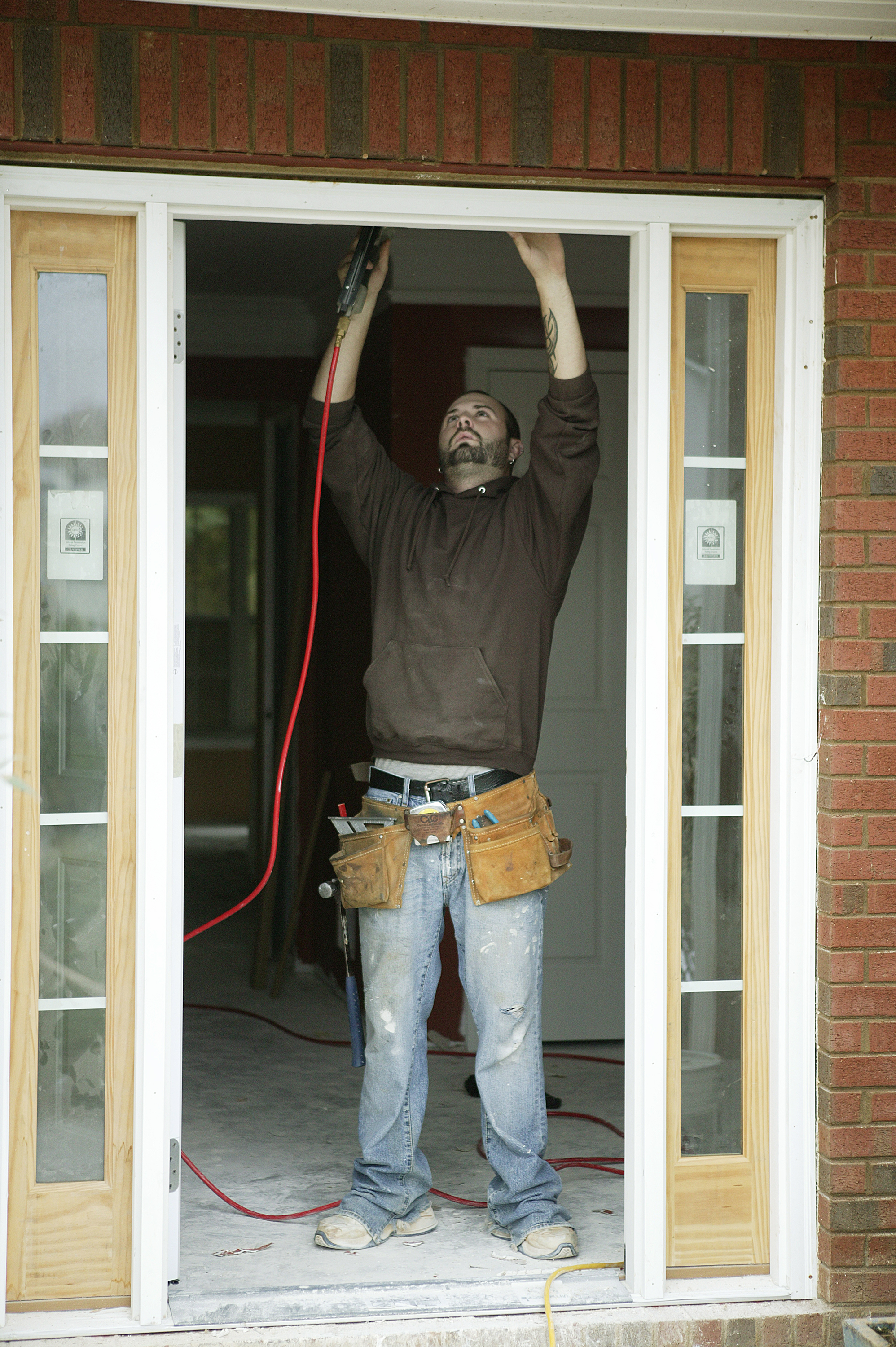
Entry Door Replacement (steel) 96.6% (Entry Door Replacement (fiberglass) 70.8%)
According to the study, the single best investment that you can make in your home is replacing the entry door with a steel entry door. Homeowners that make this investment can expect a return of 96.6 percent on the money spent. The average price of the project investment is $1,162, making it a relatively low cost home improvement project to undertake. Replacing your entry door with a fiberglass entry door will only return 70.8 percent of your investment.
Replacing the entry door will also enhance the curb appeal of the home by transforming its appearance, potentially increasing the interest of potential buyers. If you are replacing a door that has been on the home for more than a decade, it may also give you significant energy savings by reducing the amount of air escaping your home from around the door.
Deck Addition (wood) 87.4% (Deck Addition (composite) 74.3%)
The addition of a wooden deck to the home is another home improvement project with an excellent return on investment, averaging an 87.4 percent ROI. Decks and patios are a great way to expand living space at a low cost, generally costing about a tenth as much as expanding rooms in a home. These are also versatile spaces that can be used throughout the year for different functions. The addition of a composite deck has an ROI that is a bit lower at 74.3 percent.
Siding Replacement (fiber-cement) 87.0% (Siding Replacement (vinyl) 81.6%)
Another good home improvement project with an excellent return on investment is replacing the siding on your home, which can significantly enhance the curb appeal of a home that is being sold. You want potential buyers to see siding that is clean and well cared for, giving them confidence that the rest of the home has been cared for as well. On the other hand, worn or damaged siding can reduce the value of your home by about 10 percent.
Replacing the siding on your home with new fiber-cement materials offers a return on investment of about 87 percent. Fiber-cement siding is generally viewed as high quality and quality is one of the most important traits considered by buyers when searching for a home to buy. Replacing damaged siding can also improve the energy efficiency of the home, resulting in savings on your utility bills after the project has been completed.
Vinyl siding is less expensive than fiber-cement siding and is easy to install, allowing many homeowners to tackle the product themselves with the help of a few friends or family members. The types of vinyl siding available today have long warranties and fade resistant finishes, guaranteeing that your siding will look great for years to come. Replacing the siding on your home with vinyl siding gives you a return on investment of about 81.6 percent.
Attic Bedroom 84.3%
Adding an extra bedroom to your home can result in a significant boost to your property value. Turning an attic into an attic bedroom is a great way to take a rarely used space and turn it into something that is functional for your family or for the people that will be purchasing your home from you. This project has an average return on investment of 84.3 percent and the project costs are generally low because the walls and ceiling of the room already exist.
Minor Kitchen Remodel 82.7%
Remodeling the kitchen area is a task that many homeowners undertake before attempting to sell their home. This is because the kitchen is one of the most used areas of the home, resulting in wear and tear on everything from the counters to the floor to the appliances. Doing minor remodeling to a kitchen area provides an average return on investment of 82.7 percent. Minor remodeling involves replacing the appliances, the lighting, the flooring, the countertops, or the cabinetry.
The average cost of the minor kitchen remodels in the report was $18,856, including labor costs. However, many of the tasks required for a minor kitchen remodel can be completed by the homeowner in a few hours, which can significantly decrease the cost of the remodel. Any tools that are needed can generally be rented from a home improvement store like Lowe’s or Home Depot.
Knowing which projects offer the best return on investment will help you make better decisions on where to invest your remodeling dollars. Whether making your space more livable for your family or improving your home to get a better sale price, focusing on the projects that give you the best return on investment is a smart way to increase the value of your property.
How about you all? Which home improvements projects have you completed which you felt like provided a good financial reward?
Share your experience by commenting below!
Picture: http://en.wikipedia.org/wiki/Handyman#mediaviewer/File:FEMA_-_42428_-_Home_Repair_after_Flood.jpg

How I Saved $40 A Month By Reviewing My Cable Bill

 The following post is by MPFJ staff writer Travis. Travis is a customer blogger for Care One Debt Relief Services, and also appears weekly at Enemy of Debt. Travis candidly shares his personal journey to pay off $109,000 of credit card debt and the tips he’s learned along the way. As a father and husband he provides a unique perspective on balancing debt, finances, and family.
“Dad, my TV stopped working,” said my son as he came down the stairs. No investigation was necessary, because I knew exactly what had happened.
A letter had arrived a few weeks prior stating that our cable company was going completely digital, and as of a certain date every TV was required to have a digital cable box in order to receive the signal. One box would be provided free for a year, but any additional boxes would cost $6.99 per month.
We currently have three televisions with cable boxes attached as part of our multi-room DVR system, but we have two TVs that did not; my son’s TV, and one in our guest bedroom. I wasn’t particularly happy with the requirement to have a $6.99 a month box attached to every TV. The reason given for dumping the analog signal is to free up bandwidth for more high definition stations and faster broadband service. Seems like progress, but with progress comes a price tag.
That afternoon, I picked up a cable box for my son’s room. My wife and I decided that the guest room would no longer have a television, since it’s silly to pay $6.99 a month for cable to a room that is used only a couple times a year. Even though our cable bill would not be changing due to the extra cable box for a year, we used this opportunity to review our cable package and see if there’s anything that we could do to decrease our overall bill.
I opened our latest cable bill, and went through it line by line. We evaluated each service for value in relation to how much it cost and how much it was used. Like an episode of Bar Rescue, I’ve agreed to open the books and share the process with you, the readers of My Personal Finance Journey. Let’s get started.
- Cable TV Service Gold Package: $99.99
- DVR Service: $19.99
- Digital Receiver Rental: $27.96
- Internet Service: $49.99
- Phone Service: $19.99
- Taxes and Fees: $20.44
Total Bill: $238.36
Package Summary:
We currently have a cable TV, broadband internet, and landline phone service bundle through Charter Communications.
TV Package Analysis:
Our cable company has really simplified its offerings in the last two years. Gone are the seemingly limitless ala carte options to choose from. We now have three packages to choose from: Select ($79.99 per month), Silver ($89.00 per month), and Gold ($99.99). We currently have the Gold package, giving us every channel offered by our cable company. However, in reviewing the channels offered by each package, we only watch the channels in the Select package. I can’t remember the last time I found something on the premium movie channels that I wanted to watch, and I never watch the obscure sports channels. We have an opportunity to save $20 a month if we move to the Select package.
Equipment Rental Analysis:
Honestly, I was shocked to see how much I’m paying for the combination of the DVR service and the equipment rental. We could dump the DVR service, but given the new requirement of having a digital converter on each TV, we’d just exchange the DVR boxes for basic digital tuner boxes which cost the same amount each month to rent. We’d save the $20 a month without the DVR service, but we actually use that all the time.
Phone Analysis:
I honestly cannot believe we still have a landline. I think the only reason I keep it is because we’ve had that number for close to 20 years now, and I’m afraid that someone won’t know how to get a hold of us. But honestly, the only non-telemarketer that calls our home number is my parents and they could simply be told to call my cell phone number.
If we dump our landline, we’d save an additional $20 per month.
Broadband Analysis:
There’s really no option here. My cable company used to have different speeds available for different prices, but that’s no longer the case. We currently have 30mps service, and it’s scheduled to move to 60mps by the end of the year as part of their system upgrade. The only other option we would have is DSL, which isn’t fast enough to support my connection to my employer.
Final Analysis:
Our analysis shows that we could easily cut $40 a month from our cable bill, and not even have to alter our lifestyle or television viewing habits. That means that right now we’re really just wasting $40 each and every month.
The point of this article isn’t to debate whether cable TV is worth the money, or if we should go with a different solution. That is a different post, one that I’ve already written and concluded that at this time, cable television fits our family’s lifestyle the best. It is within our budget, and we consciously choose to spend our money on it. It could very well happen that sometime in the future we may decide that cable TV is no longer worth the money we spend on it, and go in a different direction. The point of this article is to drive home the fact that my wife and I periodically review all our expenses and look for ways to get as much value as we can out of the services we choose to have, and look for ways to maintain the lifestyle we want while not wasting money in doing so.
During this review cycle, we have identified $40 that we could cut from our cable bill without affecting our lifestyle at all. Our family’s lifestyle and needs are constantly changing and evolving, meaning that evaluations of this kind are always a good idea from time to time.
Now, it’s time to give my cable company a call.
How about you, readers, do you periodically review your monthly expenses? How often?
Share your experiences by commenting below!
***Image courtesy of NayPong at FreeDigitalPhotos.net

How to Determine Which Home Improvement Projects to Tackle First

 The following post is by MPFJ staff writer, Melissa Batai. Melissa is a freelance writer who covers topics ranging from personal finance to business to organics to food. She blogs at Mom’s Plans where she shares her family’s journey to healthier living and paying down debt.
We bought a house in August, and while it is a nice house overall, it is 18 years old. There have been no significant renovations, so much of the house is out of date. There is definitely room for improvement.
Here are some of the projects we’d like to tackle:
Replacing Broken and Green Blinds. We bought the house with all the blinds included. After the sale went through, the owners e-mailed and informed us that the large blind in the master bedroom and the blind in the guest room are broken, so they will fall down if you try to open them. (We’d already discovered this with the guest room blind during the home inspection.) The rest of the blinds work fine, but they are a deep hunter green. In some rooms, that color works. In my daughters’ pink and purple room? Not so much.
Lack of Sun Screens. Many houses in Arizona have sun screens on them. These are dark screens that go on the outside of the house and keep out the intense UV rays, protecting items in your home from sun fading, and more importantly, reducing how much the sun can heat up your house. With sun shades, your cooling bill can be reduced substantially. Our house had no sun screens.
Our home had a few other issues too.
Faucet that Hangs to Low Over the Sink. The space from the faucet to the bottom of the kitchen sink measures 10 inches. That means it’s impossible to fill the sink with soapy water to wash and still be able to rinse the dishes. Even without water in the sink, rinsing a large pot is nearly impossible and involves me putting water in my hands to splash the soap off the sides of the pot that I can’t reach.
Pale Pink Kitchen Cabinets. The kitchen cabinets are a pale pink, and the finish is coming off in many places, exposing the wood. It’s ugly, and I would like nothing more than to paint all of the cabinets white. The cabinets also lack hardware, so I’d like to add handles and knobs, too.
Orange and Brown Sponge Painted Living Room. Finally, the living room is sponge painted ala the 1990s decor style in shades of orange and brown. No thanks.
Choosing What Renovations to Make on a Limited Budget
While I would like to make all of the changes to our home at once so I could live in the house I want, that’s not possible thanks to budget constraints.
We’ve created a hierarchy of renovations.
Those That Will Save Us Money
The renovations and improvements that we are making a priority are those that will save us money.
Sun Screens. We had a few hundred dollars available when we first moved in, so we immediately bought sun screens for the five windows that receive the morning and evening sun. Doing so helped keep those rooms cooler and saved us on our electric bill.
We are now saving so that in March, when the temperatures in Arizona ramp up again, we’ll be able to buy solar screens for the three windows that receive the afternoon sun and heat up the master bedroom.
Kitchen Faucet. Water is precious everywhere, but even more so when you live in the desert like we do. Having a kitchen faucet that gives us so little room to manipulate pots and pans underneath it wastes a lot of water. This is another priority repair, though this renovation may have to wait until after we install the sun screens.
Those That Will Increase the Value of the House
Next on our list of renovations are those that will improve the value of the house. (This is important because we know this isn’t our forever home. We will likely move in the next 5 to 7 years to be closer to family.)
Painting the Kitchen Cabinets. Our kitchen has a lot of great features–open concept, huge island, eat-in dining space. However, the cabinets are a real eyesore. We plan to DIY paint the cabinets white and also install knobs and handles on the cupboard doors. Just doing this, assuming we do it well, will increase the value of our home when we get ready to sell it.
Painting the Living Room. Remember that sponge painted living room in desert brown colors? That definitely has to be repainted before we sell. In fact, when we were house hunting and I saw the pictures of the home online, I didn’t even want to look at the property because the living room was so ugly. The sponge painting didn’t look like sponge painting in the picture but rather like some hideous wallpaper. Besides being aesthetically pleasing to us, painting the living room will make the house more marketable in the future.
Those Projects That Will Wait
The Blinds That Fall Down. The guest room is rarely used, so for now, we will leave that blind and not replace it. I do want to replace the blinds in the master bedroom, especially since the window with the broken blind is the one that brings in the most sun light. However, there are only a few months of winter left now, and in the summer we don’t open that blind to help keep the house cool. Therefore, this improvement will wait until at least next winter.
The Green Blinds. I really hate the hunter green blinds, but they’re functional, so they’re at the bottom of our renovation/improvement list.
Renovating and improving your house on a budget requires a great deal of patience, especially when it seems like several projects are important. It also requires discipline, because as much as I know that the sun screens are important, I would much rather have a living room that I like to look at!
Make Those Home Improvements That Increase the Value of Your House First
If you, too, have a list of home improvements you’d like to make, the best bet from a financial stand point is to first make the improvements that increase the value of your house.
In general, these areas offer the most bang for your buck:
- Home systems. These include things like replacing hot water heaters, air conditioning/heating systems, and plumbing. If you can replace the current model with an eco-friendly version without wrecking your budget, you’ll likely get even more value for your money. However, don’t overspend for a “green” system because you won’t recoup that much.
- Kitchens. The kitchen is the heart of the home, so you want to make it as nice as you can. This is one area where you’ll definitely improve your resale value. Minor upgrades like painting the cabinets and installing hardware don’t cost that much money yet can dramatically improve your house’s value.
- Curb appeal. Finally, consider making your home more friendly from the outside. Install outside lights, plant some greenery, consider adding a tree. The front of the home is most important, and first impressions only happen once.
Deciding which home improvement project to tackle first is an individual decision, but financially, consider the one that will most improve the value of your home or will save you the most money.
How about you all? Do you own a home that needs or needed renovations or improvements? If so, how did you decide which project to tackle first?
Share your experiences by commenting below!

Six First-Time Homebuyer Mistakes To Avoid Like The Plague

 The following is a post by MPFJ staff writer, Kevin Mercadante, who is a freelance professional personal finance blogger for hire, and the owner of his own personal finance blog, OutOfYourRut.com. He has backgrounds in both accounting and the mortgage industry.
Remember a few short years ago when millions of people were losing their homes to foreclosure?
Some of them were hit by unfortunate circumstances – others simply walked away when the value of the property fell below the amount of the mortgage that they owed on it. But, it’s likely that most of them lost their homes because they made one or more major mistakes at the time they bought the property.
If you are in the market to buy a house, there are steps that you can take now to avoid falling into a similar trap. Here are six first time homebuyer mistakes to avoid like the plague.
1. Over-Buying
This is probably the single biggest reason why people get into trouble with homeownership. Simply put, they buy more house than they can comfortably afford.
They do this by buying at or above the highest house price level that they are qualified for. They may be pre-qualified to buy a home for $300,000, but end up buying one for $320,000.
That actually understates the problem. Whatever property value they are qualified to buy, they always have the option to buy beneath it. For example, they can easily buy a house for $240,000 and that will leave them plenty of room in their budget for non-housing expenses, including saving money.
But by buying at or above their highest qualification level, they essentially doom themselves to a life of always needing to stretch to meet their monthly budget. And should an emergency come along, they will be completely vulnerable.
Moral of the story: when buying a house, always leave yourself plenty of financial margin for error. You will probably need it.
2. Buying a House Before You’re Ready
A lot of people buy a house because of peer pressure, and not for legitimate need. The pressure often comes about from parents and from other family and friends who are certain that it is “the right thing” for everyone to become a homeowner, and to do it as soon as possible. You may even be persuaded to buy a home because of the tax benefits that it offers.
But none of these are legitimate reasons to take on a financial obligation as great as owning a house. Buy because you are in a position in your life – such as marriage or the arrival of children – that make it desirable. Or buy because it’s less expensive than renting a similar property in your area.
There are times in your life where owning a home can be the absolute wrong course of action.
Unfortunately, it isn’t a decision that is easily reversed. Be sure that you are ready for the commitment of both time and money that owning a home requires. If you’re not, relax and take your time.
3. Not Doing a Home Inspection
There are at least two reasons why homebuyers pass on having a home inspection done on the property they’re buying:
- They don’t want to spend the $200 or $300 that it will cost, or
- They are so in love with the property that they don’t want to learn any bad news that might cause them to not buy it.
Neither are legitimate reasons to not have a home inspection. That inspection will be your last opportunity to back out of what could very well be a very poor deal. Pay the extra money, or have a family member pay for it, but get a home inspection done, and pay close attention to what it contains.
Not having it done can cost you thousands of dollars later on – money that you may not have.
4. Ignoring the Possibility of Living on a Single Paycheck
This gets back to over-buying, but it’s more specific. If you are too tightly stretched on your house payment, there will be no room in your budget if one parent wants to stay on with a new baby, or even if one wants to quit his or her job to start a new business.
In an ideal world you will qualify for the house payment based primarily on a single income. While this is not always possible, doing so gives you the flexibility that may be absolutely necessary at a later date. At a minimum, try to get as close to qualifying on a single income as you can, which may allow you to make other arrangements in the event that it becomes necessary.
5. Buying a Bunch of New Stuff for the New House
Many homebuyers feel the absolute necessity to fill the new home with all kinds of new stuff. This can include new furniture, new window treatments, and even a brand-new car. It’s also not uncommon for new homebuyers to pull out perfectly good carpet and to replace it with new carpet or with wood floors.
That kind of activity costs money at a time when you’re probably already stretched thin. And you certainly don’t need to be running up credit card balances to make it happen.
After you buy your home, you should plan on being extremely conservative spending your money. It would be far better to put any extra money into savings, that way you will have a cushion in the event of unforeseen circumstances. After that, you can begin to make gradual improvements to the property, as additional funds become available.
6. Closing Broke
Next to over buying, this is likely the second-biggest mistake that first-time homebuyers make. Owning a home cost money, generally more than renting does. After all, if the heater melts down and needs to be replaced, you won’t be able pick up the phone and call the landlord to have it taken care of.
Mortgage lenders typically require that you have “cash reserves” – liquid savings equal to somewhere between two to six months of your house payment. Many homebuyers will show this amount only for qualification purposes, then the cash quickly disappears.
Owning a home requires that you maintain a certain amount of liquidity, and that needs to start from day one of your ownership. It sets a positive pattern, if you have money available right after the closing. Take this seriously, because trying to save up money when you’re broke and taking care of a home is not an easy task.
The standard advice from financial planners is to have somewhere between three and six months of living expenses in an emergency fund. The advice works extremely well for first-time homebuyers, even if lenders require far less.
Follow these six steps, and your life is a homeowner should be a relatively stress-free experience.
How about you all? What mistakes did you make when you first bought a house? Any of the ones above?
Share your experiences by commenting below!
PHOTO: https://www.flickr.com/photos/editor/6148335002/sizes/n/