

Category Archives for Saving Money & Frugal Living

How To Save $200 On Your Grocery Bill Each Month
 The following is a post by MPFJ staff writer, Derek Sall. Derek is the owner of the blog, LifeAndMyFinances.com, where he teaches people how to get out of debt, save money, and become wealthy.
Many couples don’t think about their grocery bill when they first start out since they are only buying food for the two of them .The major bills like the mortgage and the cars are much more expensive, and therefore get more attention.
However, when these young couples have children and their family grows, the food bill gets noticeably larger and can hurt the bank account quite handily with each trip to the grocery store.
Food is food though right? There can’t be that much that you can change in order to save money on filling up your stomachs is there? As you may have already guessed from my rhetorical questioning, there actually is. By implementing the tips below, many families have noticed a sizable savings in their food bill each month, often to the tune of $200 or more. Take a look and see how much you can save!
1) Stop Going Out to Eat, Even to McDonald’s
Restaurants can absolutely kill your grocery budget, especially the finer ones. But, even McDonald’s can end up impaling your bank account as well. Think about it. How much does it cost to feed your family with sandwiches and crackers for lunch? A family of four will spend about $6 all together when you factor in the slices of bread, cheese, meat, and crackers. So what if you went to McDonald’s? How much do you typically spend there? If your children get kid’s meals and you and your spouse order off the value menu, you will still end up spending around $18 on your meal, which means that you are spending three times more at McDonald’s than you would at home! If you stop eating out, you will see a huge improvement in your food bills each month.
2) Stop Shopping At Walmart for Groceries
Everyone wrongfully assumes that Walmart has the best prices on everything. This is simply not true. Sure, some of their items may be cheaper than other retail stores, but their food is often much more expensive than the discount supermarkets across the street. I personally shop at Aldi. The prices are cheap, the service is fast, and the customers are ten times more classy than the Walmart crowd. As a single person, I can get away with spending only $30 a week on groceries. Therefore, your family of four can easily get by on less than $120 each week, which means your monthly food expense could be $500 or less. I bet that’s a severe improvement from what you are spending now.
3) Plan Your Meals in Advance
In order to eliminate waste, plan your meals in advance. If you know exactly what you will eat each week and buy only food for those meals, not only will you avoid buying the extra junk food that otherwise finds its way into your cart, but you will have less food that gets pushed to the back of the refrigerator and gets forgotten about. You will buy less food and waste less food, which of course saves a quite a lot of money each week.
4) Keep the Groceries Cheap, Yet Healthy
For some reason, many people get the idea that in order to eat healthy they need to spend more money. Actually, I have found the opposite to be true. Often times, prepackaged foods are more expensive because they are convenient for you to pop in the microwave and eat in just ten minutes. If you instead buy the ingredients individually and prepare the meals yourself, you will be able to make your meals with less money and with fewer preservatives (ie. sodium). Your food will be tastier, your wallet will be thicker, and your bodies will feel younger. It’s a triple win if you will just take the time to cook the meals yourself.
How about you all? Are you ready to save money on your food each month? Which of the tips above impacted you?
Share your experiences by commenting below!
***Photo courtesy of http://www.flickr.com/photos/jlarnos/8200880966/in/

Budget Breakdown: What Do You Really Buy With Your Grocery Budget?

 The following post is by MPFJ staff writer Travis, who also blogs at Enemy of Debt . Travis candidly shares his personal journey to pay off $109,000 of credit card debt and the tips he’s learned along the way. As a father and husband he provides a unique perspective on balancing debt, finances, and family.
You can’t change what you don’t track.
The concept of tracking your spending is one that I’ve both read and written about many times, but I just heard the above phrase for the first time recently. The premise behind tracking your spending is fairly simple; write down everything you spend, then use that information to build a realistic budget. If the number for a particular expense seems too high, you need to put some effort into determining how you bring your spending down for that category. This is where my opening statement comes into play. If you don’t know how much you’re spending, or what you’re spending it on, there’s no possible way you can make any kind of educated decision as to whether your spending is in line with your expectations.
I’ve been thinking a lot about the above statement as I haven’t been very happy with the results of my grocery shopping lately. When we finished our debt management plan paying off over $109,000 in credit card debt one area that we immediately increased in our budget was the weekly grocery amount. Adding some extra special items to our meal planning each week was something we determined was a good use of some of the extra funds we had available after that final payment was made.
The problem was, as I looked at my grocery cart waiting for the cashier, I saw a lot of things in the cart that had nothing to do with making actual meals. I will admit that when I say the term grocery budget, I really mean pretty much anything I’d by at the grocery store including food, snacks, toiletries, and pet supplies. I started wondering what percentage of my grocery budget each of those categories represented. That opening phrase popped into my head again.
You can’t change what you don’t track.
It was time to go to work on my grocery spending. Even though I was staying on budget with my overall grocery spending, I wanted to ensure I was getting what I wanted out of my trips to the grocery store. I decided that I was going to shop as normal for three weeks, and save my receipts. After that third trip to the grocery store I would sit down and analyze what I was purchasing and see what revelations I could find.
The Ground Rules
- Grocery shopping is to be done normally, not altering my process or current shopping habits
- This experiment will run for three weeks, after which I will analyze the products purchased from the three saved receipts.
- Products will be split into the following defined categories;
- Food: items used directly for meals
- Snacks: items that are eaten between meals, or during the evening. Example: chips, snack crackers, ice cream.
- Drinks: Non-essential drinks such as bottled water, soda, Gatorade, or lemonade
- Pets: Items for our two cats such as cat food and cat litter.
- Household: Nonfood items such as laundry detergent, dish detergent, toiletries, paper towels
The Results
Week 1:
• Food: 58.8% ($95.37)
• Drinks: 7.7% ($12.60)
• Pets: 4.8% ($7.84)
• Household: 15.9% ($25.89)
• Snacks: 12.8% (20.74)
Total: $162.44
Week 2:
• Food: 51.7% ($71.38)
• Drinks: 10.1% ($13.98)
• Pets: 0% ($0)
• Household: 11.6% ($15.94)
• Snacks: 26.6% ($36.74)
Total: $138.02
Week 3:
• Food: 58.8% ($92.57)
• Drinks: 14.0% ($22.02)
• Pets: 9% ($14.12)
• Household: 4.5% ($7.11)
• Snacks: 13.7% ($21.64)
Total: $157.46
Three Week Average:
• Food: 56.6% ($86.44)
• Drinks: 10.6% ($16.20)
• Pets: 4.8% ($7.32)
• Household: 10.7% ( $16.31)
• Snacks: 17.3% ($26.37)
Total: $152.64
Analysis
I was fairly happy with the breakdown of my grocery spending with the exception of the Snacks category. The percentage, and the raw dollar amount spent, surprised me. We do not need to spend close to 20% of our budget on snacks, so I’ll be looking to reallocate some of that spending into the main Food category. Ideally, I’d like to see Food at about 65%, and Snacks closer to 10% of our grocery spending breakdown. The other categories are right where I would expect, and want them to be.
Action Plan
In preparation to go grocery shopping, my wife and I make a meal plan for the week, then I write a list of the items we need to execute that meal plan. I then add in any additional wants or needs from the family and estimate the price. In the past, as long as the bottom line was within our $150 weekly grocery budget (give or take a few dollars) I was ready to roll.
However this week I’m going to break down the items on the list according to these 5 categories, and then ensure that each category adheres to the following target percentages:
- Food: 65%
- Drinks: 10%
- Pets: 5%
- Household: 10%
- Snacks: 10%
The hope is that by purchasing more of, and better quality food for meals that we will need less snacks, leaving myself (and the whole family) much more satisfied with the food we have in our home.
How about you all? Have you ever broken down your grocery shopping purchases to get a glimpse as to what you’re really getting for your money? Give it a try, you may be surprised!
***Image courtesy of Vichaya Kiatying-Angsule at FreeDigitalPhotos.net

Pay Yourself First – Action Plan

 This following is a post by MPFJ staff writer, Jeff. Jeff writes about sustainable living and finances at his website, Sustainable Life Blog. Jeff really enjoys traveling with his wife as much as he can, to wherever he can.
Have you ever heard the saying “pay yourself first”?
If you’ve ever had a job, I’m sure that you have. I’ve been having that information pounded into my head for about 15 years now, ever since I got my first job as a lifeguard. My parents said it to me, and so did relatives that were older and trying to steer me towards good habits. I appreciated the advice and I took it heart, building up a nice savings before going off to college (which I promptly spent most of).
15 years later though, even after I’ve set up automatic withdraws from my checking to my savings account on every payday, I look at my check and notice that I’m still not being paid first. If you’re not sure what I’m talking about, grab your most recent pay stub and have a look at it and you’ll see what I’m talking about.
- I pay federal income taxes of $987.52
- I pay medicare taxes of $78.54
- I pay Social Security Taxes of $227.50
- I’m single, so my employer pays for my share of the health insurance. If I wasn’t, a percentage of my check would be going to cover my health insurance premiums.
- This totals up to $1,293.56
Despite taking the advice I was given, there are 3 (or 4) people getting paid out of my wages before I do. Since I would rather keep more of my money than let them have it, I’ve been trying to figure out ways to put my name ahead of all those other groups siphoning money from my check. If you’re interested in that as well, here’s what you can do.
How to Pay Yourself First
The first (and probably most important thing you can do is contribute to a pre-tax retirement account, such as a 401k or a Traditional IRA. Most employers have a 401k option, and you can contribute to that account to the tune of $17,500 in 2014, or $18,000 in 2015 and beyond.
Even if you can’t fully fund your 401k each year, every dollar that you set aside will be a dollar that is truly going to you first. Once your 401k deduction gets taken out, then your taxes will follow (SSA, Medicare and Federal Income Taxes), but the taxes will be computed on a lower income. Using the above example, and assuming we will begin contributing the maximum to our 401k in 2015, here’s what it would look like. Your income would drop from 65,000 per year down to 47,000 per year, which would then be the basis for calculating the above taxes. Here’s how it would shake out:
- Federal income taxes will be $636.98
- Medicare & Social Security Taxes of 299.66
- Total is 936.64, less than just the income tax rate in the above scenario
The income tax is a lot lower because it is based in a sliding scale, while medicare and social security taxes are at a fixed rate. In this situation, we are truly paying ourselves first, instead of paying the government first and paying ourselves second. Now, if you’re already maximizing your 401k contributions and are looking for more ways to pay yourself first, there are a few other options, but you’ll have to check with your employer. If you don’t have the opportunity to have a 401k with your employer, a 457 or a 403b plan will serve the same purpose. If none of those are available to you, then you’ll be able to use a traditional IRA, though the limits are much lower ($5,500, or 6,500 if you’re over 50).
Other Ways to Pay Yourself First
There are a few different ways to keep the good times rolling, and they may (or may not be) offered by your employer.
In addition to retirement benefits, you may also be able to pay for a few more things with pre-tax dollars, lowering your tax liability even further. In IRS terms, these are called Section 125 plans, but are more commonly called cafeteria plans. You may be able to deduct expenses related to some (or all) of the following things:
- Health insurance expenses
- Commuting or Parking (if you’re traveling on public transit)
- Dependent care (day care)
- Adoption (expenses related to adopting a child)
- Group term life coverage
- Health Savings Accounts
Obviously, not all of these will be useful to you, but if your employer offers them all and you’re already paying for things such as day care and commuting, it’s in your best interest to pay for those with tax free dollars so that you can lower your tax liability.
Even though we are paying for everything with pre-tax dollars, it’s still wise to pay yourself after the government takes their cut because of early withdraw rules for 401k’s and other retirement plans.
How about you all? How much do you pay for with pre-tax dollars vs post-tax?
Share your experiences by commenting below!
***Photo courtesy of http://www.flickr.com/photos/76657755@N04/6881508144/in/

Do Credit Cards Really Help You Save?

 The following is a guest post by blog reader, Audrey Clark. Audrey is a freelance blogger covering a range of topics from careers and finance to travel and leisure, along with everything in-between. When not writing, she’s always on the lookout for her next adventure. Connect with Audrey on Twitter and Google+.
We all know that irresponsible use of credit cards can cost us hundreds or even tens of thousands of dollars in unnecessary debt. But used wisely, credit cards can actually help put money into your wallet. That’s right, credit cards can help you save money.
According to TransUnion, credit card companies are changing the way they do business in response to consumer concerns. While banks are obviously still in business to make a profit, even lenders know that consumers who go bankrupt because of overwhelming debt don’t make good repeat customers. If the new wave of benefit offers is any indication, credit card companies are more interested than ever in keeping their customers happy.
Cash-back, rebates, college-savings rewards, pay-back planners and loan consolidation are just a few of the carrots lenders are dangling in front of our noses. Not all of these enticements can actually save you money, but some can. The three easiest ways to make credit cards work for you are through rewards, expense tracking and consumer protection.
Rewards
Also called “points” or “bonuses” rewards are an incentive program to encourage you to use your credit card. A certain percentage of your spending is paid back in the form of cash, points towards good, air miles or some other attractive prize. To take the best advantage of rewards you must do three simple things:
- Find a card that offers rewards you can actually use.
- Use your credit card to buy everyday goods you’d normally pay for with cash such as groceries or gasoline.
- Pay off the balance each month. Keeping a zero balance on your card is crucial if you want to save money.
For example, let’s say your credit card offers one percent cash back on all purchases. So you spend 100 dollars in groceries and earn one dollar. That’s not a phenomenal savings, but how much money do you spend in groceries every month? How much do you spend on gasoline? Depending on your habits, you could save hundreds per year by paying with a credit card instead of cash. But to realize those savings, you must pay the bill in full each month to avoid interest fees. And that should be easy to do–simply use the cash you would have used in the first place.
The cards you already have may not be the ones that offer the best benefits. Investigate the rewards your current credit cards offer against some of the more popular options on the market. Bankrate is a reliable and unbiased source for credit card information. When making comparisons, remember to consider these factors:
- The interest rate
- Annual fees
- Deals that change too quickly
- Cards with travel benefits probably won’t save you money if you rarely travel
- Bonus or reward points save you money only if they can be used for goods you actually need, not luxuries
- Cash-back plans offer the best potential for savings
Expense Tracking
You can’t cut unnecessary expenses of you don’t know what they are. As Debit Card Tracking explains, credit cards sometimes provide more thorough statements than banks. If you pay for everyday items with a credit card instead of cash it will be easy to see exactly what your expenditures are because it’s all right there on the credit card statement. While “living” on your credit card may not be the best practice, using your card to get a realistic view of how much you spend and where can be a great benefit when trying to tighten the budget.
Consumer Protection
Having a credit card stolen from you is a big inconvenience, but not as much as having cash go missing. Using a credit card instead of cash when you travel or need spending power for any reason provides protection against loss or theft. Stolen cash can’t be recovered, but stolen credit cards can be canceled without holding you accountable for fraudulent activity. And according to Creditnet, credit cards also save you money on defective purchases or purchases that fail to be delivered. Lenders will withhold payment until your transaction is satisfactory.
Credit cards really do help you save money if you use them correctly. Be smart with your cards and they can be a valuable asset in your long-term financial planning.
How about you all? Do you have a favorite rewards card that you’d recommend to others?
Share your experiences by commenting below!
***Photo courtesy of http://www.flickr.com/photos/consumerist/422358899/in/

How Much Money Do You Need to Be Happy?

 The following is a post by MPFJ staff writer, Derek Sall. Derek is the owner of the blog, LifeAndMyFinances.com, where he teaches people how to get out of debt, save money, and become wealthy.
In our society today, there is always a wanting for more. You may live in a house that is perfectly fine for your current needs, but that house up the road that has 500 extra square feet with a pool in the back just looks so much better! Surely everyone would be happier with more amenities and more space, right? Well, not necessarily.
The Research Regarding Money
According to the research of Forbes magazine, the standard amount for happiness is around $75,000. Those that earn more than this really don’t gain much from their extra income. They still have a nice house, but maybe it’s just a little bigger. They might still own a boat, but it has a few extra feet on the front. And, they still receive (and can afford) a valuable education. Extra money beyond the $75,000 amount is merely spent on extras that truly don’t provide much more in the way of happiness.
Why Is It That We Always Think We Need More?
So for those of us that have read this Forbes article, we can buy the fact that happiness does not increase greatly after that $75,000 mark, but why then do all of us continually strive for more? Why are we all spending our precious time to acquire more and more money, which in turn buys us an increasing supply of stuff?
This is the question I have been asking myself lately, and I think that it’s an important question for all of us. Sure, it might be nice to earn more money than we have right now, but how much money do each of us really need to be happy? And how do we decide what this amount is for us?
The Quest for Understanding Your Happiness
It is easy to think that additional money would make you happy. Instead of going out to eat once a month, you could eat out every weekend. Surely, this would increase your happiness right? Or what about that new car that you have always wanted? If you were able to buy those new wheels, life sure would be sweet wouldn’t it? Then you would be happy! Honestly, I really doubt it. An increase in stuff will not make you happy, and the earlier you realize this the better.
If you are anything like me, when you talk to others, you are not talking about your recent money-making quest or about your big raise at work. No, you are talking about your wife, your kids, your experiences, and the fun things you have done in life. Relationships and experiences are what creates happiness, not money.
So how much does it cost to have these relationships and to create memories through experiences? Honestly, it doesn’t cost that much at all. I currently earn quite a lot of money (in comparison to the average family), but I only find myself spending about $25,000 a year. I travel, I give, and most importantly, I spend a large part of my time with those that I love. In the grand scheme of life, money does not play that large of a role in my overall happiness. As long as I am able to buy the necessities without stress or worry, and I have a little extra to have some fun once in a while, I can really be quite happy.
What about you? Do you always feel like you need more money to be happy? Perhaps you just need to change your perspective!
Share your experiences by commenting below!
***Photo courtesy of https://www.flickr.com/photos/marinadelcastell/8916590367

Five Advantages of Renting a Car for a Long Trip

 The following is a post by MPFJ staff writer, Kevin Mercadante, who is a freelance professional personal finance blogger for hire, and the owner of his own personal finance blog, OutOfYourRut.com. He has backgrounds in both accounting and the mortgage industry.
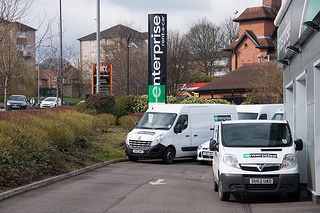
The next time you’re considering taking a long trip, put renting a car on your list of options for that trip. There are at least five advantages to renting a car for a long trip, rather than flying or driving.
1. Saving Air Fare on Short- to Mid-Range Trips
If you typically fly to a destination that is in the 250 to 500 mile range, renting a car and driving it direct to the location can save you a substantial amount of money.
Up to 500 miles, you’re basically talking about flight time of about an hour. But it can easily take you at least two hours on each side of that flight – two hours driving to the airport and going through security, then another two hours getting off the plane and booking a rental car. You’re looking at a time investment of at least five hours should you fly.
If you decided instead to rent a car and drive the distance, you can probably get there in about eight or nine hours. Yes that is longer than the five hours we just discussed for a flight. But as we all know, flights can be delayed, or you could be bumped to another flight, which can quickly get you up to eight or nine hours – or even more.
If you rent a car instead of flying for short- to mid-range trips, you have the following advantages:
- Your time of arrival at your destination is likely to be more predictable, since you will not have to rely on the airlines or conditions at the airport.
- You will already have your car rented upon arriving at your destination.
- You will save a substantial amount of money on round-trip airline tickets, especially if you would need to rent a car at the destination.
You certainly don’t want to do the car rental option much beyond 500 miles. But if it is within that range, you can save yourself a lot of money, as well as a lot of hassle, by avoiding the airport experience entirely.
The advantages of renting a car for a trip can be even more substantial if the other option is to drive your own car there.
2. Avoid Wear-and-Tear on Your Own Car
People often choose to drive their own car on a short- to mid-range trips as a way of saving money. But on deeper analysis, the savings are not as clear as it seems at first glance.
While it is true that you will save money by not renting a car, you are in fact adding deferred expenses to the cost of using your own car as a result of putting more mileage on it.
Let’s say that you decide to take your car to a destination that’s 500 miles away – that’s 1,000 miles round-trip. Adding that many miles will not only accelerate the need for certain car repairs, but it will also cause the resale value of your vehicle drop. According to some sources, it could be as much as 10 cents per mile, or about $100 for a 1,000 mile trip.
You can generally rent a car for as little as $200 for up to seven days. If you count the decline in resale value of your car, as well as potential deferred repair costs, it may actually cost more to drive your own car than it would to use a rental.
3. Dealing With Mechanical Breakdowns is a Snap With Car Rentals
If you are driving your car and it breaks down along way from home, not only will you have to pay the cost of having it repaired in a remote location, but your trip will also be delayed, possibly by as much as two or three days.
However, if you rent a car for the trip, and the car breaks down, you simply need to call the car rental company, and they will typically replaced it within an hour or two. You’ll then be able to resume your trip, having experienced only a slight delay as a result of mechanical breakdown.
It should also be worth noting that if your own car breaks down far from home, you’ll probably pay a lot more for the repair than you would if you were on your own home turf. This is because not only will you lack access to your preferred mechanic, but you may be forced into getting the job done as quickly as possible in order to maintain your travel schedule.
4. A Rental Car May Be Newer Than Your Own Car
If your own car is more than a few years old, you could be at substantial risk of a breakdown while you’re on a long-distance trip. This is more relevant than ever since the average age if a car in the US is now at a record 11.4 years.
That being the case, you can rent a car that is typically somewhere between brand-new and no more than two years old. Such a car would likely be much more reliable on a long-distance trip, not the least of which because the car rental company maintains a regular maintenance schedule on the vehicle.
In short, the rental car may be better able to weather a long-distance trip than your own car.
5. Choosing the Vehicle That You Need
Still another issue may be that your own car is not well suited to the trip that you want to take. For example, if you have a subcompact car, and a family of four, it may get more than a little uncomfortable on a long trip, particularly if you are packing luggage.
In that situation, you may be able to rent a larger vehicle, that will be better suited to the needs of your particular trip. Though the price will be significantly higher, you can even rent a van or a large SUV, if that’s what you happen to need.
If you do have to take a trip is not more than 500 miles away, give some serious consideration to renting a car for the purpose. It’s generally both less expensive and more flexible than driving your own car, and certainly than flying. And if the car can be rented with no mileage charge, it may be more cost effective even on much longer trips.
How about you all? Have you ever rented a car for a trip instead of flying or taking your own car?
Share your experiences by commenting below!
***PHOTO: https://www.flickr.com/photos/pauliospictures/13455468185/sizes/n/

5 Reasons Why You Should NEVER Own A Storage Unit

 The following is a post by MPFJ staff writer, Derek Sall. Derek is the owner of the blog, LifeAndMyFinances.com, where he teaches people how to get out of debt, save money, and become wealthy.
Do you realize how incredibly huge the self-storage industry is?
While it seems that no one talks about it, many of us own storage units to store stuff that doesn’t fit in our house very well. It seems logical until you begin to understand the mass of storage that is being funded each month. Believe it or not, there are over 2 billion square feet of storage units currently rented out in America, which is enough to fit each one of its citizens if they simply stood shoulder to shoulder in those very same units! Isn’t that just sick? Why on earth do we need so much storage space outside of what can fit in our house?
Here are my five top reasons why you should NEVER own a storage unit.
1) You’re wasting your money on rent
So what is the typical cost of one of these storage units? In my area (where everything seems to cost much less when compared to other parts of the country), a simple 5’ x 10’ space can cost $47 a month. This initially doesn’t sound like too much, but what if we extrapolated that out to a year? The yearly cost of this small storage space is $564. Over the course of a few years, this expense really starts to add up!
2) You’re wasting your money on stuff
A very small fraction of people are using storage units temporarily (many think their unit is temporary, but they soon become lifers as their stuff begins to pile up), which means that they simply have more stuff than they have room to put it! How is this even possible? How can we possibly accumulate more stuff than a typical house can hold? The very notion of this is ludicrous.
Did you know there is a movement going on called, “The Tiny House movement?” This is where people sell the majority of their stuff and scale down to a 150 square foot living space. Oddly enough, many people seem happier to live in that tighter space with less stuff than they did with their large house and storage units full of stuff.
You simply do not need all of that stuff and are therefore wasting your money.
3) You could be infesting your home
Supposedly, storage units are completely clean and you should have no worries when it comes to bringing those boxes back into your home. In my opinion, bugs are everywhere, and I am sure that there are plenty of people that brought some crazy stuff back into their homes when they opened up their storage box. You could be releasing spiders into your home, or maybe even mice or snakes. I think I’d rather just limit my stuff and reduce the odds of this from happening!
4) You’re wasting money on fuel
Storage units aren’t typically right around the corner. When you need something out of your unit, you have to hop in your car, drive a number of miles, and then return home. Each time you do this, you are burning fuel which is taking money right out of your pocket. If you could fit all of your stuff in your home like a normal human being, you wouldn’t waste any fuel at all! By renting a storage unit, you are increasing your expenses by more than just the unit rental fee.
5) You are wasting your precious time
I saved this reason for last, but it is (in my opinion) the most important reason to avoid renting out a storage unit. Do you realize how much time is wasted at these places? You first need to load up your stuff, then drive it over there, and then unload it. Then, at times you need to drive back to the unit to try to find something that you decided you actually need, and then good luck finding it amongst your boxes!
Each moment of our lives is valuable because once those minutes and hours are gone, there is no getting them back! Which would you prefer doing? Rummaging through boxes in a cold, damp, garage or hiking through the mountains, enjoying the beautiful scenery that will be etched in your mind for life? I could make a list of 1,000,000 things that I would like to do with my time, and sifting through a storage unit would still not make the list.
Before you go out and waste your money, fuel, and time on a storage unit, be sure to ask yourself if you really need it. Perhaps instead, it’s time to sell some of your stuff.
How about you all? Have you ever spent your money on a storage unit?
Share your experiences by commenting below!
***Photo courtesy of https://www.flickr.com/photos/jeepersmedia/14950689245/in/
Lazy Guide to Building Credit

The following post is by Amanda Green. Enjoy!
It is easy to end up with poor credit. Far easier than people realize. The good news is, even if you are lazy you can still build up and repair your credit.
Don’t know where to start? That’s okay. I’m here to give you a few good tips on reviving your poor credit score and scoring those awesome credit cards no matter how lazy you are.
1) Address Outstanding Debt
I think we all know I’m not talking about wonderful debt, because there is no such thing. Hey, we’re all a little lazy when it comes to this, especially if we have a lot of outstanding debt. The truth is, if you have a lot of outstanding debt (particularly from medical bills or credit cards) you have to address those debts to have any hope of improving your credit score.
If you don’t feel like dealing with this yourself (and it can be overwhelming), don’t worry. You can hire out a company who specializes in reducing debt and credit repair services. It takes the trouble and puts it in someone else’s hands. It’s the perfect solution if you know you can’t (or won’t) deal with it on your own.
2) Get Secured Credit Cards
Whoever came up with this idea was brilliant. A secured credit card is a card for people who have poor credit and are looking to build their score back up again. The idea is pretty simple.
- You apply for the secured card and establish a credit limit.
- You put down the deposit based on the credit limit (usually 50-100% of the limit).
- You use the card with the deposited balance.
- You reload the card just like any other pre-paid card.
The bank that holds the account reports to balance to the credit bureaus to establish a stable credit card that is controlled. There can be a fee associated with these cards, so find out for sure and read the fine print.
3) Join a Credit Union
Credit unions are like banks, but they are owned by the customers. That means that the credit unions aren’t out for profits like regular banks. As a result, they are able to offer higher return on interest, and lower interest rates on their credit cards and loans. The beauty is that credit unions still report to the credit bureaus, so you can build your credit and increase your chances at getting better rates at the same time.
Once you have established yourself with the credit union, find out if you can qualify for a low interest personal loan or a home refinance. By using a personal loan through the credit union to pay off credit card debt, you are ensuring that you will have it all paid off by a certain date.
4) Budget
Sounds like a no-brainer. The truth is a lack of budget is one of the main reasons people find themselves in this mess to begin with. If you ever want to climb out of debt you have to create a budget and stick with it. Make it reasonable and effortless, and you are more likely to succeed at sticking to it.
Try to avoid using credit cards as much as possible. They will only throw you further into debt.

Do Country Club Memberships Make Financial Sense?

 The following is a post by MPFJ staff writer, Sally, the blogger behind TinyApartmentDesign.com, a blog about design, living well, and simple, tiny spaces. Enjoy!
My first introduction to country clubs was the classic Simpsons episode “Scenes from the Class Struggle in Springfield”, when Marge buys a discounted pink Chanel suit and soon ends up spending time with the idle rich of Springfield Country Club.
I’ve since spent lots of time around the “clubs”, whether I was working there (as a hostess one summer) or visiting for work and alumni functions. In California, there are a number of prestigious clubs, which may not be as old as East Coast clubs, but are still heavyweights with big price tags for memberships, like the La Jolla Beach and Tennis Club, the Jonathan Club, and the Bel Air Bay Club, to name a few. There are also plenty of yacht clubs and country clubs with hefty admissions fees (usually a one-time fee) and ongoing annual dues. Some of these clubs have the added social clout that require one or two current members to “sponsor” or nominate the potential member into the club’s ranks. If it all sounds very exclusive, well, it was designed to be that way. Country clubs and other private clubs are pretty much know for exclusivity, promoting a homogenous membership (if not racially, then socioeconomically) and associating among themselves. Think “Not Our Kind, Dear” and other heavily entitled phrases used flippantly.
So, why would you ever want to join a country club? Well, there’s the golf, tennis and swimming facilities. Many have a club restaurant, and it can become a place for all of your social gatherings. One acquaintance who’s been a country club member since birth explained why he and his wife are now becoming full members into the same club: they have all of their family gatherings at the club, celebrate lots of holidays at the club, many of their friends are members of the club. It’s not a lifestyle I can relate to exactly, but I understand the comfort factor, and the convenience factor.
The actual cost varies wildly. Some clubs in Southern California have a smaller initiation fee and annual dues, like $10,000 and $3,000, respectively. Others are known for $60,000+ fees for a full member plus $10,000 in annual dues. On top of that, some clubs may require you spend a certain amount each month in the restaurant and pro shop. This is definitely a luxury expense unless the cost of playing tennis or golf in your area is much higher on a per-use basis than joining a club. But I’ve never seen an area that doesn’t have at least one public tennis court and a public golf course with reasonable fees. Personally, while the idea of belonging to a club is appealing, and I like the thought of taking friends and out of town guests to my club, I don’t think I would ever join any club just because of its long history of exclusion and segregation.
How about you all? What do you think, would you join a country club or are you already a member?
Share your experiences by commenting below!
***Image: http://www.freeimages.com/photo/1369498

Six Things To Know Before You Shop Online

 The following post is by MPFJ staff writer, Travis. Travis is a customer blogger for Care One Debt Relief Services, and also appears weekly at Enemy of Debt. Travis candidly shares his personal journey to pay off $109,000 of credit card debt and the tips he’s learned along the way. As a father and husband he provides a unique perspective on balancing debt, finances, and family.
Online shopping is big business these days.
It’s even inspired a new phenomenon in recent years called Cyber Monday when savvy online shoppers start their holiday shopping the Monday after Thanksgiving. I’ve done my share of online shopping, and can’t disagree with the convenience of searching, price comparing, ordering and having the item delivered to your doorstep all without leaving the comfort of your own home.
However, as my son found out recently there are things consumers need to be wary of when they shop the cybermall.
Last summer, my son saved his lawn mowing earnings and bought an entry level gaming computer. Over the last year, he’s continued to save his money in order to upgrade his system with items such as a new monitor, headset with microphone, and upgraded graphics adapter. All of these items he researched himself and ordered online so I didn’t think much of it when he approached me asking to order a gaming mouse.
The specially designed mouse cost $59.99 with an additional $9.99 tacked on for shipping. Once it arrived, I could tell immediately as he started using it that he didn’t like it. It was bigger than a standard mouse, and he found it uncomfortable. After a weekend of using it, he was sure he wanted to send it back. I opened up a support ticket with the manufacturer, and received authorization to send it back. The return authorization was good for three weeks, so we decided to order a replacement mouse that he was sure would be better, ensure that he liked that one, then send the original mouse back.
We ordered the new mouse, which also cost $59.99, plus $6.98 for shipping. Thirty minutes after getting mouse #2, I knocked on his bedroom door to see how he liked it. Seeing the mouse unplugged laying on his bed answered my question. “I think I’ll keep the first mouse, Dad. This one feels weird. Plus I’ve gotten used to the first one anyway.”
The next day I shipped the second mouse back to the manufacturer.
When I returned home, my son and I had a discussion about the lessons learned from our great mouse adventure.
Make Sure You Know What You’re Getting
The initial complaint my son had with the first mouse was that it was too big. The complaint about the second mouse was that it was an odd shape. It’s reasonable to believe that he may not be able to tell 100% whether the mouse would be comfortable in his hand until he was able to physically hold it. However, I also doubt that he looked at the dimensions or specifications of the mouse to see how truly big it was before he ordered it. He was more enamored with the button placement, and the fancy lights on the product. I suggested that before we order anything else online we do as much research on the product as possible to give us the best chance of being happy with the product.
Shipping Isn’t Always Free
Many retailers will offer free shipping when your order exceeds a certain amount. During the holiday season, free shipping is even more common. Unfortunately, the two retailers we dealt with here made no such offers. Because my son was not satisfied with the product he ordered, he had to pay multiple shipping charges for multiple items to be shipped to our house.
Beware Of Restocking Fees
Both manufacturers boasted a money back guarantee. However, once we started down the path of returning the second mouse, we found that there was a 15% restocking fee. That’s $9 that we just flat out lost.
Return Shipping Fees
In addition to the restocking fee, the shipping fee to return the product came out of our pocket. Shipping the mouse through the United States Post Office with insurance and tracking cost $12.95.
First Impressions Aren’t Always Right
My son didn’t like either product right out of the box. He didn’t give the second product a chance, but after two weeks of using the first mouse, he became used to it. In fact, now that it’s been almost two months he actually likes it a lot and is glad that he decided to keep it.
Know The Return Policy
Had we known that the return shipment was our responsibility, as well as the restocking fee, we may have been more diligent in our product research before ordering anything.
Finally, I totalled up for him the extra fees that he had to pay for due to ordering two products and returning one:
- $6.98 to ship the second mouse that we ended up returning
- $9 restocking fee of the second mouse
- $12.95 return shipping cost
Total: $28.93
I could see the wheels turning in his head, as we both realized that due to the fees of ordering and returning the second mouse, he ended up paying almost $100 for one he kept.
That’s an expensive rodent.
Shopping online definitely has it’s benefits. Not only is it convenient, but products can be purchased that may not be available locally to some consumers. But there are still pitfalls that consumers need to be aware of, or they may end up dropping their hard earned cash down a mouse hole.
How about you all? How much shopping do you do online? Have you ever had to return something, only to find out it was going to cost a significant amount of money to do so?
Share your experiences by commenting below!
***Image courtesy of marin at FreeDigitalPhotos.net