

Category Archives for Saving Money & Frugal Living

How Much and How to Save for Home Repairs and Maintenance
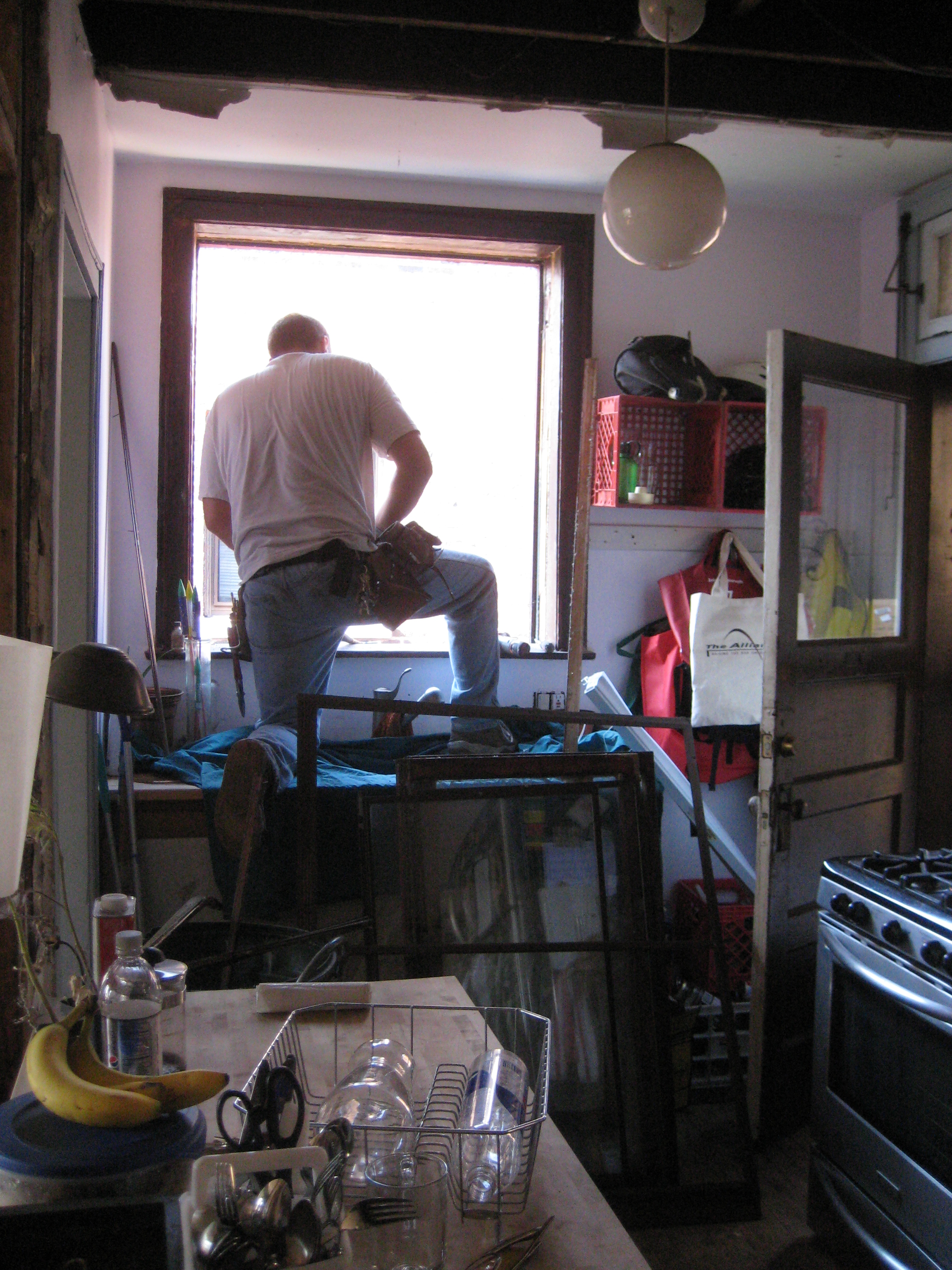 The following post is by MPFJ staff writer, Melissa Batai. Melissa is a freelance writer who covers topics ranging from personal finance to business to organics to food. She blogs at Mom’s Plans where she shares her family’s journey to healthier living and paying down debt.
My husband and I previously lived in an area where both home prices and annual property taxes were well outside our financial means, so we always rented. When we moved to a new area of the country, we could finally afford a home, so, last year, my husband and I, both in our 40s, finally made the leap to home ownership.
We’ve now lived in our home for 13 months, and we’ve learned a lot, especially about the importance of saving for home repairs and maintenance.
Home Repairs—It All Has to Break at Once
The home we purchased is 18 years old. We knew buying the place that it had its original central air conditioning unit, and with a lifespan of 15 to 20 years, we’d likely have to replace the unit sometime. Since we live in Arizona, surviving without central air is not an option. At $4,000 to $6,000 for a replacement, this home improvement is not a cheap one.
However, that was the only home repair we knew would be coming up soon; the rest of the house passed inspection with flying colors.
Since we moved in, we’ve had several issues that have come up.
The hot water heater burst the first week that we moved in–$560. This went undetected for a few days, so the water leaked into our pantry. The previous owners had given us a homeowner’s warranty, so part of the cost of repairing the hot water heater was covered, but we still had a significant amount to pay out of pocket. In addition, the realtor nicely sent over her contractor to open up the drywall and dry the wet interior. Unfortunately, he never came back to fix the job, so we still have a large hole in our drywall in the pantry and will need to get that fixed at some point.
Air conditioner repair/maintenance–$200. Our first summer here, we didn’t have any trouble with the air conditioning. This summer, I noticed that our air seemed to be running more often and that it wasn’t as cool in the house. In July, our electric bill was $120 more than usual, so I called a repairman. He replaced two pounds of Freon and charged us $200.
Yep, the air conditioner is about ready to give up the ghost, but it will probably bleed us to death financially first.
Home repair tools–$200. Since we always rented, we had to buy basic home repair tools like a ladder, saw, leaf blower (we don’t have leaves but little pieces that drop from our trees and can’t be raked up because our “lawn” is not grass but rocks), etc. My husband discovered that one of our trees was growing into our cement fence, so he had to buy tools to cut down the tree before the tree could push the cement blocks out of place, causing a more expensive repair.
We’ve also had other cosmetic issues that we’ve put off but that will need attention at some point:
Broken doorbell. The doorbell worked during the home inspection, but it hasn’t worked since then.
Broken window treatments. The previous owners left us two blinds that fall down if you try to pull them up. They need to be replaced, but that hasn’t happened yet.
Patio paint. The whole house’s exterior was repainted before we bought it. Our outdoor patio has a roof over it. The previous owners painted the cement ceiling that people can see above the patio. In the 13 months that we’ve lived here, huge patches of paint have come off the ceiling.
How Much Should You Save for Home Repairs
According to US News, “On average, homeowners will spend between 1 to 4 percent of a home’s value annually on maintenance and repairs, which tend to increase as the house ages.” That means if you bought a $200,000 home, you should be setting aside $2,000 to $8,000 annually for repairs, which is no small chunk of change.
However, most people don’t do that, and I can understand why. That’s a lot of money to set aside for an emergency that may, or may not, happen this year.
“‘People know that if they ignore maintenance checks at the 30,000-mile mark on their car or don’t go to their dentist, they could have more serious and more expensive issues to contend with, but we don’t always give our homes the same preventative checks,’ says David Lupberger, a veteran contractor and principal at remodeling and contracting consultancy Remodel Force. ‘The mindset is, if it’s not leaking or smoking, I have time’” (US News).
Considering “just 38 percent of Americans said they could cover an unexpected emergency room visit or even a $500 car repair with cash on hand in a checking or savings account” (CNBC), many, many of us are not saving for unexpected home repairs.
Why You Should Save 1 to 4% Per Year
When we’re talking so much money, why should you save 1 to 4% of your home’s purchase price per year? The answer is simple. Fairly easy repairs, like replacing a water heater, may only cost as much as 1% of your home’s purchase price, but other repairs, like a new roof, can cost much, much more.
If you save 1 to 4% per year, that will allow you to have cash for basic repairs while still saving for bigger repairs that will occur later, like replacing the air conditioning or heating or the roof.
How to Start Saving for Home Repairs and Maintenance
Let’s be honest, when it comes to home repairs it’s not a matter of IF a home repair will come up, but WHEN.
But many people can’t get beyond the sticker shock of saving 1 to 4% per year, especially if it means $2,000 to $8,000 or more annually! However, there are strategies you can use to make it easier to save.
Save what you can. If your budget is tight, like so many people’s, focus on what you can do. Set aside a dollar amount to put into savings. Right now, for my husband and I, that means setting aside $50 a month for home repairs. Yes, that’s only $600 per year, but it’s better than saving nothing. Start where you’re at.
Make your savings automatic. Once you decide on an amount to set aside every month, make your savings automatic. Set up automatic withdrawal from your checking account to a designated account so you don’t even have to think about saving the money.
Increase your savings with each raise you get. As you earn more money, set aside a portion of the earnings to go to your home repair/maintenance fund. Maybe this year, you can only save $50 a month, but maybe after a raise next year, you can bump that amount up to $75 a month. Keep doing this year after year, and you’ll be well on your way to saving 1 to 4% of your home’s purchase price for repairs.
Bank unexpected money. Rather than blowing your tax refund (if you get one) or any unexpected rebates or reimbursements that you get, put some or all of that money in your home repair/maintenance fund.
Invest the money. You don’t want to invest your home repair/maintenance money in the stocks, but you could invest it in mutual funds or a checking or savings account that pays a higher rate of interest, especially as the amount you have grows. By doing this, the money is still liquid, but you are earning more interest.
How about you all? Do you have a home repair/maintenance fund? If so, what percentage of your home’s purchase price do you set aside per year?
Share your experiences by commenting below!
***Photo courtesy of https://www.flickr.com/photos/vinzcha/3898537817/in/
How to Build Credit as a College Student

College is amazing—lots of new experiences and new life changes. Even though you’ll be very busy, it is important to also understand that now is the best time to start building your credit for all the other financial changes that you’ll experience after college. From buying your first car to buying your first home, you want to build up your credit while you’re in college so you run into fewer difficulties when those important financial milestones come up.
Here are just a few ways to start building your credit now as a college student:
- Put utility bills and student loans in your name.
If you have bills in your name that require regular payments, this will count toward your overall credit score. Paying cable, gas, water, electricity, or cell phone? Put them in your name! If your roommate(s) are also trying to establish good credit for themselves, consider each of you having one bill with your name on it so that you each can start building up your credit now.
If you have student loans, putting them in your name can also help build your credit.
The most important thing here is that you pay your bills ON TIME. By putting these bills or loans in your name, it is important that the bills are paid on time or else your credit score will suffer.
While you’re at it, be sure to pay off the balance on each bill every month. Carrying over a balance might incur some interest charges as well as look bad to creditors.
- Enroll in credit cards in your name:
Apply for your very own credit card in your name! Make sure you’re not applying for several all at once, and DO NOT under any circumstances agree to co-sign with your friends. If you co-sign on a friends’ card and they slip up by not paying a bill on time or they spend a lot more than they can afford, not only will your friends’ score suffer, but YOUR credit will also suffer.
The same goes for all your other bills in terms of how to maintain good credit with your new credit card: pay your bills on time every month, and pay your balance in full. Try to only use the card for emergencies or small purchases only in order to keep your spending in check and to be sure you can actually pay off the balance every month.
There are many ways to start building your credit early. By following these tips, you’ll be well on your way to financial independence during college and beyond!

Automate Your Savings To Save More Money Quickly

 The following is a post by MPFJ staff writer, Toi Williams, who is a professional personal finance blogger of Fine Tuned Finances. She has backgrounds in personal finance, sales, and real estate.
According to the U.S. Bureau of Economic Analysis, Americans saved roughly $646.3 billion collectively in June. That figure translates to about 4.8 percent of our disposable income. That savings rate is dismal, even though it was up slightly from May. At its most recent peak in December 2012, the savings rate was about 11 percent.
The picture for adults under the age of 35 is even bleaker. In 2014, adults aged 35 and under had a savings rate of negative 2 percent, according to data compiled by Moody’s Analytics. If you are one of the millions of Americans that are not saving enough for the future, don’t despair.
There are a number of methods you can use to automate your savings and save more money quickly. Automating your savings is important because it allows you to continuously save without having to think about it. It also reduces the chances that you will divert the funds for other spending.
Here are some of the best methods to use to automate your savings:
Automatic Direct Deposits
The easiest way to automate your savings is to have the amount you want to save taken out of your paycheck each pay period. Many of the companies that offer direct deposit for paychecks also allow employees to split their check into several different bank accounts. You can have a specific amount or a set percentage of each check deposited into a savings account with the rest deposited into a checking account for spending.
Automatic Money Transfers
If your employer does not provide direct deposit services, you can still automate your savings by setting up an automatic transfer from your checking account to your savings account. Simply log on to your bank’s online portal, determine the amount that you would like to transfer, choose a monthly transfer date, and confirm your choices. Every month, the amount chosen will be automatically transferred from your checking account to your savings account without you having to take any further action.
Sign Up For A Round-Up Program
Several banks now offer a feature where they round up your account transactions and deposit the difference into your savings account. For example, if your debit card purchase from a grocery store totaled $87.60, the bank would deduct $88 from your checking account and deposit $0.40 into your savings account. As anyone who has every saved their change knows, these small increments can add up to a considerable amount of money over time.
Apps That Automate Your Savings
Acorns – The Acorns app automatically invests your spare change in exchange-traded funds. When you purchase items with your credit or debit card, the app rounds the purchase up to the next dollar and invests the difference in previously chosen investments. The service is free for anyone that is under 24 years of age or that is currently a student.
Betterment – The Betterment app allows users to set up automatic deposits that are then invested according to the users’ age, investment horizon, and risk appetite. Betterment then checks your portfolio daily and will automatically rebalance it through buying or selling securities or using deposited cash to purchase additional securities. The program is fully customizable and the parameters can be changed at any time.
Digit – The Digit app analyzes how you spend your money. When it detects that you have extra cash, it automatically deposits it into an FDIC-insured Digit savings account for you. When the money is in your Digit account, it can only be transferred back into savings. It is an easy way to save a little extra money each month.
Qapital – The Qapital app lets users set up savings targets tied to certain financial parameters, such as spending. When a user spends a certain amount of money in one of those parameters, a predetermined amount of money is transferred to a savings account. There is also a feature that lets freelancers save a set percentage of their income automatically to pay their quarterly taxes.
Simple – The Simple app from BBVA allows users to designate a small amount of money that will be transferred to their savings account from their spending funds in small daily increments. Because the transfers are occurring in small amounts on a daily basis, the user will not even miss the money from their account.
Final Thoughts
Automating your savings will save you a lot of time and effort while ensuring you are putting money away for the future. While these options are generally “set it and forget it,” you should still review these accounts on a regular basis to ensure that you are making progress towards your savings goals.
During your review, you may find that upping your contributions to your savings accounts are in order or you may find that too much money is leaving your checking account. Rebalancing these contributions on a regular basis based on your financial situation can increase your future financial stability.
These saving methods work best when the money is allowed to remain in your savings account for a long period of time. Emergency savings that may be accessed at any time should be kept separate from your long-term savings in an easily accessible account with no withdrawal penalties. Your long-term savings should be stashed in an interest bearing account so that your money can grow over time from interest payments.
How about you all? Have you tried any of these automatic money saving strategies? Do you have other automatic money saving strategies you’ve tried successfully?
Share your experiences by commenting below!
***Photo courtesy https://www.flickr.com/photos/68751915@N05/6355251231

Can Ryan Broyles Inspire You to Spend Less Than You Earn?

 The following post is by MPFJ staff writer, Melissa Batai. Melissa is a freelance writer who covers topics ranging from personal finance to business to organics to food. She blogs at Mom’s Plans where she shares her family’s journey to healthier living and paying down debt.
What’s the rock bottom salary that you can have to support you and your family?
If you’re like most Americans, your rock bottom salary is what you’re currently making.
Perhaps you scrimp along, barely making ends meet. You’ve paid your dues living on a low salary. As your income increases, you spend more, year after year, after year.
“After all, don’t you deserve to reward yourself with an SUV after years of driving a compact clunker? The tendency to spend more as you earn more is known as lifestyle inflation—and it can affect you whether you make five figures or seven” (Forbes).
If those of us on an average income have trouble managing lifestyle inflation, imagine that you’re a millionaire, and you’re surrounded by other millionaires. Would you be able to live off of a “typical” salary? Would you be able to resist the urge to keep up with the millionaire Jones’ next door who are spending their money, as the proverbial saying goes, as if there’s no tomorrow?
Think, for just a minute, about the challenge to resist lifestyle inflation when you have money. . .lots of money.
So is the case for Ryan Broyles, the Detroit Lions wide receiver who signed a contract for $3.6 million in 2012. Yet, he and his wife live on just $60,000 a year.
ESPN reporters, when discussing Broyles’ financial decision, share that “78 percent of NFL players and 60% of NBA players file for bankruptcy within 5 years of retirement.” The reporters go on to discuss the lavish spending of other pro players including Jalen Rose who spent $60,000 once on a cell phone. A cell phone!!
Yet Broyles and his wife (and new son), despite the constant financial temptation around them, are living on $60,000 a year, just $7,750 more than the median American income of $52,250 according to Business Insider.
If Broyles can live on so much less than he earns despite his surroundings, can you, too?
Simple Strategies to Live on Less Than You Earn
Before you complain that you can’t possibly live on less than you earn, think about the 78% of NFL athletes who also believe they can’t live on less than they earn. After all, they have managers, gardeners, personal assistants, trainers, housekeepers. . .They can’t possibly cut corners. Many of them are used to a certain lifestyle and have trouble imagining their lives without all that they now have.
Regardless of your current income, you, too, are used to your current standard of living. Changing it, imagining living on less, when all you want to do is to live on more, is difficult. So, start slowly. Don’t make all of these changes at once, or you’ll be miserable. Instead, slowly change over the next year or two.
Make a budget
I know; I know. Making a budget is about as pleasant as having a root canal. However, making a plan for your money helps you avoid the temptation to overspend. The best way to succeed is to make the budget realistic. If you currently spend $300 a month eating out, don’t drop that amount to $0. Instead, drop it to $250 this month, then $200 next month, then $150 the month after.
Stick to a budget
Once you make the budget, you must stick to it. There are thousands of ways that you can pitter away your money without thinking much about it. You might buy a candy bar and a pop when you get gas. Maybe you pick up a magazine at the grocery store checkout. If you find that you’re overspending, take a month to write down all of your purchases or track them on your smartphone. You may be surprised to see the many ways you’re leaking money.
Cut your grocery bill
Besides your mortgage or rent, groceries are often the second largest expense for a family. I’ll be honest, for our family of 5, we used to spend $900 to $1,200 a month. I bought all organic—meat, veggies, fruit, etc.
Over the last two years, I’ve whittled our grocery spending down to $500 to $600 a month. It’s not been easy, and I’ve had to give up some of my food preferences (like eating all organic). Instead, I found changes we can live with.
- We eat more bean meals now.
- We eat organ meat, which is still a challenge for me.
- We always buy organic for the dirty dozen, but I will buy conventional produce, too.
- We buy in bulk when items are at rock bottom prices.
- Most importantly, I learned to shop from the pantry and freezer, choosing to make meals based on what we already have at home.
I have always meal planned, but if you don’t regularly, start with this simple step. Make a meal plan. When it’s 5:30 p.m. and you have no idea what to cook for dinner, simply look at the meal plan and start cooking. You’ll save yourself a drive to the local fast food restaurant.
Another good strategy is to make some freezer meals, so if you have a crazy week, you will have food at home waiting for you.
Kick the dining out habit
I know how hard this is. I once had a blog exclusively devoted to dining out, so I know how convenient it seems to eat out and how enjoyable it can be. But you will save so much money if you don’t eat out or you scale back on the frequency of dining out. And I promise, after a while, you won’t miss eating out. And when you do dine out, you’ll enjoy it all that much more because it will be a treat.
Curb your entertainment bill
Entertainment costs many families quite a bit of money, but it doesn’t have to. There are plenty of low cost entertainment options.
- Get movies from the library or through a Netflix subscription.
- Have a family game night.
- Cook restaurant quality meals at home together.
- Attend local free events.
With some creativity, you’ll find that entertainment can become a very small line item in the budget.
Lower your utility bill
You can save money on your heating or air conditioning bill by making gradual changes to the temperature. We live in Arizona where air conditioning is needed six to eight months of the year. Last year we kept the air at 80 degrees. This year, we’ve kept it at 81 degrees. Next year we may try to raise it to 82 degrees. Gradually change the temperature you’re used to, and you can save money.
If you look at this list of cost cutting strategies and think, “If I do all of these things, I’ll have no life”, I just want to reassure you, you’ll have a life. You’ll have a good life; it will just be different than the life you’re currently living.
Think of Ryan Broyles living on $60,000 a year. He’s not hurting by living on that income, but I’m sure he’s not dining out every night, either. He’s certainly not living lavishly like his teammates. But he’s building for his future through his investments. You can do that, too.
How about you all? Do you routinely spend less than your income, or do you constantly feel like you’re trying to make ends meet? What is your favorite way to keep more money in your pocket?
Share your experiences by commenting below!
***Photo courtesy https://pixabay.com/en/piggy-bank-saving-money-young-woman-850607/
From Enrollment To Investment: My HSA Experience

 The following post is by MPFJ staff writer Travis, who blogs at Enemy of Debt where he candidly shares his family’s financial struggles, failures and successes. As a father and husband, he provides a unique perspective on balancing debt, finances, and family.
Last year I made a major change regarding my health insurance, switching from a low deductible preferred provider organization (PPO), to a high deductible PPO with a health savings account (HSA) It wasn’t what I originally intended to do when I began investigating my health insurance options for 2015, but after hours of research I made the decision believing it would not only be the best choice for my family for the following year, but for long into the future.
Flexible Savings Account (FSA) vs. Health Savings Account (HSA)
I originally intended to keep the high deductible PPO that I’d had for over a decade. My intent was also to add a flexible savings account (FSA) which have the following characteristics:
- Funds are contributed pre-tax from my paycheck
- Funds are front loaded meaning if I indicate I will contribute $200 a month, the full year’s contribution of $2400 is available on January 1st.
- Funds must be used by the end of the year, or the funds are lost
- Low deductible medical coverage
- Great medical coverage including preventative and general office visits
- High monthly premiums
This option was attractive to use because our daughter needs braces, and the FSA would allow us to have our full year’s FSA contributions available at the beginning of the year. We could move forward with the braces on January 1st should we wish to do so.
I was ready to pull the trigger, then I started reading about the high deductible PPO with an HSA also offered by my employer which has the following features:
- Funds are contributed pre-tax from my paycheck
- $500 of automatic employer contributions
- $1100 of additional healthy living incentives offered in the form of additional employer contributions
- Funds can be rolled over from year to year, and invested for growth
- High deductible
- Only preventative care is covered until deductible is met
- Low monthly premium
The HSA option appeared to fit our family’s needs perfectly. Doing the math, I found the premium for the high deductible PPO plus a $250 monthly contribution to my HSA would result in an almost identical monthly payment as my health insurance premiums in 2014. The difference is that the $250 a month contribution, or $3000 for the year, would go into an account that I could use for medical expenses. Add to that the $1600 of total potential contribution from my employer, and my family would have $4600 available to pay for medical expenses.
My medical records show that the billed amounts (prior to insurance payouts) of our medical expenses for the past two years barely added up to $1000 per year. This clearly indicated that the high deductible PPO with an HSA was the right choice for our family.
Was an HSA the Right Choice?
As we approach the end of summer, how has my decision worked out for us? Here’s a breakdown of the numbers thus far in 2015:
- Total pretax contributions : $1900
- Total Employer contributions: $650
- Total Medical Expenses: $1487
Current Balance: $1063
At first glance it would appear that our medical expenses are higher than the last few years. However, what the numbers don’t reveal is that we used our HSA funds to pay for glasses and contact lenses for our family. This is something that has traditionally been paid for out of pocket. With the HSA, I actually feel more prepared for having a family member need to go to the doctor because I know that I have funds available to pay the bill, and don’t have make several phone calls to our medical provider and insurance company trying to make sure I know what’s covered, what’s not, and why.
Additionally, I have $950 worth of incentives that I haven’t earned yet. I’ll easily have those taken care of in the next couple of weeks, giving our HSA balance a nice bump.
Time To Invest My HSA Funds
Now that I’ve accumulated a healthy sum of money in my HSA, it’s time to revisit one of the advantages of having it; investing the funds for faster growth. I saw that I earned a few cents in interest from my HSA balance since it’s sitting in the default savings account for fast access. Surely I could do better than that!
My HSA allows me to search for a stock symbol, plug in an amount, and in the touch of a button a purchase is ordered. It also allows me to choose from a wide variety of stock and bonds. Finally, it let’s me create something called a basket in which I can buy and sell a grouping of stocks (which I specify) as a single entity.
While I like the flexibility of the investment options offered by my HSA, I’m not all that thrilled with it’s simplicity. I much prefer the investment options offered by my 401K program in which I can choose from investment funds that the managing brokerage creates, and tracks it’s performance. There certainly is room for improvement here.
Note: The inner workings of my HSA is specific to the product offered by my employer. If you have an option of having an HSA, check with your employer or HSA administrator for details of your specific HSA.
It’s often suggested that a person keep some amount of their HSA in the default savings account for fast access. For my personal situation I don’t see that as necessary since my medical provider sends everything to insurance before a bill shows up in my mailbox. From the time I receive the bill until it’s due is another couple of weeks, giving me plenty of time to sell some of my investments if necessary to pay the medical bill.
I’m not planning on needing the bulk of the funds for many years, so I could go a little more on the high risk side with my investments to try to achieve maximum growth. Unfortunately, due to the way my HSA is administrated, I may end up going with something on the low risk side, or consulting a financial advisor regarding how to best invest my HSA funds.
I know I made the right choice regarding my health insurance options by enrolling in a high deductible PPO with an HSA. But it’s now time to move on to the next step and maximize the growth of the funds in my HSA.
How about you all? Do you have an HSA? What investment options does your HSA offer, and how have you invested your funds?
Share your experiences by commenting below!
***Photo courtesy phasinphoto at FreeDigitialPhotos.net

Get Your Dorm Room Ready For Freshman Year at College

 The following is a post by MPFJ staff writer, Kevin Mercadante, who is a professional personal finance blogger, and the owner of his own personal finance blog, OutOfYourRut.com. He has backgrounds in both accounting and the mortgage industry.
College is just a few weeks away, but you still have some time to get what you need to set your dorm room up with all the comforts of home, and to do so for not a lot of money.
Here is a list of 10 must-have items for the upcoming college school year. Have them in your dorm room, and the whole year will go better for you.
1. Earplugs – Or a Good Set of Headphones
“Ear protection” is at the top of the list, since silence is often at a premium in college dorm rooms – not to mention college dorms in general. This is especially true if one or more of your roommates is a party animal, or likes to listen to loud music. Earplugs will be the budget ear protection, and you can get these for just a few dollars at any pharmacy chain.
But a good set of headphones will be the better route, since it sometimes takes preferred noise to drown out the annoying variety. Shop for the best headphones you can find at Best Buy, then order the same set on Amazon.com for a lot less.
2. Mini-Fridge
Burning the midnight oil is hardly an uncommon occurrence in the college universe, especially during exams. But it’s unlikely that the cafeteria will be open that late at night. And sometimes even during the day, you will want a cold drink, or have the need to preserve food for daytime snacks and meals when you just don’t feel like leaving your room.
Target and Walmart are generally where you’ll find the best prices on a decent mini fridge. But if you want to save even more money, check out a local thrift store, or even a garage sale. Since the fridge will be in a room with multiple occupants, you want to spend as little for this as possible, against the chance that it might be damaged.
3. A Supply of Common Over-the-Counter Medications
Headaches, upset stomachs and chest colds don’t disappear when you leave home. In fact, they may be even more common in a college dorm. For that you will need to lay in a supply of common over-the-counter medications. This can include Tylenol (or some other preferred pain reliever), nasal decongestant, cough syrup, antacids, vitamins, and even Band-Aids and disinfectants.
It’s best to buy the smallest packages of each, and to buy storebrand varieties that are available at local grocery stores. There are two reasons for doing this:
- You want your medicine supply to be as inconspicuous as possible, so that you can avoid becoming your dorm floor’s medicine man/woman, and
- In case one of your roommates hits you up for some of your medications, you’ll be providing them with the least expensive brand available.
4. A Clothes Hamper
This is especially important if your practice at home is to simply allow your laundry to accumulate in a corner of your bedroom. Not only will a clothes hamper help to organize your laundry routine (a full hamper will be the signal that it’s time to do your wash), but it will also help you to avoid commingling your clothing with your roommates dirty laundry.
Once again, Target and Walmart are likely to be the least expensive sources for this item. And while you’re at it, stock up on some inexpensive store brand laundry detergent.
5. A Desk Lamp and a Reading Light
Your dorm room will almost certainly come equipped with a desk, but you shouldn’t assume that that will include a desk lamp. Since it’s entirely possible that you will spend at least as much time at your desk as you do in your bed, you need proper lighting. You can find a good quality desk lamp for not a lot of money at Staples, during their back to school sales, typically held in August and early September.
Also look into a reading lamp so that you can read and study in bed after the lights are out.
6. A Coffee Maker and Related Items
Naturally this applies only if you are a coffee drinker, but it can also serve as a hot water source for tea, if that is your preference. There are usually entire shelves filled with coffee makers in thrift stores, typically selling for no more than $3 to $5.
While you’re at it, don’t skimp on coffee filters and a decent quantity of your favorite coffee or tea brands. You can save a bit more by buying these at a dollar store, particularly if you are not hung up on the brand.
7. A Comfy Mattress Pad
College dorm room beds are not known for being the most comfortable sleeping accommodations. But you can change that situation by adding a mattress pad on top of the bed, right underneath the fitted sheet. A couple of extra inches of foam could guarantee a better night’s sleep throughout the school year.
You can try Bed, Bath & Beyond, but you’ll almost certainly find a less expensive version at Walmart.
8. Microwave Oven
It’s almost a certainty that you will want something quick and hot, and on more occasions than you might anticipate. Simply having a microwave oven to heat up soup or a packaged hot meal, could save you a trip to the cafeteria, and give you more time for studying, relaxing, or sleeping.
Thrift stores or garage sales will be your best sources, since they usually have plenty of them. And since the oven will likely be used by your roommate(s) (and their guests), it’s better that it’s not brand-new.
9. Bed Linens
These will be especially important if the dorm room bed is a non-standard size. A bed that is just a few inches longer than a standard twin size bed will not fit the sheets that you probably have.
Cost can be a factor here. Bed linens are not cheap to begin with, but non-standard sizes are even more expensive. WalMart and Target will likely be your best sources on the price side, but keep your eyes peeled for sales. Especially since you’ll probably need two sets of bed linens, that way you can have one on the bed while the other one is in a hamper waiting to be washed.
10. A Fan (or Space Heater)
Room temperature can be an issue when you are sharing a room with a stranger for the first time. If your roommate likes to keep the room on the warm side, a fan will be a welcome tool. At the opposite end of the spectrum, if your roommate likes it cool, even in the dead of winter, you may need a space heater kept close to your bed in order to keep peace in the room.
Fans are inexpensive in late summer, since they are close to being mothballed for the winter. But space heaters may be at a premium, since it isn’t quite cold enough for them yet, and there probably aren’t many available. Search the web to see where you can get the best deals, and don’t rule out a visit to a thrift store or two to see what you can find.
Anticipate your needs for your dorm room, and give yourself time to find the best deals that way you won’t spend more money than you need to.
How about you all? What are some dorm-room essentials you can think of?
Share your experiences by commenting below!
***Photo courtesy of https://www.flickr.com/photos/mattnazario/13971207088/in/

Quick and Frugal Summer Meals

 The following is a post by MPFJ staff writer, Jeff. Jeff writes about reducing waste, saving money and building freedom at his website, Sustainable Life Blog.
I have been living on my own for over 10 years now, and after a bit of thought, the one thing that can save you loads and loads of money over time is to eat food that you prepare at home, instead of purchasing take out or heading out to a restaurant. While I still eat out more than I like (which honestly pains me because I live in a small town and honestly think I’m a better at cooking than every dining establishment in my town but 1), I’ve cut way back over the years.
This has saved me a boatload of money over the years and I’ve really grown to like cooking. it’s turned into a fun and fulfilling hobby for me.
So, now that it’s summer time and it seems like there’s always a party to attend or some other function to take advantage of the nice weather everywhere around you it makes cooking at home much harder. I get that, and I’ve fallen victim to that same struggle just this week.
However, since I know it costs a ridiculous amount of money and I’ve been cutting back HARD, I wanted to share a few easy to prepare and quick recipes with you that you can throw together in less than 15 minutes. These dishes are all great and fairly cheap. Without further complication, here are some of my favorite recipes (taken from a New York Times article quite a while ago).
Crab Sandwiches
Combine crab meat (can use real or imitation) with a bit of mayo, Dijon mustard, chives, tarragon and salt and pepper in a bowl. Mix well. Serve mixture in a sandwich – tastes great if you toast the bread first – with potato chips on the side. I really like this one because aside from the crab meat, I typically have all of these laying around the house. I also try and keep some crab meat in a can on hand so I can whip this up for dinner quickly. The crab meat makes this a bit more expensive than other recipes in this list, but it’s still cheaper than eating out.
Tuna Pasta
This is one of my favorites. As soon as I tried this recipe, I fell in love with it and I started making it for dinner guests. One of those guests was my wife, and she soon fell in love with the pasta (and with me). Very quick to prepare and cheap, it’s fantastic. The cornerstone of this recipe is the tuna, and you need to make sure you get tuna in olive oil, and not tuna in water. I’ve found the most common brand is this genova tonno, and you can get it for about 2 bucks a can. Here’s how you make it:
Start your pot boiling with water and add pasta. The best pasta for this is rigatoni, farfelle, penne or similar. Spaghetti or similar does not work well with this. Boil your water add your pasta then get to the rest of the dish. Combine your tuna, halved grape tomatoes, black olives (whole or slices), chopped mint, lemon zest (I usually forget about this and don’t add it) and red pepper flakes. Season with salt and pepper and adjust spices as necessary. Toss pasta with tuna mixture, cut with olive oil as needed.
These are two of my favorite recipes to eat during the summer. Both are quick, easy and cheap! They also don’t need anything that you cant store in your pantry for a while (except for the cherry tomatoes) so you can keep ingredients for this on hand and use it as a go to recipe if you’re out of ideas.
How about you all? What are some of your go-to recipes to make sure you eat at home? Do you have other ideas for saving money on at-home meals?
Share your experiences by commenting below!
***Photo courtesy http://cdn.morguefile.com/imageData/public/files/m/MaxStraeten/07/l/1406189189fgnxh.jpg

3 Money Scams To Watch Out For

 The following post is by MPFJ staff writer Travis, who blogs at Enemy of Debt where he candidly shares his family’s financial struggles, failures and successes. As a father and husband, he provides a unique perspective on balancing debt, finances, and family.
We all work extremely hard for our money. By the fact that you’re reading this blog I’d be comfortable in guessing that you also put an effort into managing your money as well. You may create a spending plan, be on a constant lookout for ways to get the most for your money, and save for retirement. But there’s something else we all need to pay attention to.
I’m talking about money scams. There are people out there that want to take your hard earned money instead of putting in an honest day’s work. Here are three scams that I’ve personally experienced .
Free/Cheap Vacation Scam
College kids are notoriously broke. Scam artists know that and try to take advantage of it. In January of my second year of college I got a call from someone that offered me a 3 day 4 night cruise for the promotional rate of $149 a person. All I had to do was get myself to Florida. I instantly envisioned using this trip for Spring Break for my girlfriend at the time and myself. I thought I was being careful, I asked several times if there were any additional fees, taxes or costs that he wasn’t telling me about. He emphatically denied it, until I gave him my credit card number. Then he said that there were a few things that I should know about, and started rattling off a long list of things that I would be responsible for paying. My heart sank.
I listened to the rest of his pitch, and hung up. I immediately called my credit card company, told them what had happened, and asked to stop the charge, which they happily did. The company offering me the cruise tried to call back a few times, but I simply didn’t answer the call.
Lesson Learned: If it sounds too good to be true, it probably is. The question you have to ask yourself is, “Why is this company calling me unsolicited wanting to give me a ridiculous price on a cruise?”
Computer Virus Scam
This one is going around right now; I’ve personally received this phone call several times. The caller claims to be from Windows support, and states that your computer is likely infected with a virus. They go on to tell you that they’ve been receiving error messages from your computer and want to verify that they are indeed calling the right person. They have you run a few commands that supposedly give you an identification number that is unique to your computer. What they’re really having you display is a simple version number of a piece of the Windows Operating System. It’s the same on every computer running the most recent version of Windows. But it sounds legit, and people continue on convinced that they are indeed infected with a computer virus.
My dad was one of these people. He followed their instructions to allow them access to his computer, at which time they actually infected my dad’s computer. Then they offer to help him by selling him their software for $100. My dad eventually caught on and hung on them. I’m glad he didn’t waste $100 on their product, but it took my brother and I a few hours to reverse the damage that these scammers did to his computer.
Lesson Learned: The thing that should instantly raise a red flag is that the caller used the term “Windows customer support.” They never used the company’s name, Microsoft. I’ve gotten this call several times, and asked them flat out if they were from Microsoft as I know they would be liable for a lawsuit if they said they were. They danced around the issue, continuing to repeat they were from Windows support. Never give someone access to your computer that you cannot verify their credentials.
Automobile Extended Warranty Scam
I recently received a postcard in the mail stating that a Technical Service Bulletin had been issued for my mini-van. TSBs are a real thing that auto manufacturers use to communicate to consumers defects or recalls to their vehicles, so I called the number on the postcard.
The man who answered the phone had me repeat the TSB number printed on the mailing and then asked me if I had purchased an extended warranty on my van. When I indicated that I had, he apologized for the inconvenience, said that he would update their database, and they would not be calling again. There wasn’t anything wrong with my van; they were simply using the term TSB to get me to call them in an attempt to sell me an extended warranty.
Lesson Learned: Look over any mailing that prompts you to call a number very carefully. If you get a mailing regarding an automobile you own, ensure it was sent from the manufacturer. Looking at the postcard again, there was no indication that it came from the manufacturer, nor was the number for my local dealership which is what has happened in the past when I was alerted to a TSB. Also, on the bottom of the post card was some print stating I received the postcard because I had requested to be put on the national do not call list. That in itself indicates that it is simply a solicitation.
There are people out there that are looking to prey on people’s lack of knowledge, or failure to pay attention to details. Guard your money closely!
How about you all? Have you come across any of these or any other scams? What other scams are out there that people should be aware of?
Share your experiences by commenting below!
***Photo courtesy Stuart Miles from freedigitalphotos.net

Saving Money with DIY

 The following is a post by MPFJ staff writer, Jeff. Jeff writes about reducing waste, saving money and building freedom at his website, Sustainable Life Blog.
I have found that as I’ve gotten older, the skills to fix things (or the ability to YouTube the procedure) has come in quite handy when trying to keep costs down. If you own your own home, this is crucial, as you want to get things back to working order as cheaply and quickly as possible and may not have the spare money it takes to pay someone, or the time to wait for them to come to your place and do it.
Personally, I think there are plenty of reasons to at least try to fix something yourself, and here are a few of them.
Save Money
One of the first times that I realized how much I could save was when the heating element in our then-electric oven burnt out. It was quite the smoldering heap, and I had absolutely no idea how to fix it. We got a bid from someone, but they wanted over 100 bucks to come by and fix it, and I just didn’t want to spend that much money. I talked to a friend who suggested that I do a bit of research on YouTube.
I started looking and found exactly what I needed. Even though I’d never done work on any appliance before (much less an oven) I decided that I could at least give it a try. My oven was already broken, so I didn’t have much to lose.
I went to the appliance store and bought the part needed for $30 or so, and went in and fixed it. It didn’t take that much time and all I had to do was follow the video. Pretty easy way to save money if you ask me.
Nothing to Lose
The last time I ran into a problem with our fancy washing machine it wouldn’t work at all, and I had no idea what was wrong. I was not sure what the cost for repair was, so I did a little research and found the most common issue that our washing machine had was something caught in the pump, so I went downstairs to try and see if there was anything in there. Unfortunately, there was nothing in there so the problem persisted.
As far as I saw it before I started trying to fix it, I didn’t have much to lose. My washing machine was already broken, so if I broke it more it wouldn’t matter. A new one was most likely on deck anyway if our fix didn’t work, so why not at least try.
We ended up having someone come out and fix it for around $300, and it probably wouldn’t have been much more expensive if I had messed something up while I was in there trying to fix it.
Opportunities Everywhere
I used to believe that you needed many different skill sets and tools to get any sort of DIY project done, and that it was almost always better to hire someone. I’ve found that you can easily learn these yourself (mostly on YouTube, or through books) and easily fix things if you desire.
There’s also the question of having the correct tools, but I’ve found that once you get past a basic starter kit of tools, you can do most things. For the more specialized tools, you should ask around with friends or try a tool library.
Enough with the excuses, Give it a shot!
How about you all? What do you typically DIY? How much money do you think you’ve saved recently while doing it?
Share your experiences by commenting below!
***Photo courtesy https://www.flickr.com/photos/simplyarundotcom/8096301670/

The Most Important Financial Comparison: Are You Doing Better Financially Than Last Year?

 The following post is by MPFJ staff writer, Melissa Batai. Melissa is a freelance writer who covers topics ranging from personal finance to business to organics to food. She blogs at Mom’s Plans where she shares her family’s journey to healthier living and paying down debt.
Experts offer a rule of thumb for where we should be at certain ages. For instance, “Fidelity Investments recently put together an age-based savings guideline with a range of savings goals. At age 35, you should have saved an amount equal to your annual salary. At age 45, you should have saved three times your annual salary. At 55, you should have five times your salary. When you retire at age 67, you should have eight times your annual pay” (TIME).
Are you discouraged reading this? Do you feel woefully behind?
Or, are you excited and see that you’re right on track or even ahead of the experts’ schedule?
Your answer is highly variable and depends on many factors that the “experts” cannot know or consider.
What Was Your Parents’ Financial Background Like?
As Americans, we like to think that everyone can get ahead and make a name for themselves based on their own skills, ability, and drive. It’s the old pull-yourself-up-by-your-bootstraps mentality.
While there are certainly success stories like that, the simple truth is that if your parents are able to help you as you leave the nest, you’re much more likely to be a success.
I had several friends in college. Some were like me and came from backgrounds where our parents weren’t able to help financially. We took out student loans and may have gone into credit card debt to pay for a college education. After college, we took many, many years to pay back student loans. (It took me 14 years to pay mine off.)
I had two friends in particular who came from wealthier families. One’s dad was an ophthalmologist and the others was a pharmacist. Their parents paid for their college education and gave them a modest subsidy to live off of. When the one, Jake, went to California right after graduation, his dad urged him to buy a house and gave him the money for the down payment. Eight years later, Jake sold the house for double the price he bought it for and bought a larger house when he got married. Today, eleven years later, that house has also doubled in value and is now worth $1.5 million.
I don’t want to discredit Jake’s success because he’s worked very hard and he chose a career in a field that is growing and pays handsomely. However, Jake’s father’s ability to pay for his college education and give him money for a down payment in the expensive California housing market certainly helped him get ahead financially.
What Are Your Priorities?
Another important factor in each of our personal finances is our priorities.
I taught at a community college for ten years before I quit to stay home with my kids. If I had stayed at the job, I expect that I could have made $100,000 a year after working twenty years or so. I left my job just when I was finally earning a nice wage. I gave up a comfortable life to instead stay home with my children. I don’t regret my decision, but it did certainly impact our family financially.
Other people are dedicated to their careers and work long hours. They may find financial success while juggling family responsibilities, or they may forgo having a family. Because they stay in the work force while raising children (or opt not to have children), their salaries continue to grow throughout the years as do their retirement savings.
What Are Your Goals?
Some people retire and want to travel the world. They want to go on a safari and take a cruise. They want to see the world. Others spend time hopping planes to visit their kids and grandkids who are scattered throughout the U.S. Others are perfectly content staying home and volunteering, tending to their home, yard, and garden, and being with friends and family.
What your goal is in retirement will affect how much you save before you retire.
You Never Truly Know How Others Are Doing
What means do we have to calculate how others are doing financially? We make take stock of their cars, homes, and “toys” like boats, motorcycles, etc. We may guess at how much they make, but very few people broadcast their specific salary. What we have are our guess and estimates, and these are often wildly off.
You don’t know if the neighbor with the perfectly manicured lawn and expensive car is deep in credit card debt or if her home carries two mortgages. You also may not realize that your neighbor in the modest house who drives a 10 year old sedan is a millionaire who spends his money frugally. We never know these things. Instead, we compare against externals without knowing the full financial story. There is no point to this, but we do it over, and over, and over again.
Only Judge Your Finances Against Your Previous Finances
It does no good to compare yourself to others and be discouraged. Jake is a world ahead of me financially. Sure, it’s partly because his dad could help him financially when he was young, but now Jake works long hours as does his wife. They chose to have one child while my husband and I have three.
I chose to give up an income and have more children. That choice is reflected in my finances. If I compare my finances to Jake’s without looking at the choices made, I’ll likely feel frustrated and depressed.
Instead, a much better option is to compare my finances to my finances in the last several years. When I look back from the time I had my third child and my husband and I were at our financial lowest (thanks to the loss of my income), I see that each year since then, our finances have improved. My husband is earning more at his job, and I have a freelance income. Each year, we earn a bit more and pay down more of my husband’s student loan debt. Each year, we have a little more room to breathe.
If you have not yet started tracking your net worth each year, I highly recommend doing so as you can learn a lot about your financial situation, especially whether it’s improving or declining, just based on calculating your net worth. For many of us, finances improve S-L-O-W-L-Y, and you can feel like you’re making very little progress. Tracking your net worth will help you see that you are, indeed, moving forward, even if it’s only baby step by baby step.
Besides comparing ourselves to our own finances, my husband and I also look loosely at what experts recommend. However, we remember that the experts’ rule of thumb for retirement savings is just that—a target to aim for. We’re doing the best to reach that goal, but we also know when the kids are older, I’ll increase my workload and we’ll have more money to funnel to retirement, especially since we’re used to living on one income.
Each of us has unique, complicated financial situations created by our backgrounds and our choices. There is no point comparing to others; simply compare against yourself and your own financial progress year after year.
How about you all? Do you find yourself comparing yourself to others financially? Do you compute your net worth every year to see how you’re progressing financially?
Share your experiences by commenting below!
***Photo courtesy https://www.flickr.com/photos/teegardin/5912231439/