

- You are here:
- Home »
- Blog
Reader Profile – Dojo from Dojo Blog
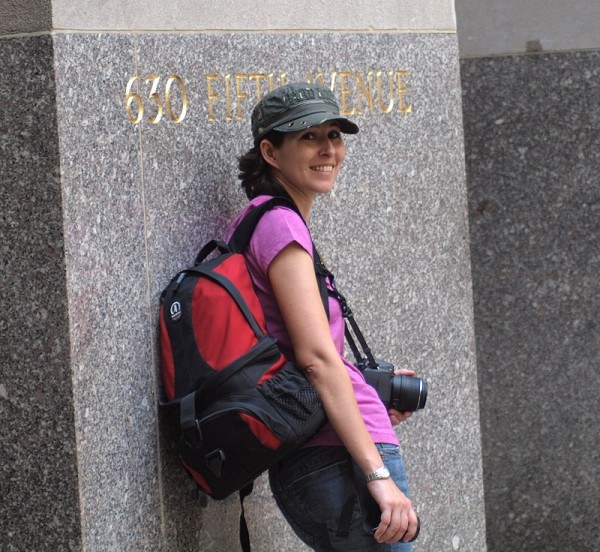 Today, in the ongoing Reader Profile Series, we’re getting to know MPFJ.com reader and commenter, Dojo, from the sites, Dojo Blog and ByDojo. Let’s all give Dojo a big round of applause for sharing her life with us and listen to her story. Enjoy!
Also, if you’re interested in sharing your own financial story/journey with us in a reader profile of your own, just shoot me a quick email, and we can get the ball rolling!
1. Please Tell Everyone a Little Bit About Yourself (Background, Education, Family Situation, etc).
I’m a 35 year old woman, who studied to become a teacher, worked for 10 years as a radio DJ and for the past 4 years is running her own business in web design (a passion that’s been consuming her since 2002). In my case, life proved that you won’t always end up as you planned, but you can still make it, if you’re open to change and willing to work.
On a personal level: I recently got married (we’ve been together for 11 years) and have been pregnant for 6 months, expecting a baby girl (which is exactly what I wanted, so it makes me feel happy and lucky at the same time).
2. Describe Your Current Financial Situation (Who Works in Your Family, How Your Income Is, Your Expenses, etc).
Back in 2009, both me and husband remained jobless.
I lost my job when the radio station closed down and he gave up his job, after seeing the work conditions weren’t as good as before and after getting sick and tired of having everybody take advantage of him. He’s a civil engineer and it’s been really hard for him lately with many construction sites and all the stress from such a job.
We relied on some of his savings, plus he sold some of his coins (he has a pretty nice collection), while I also started freelancing full time as a web designer and taking it more seriously than before. It wasn’t too easy, but we did manage it. I was also in debt (paying for my car), but the payments stopped in March 2012, when my car was paid off completely.
After 3 years of extensive travels (staying in NYC for 6 months at our friends), we decided to become ‘family people’ and he opened a business in the city (he’s doing the heating system’s mandatory 2 year checks – as they are here in Romania). It was pretty costly to set up (the gas analyzer and having him / the company certified cost us quite a lot), not to mention it’s slowly picking up speed, but it’s still OK.
We can live comfortably from my income and he’s also bringing money as much as he can. We’re both debt free and plan on keeping it that way.
Our income is around $30K/year, which is pretty OK for my country. We do pay a lot in business taxes and the regular expenses (mostly his side of the business, since he needs all kids of certifications), but are still left enough money to live comfortably and also save some money.
3. What Are the Current Financial Challenges You Are Facing (Saving, Paying Off Debt, Student Loans, Merging Finances After Being Married, etc)?
The biggest challenge now is to have our girl come to this world (I’m paying for my birth at a private clinic and it’s pretty expensive for the regular income here) and be well prepared for her. We also wouldn’t want to stop traveling (even if not for 6 months at a time) and need to save money for immediate emergencies and also for our retirement.
The retirement/pension system here is almost ‘dead’, so we’ll probably live on the money we saved only. Not such a great perspective, but we’ll make it.
I’m not 100% thrilled with our savings at this moment, but it’s true we did have many things to take care of. My pregnancy also cost us quite some money, but it will be soon over and we can get back to a more predictable budget.
4. What Are Your Plans for the Future (Retire Early, Build Your Career, etc)?
In both our cases, the goal is now to grow our small businesses. He needs to get more clients (which fortunately started happening after 8 months of pretty small income), while I’m constantly working on building my portfolio and client base for my web design business.
I’m also trying to develop my blog and start earning some ‘residual’ income from it, too.
We’re clearly far from being able to retire, which is still OK, since we’re not that old anyway. I’d love to be able to work for many years (even after hitting the retirement age), since I love my ‘job’ a lot and don’t feel it like ‘work’ anyway. We’ll see … There’s a lot between now and those years, especially having to raise our daughter and try to provide her with a good life and education.
5. What’s Your Best Piece(s) of Financial Advice and/or Your General Philosophy on Personal Finances?
What really worked for us was to find out which things make us truly happy. For these, we always paid good money (travels come to mind), while we could save money from other things that are not important to us. We’re frugal in many aspects, but know what makes us happy and pay for it.
We also want to remain debt free and save for anything we want to own. It’s not a very easy thing to do, but with consistency and drive, we’ll make it.
One of the most important advice we can give would be to live bellow your means and NOT feel bad about it. We constantly have people tell us that with the money we earn, we should dress like this and do that. We both have similar goals in our lives and don’t care about how ‘cool’ we look or not in other people’s eyes. What matters most for us is to build a strong financial foundation, not keep up with the Joneses.
CD Rates Suck – But Here’s Why You Need to Be In Them Anyway

 The following is a post by MPFJ staff writer, Kevin Mercadante, who is a professional personal finance blogger, and the owner of his own personal finance blog, OutOfYourRut.com. He has backgrounds in both accounting and the mortgage industry.
A one-year certificate of deposit (CD) paying 0.25% interest doesn’t look appealing on the surface.
And, as a matter of getting a healthy return on your investment, it certainly isn’t. But, don’t be so quick to write off CDs as being worthy of having a place in your investment portfolio. There are compelling reasons to have at least some money in them, even if interest rates are lousy.
Holding investments that are completely independent of stocks
In Investment 101, you learn that diversification of an investment portfolio is foundational. A portfolio invested 100% in stocks – even if they are split between 10 different stock sectors – is not an adequately diversified portfolio.
In order for a portfolio to be properly diversified, there must be a certain percentage of holdings that are totally unrelated to stocks. Though bonds and real estate represent a partial diversification, historically their performance is often parallel with stocks. Sure, they may not be stocks, but if their performance is similar than they aren’t a true diversification.
The best way to achieve true diversification is by holding assets that will be completely unaffected in the event of a blowout in stocks. CDs serve well in this function, because they have virtually zero risk of loss, no matter what is happening in the stock market.
Reducing exposure to equity risk
Whenever the stock market is on a tear – as it is now – it’s very easy for investors to get complacent and sloppy. You might even give it to the temptation of believing that this bull market will continue indefinitely. Rest assured that it won’t.
No one saw the length and severity of the market slides in 2000 – 2002 and again in 2007 -2009. That last one was so bad that many investors are only now beginning to recover their losses, with the Dow Jones Industrial Average having long since more than doubled from it‘s lows.
By having a small percentage of your investments held in non-risk investments – say 20% – you ensure that it will be virtually impossible for you to ever lose all of your investment portfolio. And by holding even that much in non-risk investments, like CDs, means that you will lower your losses in a crash by at least 20% across the board.
One of the biggest problems with major corrections and crashes in stocks is that once they get rolling, any efforts to reduce your exposure are usually too little, too late. What makes this outcome so predictable is human emotion. While stocks are rising, it seems counterproductive to remove any money from the market. That kind of a move only looks smart in hindsight.
A ready cash reserve to buy stocks after the next big slide
One of the truly underappreciated aspects of CDs is that they represent a store of capital that can be tapped in the aftermath of a major market decline. This is another way that CDs represent a true diversification away from stocks. They leave you better able to participate in the future rallies that will follow big market declines.
It is precisely because they are completely unaffected by moves within the stock market that they serve so well in this capacity. We can think of CDs as being an emergency fund for your investment portfolio. When things get really bad in the stock market, CDs become really good to have.
Don’t wait for the next bear market to find this out – especially if you’re something close to 100% invested in stocks right now.
Why not money market funds or online high yield savings accounts?
There are various cash type investments that work in a fashion similar to CDs. These include money market funds and high interest online savings. Why not just invest in those, rather than in CDs? After all, moving money between those vehicles and the stock market is so much easier.
CDs are fully insured by the FDIC, up to $250,000 per depositor per bank. Most people are probably completely unaware that money market funds only enjoy similar protection if they are held by banks. If a money market fund is part of an online brokerage account, or is a stand-alone fund, it does not have FDIC insurance. This could become particularly important if a major market slide were to turn into a major recession like the one we just had, causing institutions to fail.
(**Note from Jacob: Even though money market mutual funds with an investment house are not FDIC insured, I’ve often read in books something along the lines that “no money market fund has ever failed or lost money.” I also just read that in the 2008 market panic, the government even stepped in to support a money market mutual fund that was having trouble. Therefore, they are very secure, but as Kevin mentioned, not insured.)
High-yield online savings can provide richer returns than CDs – especially in today’s low rate environment. But once rates begin to rise, you may want to start locking into those rates for longer terms. This is something you can do with CDs, but not with either online savings accounts or money markets.
There’s one other reason to favor CDs over other cash type investments. It may be more psychological than anything, but savings instruments held at a local bank – rather than in a brokerage account or online savings account – represent an entirely different investment holding. There is an actual separation between your cash type savings and your equity investments with CDs that doesn‘t exist with other liquid account.
Human nature is the reason why this separation is so important. In a strong bull market, it can be tempting to move any available liquid assets into equities. That’s not quite as easy to do with CDs, not the least of which because they’re locked in for a certain term. They represent the one definitive part of an investment portfolio that will not be used for risk of any type, even in a strong stock market.
How about you all? Do you hold any CDs in your investment portfolio? Why you do this, even though rates are so dismally low?
Share your experiences by commenting below!
***Photo courtesy of http://www.flickr.com/photos/spcbrass/2283908075/sizes/m/in/
Don’t Let Yelp Do All the Heavy Research for You

 The following is a post by the newest staff writer addition to MPFJ, Sally. Sally is the blogger behind TinyApartmentDesign.com, a blog about design, living well, and simple, tiny spaces. Enjoy and welcome her to the MPFJ family! – Jacob
Yelp is my favorite social website.
It takes the power of the crowd and applies it to your local area, helping you find places to eat, a place to get your pants hemmed and a dentist. When you’ve just moved to a new area, Yelp can be a lifesaver. How else do you decide between the two identical pizza places that are within walking distance? Dry cleaning is another big win on Yelp. I want to know if it’s the kind of place that breaks buttons in advance.
But, too much of a good thing can be dangerous. Let Yelp take over your buying decisions too much and you’ll end up having fewer really new experiences and your wallet will pay the price as well.
1) There’s No Accounting For Taste
I first realized that I could not rely on the taste buds of strangers on a taco quest in LA.
I had just moved to the city, and Yelp had fast become my new best Internet friend. I was Yelp-checking everything I did (how’s this dog park? How about this grocery store?) and I had yet to find my go-to taco spot in a town of 10,000 taco stands. And I kept seeing Tito’s Tacos on TV, which even has its own jingle: I love Tito’s Tacos, you love Tito’s too. The only thing better than a Tito’s Taco…is TWO! And then I Yelped it, and the place had thousands of reviews, most of which were pretty positive.
I knew I had to try it, and so I headed up Washington Blvd. to stand in that infamous line. I ordered two takeout boxes worth of tacos for my and my boyfriend and headed home excitedly. Well, once we opened up those boxes, I was in for a major letdown. These tacos were the most Americanized, Sysco-food-supplied basic tacos you could have. Hard shell tacos with iceberg lettuce and American cheese and pretty bland salsa. This was not the street taco I had envisioned. There wasn’t a fresh cilantro sprig anywhere in sight. I thought the food sucked. And although there are plenty of Yelp reviews that agree with me, the majority of Yelpers seem to love the place and their opinion swayed me.
Now, I take Yelp reviews with a grain of salt. Because food’s deliciousness is in the five senses of the beholder.
2) Yelp Feeds on Your Impulsiveness
Using Yelp too often and too mindlessly can drain your wallet. I’ve often found myself browsing restaurants on Yelp, and soon enough, I start to feel hungry and everything is looking really tasty. Yelp makes it easy too, there are check-in offers, the map quickly sends you to your map app for better driving directions and they even have the store’s hours prominently displayed (something even restaurant owners sometimes forget to clearly display on their own website).
Before you reach for your trusty Yelp app, ask yourself if you really need to eat out or try that new place, or go for the expensive car wash. It might be just groupthink overwhelming you.
3) Try Something Different and Stay Independent
I can name you dozens of restaurants that I love in LA, and I don’t think I found more than one or two on Yelp. It was mostly a result of walking or driving by a place and wanting to know more about it, getting a recommendation from a friend or even ending up there because of a business meal.
Yelp is awesome and definitely useful when you need a recommendation or new place quickly, but I also want to try things in my town and are part of the local community, not just what’s popular with Yelpers.
How about you all? Do you use Yelp to help find information on local venues/restaurants/businesses?
Do you think it has saved or costed you money in the long run?
Share your experiences by commenting below!
***Photo courtesy of http://www.flickr.com/photos/zigazou76/7054766111/
How Networking Can Change Your Life


The following post is by MPFJ staff writer, Shondell of Call Me What You Want, Even Cheap. She blogs about her recent car loan and mortgage pay off and a whole bunch more. Check out her blog right here.
Networking is an amazing concept that can change your whole way of thinking about what it truly takes to succeed in business and your career.
Networking is a practice that will introduce you to knowledgeable and stimulating allies you didn’t even know you had. Networking is also a complex process of developing and using contacts for advice, information, and moral support as you pursue your business and career goals. In the end, networking with like-minded individuals can trigger a chain of events that can ultimately lead to a large-scale phenomenon.
Unconditional Support
Networking can change your life in so many ways you would not even begin to imagine.
When you network with people who share your dreams and ideas, you benefit from much more than meaningful conversation. You enjoy the support of people who understand what it takes to realize your aspirations and where and why you might need support. You get this unconditional support that can urge you to become a published author or a successful retailer, it doesn’t really matter.
All that matters is that networking can help you follow those career and business paths that you may have otherwise abandoned out of fear of failure. Many established professionals and business owners credit networking for their success and appreciate the encouragement they’ve received from like-minded individuals. They are aware that they might have not flapped their wings and arrived where they are today without that support.
Shared Knowledge
Networking is the best activity that one can indulge in as an entrepreneur or career person. It is the activity that promotes shared knowledge and ideas, which allows you to see things from a different perspective whether you discuss your point of view or ask for feedback. Networking is the motor for expanding your knowledge and learning from those who have already been where you are today. In this respect, networking facilitates connections with people who have once shared the same drive and passion that you have today and are willing to help you overcome and avoid the pitfalls they have already experienced. That eventually helps you pursue your goals with even more passion and realize your dreams faster.
Valuable Source of Information
Networking has changed the life of many individual professionals who have benefited from getting the right information at the right time. The course of many careers has been positively altered by networking that brings people together willing to share valuable information with other like-minded persons. Networking enhances a high percentage of new jobs, a lot higher than that generated by formally applying online or through some other venue. Networking is synonymous to new professional and business opportunities.
It is a practice very similar to brain storming where the spirit of competition complements a friendly ambiance. By the way of networking, new businesses are born and new jobs are created. It remains the best way to receive the right information at the right time and build a business or a career on it. How many times have you wondered what would your life have been if you had known about a certain business opportunity at the right time? You would have probably known about it if you had been networking with the right people.
Raising Your Profile And Confidence
Networking is a wonderful process that encourages talking to people you don’t know and putting forth your best efforts to make a good impression constantly. That ultimately increases self-confidence, which is one of the most important attributes of a successful business owner or professional individual. It is the quality that helps you make connections and talk to people, essentially enhancing business growth. On the other hand, networking propels your profile in the right circles where your constant and visible presence builds your reputation as a reliable, supportive, and knowledgeable person. As you offer advice, information, and support yourself, you establish and nurture ever stronger relationships that will generate more leads and referrals. When people see you as a supportive and helpful person, you become the one person that comes to mind when they need what you offer.
Networking is a key activity for all business owners but it is crucial and vital for small business owners, new entrepreneurs, or professional individuals. It is an activity that enhances personal growth as well as business development while remaining fun at the same time. After all, small business and careers are all about networking, establishing and growing relationships, and eventually taking action. Climbing the career ladder or building a successful business takes a lot of time, energy, and drive. It is just wonderfully beneficial to have a network of like-minded people, friends, and associates that can keep you going and offer you the energy, information, and advice you need to pursue your dreams. As you surround yourself with people who share your vision, ambition, and drive, you stand more chances of having your entire life changed and move forward not only as a person but also as a group.
How about you all? What has networking done for you? What is your favorite strategy for networking?
Share your experiences by commenting below!
***Photo courtesy of http://www.callmewhatyouwantevencheap.com/wp-content/uploads/2013/11/networking-300×200.jpg
Reader Profile – Michelle from Making Sense of Cents

 Today, in the ongoing Reader Profile Series, we’re getting to know MPFJ.com reader and commenter, Michelle, from the site, Making Sense of Cents. Let’s all give Michelle a big round of applause for sharing her life with us and listen to her story. Enjoy!
Also, if you’re interested in sharing your own financial story/journey with us in a reader profile of your own, just shoot me a quick email, and we can get the ball rolling!
1. Please Tell Everyone a Little Bit About Yourself (Background, Education, Family Situation, etc).
Hey! My name is Michelle. I am 24 and I live in a suburb of St. Louis, Missouri. I have undergraduate degrees in Business and Management, and I earned my Finance MBA in August of 2012. In July of 2013, I paid off $40,000 in student loans from my three degrees, and it felt awesome!
I recently left my day job, and now I completely focus on my online business. I worked as a financial analyst for over three years, and I originally thought it was for me. However, I started reading personal finance blogs and became increasingly interested in financial independence and being an entrepreneur.
Now that I am able to work from anywhere (all I need is my laptop), I have had a major travel itch. We are in the midst of planning a two month trip for 2014, and we hope to increase that in the future even more.
I live with my significant other, Wes, and we have lived together going on seven years next Spring. We have two awesome fur-children who I would do anything for.
2. Describe Your Current Financial Situation (Who Works in Your Family, How Your Income Is, Your Expenses, etc).
Most of our income comes from my business. We used to both work day jobs, but both left them this Fall so that we could start doing some extensive travel and focusing on the business. Wes plans on going back to college in 2014, and has a side job flipping classic cars for the time being.
We both used to work a ton, and definitely made a good living working as much as we did. However, we came to the realization that life does not need to be all about money. We found ourselves spending more because we were making more, and it was just a viscous cycle that we were stuck in.
Our expenses are fairly low. They are around 30% of our total income, so we are saving a good amount each month. That is good though because with freelancing you never know when you will have a bad month.
Just a few years ago, our mortgage was around 30% of our total income each month, and now it is under 10%!
3. What Are the Current Financial Challenges You Are Facing (Saving, Paying Off Debt, Student Loans, Merging Finances After Being Married, etc)?
Our current financial challenge is making sure that the business has stable or increasing income each month. With freelancing, you just never know what may happen. We are trying to save as much as we can (without sacrificing having fun in life), so that we can be prepared for anything.
Another financial challenge is saving for long-term travel. We are going on a two month trip in 2014, but we would like to do an even longer trip eventually. Traveling is expensive since we do need to pay for someone to watch our home and our dogs. I still like having a home-base.
4. What Are Your Plans for the Future (Retire Early, Build Your Career, etc)?
My plans for the future are to reach financial independence, grow my business and to have a family. I never see myself fully retiring, but I would like the option to do truly meaningful work that I care about and when I want to.
My business has been growing great as well, and I can’t wait to see where I am this time next year. We also want to have a family, although we have don’t know when. Possibly within the next few years though!
5. What’s Your Best Piece(s) of Financial Advice and/or Your General Philosophy on Personal Finances?
My best piece of financial advice would be to not give up on your goals. I know that sometimes you may feel like you will never get ahead, it may feel like you are drowning in debt, and so on. However, I do think that with hard work and a solid plan, that you can improve yourself and be better with your finances. Be realistic with your financial goals and you should be able to reach them.
10 Things to Keep in Your Car During Wintertime

This is a post by MPFJ staff writer, Jeff. Jeff writes about sustainable living and finances at his website, Sustainable Life Blog. Jeff really enjoys traveling with his wife as much as he can, to wherever he can.
I live in a state where I often have to travel long distances through pretty barren places, and the weather doesn’t always agree with me.
When I first moved here, I was driving 100 miles to work (round trip) and there was really nothing between point a and point b. I was driving a very terrible car at the time, so I needed to be ready for any sort of issues that it may have every day.
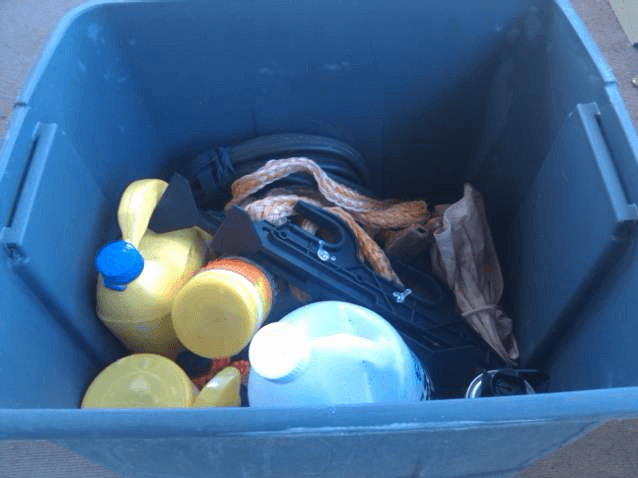
Thankfully, I never got stranded on the side of the road (in the cold or otherwise), but it was always in the back of my mind. I don’t know if I was ever prepared for every possible thing that could happen, but I tried to get prepared for the highest likelihood of things that would happen. I also figured this would be a great way to save money (by avoiding a long tow). Here’s what I took with me (I had a milk crate in the trunk).
- Jumper Cables – This one should be relatively self explanatory, but they are used in case your battery dies. Simply hook them up to your car and someone elses and wait a few minutes before you try to turn it over. I got really good at this because my starter was going bad and that really drained the battery. While a dead battery is a pretty big pain, it’s not the end of the world and can easily be fixed with some jumper cables.
- Blankets/warm clothes – Just in case you get stuck somewhere, it’s great to have a little bit of spare warmth with you. I usually have an extra sleeping bag on hand. I also have an extra pair of gloves and a winter hat, just in case I need to be outside for part of the time.
- Flashlight – This is something that you can pick up for free at a conference or something as they are always giving them away. Keep it in your glove box, and it should come in handy.
- Shovel – Keep a small shovel with you so you can dig out if need be. You don’t need a full size shovel, a smaller one will do just fine. Try looking for a child sized one – those should be small enough to fit in the truck and not take up too much room.
- Old Cell Phone – Right now, my wife and I are about to switch cell phone providers and will be getting new phones. We each plan on charging our old phones and putting them in the car. Even if the phone isn’t on a service plan, you can still make emergency calls with them (to 911).
- Antifreeze – Once when I was driving the old car, a hose burst on me when I was on my way somewhere. I was able to pull off the road and get the problem diagnosed pretty quickly, but I was still out a whole car full of antifreeze. Thankfully I had some with me at the time, and was able to fill the radiator back up. When you’re buying, make sure to buy the premixed stuff. When you’re out there in a bad spot, you most likely wont have a vessel to mix up a new batch of diluted antifreeze.
- Water – A bottle or two of water will also come in handy in the event of an emergency.
- Tow Rope – After I had gotten rid of the bad car and gotten my truck, I was driving to work one day and saw a guy slide off the road. He wasn’t in that bad, but it was pretty clear that he wouldn’t be able to get out on his own. I had a tow rope with me, so I stopped and we hooked him up and I pulled him out of the ditch when traffic was clear.
- Sand bag – Great to weigh down the vehicle over the drive axles, or can be broken open and used for traction if you end up getting stuck at some point. Just sprinkle the sand into the hole your stuck in and hopefully that will get you enough traction to get out.
- Windshield wiper fluid – It doesn’t sound like a big deal, and it really inst, until you’re driving in slushy roads that the snow, sand and gravel are in the process of melting off of. If you run out of fluid, it’s always a handy thing to have as a back up.
This is what I keep in my car year round in case I get stuck, and I’ve yet to have a problem that I couldn’t get myself out of (without a bit of help).
Is there anything that I left off the list?
What do you keep in your car in case of emergencies? Have those items ever saved you big money?
6 Tips to Avoid Crazy Holiday Spending This Year and Next

 The following post is by MPFJ staff writer, Catherine Alford. Cat is a freelance personal finance writer who blogs at www.BudgetBlonde.com.
Wow, I forgot how crazy the holidays get here in the States! Why were there three Christmas aisles at every store in October? It’s so overwhelming to me, and I feel like I have some fresh perspective on the American holiday season having been out of the country for two years.
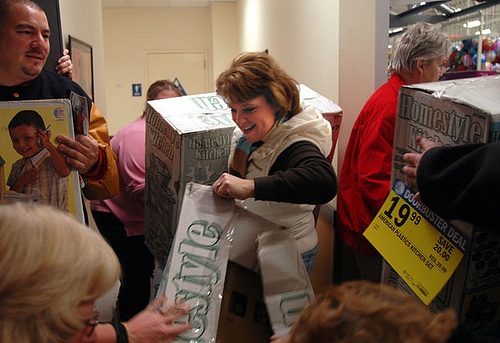
If there’s one thing I learned from living in the Caribbean for so long, it’s that we just don’t need a lot to be a happy. We don’t need a lot of Christmas junk. We don’t need 5,000 decorations, and we don’t need to go wild at a Black Friday sale. In fact, you couldn’t pay me to go to a Black Friday sale (okay, okay, if somehow my baby cribs go on sale for $50 a piece, I will go. It’s very unlikely, but hey, I have to buy two cribs since I’m having twins, so have mercy on me!)
All that said, there are a lot of ways that we can avoid crazy holiday spending this year AND next year! Here’s how:
This Year
1. Only Buy For Your Family and Your Best Friend
Holiday gift giving is so awkward. Inadvertently, someone will send you a Christmas gift, only to find out that you didn’t have one already purchased for them. To those people, just simply say thank you. I know it’s hard but you don’t need to waste money on a pile of “just in case” gifts to give to people. Just say, “Thanks! That’s so thoughtful!” and send them a thank you note. Remember, most gifts are quickly forgotten as the months go by. Plus your coworkers already have 42 scarves each, so buy gifts for the people closest to you and don’t fret about the rest!
2. Bake Your Heart Out
One inexpensive way to get through the holiday season and send some awesome gifts out into the world is to bake! Most people would absolutely love a loaf of homemade bread or Christmas cookies. This is great for aunts and uncles, grandparents, and other people who already have more material items than they could possibly need!
3. Give the Gift of Experience
One thoughtful gift you could give is a card that has a completely written out plan for how you’re going to spend the day together with someone. So, if you wanted to spend more time with your sister, you could give her a card that says, “Eligible for one girls night sleepover just like when we were kids.” Then, make sure to actually pencil it in your calendar! I feel like so many people give the gift of “coupons” for a date night and things like that but never use them! So, give the gift of thoughtfulness and actually follow through!
Next Year
4. Save As You Go
It would be hard to save up for Christmas for this year, so let’s start fresh for next year. If you know that you spend a certain amount on the holidays, go ahead and start putting aside that money every month. It will feel so great to be proactive and have a nice savings account ready to go. This will stop you from overspending and it will also prevent you from going into credit card debt just because society tells us it’s the season of giving.
5. Buy Throughout the Year
I am always thinking ahead for Christmas and birthday gifts. If I see something I think my sister would like and it’s a good price, I will go ahead and buy it for my sister, my two sisters-in-law and maybe even my mom and mother in law too. In the past, I’ve given the women in the family jewelry, organizers, monogrammed towels, lotions, etc. and I’ve thought about most of them way ahead of time. It just makes things much less stressful when you have it all planned out.
6. Adopt the “4 Gift Rule” for Kids
It might be hard for kids to adjust to fewer gifts at first, but if they are awesome gifts, I bet they won’t care. I love the “4 Gift Rule” which stands for “Something you want, something you need, something to wear, something to read.” Come on; you know your kids are going to get a million gifts from their grandparents, aunts, and uncles, so don’t spoil them too much at home!
Of course, these aren’t the only ways to beat the crazy holiday spending this year and next so I want to hear from you!
How about you all? Do you always have a big Christmas celebration or a small one? Do you buy lots of gifts to family and friends or make them yourself? Would your kids be upset at only getting 4 gifts?
Share your experiences by commenting below!
***Photo courtesy of http://www.flickr.com/photos/bethcanphoto/3065695690/sizes/m
Carnival of Personal Finance #438 – November 11th, 2013 Edition

 Welcome to this week’s Carnival of Personal Finance, a weekly listing of the top personal finance articles around the blogosphere in the following categories – taxes, money management, investing, career, debt, frugality, credit, economy, finance, real estate, saving, and budgeting.
I hope you enjoy the posts and that you can stop by My Personal Finance Journey on my non-carnival days as well!
Listed below are this week’s top 3 editor’s picks. Congrats to the three winners! Some truly great articles here!
1. Emily from Evolving Personal Finance presents Talking to People Who Are Different from You about PF, and says, “I got into a FB altercation over the use of credit cards, and it forced me to realize that I probably don’t know my friends as well as I thought I did.”
2. Ray from Squirrelers presents It’s All About Supply and Demand With Earning Income, and says, “While I’m a big proponent of education and advanced degrees, it doesn’t guarantee more money than one without such a background. For better or worse, it’s important to remember supply and demand!”
3. Roger Wohlner from The Chicago Financial Planner presents Five 401(k) Investing Tips for This or Any Market, and says, “The Dow Jones Industrial Average has hit something like 30 new highs this year alone, the S&P 500 is near record levels as well. Twitter just went public and Obama Care will go into full swing in 2014. What does any of this mean to you as a 401(k) investor? Here are five 401(k) investing tips for this or any market environment.”
And, listed below are the best of the rest!
Nell from The Million Dollar Diva presents 5 Things You Might Be Doing to Sabotage Your Savings Goals, and says, “Having trouble getting ahead with your savings? You might be sabotaging your efforts without even realising. Here are 5 financial sabotuers that might be keeping you from reaching your goals.”
Donna Freedman from Surviving and Thriving presents 21 uses for a dead gift card, and says, “What do we do with all these plastic rectangles, especially since the impending holidays probably mean even more gift cards coming our way? We get creative. Or silly. Or both!
Kay from Green Money Stream presents Are You Making These 4 Frugal Living Mistakes?, and says, “When first embarking on the path to frugal living, some people have difficulty distinguishing the forest from the trees and perhaps “try too hard” to be frugal. Here are some rookie mistakes to avoid.”
Daisy from Suburban Finance presents Is Your Car an Asset or a Liability?, and says, “Banks will consider your car an asset when they are assessing whether or not to grant you a loan, but is your car really an asset? Just because you can sell something does not mean it’s an asset.”
Sean Smarty from Growing Money presents How To Invest With $500
DPF from Digital Personal Finance presents Someone Tell Me: Why Do People Take Out Long-Term Car Loans?, and says, “For many people a car truly is a need rather than a want. However, this doesn’t mean we need to buy an expensive car that requires long-term debt. Why do people do this anyway?”
Madison from My Dollar Plan presents 31 Movie Gift Ideas for Kids, and says, “Movies can make a great, affordable gift for kids this holiday season!”
Jason Hull from Hull Financial Planning presents How Much Does Missing Your Budget By $200 Affect You?, and says, “If you miss your budget by $200 per month, how much does that affect your chances of running out of money when you retire? It’s more than you think. In this article, I ran 10,000 future stock market simulations to look at the effects of having just a little less money set aside to see if you ran out of money before you ran out of heartbeats.”
Harry Campbell from The Four Hour Work Day presents Why I Picked my Day Job Over the Four Hour Work Day, and says, “I started this site because I know that one day I want to work for myself and I think four hours a day is the ideal work day for maximum efficiency and happiness. I will never understand people that kill themselves at their day job: working long hours, weekends and overtime solely for the money. And that is why they’re doing it, what other reason could there be? I would rather work less, spend less and live more as this site’s tagline would suggest. The world that we live in has so much to offer and I can’t think of one good reason why I’d want to spend a majority of my day cooped up inside a cubicle.”
Harry Campbell from Your PF Pro presents A Tribute to the Greatest Chipotle Article of All Time, and says, “When I first started this site almost two years ago it was with the intention to discuss topics like saving for retirement and investment strategies. But I quickly realized that those articles were pretty boring to read and to write. That’s why you see articles today ranging from travel hacking to saving money at Chipotle. The latter has actually become one of the most popular articles on my site and today it has over 5,000 total views.”
PK from Don’t Quit Your Day Job… presents Is the Stock Market Overpriced? Part II, and says, “This is part II of a series I’m hosting on market valuation. This entry’s claim to fame? The fact that probably half the planet knows the adherent – a man named Warren Buffett. So, how does Mr. Omaha judge the stock market?”
Eric from Narrow Bridge Finance presents 3 Areas Not to Overlook as You Financially Prepare for Next Year, and says, “Whether you believe it or not, we are just a short seven short weeks or so from ringing in 2014. If you’re like me, you may feel like this year has flown by and the prospect of a new year is a bit on the nutty side. While it is crazy, I like to be prepared and the impending new year is a great reminder that it’s a perfect opportunity to look at how we can financially prepare for the dawn of a new calendar year.”
Jon from Novel Investor presents 2014 Federal Income Tax Brackets, and says, “The federal income tax brackets are a fickle thing. Between political meddling and inflation, something changes every year. Of course, that streak is alive and well going into 2014.”
Miss T. from Prairie Eco Thrifter presents Making the First Pro-Graduation Pay Check Count, and says, “You’ve studied, passed exams, graduated and now you have scored your very first job. Congratulations! Don’t let it all go to your head though, it’s really important to know how to make your first post-graduation paycheck count, so here are some tips.”
Pauline from Reach Financial Independence presents Til “Debt” Do Us Part: Are You Financially Ready to Get Married?, and says, “David Moran of Finance for Your Future helps you to determine if you are financially ready to get married.”
Pauline from Make Money Your Way presents From having £12 and a suit to buying a property in 6 months!, and says, “Ben Edgson, the owner of workfromhomeblog.net shared his experience from having £12 and a suit to buying a property in 6 months!”
Money Beagle from Money Beagle presents It’s Been Two Years Since Our Refinance, and says, “A look back (by the numbers) at our mortgage refinance of two years ago.”
saverspender from Save. Spend. Splurge. presents What’s the most money you’ve ever spent on a piece of clothing?, and says, “It’s interesting to know how much people spend on clothing, especially what the most expensive item in their wardrobe is! ”
TTMK from Tie the Money Knot presents Money and Neighbors, and says, “When it comes to our finances, there are many types of people that can influence them: spouse, parents, employer, even friends. How about neighbors?”
Mrs PoP from Planting Our Pennies presents FPL On Call – Discounts On Our Utility Bill, and says, “The PoPs finally enrolled in the FPL On Call Program, a way to get discounts on the electric bill without having to buy any new energy saving appliances.”
Andrew Dickow from Finance Penguin presents Is your startup struggling? Let’s talk about it. Seriously., and says, “Tips for Startups.”
Well, that wraps up this week’s Carnival edition! Next week’s carnival (#439) is scheduled to take place on November 18th, 2013. Be sure to submit your articles for next week’s edition, using the following handy submission form.
Also, if you’re interested in hosting a future edition of the Carnival of Personal Finance, you can apply using this form.
***Photo courtesy of http://www.flickr.com/photos/learningexecutive/726892925
$50.75 Giveaway – Community and Charity 10% Monthly Blog Income Give Back # 26 – November 2013 Edition

 The 10% give back giveaway fun rolls on for the month of November!
In case you missed the first 25 editions of the 10% Blog Income Give Back, after doing some thinking at the beginning of October 2011 about what direction I want this blog to grow and evolve towards in the future, I decided that any income made from this blog would have more significance to me at a personal life values level if I knew that a portion were being given back to the following places:
- 1) The readers – Obviously, without you here to read my articles and interact with my ideas, there would be no blog in the first place (let alone blog income). As such, it is only fitting that you receive a portion of any blog income.
- 2) Charitable organizations – If you’ve read my blog before, you know that I’m a big believer in donating a portion of my money to charity. Each year, I donate between 5-10% of my income to the National Multiple Sclerosis Society as part of the Bike for MS fundraiser that I do. Beyond the good that is done by donating your money, getting used to contributing to charity is also a good practice to emulate the actions of affluent individuals (T. Harv Eker discusses this in his book, Secrets of the Millionaire Mind, which I would definitely recommend reading if you have a few hours).
Because of these considerations, I’ve decided that each month going forward, I’m going to give away 10% of my net (after-tax) blogging income/profit to My Personal Finance Journey readers (5%) and to charity (5%). Listed below is how the process will work:
- After each calendar month passes, I’ll tally up my net blog income and determine what Dollar value correlates to 10%.
- I’ll post the giveaway (similar to this post you’re reading now), and you’ll have approximately 2-3+ weeks to enter.
- Once the giveaway is over, a grand prize winner will be announced, and that winner will then select what charity they’d like to have 5% of my blog income sent to. Once the giveaway entry window ends, I’ll send out the money to the blog reader winner(s) and personally drop off the charity donation, if possible.
- So far, I’ve been very happy with the success of the October 2011 – October 2013 give backs. Listed below is a summary of what we’ve accomplished so far with the give backs.
- Current total given to charity = $2,273
- Current total given to blog readers = $1,002
Details of November 2013 10% Blog Income Giveaway
- $50.75 total blog income to give away – $25.75 to a My Personal Finance Journey reader and $25 to a charity selected by the reader winner.
- $25.75 in the form of one prize available to one reader as follows –
- 1) Grand Prize = $25.75 cash via PayPal.
- $25.75 in the form of one prize available to one reader as follows –
How to Enter the Giveaway – Deadline to Enter is 11:59 PM, November 30th, 2013
Like previous months, I’ve decided to use the RaffleCopter giveaway management tool to handle sign-up facilitation for this giveaway, so simply go through the steps listed in the widget below to enter the running for the prize and accumulate entry points.
There is no limit to the amount of points you can earn. If you refer 10 subscribers – your name will have accumulated 170 entry points! Or, if you link to the giveaway more than once, you can accumulate those 10 entry points multiple times. You can also share other My Personal Finance Journey articles via social media sites once per day. In the event of a tie, I will be using a random number generator to select the winner.
Important instructions: After you complete an entry method, make sure to click and fill out the “I Did This” or “Enter” button in the widget so that I have a record of your points.
Remember, the deadline for entries will end at 11:59 PM, November 30th, 2013 (a little over 3 weeks from today – the start of the give back). Good luck to you all! Please contact me if you have any questions. After the deadline for entries passes, the winner (one with the most points accumulated) will be contacted via email to receive their prize.
***Photo courtesy of http://www.flickr.com/photos/50177865@N00/815
Is It Time To Refinance My Adjustable Rate Mortgage?

 The following post is by MPFJ staff writer Travis. Travis is a customer blogger for Care One Debt Relief Services, and also appears weekly at Enemy of Debt. Travis candidly shares his personal journey to pay off $109,000 of credit card debt and the tips he’s learned along the way. As a father and husband he provides a unique perspective on balancing debt, finances, and family.
We built our home in 2004, at the tail end of the housing boom. Mortgage lenders did creative financing to get borrowers into as large of a home as possible because with home prices skyrocketing, you could make money hand over fist by selling your home a few years later.
We were no exception.
Creating Financing
Our first mortgage is an adjustable rate mortgage (ARM) which stayed at a constant rate for the first 5 years, and then adjusted once a year, on July 1st. Our second mortgage was set up as a 10 year interest only home equity line of credit. This setup made our monthly payment as low as possible for the following reasons:
1.) The fact that our first mortgage was for 80% of the home’s appraised value allowed us to take advantage of a loophole to not pay Personal Mortgage Insurance (PMI).
2.) The interest rate on our first mortgage (which was an ARM) was low
3.) Our second mortgage was interest only
Mortgage Treatment
ARMs generally have a bad reputation, but to be honest ours has treated us very well. After the initial 5 years when the rate remained constant, it has adjusted 5 times. The first four adjustments actually decreased our mortgage interest rate resulting in a lower payment each year. This year, the rate stayed constant at 2.875%. In comparison, a 30 year fixed rate mortgage available through my bank according to their website is currently 4.375%.
The second mortgage is a different story. While it has kept our payment low, we haven’t paid any principal on 20% of the money we borrowed back in 2004.
The Refinance Question
Our ARM can adjust upward at most 2% in a single year, with a maximum interest rate of 9%. Due to the way the rate is calculated, interest rates would have to go up quite a bit for our mortgage to increase the maximum. However, economic indicators seem to indicate that the economy is on the mend, even if it is a slow recovery. Which means mortgage interest rates, including our ARM, may be on the rise.
So we have decided to talk to a mortgage representative at our bank about refinancing for the following reasons:
1.) While all mortgage rates are still very low relative to history, I don’t want to wait until rates increase dramatically and the jump from what we have now to a fixed rate gets larger.
2.) Our interest only home equity loan will soon be converted to a fixed rate loan that is at a higher rate than the typical 20 or 30 year mortgage.
It seems to me that we are in for a mortgage payment increase if we just let things continue down their current path. The worst part is that the amount of increase is unknown until we get closer to the adjustment date of the first mortgage, and the conversion date of the second mortgage.
Uncertainty makes it very difficult to build a budget, and that makes me very nervous. I’m done playing the market and hoping that the ARM adjusts in our favor. It’s time to lock in and know exactly where we’re at.
How about you readers, have you refinanced recently? Do you have an ARM? Do you think the time is right to refinance?
Share your experiences by commenting below!