

- You are here:
- Home »
- Blog
A Review of My 2013 Income Tax Results and 2014 Tax Planning
 This past week, I received my completed 2013 federal and state income tax return documents from the accountant. After making one correction due to some confusion on whether my Solo 401k contributions were deductible or not, my taxes were successfully e-filed a few days later.
In general, the results were very good, as I felt like I leveraged the tax code to the best of my ability in order to maximize wealth. As has become my habit over the past few years, I feel that by analyzing some of the finer details/numbers, I can better plan for how to approach my tax planning for the 2014 year.
Specifically, the questions I am interesting in answering are as follows:
- How much of my un-taxed income should I be saving each month in order to pay taxes when the time comes?
- What would I predict my marginal tax bracket will be in 2014?
Let’s get started!
2013 Income Breakdown
My 2013 gross income can be broken down in to the following components:
- 3% from dividends, capital gains, and interest from investments (meaning that I can likely ignore this contribution for planning purposes since it is so small).
- 71% from untaxed fellowship/wage income for my work as a graduate student.
- 26% from Schedule C self-employed business income.
2013 Deductions
Since the standard deduction was greater than my itemized deductions, I took the standard deduction of $6,100 for 2013.
After subtracting the 1 personal exemption I get for myself (with no kids, filing as a single person), I arrived at a taxable income that was only 77% of my original gross income that I started with.
2013 Federal Taxes
Having established my taxable income, my total personal federal taxes were computed. Next, self-employment taxes were added on top of the personal taxes.
This resulted in my total Federal taxes owed for 2013 being ~14% of my overall gross income.Nice! I am surprised this percentage is so low!
If we calculate this based on my AGI or taxable income, the percentages become 14% and 18%, respectively.
2013 State Taxes
For my Virginia State Income Taxes, the form starts out with my federal AGI mentioned above. From there, the VA standard deduction and my personal exemption reduces my taxable income to 90% of my overall gross income.
Having obtained my VA taxable income, my 2013 total state taxes owed was calculated to be 5% of my overall gross income. If we calculate this based on my federal AGI or federal taxable income, the percentages become 5% and 6%, respectively.
2013 Total (State + Federal) Taxes
If we put everything together from both state and federal taxes, we can find something useful for planning purposes going forward:
- I paid a total tax amount for 2013 equal to 19% of my overall gross income.
- My marginal tax bracket was 15%.
2014 Estimated Tax Payment Schedule
One of the nice things that my accountant does do for me each year is to calculate/prepare my estimated taxes for the following tax year (so 2014 was prepared during the 2013 tax preparation round).
For both the Virginia and federal estimated taxes for 2013, the accountant scheduled my payments to be approximately equal to the total tax I owed for the 2013 (only differ by some small rounding amounts used).
Target Question # 1 – How much of my un-taxed income should I be saving each month in order to pay taxes when the time comes?
For 2014 tax planning purposes, the important question I have at this point is what percentage of my un-taxed fellowship and un-taxed self-employment income should I be saving to pay the tax man this next year?
On one hand, I do have the requirement that I need to pay the scheduled estimated taxes set forth by the accountant, primarily based on my 2013 tax amounts. This part I really can’t change.
On the other hand, I am guessing that my overall UN-TAXED income will be lower in 2014 compared to 2013. While I predict that my un-taxed self-employment income will be roughly the same, my un-taxed fellowship income in 2014 will be 2/3 what it was in 2013 since I will be finishing my PhD by August. After which time, if I can hopefully find a job, I will transition in to being paid as an employee, where taxes are taken out of my paycheck ahead of time. What this means is that by paying my estimated taxes per the scheduled amounts set by my 2013 taxes, I will likely be overpaying them this year. Of course, when I do start working as an employee, I could definitely crank up my exemptions so that my employer withholds less taxes each paycheck.
So, where does this all leave me?
Overall, I think the best course of action is to continue saving money to pay taxes based on the un-taxed gross income I realize/track on a month-to-month basis. The amount that I will save for taxes will continue to be 20%, based on my 2013 total tax owed being ~19-20% of my gross income. This will help me most accurately match my real taxes that I will owe overall for the year.
Target Question # 2 – What would I predict my marginal tax bracket will be in 2014?
Another very important and related topic is trying to make a prediction for how my tax bracket will change, if at all, assuming that I can successfully obtain employment in the last 3rd of this year.
If I utilize my 2013 tax return gross income amounts as a starting point, only add up my fellowship income for 2/3 of the year, and add in an approximate amount I will make in my new job the last 3 months of the year (assuming starting in October 2014), there is really no chance for me to make it in to the 15% tax bracket if I assume I will file individually.
However, since I’m getting married later this year, I will be able to file my 2014 tax return jointly with my fiance. Adding her income for 2013 on top of mine and then subtracting out the generous filing jointly standard deduction and 2 personal exemptions (1 for each of us), I predict that we will have no trouble getting in to the 15% marginal tax bracket for 2014.
This is good news, as it means 1) full steam ahead contributing to my Individual Roth 401k, and 2) saving 20% of my un-taxed income is still an appropriate amount to be saving.
If you’re interested in seeing the 2014 tax brackets, standard deductions, and personal exemption levels, I would recommend taking a look at the following article on Forbes.com.
How about you all? What lessons did you learn from your 2013 taxes that you will carry forward in the next year?
Have you ever calculated what % of your gross income you pay in state + federal taxes?
Share your experiences by commenting below!
***Photo courtesy of http://www.flickr.com/photos/judgmentalist/9351909/sizes/o/in/
Is Supplemental Health Insurance Worth Having?

 The following is a post by MPFJ staff writer, Kevin Mercadante, who is a professional personal finance blogger, and the owner of his own personal finance blog, OutOfYourRut.com. He has backgrounds in both accounting and the mortgage industry.
With the rollout of Obamacare well underway, and the major changes in healthcare it’s bringing, is supplemental health insurance worth having? On the surface, the answer would seem to be no. After all, Obamacare seems to be moving us toward a single payer health care system, much as most other countries in the world have. That would seem to leave the little room for any other forms of coverage. But for the time being, it’s worth investigating.
What is supplemental health insurance?
You’ve undoubtedly seen those semi-annoying AFLAC duck commercials – and that’s about what we’re talking about in the way of supplement health insurance. There are other companies that offer such coverage, but AFLAC is the biggest. This isn’t meant to be a recommendation, but rather a demonstration based on the largest provider in the country.
AFLAC provides supplemental coverage that is tied to specific injuries and illnesses. Some examples of the coverage they offer includes:
- Accident
- Cancer or specified disease
- Hospital confinement indemnity
- Hospital confinement sickness indemnity
- Hospital intensive care
- Lump sum cancer
- Specified health event
- Short-term disability
- Dental and vision
AFLAC offers a lump sum payment in the event that any of these situations take place. It is meant to be an insurance payment over and above basic health insurance. Unlike traditional health insurance, AFLAC pays benefits direct to you, so that you can disperse it in any way you see fit. It’s primarily meant to be extra cash in the event of a medical emergency.
The cost of the coverage is relatively low. For example, you can buy a plan for less than $100 per month, that will pay you benefits equal to thousands of dollars for the covered illness or injury. Most typically, policies are offered through employers.
There is one very important caveat when it comes to supplement health insurance – including AFLAC – it is not traditional health insurance, and not meant to replace it. It will not cover basic expenses, such as hospitalization, major medical or prescriptions. In addition, hospitals and other healthcare providers will not accept it as health insurance for the purposes of admission or rendering services.
What are some situations where you might want to consider having supplemental health insurance?
If you have high deductibles
Health insurance plans have been getting progressively more expensive over the years, and Obamacare is no exception. As a result, many people have been taking the Bronze plan since it’s the least expensive of the Obamacare options. It has the highest deductible, and can expose you to out-of-pocket costs up to $6,350.
If you have taken the Bronze plan – or still have a high deductible existing plan – you may want to consider supplemental health insurance as a way of covering the deductible. Since major illnesses and accidents are likely to trigger full payment of your out-of-pocket, supplemental coverage can provide thousands of dollars to minimize the damage.
If you’re in a line of work where accidents are likely
Some occupations are simply more dangerous than others, and that’s where supplemental health insurance can be a major advantage. If you’re in occupations, such as construction, elevator repair, and many of the trades, that carry higher risk of accident or injury, supplemental health insurance may be an excellent move.
If you typically have no liquid savings
Not everyone is proficient at saving money for a rainy day, despite the sage advice provided by personal finance blogs. If this describes you, having a health insurance supplement could be well worth having, even if you don’t have a maximum deductible base health insurance plan. The lump sum benefit you would receive from supplemental health insurance would avoid the necessity of having to set up a payment plan in the event that your out of pocket costs run into several thousand dollars.
If there’s a family history of certain diseases
If there is a definite history of certain types of diseases in your family supplemental health insurance could become quite cost effective. This is especially true if the pattern is more pronounced. It can sometimes be not a question of if, but when a certain disease will happen, and having a supplemental health insurance plan specifically for that disease would come in handy.
It’s not so much a matter of certain common diseases, such as cancer and heart disease, appearing occasionally in your lineage. It’s more that the incidence of the disease in your family occurs well in excess of normal levels. A supplemental health insurance plan could lead you to be better prepared in the event that you are stricken with it. Even if you never need it, just having it can give you greater peace of mind.
If you have no other coverage
Okay, soon enough we will all be required to have health insurance coverage, or face fines for not having it. But I think it’s safe to say that, fines or not, there will still be plenty of people who will no be covered. If you’re one of them, supplemental health insurance should be a strong consideration.
Supplemental health insurance certainly won’t cover all of your healthcare needs. But it will provide a lump sum supplement that will help to pay at least some of your medical expenses. And sometimes people have expenses beyond direct medical costs. For example, if you are self-employed, commissioned, or a contract worker, a major medical event could result in lost wages. The cash that you receive from supplement health insurance can help you to pay your bills.
Supplemental health insurance isn’t for everyone, and as noted above, it is not actual health insurance. But if you are in any of the above situations, you may want to consider purchasing a plan.
How about you all? Do you have or have you ever considered purchasing supplemental health insurance? Why or why not?
Share your experiences by commenting below!
***Photo courtesy of http://www.flickr.com/photos/scenicplaces/5136982667/sizes/n/
How Can Tax Lien Sales Increase Your ROI?

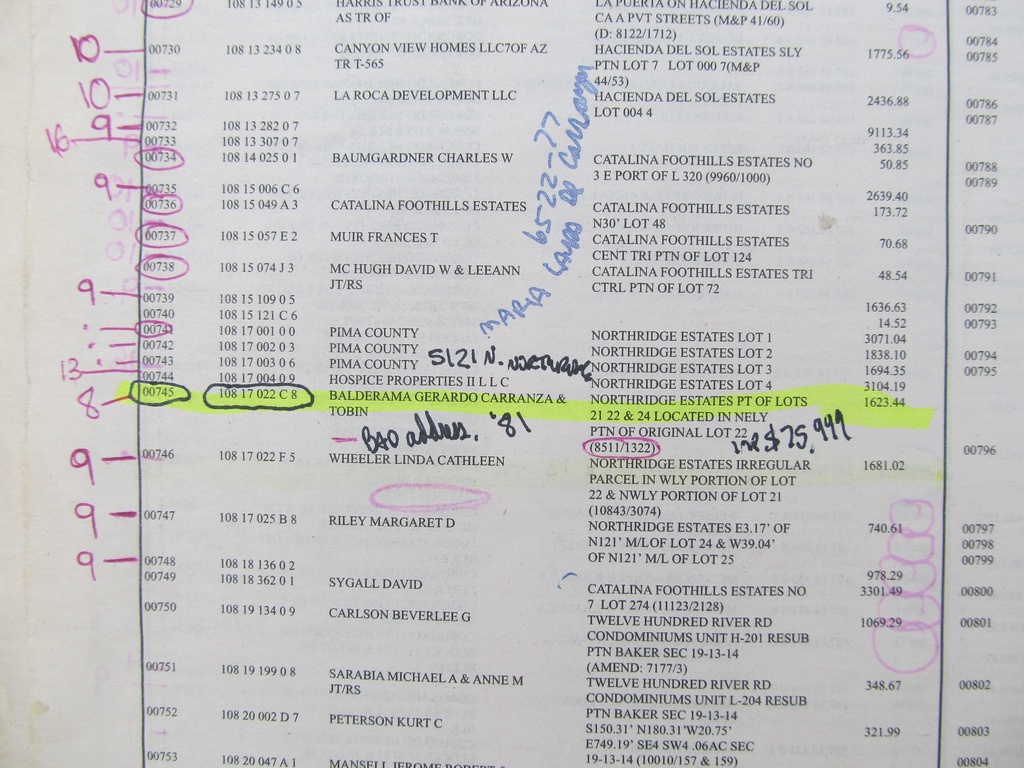 This is a post by MPFJ staff writer, Jeff. Jeff writes about Sustainable living and finances at his website, Sustainable Life Blog. Jeff really enjoys traveling with his wife as much as he can, to wherever he can.
There are a lot of investment options out there: stocks, bonds, p2p lending, and more.
Some people advocate a simple portfolio with a mix of socks and bonds that changes depending on your age, and others suggest keeping it ultra simple and investing in just 1 broad index fund.
Those are some of the more popular options, but they are not the only things out there that will help you get a decent return on your money. I’ve been looking into different ways to get a better return on investment (ROI) with low risk for the past few years and I think I’ve finally found a favorite: tax liens.
What is a tax lien?
Every year, property owners have to pay a tax on the property they own, at a rate set by the government. The rate varies by the use of the land (for instance farm land is taxed at a lower rate than land with an office building on it). As we know, the taxes are used for things like schools and roads. Most people who are still paying a mortgage do not need to worry about this tax, as it is paid out of the escrow account that a portion of their mortgage payment goes to every month. If you own your home outright though, you’re on the hook for paying your property tax.
When people forget to pay their property tax or they can’t afford it and don’t pay it, the government puts a lien on the property. This lien becomes first debt paid in the event of a sale of the property (if one were to occur).
How can this help my returns?
You’re probably thinking this is great but how does it help me? Well, the government needs money to do the things it wants to do over the course of a year, like inspect buildings and fix roads. They expect a certain amount of money from property taxes each year to do those things and when some people don’t pay, they won’t have enough money to do what they need to do for the next 12 months.
The government solves this shortfall by selling the tax liens to investors. The government also promises a certain rate of return to the investors for their troubles. Where I live (Wyoming) the rate is 15%, and in Colorado the rate is prime plus 9%. By doing this, the government gets their money to operate for the fiscal year, and the investors get a very healthy ROI.
How can I find tax lien sales?
Usually, each county will have their own sale of tax liens. For Wyoming they are usually in August or September. I’ve looked at some larger areas that will have the lien sales once a month. The easiest way to find out about when yours is would be to Google “your county tax lien sale”, or you can call the county assessor or county treasurer’s office.
The best part about these is that you don’t have to only buy them in your county! You can go to any counties sale and try to purchase them if you want to. I’ve been to sales in 3 different counties.
What are the downsides?
There are not many downsides to this. As my dad always says ” the wheels of the government turn slow but they grind just fine”. What he means by this is that the government always gets their money. What this means though is that you (as the investor) have downside protection.
In Wyoming, if you purchase a tax lien at a sale, they will notify you if the taxes are not paid the next year and give you the option to pay those as well. If you pay for 4 consecutive years, then you can begin legal proceedings to take ownership of the property. I have not gotten to this point yet, but I understand that it also takes time.
Bottom line for tax lien sales:
Where I live, you can get 15% interest for the years that you pay the lien if the property owner pays you back. If you pay for 4 consecutive years and are not paid back, you can begin proceedings to take control of the property.
I guess the ultimate downside is that you get stuck with a piece of property you don’t want, but in my mind that’s a small downside.
So, how about you all? Have you ever invested in a tax lien sale before? If so, how did you like it?
Share your experiences by commenting below!
***Photo courtesy of http://www.flickr.com/photos/666_is_money/6036913933/sizes/l/
How Much Are You Willing To Spend On A Hobby?

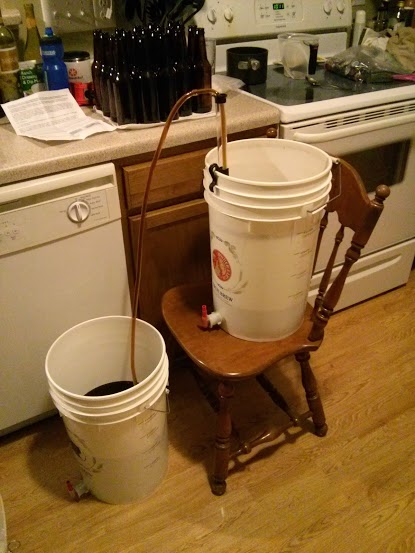 The following post is by MPFJ staff writer, Grayson Bell. Grayson, who runs the finance blog Debt Roundup, is a fan of personal finance, brewing beer, and working on cars.
Having a hobby is an important part of life. As schedules and days get jampacked with activities, you should remember to take time for yourself every once in a while. I realize this could be hard to do, but it really does do wonders for your mindset. Hobbies are a great way to break away from the time crunch and enjoy life a little more. Just don’t overdo it and spend too much time on your hobbies, as that can become unproductive.
Though hobbies allow you to break away from the daily grind, they can also cost money. There are a handful of great hobbies which don’t cost any or very little money, such as reading or hiking. No matter your favorite hobby, you might have to part ways with some of your hard earned money to enjoy them. This begs the question “how much are you willing to spend on a hobby?”
The Hobby Breakdown
I have had quite a few hobbies over the years. Some were inexpensive and others cost me a pretty penny. After my son was born, I decided to focus my attention on the hobbies that gave me the most enjoyment. Here are my three favorite hobbies that I still partake in today.
Playing Hockey
I have been a hockey player for close to 15 years. I started playing after I realized that soccer wasn’t keeping my interest any longer. Hockey is a sport that I love and follow. I have played both ice and roller hockey for different leagues and teams across my home state. It has really been an enjoyable experience and continues to this day.
I currently play hockey in an adult league almost every weekend. I have been in the league for 5 years and I really enjoy it. The fees to play are relatively low at $60 per season. I have all the required equipment and don’t have to buy any new gear each season. The $60 is well spent in my opinion as I get a high level of enjoyment out of playing, interacting with other players, and getting the exercise.
Brewing Beer
Brewing beer is an awesome hobby, but it can be expensive. I have written about my fascination with brewing beer and why I do it. When I talk with others that have thought about it, I can usually get them to try it out. Any hobby that allows you to create something from scratch and enjoy it later is a winner in my book.
The best part about brewing beer is the networking. Well, that, plus drinking the beer! The home brewing scene is large in my state. I have met and interacted with many dedicated homebrewers. The passion and drive of these individuals is what motivates me to brew the best beer I can. Not only have I gained friends, but experience as well.
The big downside to brewing your own beer is cost. It can be expensive to get started brewing beer. There are kits at some stores that can get you started, but they tend to have a weak flavor profile. If I am going to take a month to create a drink, then I want a full bodied taste. It cost me about $120 to get started with my first batch. Each consecutive batch costs me about $30 for 40 finished beers. These costs all depend on the beer style and ingredients involved.
Working on Jeeps
My passion for mechanics has grown strong over the years. I learned to work on cars from my brother, who has a great skill with most machines. Once I got out of college, I decided to start working on cars to not only to increase my knowledge, but also pursue an interest. It was the “two birds with one stone” type of scenario.
In the past 5 years, I have had three Jeep Wranglers at my disposal. I bought two from Craigslist and another from my brother. The Craigslist Jeeps were bought, fixed up, then sold for a profit later down the road. This wasn’t a business for me, but more of a challenge to see if I can fix them. One Jeep came to me completely dead. I bought it for a low price, which made me feel like I stole it. The price was ridiculously low. The reason was the owner had no idea what was wrong with it and didn’t have the funds to fix it.
I swooped in, bought it, and two weeks later it was purring like a cat. Yes, the two weeks in between were long and tiring for me, but they were also rewarding. I ended up rewiring the entire Jeep, but the end result was quite fulfilling. I paid cash for two Jeeps and financed another one as an experiment, which was paid off in less than four months. I still own one today and plan on keeping it for some time. My total between three Jeeps is close to $15,000.
My Reasoning
Many ask me why I spend so much on my hobbies. My simple answer is that I feel the money is well spent. My return on investment is high. If you love investing or business, then you know that ROI accounts for something. I calculate the ROI on hobbies by measuring my happiness. You typically won’t get money back with your hobbies, but they can make you happy. That is how you can measure it. I also look at what my hobbies can teach me. I have learned a valuable skill with working on cars. I can use that skill anywhere. The other two just bring me joy and that is all I need after a rough day. An escape from a stressful world can be immeasurable.
OK, now you know how much I spend on my hobbies. What about you? How much are you willing to spend on a hobby or hobbies?
***Photo courtesy of http://cdn1.debtroundup.com/wp-content/uploads/2014/02/brewing-beer.jpg
The Five Hottest Housing Markets in 2014 – How Does Yours Stack Up?

 The following is a post by MPFJ staff writer, Kevin Mercadante, who is a professional personal finance blogger, and the owner of his own personal finance blog, OutOfYourRut.com. He has backgrounds in both accounting and the mortgage industry.
Back in January The Motley Fool did one of those five hottest real estate market lists that media outlets like to run. You don’t need click through to the link, here’s the list – it‘s based on projected price gains for 2014:
- Vallejo, Calif. — 23.9%
- Stockton, Calif. — 22.7%
- Merced, Calif. — 21.4%
- Modesto, Calif. — 21%
- Yuba City, Calif. — Projected gains of 20.3% in 2014
- Orlando, Fla. — 10.1% (The hottest market outside of California)
I’m of the opinion that most of these highest this, lowest that, worst this lists are more interesting than useful. After all, though the top five on the list are all expected to see price gains of more than 20%, it hardly matters to the rest of us unless we’re in those high flying markets.
More relevant is what’s happening in your own area. Over the past two or three years, the real estate market has been a mixed bag. Many areas have done little more than stabilize (at reduced levels) since the real estate collapse, and a few have even continued to decline. Others have seen modest price recoveries, but not back to their former peaks.
The hottest housing markets, it seems, are taking place in what were some of the worst hit markets during the price crash. Notice that all of the top areas are small market cities in California? They all got clobbered during the crash (Stockton in particular). The strongest market outside California is Orlando, another hard hit market. In fact, California and Florida in general were at the epicenter of the meltdown. After taking such heavy price declines, they’re natural candidates for impressive rebounds – though none have fully recovered their peak market prices.
Let’s forget about the five hottest markets, and zero in on the housing market where you live. Would you say your local market is booming, treading water – or somewhere in between?
How far did prices fall after the market peak in 2006?
A common characteristic of each of the markets on the list is that prices fell by at least 50% from the market peak in 2006. This at least partially explains the spectacular rebounds – there‘s simply more room to go up.
Not all markets fared as badly as those in California or Florida. Some experienced only modest price declines during the collapse. How bad did prices get during the real estate price collapse in your market? Anything close to a 50% decline?
How has price appreciation been in your market in recent years?
If you bought your house after the price collapse, say around 2009 or 2010, any price appreciation since has improved your net worth. But if you bought (or did a cash out refinance) around the top of the market, in 2006 or 2007, the value of your home may not have fully recovered to its peak levels. And depending upon where you live, you might still be “underwater” on your mortgage.
How is the situation in your local housing market? Have you been seeing steady price appreciation in the past two or three years?
How does your current value compare to 2006 or when you bought your home?
It’s fair to say that rising house prices over the past few years signal a recovery in the housing market. However for many people, full recovery won’t be considered until prices return to pre-crash peaks.
Has the market in your area returned to the price levels of 2006? If not, about how much of the price decline has been recovered since? Or do you live in an area that has more than recovered to 2006 levels?
How quickly do you think you could you sell your home?
It’s possible that we could focus all attention on price gains as a barometer of the strength of the local market. But just as important is how quickly you could sell your home if you need to.
To a large degree, house price appreciation has been driven by the lowest mortgage rates in history. The lower mortgage rates are, the more house people can afford to buy based on their incomes. That is more a function of price level, rather than on how quickly a house can be sold in a given market.
How long does it take to sell a house in your area, and how much does price level affect how quickly that can happen? Within the same market, there can be a boom at one price range, and a bust at another.
I can tell you that where I live, house prices have recovered somewhat, but they’re doing so on very low sales volume. I live in a neighborhood with 66 houses, and not a single one of them is up for sale. In fact, only one has sold in the past 12 months. There aren’t nearly as many houses for sale in the entire area as there were before the crash.
If you had to sell your house quickly, how long would it take based on market activity in your area?
Do you have enough equity in your home to purchase a new one?
This may be the most telling indicator of a housing recovery. What has hurt the housing market in the past few years has been the fact that current homeowners don’t have enough equity to be able to trade up to a higher-priced house. I suspect that factor is having a material effect on low sales volume in my area.
What is your personal situation? Do you have enough equity in your home right now to enable you to come up with the down payment on a trade up house?
We can look at national or regional statistics all we want, but they may not tell us the true state of the housing market in our own areas. Hopefully, the answers to the questions above will provide a better picture as to what’s really going on.
Feel free to offer your input on any or all of the questions above as they relate to your own market.
***Photo courtesy of http://www.flickr.com/photos/59937401@N07/5474453551/sizes/n/
$125.92 – Community and Charity 10% Monthly Blog Income Give Back # 30 – March 2014 Edition

 The 10% give back giveaway fun rolls on for the month of March.
In case you missed the first 29 editions of the 10% Blog Income Give Back, after doing some thinking at the beginning of October 2011 about what direction I want this blog to grow and evolve towards in the future, I decided that any income made from this blog would have more significance to me at a personal life values level if I knew that a portion were being given back to the following places:
- 1) The readers – Obviously, without you here to read my articles and interact with my ideas, there would be no blog in the first place (let alone blog income). As such, it is only fitting that you receive a portion of any blog income.
- 2) Charitable organizations – If you’ve read my blog before, you know that I’m a big believer in donating a portion of my money to charity. Each year, I donate between 5-10% of my income to the National Multiple Sclerosis Society as part of the Bike for MS fundraiser that I do. Beyond the good that is done by donating your money, getting used to contributing to charity is also a good practice to emulate the actions of affluent individuals (T. Harv Eker discusses this in his book, Secrets of the Millionaire Mind, which I would definitely recommend reading if you have a few hours).
Because of these considerations, I’ve decided that each month going forward, I’m going to give away 10% of my net (after-tax) blogging income/profit to My Personal Finance Journey readers (5%) and to charity (5%). Listed below is a summary of the results we’ve achieved together thus far through this give back effort:
- After each calendar month passes, I’ll tally up my net blog income and determine what Dollar value correlates to 10%.
- So far, I’ve been very happy with the success of the October 2011 – February 2014 give backs. Listed below is a summary of what we’ve accomplished so far with the give back effort.
- Current total given to charity = $2,466
- Current total given to blog readers = $1,162
So, that’s the overall flow of things and a brief recap of what’s happened so far with the give back initiative. Now, let’s get in to the specific details for this month’s (March 2014) giveaway.
Details of March 2014 10% Blog Income Giveaway
- $125.92 total blog income to give away – $62.96 to 2 total My Personal Finance Journey readers and $62.96 to the National Multiple Sclerosis Society (which I just donated today!).
- $62.96 in the form of 2 prizes available to 2 readers as follows –
- 1) Grand Prize = $37.96 cash via PayPal.
- 2) Runner-up – 2nd Place Prize = $25 cash via PayPal.
- $62.96 in the form of 2 prizes available to 2 readers as follows –
How to Enter the Giveaway – Deadline to Enter is 11:59 PM, March 31st, 2014
Like previous months, I’ve decided to use the RaffleCopter giveaway management tool to handle sign-up facilitation for this giveaway, so simply go through the steps listed in the widget below to enter the running for the prize and accumulate entry points.
There is no limit to the amount of points you can earn. If you refer 10 subscribers – your name will have accumulated 170 entry points! Or, if you link to the giveaway more than once, you can accumulate those 10 entry points multiple times. You can also share other My Personal Finance Journey articles via social media sites once per day. In the event of a tie, I will be using a random number generator to select the grand prize and runner-up (2nd place) prize winners.
Important instructions: After you complete an entry method, make sure to click and fill out the “I Did This” or “Enter” button in the widget so that I have a record of your points.
Remember, the deadline for entries will end at 11:59 PM, March 31st, 2014 (~2.5 weeks from today – the start of the give back). Good luck to you all! Please contact me if you have any questions. After the deadline for entries passes, the grand prize and runner-up prize winners (one with the most points and second most points accumulated, respectively) will be contacted via email to receive their prizes.
***Photo courtesy of http://www.flickr.com/photos/promanex/3382448536/sizes/o/
The Basics of Common Stocks

If you’re new to the world of personal finance and investing, one of the first and seemingly most overwhelming topics you likely will encounter is investing in the common equity stock market shares of publicly traded companies.
While overwhelming at first, if you simply arm yourself with an understanding of the basics of common stocks and a few facts about the stock market, you can set yourself up for greater long term success.
What is a Common Stock Market Share?
Simply put, owning a share of common stock means that you own a portion of the equity of a publicly traded company.
Naturally, the next logical question to ask after this definition is, “What is equity?” Essentially, equity is what remains of the company’s assets after all of the debt (liabilities) is paid off. This is elegantly represented with the accounting equation, Assets – Liabilities = Equity. Therefore, as a shareholder, you have a claim on the company’s assets after all debt holders are paid off. Since companies have valuable assets, the stock market shares also have residual value, and you hope that this value will increase, making you money. All that make sense? Good!
Another thing to know about is how common stock issuing benefits the company itself. By issuing additional shares of stock (selling to investors in exchange for money), the company garners additional funds it can use on the other side of the accounting equation to buy new assets or pay off debt.
Facts About The Stock Market
The stock market is a very interesting animal. Listed below are several statistics:
- Total amount invested in the global stock market = $15 trillion
- Number of publicly traded companies = 5,008 in the USA alone
- Average number of daily stock market transactions = 682 million shares on the NYSE
- Average long term stock market return = ~ 10 % annually
Conclusion
In today’s economy, you will no doubt encounter and enter the world of common stock investing at some point in your personal finance history. While it can be easy to feel overwhelmed by all the financial media, knowing a few of the basics will set you up on the path to success.
5 Habits That Will Definitely Waste Your Money

 The following post is by MPFJ staff writer, Catherine Alford. Cat is a freelance personal finance writer who blogs at www.BudgetBlonde.com.
We all have habits, both good and bad, but some of them waste a lot more money than others. I’m sure some bad money-habits that immediately come to mind are a smoking habit or a bad drinking habit, for example, but those are kind of obvious.
My challenge to you is to think on a smaller scale. What about all those tiny, seemingly innocuous habits that can add up over the course of the year?
You might not even notice you’re doing them or realize how much they cost you over time, but here are 5 examples below that I’ve been guilty of in the past and perhaps you are too?
Never Packing a Lunch
As someone who is not a morning person, I completely respect and understand that it’s hard to squeeze in packing a lunch with your hectic morning routine.
This is a costly habit, though, because buying lunch every day really adds up. Even if you manage to get your lunch for $5, which is pretty rare unless you have an amazing food truck that stops by your work, you’ll still spend $100 a month on food. I can think of about a million other things that I’d rather use $100 for.
For some people, it’s really worth the convenience but for others it’s definitely not worth a budget bust. If you love to leave your office in the middle of the day, remember that you can drive to a park and eat your sandwich or run an errand and still get the same effect.
Giving into Cravings
Even though I am 8 months pregnant right now, I still haven’t given into every single craving I’ve had. I’ve noticed that just like anything else, you can get past them.
I admit some of my cravings have been pretty serious and have almost brought me to tears, like the time I really wanted a cheeseburger and nothing anyone could say could get me past it. Other times they aren’t as bad, and I can typically think about something else or keep busy and it passes. This has contributed to having a pretty healthy pregnancy with minimal weight gain (despite carrying twins) and it’s also helped me to stay within my budget.
So, if I can do it, I know you can do it! I know that a pile of fries sounds amazing right now, but if you can just get past the craving and think about something else, I promise they do go away.
Letting Your Car Run Low on Gas
When you let your car get really low on gas, you turn it into somewhat of an emergency situation. Instead of being able to stop at the station near your house that always has the cheapest gas, you have to pull over quickly at the next exit and find the closest one. If you have this habit and do this enough times, you can definitely waste some serious cash.
While one or two cents on the gallon doesn’t seem like a lot, it does add up over the course of the year. Essentially, when you leave out the ability to plan your day and have to rush around, you lose the option of shopping around for the best price. This is true in many other situations from groceries to appliances to clothing. Don’t wait until something breaks or is on its last leg before checking out prices.
Forgetting Your Shopper Card
There are some stores that will allow the cashiers to swipe their shopper’s card for you, but when that happens you miss out on possible gas mileage points that could be applied to your own life! I’ve done this so many times, and it really is frustrating to miss out on the points. It’s like free money that the grocery stores are giving you, so make sure that you at least have a small version on your keychain that you can use in a pinch!
Forgetting Your Grocery List at Home
I do this all the time. More specifically, I leave my grocery list in the car a lot. You think you’ll remember everything you need at the store, but you won’t. Inevitably there will be some important ingredient that you missed. Furthermore, you’ll notice other great deals and then Doritos will be on sale and soon enough your entire cart looks like a junk food store. Or maybe that’s just me?
This is one of the worst money-wasting habits since people frequent the grocery store so much. Like I said, I’m guilty of it and am trying to be better about it!
Luckily, each and every one of these five habits are quite easy to break. All it takes is a little bit of organization and being more self aware, and all of us can save some more money this year!
How about you all? Are you guilty of any of the above habits? What do you do to try to break them?
Share your experiences by commenting below!
***Photo courtesy of http://www.flickr.com/photos/76657755@N04/7214600922/sizes/l/
How to Balance Your Side Gig with Your Full-Time Job

 The following post is by MPFJ staff writer, Melissa Batai. Melissa is a freelance writer who covers topics ranging from personal finance to business to organics to food. She blogs at Mom’s Plans where she shares her family’s journey to healthier living and paying down debt.
If you read personal finance blogs, you’ve likely heard many of the bloggers urge you to create a side gig as a way to generate extra money to pay down debt, create an emergency fund, and save for retirement. Besides bringing in extra money, a side gig can be a great way to express yourself. You may be able to do something creative that you’re not able to do at your full-time job.
However, make no mistake that having a side gig is a lot of work. You likely will get exhausted, especially if your side gig grows and you’re working more hours than you planned. Yet, whether you plan to keep your side gig as a part-time job or to eventually grow it enough that you can leave your full-time job, there are strategies you can use now to help you manage wearing two hats and working 50 to 70 hours a week.
My Side Gig Experience
I quit my full-time job three years ago to stay home and care for my three children. At the time, I had two children under 3 and another in elementary school. The plan was that once all the kids were in preschool/school, my side gig of freelance writing and virtual assistant work would become my full-time job. Only life often has a way of going differently than planned.
This year, I started homeschooling the kids. Honestly, I had no idea how much time homeschooling three kids would take. Most days we’re working on school from about 8:30 a.m. to 2 or 3 p.m. every day. It truly is like a full-time job–without pay. In the evenings and weekends, I work at my side gig. Most of the tips that follow are from my own experience as I learn to juggle working 20 to 30 hours a week at my side gig with full-time homeschooling.
Know When You’re Most Productive
We all have times when we’re most productive. Some people do their best work early in the morning before the stress of the day has had a chance to wear on them. Others work best in the evenings or late at night. What time are you most productive?
Know this, and you can make juggling your side gig with the rest of your life much easier. I’m not an early morning person. I tried several times to get up around 5 a.m. to get a post or two written before my kids wake up, but that didn’t happen. Instead, I stared bleary-eyed at the screen and perhaps got half a post done. What I did get done was not of the quality I preferred.
Now, I set aside work time from 7 to 9:30 p.m. During that time, I have clear thoughts and the posts just flow. After 9:30, I’m generally too tired, so I switch to easier tasks like doing SEO work for my own blog or commenting on social media.
Chances are your side gig requires some tasks that require your concentration and other tasks that you can do when you’re not necessarily on top of your game (like my SEO work). Save the lighter work for when you’re getting tired.
Make a Schedule and Stick to It
Some people function by simply attacking their work without a plan, but that isn’t true for the majority of us. Instead, we need a schedule to keep us on track.
We all have the same amount of time available to us at any given time. According to Tony Schwartz of the Harvard Business Review, we need to make our routine, our tasks, automatic, so we don’t have to take energy to remember everything we have to do. Schwartz says he trains his clients who are trying to get more done in their day to create rituals–“highly specific behaviors, done at precise times, so they eventually become automatic and no longer require conscious will or discipline” (Harvard Business Review).
Schwartz has used this tactic himself, stating, “Over the past decade, I’ve built a series of rituals into my everyday life, in order to assure that I get to the things that are most important to me–and that I don’t get derailed by the endlessly alluring trivia of everyday life” (Harvard Business Review).
Utilize a To Do List
If I don’t have a to do list, I tend to peter away my time. I hop from task to task without getting much done.
Now, every night before I go to bed, I make a list of everything I need to do for my side gig the next day. I may not get to all of it, but I usually accomplish the majority of tasks. The to do list works as a map for me to help me manage my time.
When I’m in the midst of working, if I get an important e-mail or need to note something in my calendar, I don’t take the time to do it right that moment. Instead, I add it to my to do list and get back to my work. Then, when I’m tired, I can add items to my calendar.
Limit Social Media Time
Is it just me, or can you find yourself wasting an hour or two perusing Facebook, Twitter, and Pinterest? While these social media channels can be a great way to learn new things and connect with others, they can also be supreme time wasters.
I found that I was spending way too much time on social media. Now, I work for 30 minutes without distractions and then reward myself with a 5 to 10 minute break, often to peruse social media. When my time’s up, I start another 30 minute concentrated work cycle before I get another 5 minute break. By limiting my social media time, I found I could get a lot more done during my side gig hours.
Give Yourself Down Time
If you’re working a full-time job (or caring for your kids full-time) plus running a side gig, burn out is a real possibility. One of the best ways to avoid burnout is to give yourself down time.
I used to try to work every week night and then for most of the day on Saturday and Sunday. I found that Saturday was not usually a productive day because I was tired of working endlessly. Rather than sacrificing my Saturday, I started giving myself Friday night completely off. I read a book, I watch a movie with my husband. . .Friday night is my night for relaxing. By doing this, I find that both Saturday and Sunday can be productive because I’ve had a rest.
Another thing I do is to stop work by 9:30 p.m. so I have an hour or so to relax before I go to bed. If I try to work right until bedtime, I have trouble falling asleep.
Make sure to build some margin in your life. You likely have a side gig because you want to improve your financial life. Make sure in the process of doing so that you don’t neglect your own needs as well as your family’s needs. Take some time to relax, exercise, prepare healthy foods, and spend time with your family and friends. You’ll be fresh and ready to work hard again if you take a break regularly.
How about you all? Are you working full-time and juggling a side gig? If so, what tips would you add to this list? What’s your best advice for juggling both responsibilities?
Share your experiences by commenting below!
***Photo courtesy of http://www.idpinthat.com/edit/?url=http://farm5.staticflickr.com/4023/45268661
Are You Living a Complete “Service-Plan Lifestyle?” – A Reminder From My Recent Best Buy Geek Squad Laptop Repair Experience

 Since purchasing my new Toshiba laptop in December 2013, it has had intermittent problems with randomly freezing up and rebooting itself. This is quite annoying when you are trying to put together a PhD dissertation because you have to save your document every 2nd sentence!
Anyhow, after getting through my dissertation proposal in mid February, I decided to take my computer in for repair. I first went to the campus’ computer repair store, and they said that they could not repair Toshiba brand there (not sure why…). Anyhow, they recommended that I take it to Best Buy to have their Geek Squad fix it since they do service Toshiba’s.
So, the next day I ventured off to the local Best Buy in an effort to get my laptop fixed…
Best Buy’s Business Practices
I have to give them credit – Best Buy is an amazing example of American capitalism in action, and I have absolutely no problem with this.
Have you ever been in a Best Buy? If so, you’ll find out that there’s a reason they beat out Circuit City in becoming pretty much the only nationwide, standalone, “big box” electronics retailer.
Let’s take a moment to admire Best Buy’s business model:
- Upon entering the store, you are greeted by a person in a yellow shirt whose job is to make direct contact with everyone who comes in the store. Making contact like this has been statistically shown to decrease store theft. Good for business!
- Next, go to one of the various departments in the store. What happens? Well, if you go to the computer section, I am often approached by a customer representative who asks if I need help. If I say I am “just looking,” they often quickly proceed to ask (read..pitch) what type of Internet service I have at home in an effort to sell me an upgrade to a service plan where they no doubt get a commission. Genius!
- Have you ever purchased a computer or other device from Best Buy? The device itself is just the tip of the iceberg. Where they also make a ton of money are the “up-sells” / add-on products. For example, when I purchased a computer there, I was pitched the following add-ons – 1) a service plan, 2) a warranty / protection plan, 3) MS Office software, and 4) an external hard drive. These additions are always very profitable, but not always completely necessary.
- The checkout line at Best Buy is also a gem. Even though I have never seen a long line at the store, the line “corral” area snakes around several times with shelves full of last-minute impulse buy items to tempt customers. Again, genius!
Well, when I visited the Geek Squad area of Best Buy, I soon realized another realm where they are very profitable….tech repair
“You Don’t Want to Buy a Service Plan? I’m Not Sure If We Can Proceed With The Repair. Let Me Ask My Manager” – Best Buy Geek Squad Agent
Much to my surprise, upon entering the Geek Squad area of the local Best Buy, they seemed to be surprisingly ill-prepared to handle getting people through quickly, particularly because entering each customer’s data in to the computer system takes so long. In the end, it took me a total of 1 hr to simply drop off my laptop for repair.
When it was finally my turn in line, I approached the Geek Squad Agent and described the situation. He was a very nice guy that seemed to be fairly new to the job.
In my mind, I had envisioned paying some type of by-the-job or hourly repair fee to fix the computer. However, the Agent then proceeded to tell me that they would be happy to help me and that the best way to proceed would be for me to purchase a 1 year Geek Squad Tech Support Plan for the bargain deal of $199.99.
Being a personal finance blogger, I am well-aware that these broad tech support plans are generally a better deal for the store selling them than for the end customer, since the services they offer are often not utilized and/or necessary.
Therefore, I declined the offer to purchase a “plan,” and stated that I simply wanted them to fix this one specific issue of the computer restarting itself unexpected.
This idea seemed quite foreign to the Geek Squad Agent, and he insisted that most people simply purchase the protection/service plan. In fact, he had to go ask his manager whether or not they could even check in the computer without the service plan purchased. He stated some seemingly good reasons for why they recommend the plan. Indeed, they were quite enticing, since it would offer data backup, virus removal, and many other services that might be needed over the coming year.
In the end, the Agent finally agreed that they could check the computer in for a “diagnostic” check for $69.99, and then they would contact me once they are figured out what the problem was and determine if I wanted to pay more money to fix it.
Three days later, without any advanced warning that they had figured out what the problem was, I received an email notification saying that my laptop was ready to be picked up. Since they had not called me to discuss how to proceed on the repair post diagnosis, I was a little uncertain about what to expect…
“This Service Was A One-Time Thing. If You Bring it Back In and Need More Work, You’ll Have To Purchase a Service Plan for $200.” – Best Buy Geek Squad Agent When I Picked Up My Laptop
Having gained some experience with Best Buy’s Geek Squad from several days earlier, I made sure to make an Advanced Reservation Appointment to pick up my laptop on their website (this puts you in a quicker line once you get to store). Again, there were quite a few people waiting in line at Geek Squad, but I got to bypass most of the waiting around since I had my Reservation.
When an Agent brought out my laptop to check out and explain what was the issue, he said that I had some type of viral infection, and that they had removed the problem. I was quite surprised that they did not charge me for this work, but just charged for the $70 diagnostic portion.
However, I was not too impressed at the lack of detail the Agent seemed to be offering about how I could prevent this from happening in the future, beyond suggesting additional Geek Squad Service Plans and Virus Protection Packages that would cost even more money.
When I looked online for reviews of Geek Squad’s repairs, I did find one intriguing article on Consumerist that shares several confessions of an ex-Geek Squad worker. He or she states that there is a definite push towards selling Best Buy’s packages vs. repairing the device itself.
(Side note: In doing some research in my locale, I discovered that there are cheaper places to get my laptop repaired in the future, and at these places, they don’t seem to operate on the “plan” system, but rather, charge by the hour or by a certain type of job.)
A Good Reminder – Do You Have Too Many “Plans” In Your Life?
It is common knowledge among those with expertise in marketing that an automatic/advance-paid subscription or service plan is one of the best things you can do for your business.
Not surprising, almost every consumer service these days offers some form of “plan” that you can sign up for, and your bank account or credit card is automatically debited each month; no thought involved for you.
While plans are great for business and they facilitate the delivery of many needed services, we as consumers and individuals have to be vigilant about whether we are accumulating too many of these plans.
For example, what recurring service plans do you have currently have in your life? Since it can be very easy in today’s society to accumulate these plans, can you possibly identify one or multiple plans that you really don’t need?
Below are a few examples….
- Netflix?
- Gym membership?
- Cable TV package including too many extra movie channels?
- Smart phone?
- Yogo studio membership?
- Rewards credit card annual fee?
- Magazine subscription?
- A sports club you no longer participate in?
- Monthly cleaning services for your house?
- Professional society that you no longer participate in?
- Extended warranty plans?
- Landline phone service that you don’t use since you have a cell phone?
- And the list could go on and on….
The point I am trying to make here is that you should QUESTION whether or not these advance- or subscription- paid plans are worthwhile / ones that you will be able to fully utilize prior to opening up the wallet. And more importantly, don’t feel pressured in to buying these extra features at a store, since often, the store workers make a lot of money by pushing these products.
How about you all? Do you currently have subscriptions/recurring plans that you could do without? If so, which ones? Have you ever felt pressured in to buying a plan at a store when you didn’t originally want it?
Share your experiences by commenting below!
***Photo courtesy of http://www.flickr.com/photos/osde-info/5720808237/sizes/l/