

- You are here:
- Home »
- Blog

Why I Don’t Want My Daughters to Be Stay-at-Home Moms
 The following post is by MPFJ staff writer, Melissa Batai. Melissa is a freelance writer who covers topics ranging from personal finance to business to organics to food. She blogs at Mom’s Plans where she shares her family’s journey to healthier living and paying down debt.
We women are often told that we can do it all—have a good marriage, raise children, and maintain a rigorous career. However, many women are finding that is a myth.
More and more women are walking away from the workforce, either permanently or temporarily, while they raise children, but should they?
I was raised in the 1970s and 80s, a time in between two worlds of women—those who always stay at home and those who pursue jobs outside the home.
My mom was raised by a stay-at-home mom. My mom, too, was a stay-at-home mom, though she also worked from home babysitting so she could contribute to the family income. My mom just assumed I would also be a stay-at-home mom.
As luck would have it, I didn’t find Mr. Right and get married until I was 29, and we didn’t have our first child until I was 33. That gave me plenty of time to earn a B.A., a M.A., and to work full-time as a community college teacher. After my first child was born, I really wanted to stay home with him, but we couldn’t make it work until I was 39 and we had three children.
I was solely a stay-at-home mom for 10 months. During that time, I felt a bit at a loss. After 10 years in the workforce, juggling both work responsibilities and childcare, staying home and “only” caring for my children felt a bit strange.
When I got the opportunity to do some freelance work from home, I jumped at the chance.
In the 4.5 years since then, I’ve stayed home with my children, now homeschooling them, but I’ve also maintained a part-time freelance workload.
For me, it’s the best of both worlds. As a writer for Fortune stated, “Work at home moms have similar perks to stay at home moms. They can attend the pre-school holiday parties or pick up a sick child from school and still make it back home for a 1 PM conference call. They’re also able to save money on childcare by working evenings and during nap time. It’s almost like you get to—dare I say—‘have it all.’”
As I watch my young daughters grow, I find myself hoping that if they don’t want to work full-time, that they take a similar path as I have and will work from home part-time while caring for their children. I hope they always spend some time doing work besides caring for their children.
Why I Want My Girls to Always Work
There are four primary reasons why I want my girls to always work, even if they choose to stay home with their children:
Personal Fulfillment
Staying home with kids can be challenging. . .and tremendously rewarding. However, kids won’t be little forever. Kids grow up and spend more time with their friends. Kids go to college and leave the home.
I want my girls to have other interests and pursuits besides just raising their children so that they aren’t lonely when their kids grow up and leave the nest.
I also want them to get pride and satisfaction both from raising their children and doing work that they love. Sometimes, on particularly difficult days, raising kids can be exhausting. Escaping to do work can be a way to recharge and spend some time in the adult world.
In the Event of the Death of Their Spouse
As I mentioned, my mom did work from home babysitting. However, she never went to college, and she married young, at age 20. Before she married, she worked in a factory and hated it; she quit as soon as I was born, 11 months after she was married. While my dad was alive and the primary bread winner, they could make it financially.
However, at the age of 37, my dad was diagnosed with cancer, and just four short months later, right after he turned 38, he died. My mom was a 36 year old widow with two young kids and no work skills.
Life insurance provided her with a year’s worth of income. Then, she started working as a cashier at a grocery store; she struggled to pay the bills on that income.
A few years later, a friend managed to get her a part-time job as a secretary, which eventually turned into a full-time job. She went on to work that job for nearly 20 years before retiring. I often hear her mention how grateful she was to her friend for getting her that job because she never would have gotten the job on her own due to her lack of skills. Instead, she got her foot in the door and learned on the job.
Those years after my father’s death were very difficult for her because she didn’t have any skills or experience to help her survive when she suddenly found herself on her own.
In the Event of Divorce
No one gets married with the idea of divorce, but divorces happen in our country. . .a lot. A woman who continues to work full-time or part-time or freelances from home keeps her skills sharp.
Right now, I only work from home about 10 hours a week. I only provide about 25% of our family income, but if I needed to, I could ramp up that workload, especially if I found myself in a position where I needed to support my family myself.
We had a family friend, Joan, who was a stay-at-home mom for forty years of marriage. Her husband was a hard worker, but he struggled with alcohol abuse. They finally divorced in their early 60s. Joan was like my mom and had no education or skills. After the divorce, she found a minimum wage job, and is still working that job today.
She gets half of her ex-husband’s retirement, but she doesn’t see much of the spousal support she was supposed to receive because he was fired from his job soon after the divorce.
In the Event on Injury
There are a number of ways a stay-at-home mom may lose her husband’s income, and it isn’t always because of death or divorce.
In our community, a woman in her thirties has become the primary breadwinner because her husband, just 40 years old, had a catastrophic stroke that has left him in a nursing home.
Luckily, she had a full-time job, so she was able to financially support herself and her kids.
Sometimes Life Works Out as Planned
Certainly, there are many women who are stay-at-home moms and go on to have good, secure lives. My cousin and his wife married in their late teens and had 7 kids. During that time, he worked full-time at his own business, and she stayed home with the children. Now, all of the children are grown except for the youngest who is a high school senior.
The marriage is intact, they’re both healthy, and their arrangement of him being the breadwinner and her raising the family has worked out wonderfully.
Yet because there are so many times this situation doesn’t work out as well, I will always encourage my daughters to get their educations and to keep their toes in the workforce, whether that means working from home part-time or working outside the home part-time or full-time.
How about you all? What do you think about these situations? Would you encourage your daughter to continue to work in some capacity even if she wanted to be a stay-at-home mom? Would you discourage her from being a stay-at-home mom?
Share your experiences by commenting below!
***Photo courtesy https://pixabay.com/en/laptop-woman-coffee-breakfast-943559/

3 Simple Tips On Saving Money At The Grocery Store Without Going to Extremes

The following is a guest post by Mark Kirkpatrick.
Money is tight for many people nowadays, whether you’re a starving college student, a struggling young family on a tight budget or seniors who are on fixed incomes. Making ends meet can be challenging and some of us are resorting to new methods of making our dollars stretch even further, especially with rising food costs.
Often we think of clipping coupons, but in the shadow of such practices as “extreme couponing,” many of us don’t have the time or room in their homes for this type of reality. There are some other methods that take much less time, don’t require nearly as much space and can still show significant savings at the grocery store. Here’s three tips on keeping our food budgets in check:

1. The Dollar Store Dilemma
When it comes to getting the biggest bang for our buck, many shoppers are hitting the “dollar stores,” where everything is marked at $1 or less. But buyer beware, some of these bargains can be deceptive and they’re some simple guidelines to consider. Take Halloween for example, you’ll likely find many bags of candy for trick-or-treaters at a buck a bag, but they can come with some hidden costs.
For one thing, often these discounted treats aren’t usually very large in either weight or mass and sometimes their selection doesn’t include many brand name favorites or choices. Most drug store chains and national grocery outlets will offer popular brand name candies on sale before this Autumn holiday arrives that are a better bargain in bigger quantities.
2. Meat Markdowns
Going to the butcher for special cuts of meat, often one of the biggest expenditures on some people’s grocery lists, can add up quickly. But this doesn’t mean that we can’t save significantly on beef, pork and poultry at the market.
Most retail grocers have discount bins, even in the meat department, and in this case, these discounts usually come from food that is at or near the “date code” expiration time. Generally you’ll see these marked down anywhere from 20% to 50% or more. Remember that you’ll need to eat or freeze these purchases immediately so they don’t “go bad.” Also, fish and seafood, again unless you’ll be consuming it on that particular day, should never be refrozen, so make your selections carefully.

3. Brand Name Nemesis
One way that grocery costs can deepen the dip in our wallet is through the purchase of brand name products, which are almost always more expensive than the generic or store brand varieties. But just like the dollar store dilemma, it depends on what you’re purchasing.
For example, you may have seen detergents like Cascade ® or Dawn ® advertising that their soap goes further than the bargain brands and in most cases, this is correct. And for families with small children who like Kraft ® Macaroni and Cheese, if you buy the inexpensive varieties, kids might clam up before consuming the cheaper alternatives. Here the consumer should be patient and just wait until their favorite brands goes on sale and stock up.
There’s many ways to save more money at the grocery store, like signing up for their “club membership” programs online or in store. With a little bit of additional thought and effort on our parts, consumers can cut costs on their food expenses with these few tricks up their sleeve.
How about you all? What are some ways that you save money at the grocery store? What tips would you give to others trying to save money on food?
Share your experiences by commenting below!
***Photo 1 courtesy: http://www.shutterstock.com/pic-293925191/stock-photo-dollar-stretching-stretched-image.html?src=csl_recent_image-1
***Photo 2 courtesy: http://www.shutterstock.com/pic-326166404/stock-photo-butcher-weighing-some-meat.html?src=csl_recent_image-1

Cheap Family Activities To Do In The Fall

 The following is a post by MPFJ staff writer, Jeff. Jeff writes about reducing waste, saving money and building freedom at his website, Sustainable Life Blog.
Recently, I attended the Financial Bloggers Conference in Charlotte, North Carolina, and just a few days after that ended I hopped on a plane to Hong Kong and on to Phnom Penh, Cambodia for a bit of traveling and temple viewing. When I left my home in Wyoming, the weather was still in the mid to high 70s, which is fairly warm. However, after almost 3 weeks on the road, when I got back to Wyoming the leaves had started changing and the temperature was down into the mid 50s! Fall was here, and I am super excited – it’s my favorite season! In honor of my favorite season, I’m going give you a few of my favorite fall activities for families.
Go For A Walk
This is absolutely one of my favorite things to do any time of the year, but I really enjoy it during the fall. You get the nice cool, crisp weather, the leaves are starting to change colors a bit and everything just feels so relaxing. The buzz of summer is gone and you (well I don’t) feel in a hurry to get anything done or rushed in any way. It’s just so relaxing, and to me going on a walk is the ultimate way to relax even further and get some exercise too! Every weekend in the morning, my wife and I relax a little and then wake up, she does yoga and I play with the kid until she’s finished, and then we all go on a family walk to the local park. We live just a few minutes walk away from what I think is the best park in our town, so we take full advantage of it and use it many times a week.
Play Tourist
This is something that I think is really underrated unless you live in a destination city (and even if you do). Many people have lived where they do for years, but don’t take the time to see what the tourists come to their city to see. Since the summer is over, you can grab a jacket and play tourist for a day, and look for anything that sounds interesting to you or is fairly low cost to take the family to. You can use Trip Advisor to check for good and interesting things to do in your area, and might even find something that you didn’t know about at all in there!
Scavenger Hunts
If your kids are old enough, try planning a scavenger hunt around your neighborhood or somewhere in your city. Give them a map and a list of things to find, and see which group of them comes back first. If your kids are not old enough to go out on their own, have mom and dad join each team and provide a set number of hints if necessary (up to 3) if they need it, but other than that they are on their own! You can give them a few places to check out and have them play amateur food critic on the way, with “who has got the best X (pizza, bagel, etc)” and have them report back their thoughts on why.
While all of these will work in the summer, I find they are great fall activities because there are less people and you can do more. You also don’t have to content with the heat for very long, which should let you have more fun.
How about you all? What fun and cheap activities do you during fall? What activities have worked best for you and your family? Share your experiences by commenting below!
***Photo courtesy https://www.flickr.com/photos/dheuts/3804259707/

How To Read A Medical Explanation Of Benefits Statement

 The following post is by MPFJ staff writer Travis. Travis is a customer blogger for Care One Debt Relief Services, and also appears weekly at Enemy of Debt. Travis candidly shares his personal journey to pay off $109,000 of credit card debt and the tips he’s learned along the way. As a father and husband he provides a unique perspective on balancing debt, finances, and family. Note: Terms used are taken directly from the author’s explanation of benefits statement. Equivalent terms used by other insurance companies may be slightly different. Please refer to the glossary generally included with your explanation of benefits statement for further clarification.
A person flips through the mail, stopping at an envelope from their medical insurance provider. The envelope is ripped open, and after a brief glance it appears the mailing describes the charges for a recent doctor visit. However, the words “THIS IS NOT A BILL,” are plastered across the top of the page. Looking closer, there is no amount due or due date. The information is crumpled up and thrown in the trash in favor of waiting for the actual bill from the medical center.
Does this sound like you, or anybody you know?
The discarded document was an Explanation of Benefits Statement, which supplies patients with detailed information about the charges incurred during a visit to the doctor. In fact, it contains much more detail than the actual bill that will be received from the medical center’s billing department. A bill which likely won’t show up for several more weeks.
It’s important to understand how to read an Explanation of Benefits Statement. They provide us the opportunity to review what charges were incurred, how they were categorized, and how much we will be responsible to pay out of pocket. It can be inspected for errors, and the amount owed can be determined such that a patient can begin to plan financially to pay the bill when it finally does arrive.
Let’s take a look at some of the more important parts of an Explanation Of Benefits Statement:
Basic Information
Your name, policy number, and claim number should be easily located on the form. They should be verified to ensure the information is correct. The date of the medical visit should also be listed.
Description
A very brief description of each service provided. Example descriptions include Lab Tests and Medical Care. Many times there will be several itemized services for a single visit. For example, my explanation of benefits statement listed three several Lab Test services, one for each classification of blood tests that were performed. Additionally, there was another service labeled Medical Care that referred to the actual consultation and exam with the doctor.
Patients should look over each service provided and call their insurance company if they have any questions regarding specific medical services listed. For example, I once saw a sport’s medicine doctor for problems I was having with my feet while running. My explanation of benefits listed a charge labeled as surgery. During the office visit, the doctor taped my arches to try to hold them in place. Because he altered my body in some way, the service was classified as Surgery.
Amount Charged
This is the amount the medical provider charges for the service performed before any insurance benefits are applied. Think of this as the sticker price, or what you would pay for the service if you didn’t have any insurance.
Allowable Charges
This is the amount you are actually charged for the service based upon an agreement between your medical provider and your insurance company. It’s usually a discounted rate given to the insurance company because they bring volume business to the medical provider.
Copay
If your specific insurance plan specifies a set amount you will owe for a service, that will be shown here. This is common for Health Maintenance Organizations (HMOs). For example, if your plan specifies that you pay $15 for each office visit, that copay amount would be listed here. You are responsible to pay this amount.
Coinsurance
If your insurance plan specifies that you pay a percentage of each service, that will be shown here. This is common for Preferred Provider Organizations (PPOs). For example, if your plan specifies you pay 30% of each office visit, that amount would be listed here. You will have to pay this amount.
Applied to Deductible
Medical insurance plans have a deductible amount of varying sizes that patients are responsible for as medical bills accumulate during a calendar year. After that deductible has been fulfilled, generally plans then apply a higher level of coverage. For example, let’s say a plan has a deductible of $3200 for charges in that category. Once the patient has incurred $3200 of out of pocket expenses, the plan may then cover 100% of the charges. You are responsible for any amount listed here.
Amounts Not Covered
This column is reserved for services that are just not covered by your policy. You are responsible to pay this amount.
Amount Paid
Once the insurance benefits have been applied, the insurance company will send funds to the medical provider. This column shows the amount of insurance benefit sent to your medical provider.
How much will I owe?
You can determine your actual medical bill by adding up the liability columns for each service:
- Applied to Deductible
- Copay
- Coinsurance
- Amounts Not Covered
I typically write down the total on the bottom of the explanation of benefits document, and tuck the form away. When I receive the medical bill, I compare how much I owe to what I thought I would owe from the explanation of benefits.
The ability to read an explanation of benefits form is a skill that everyone should have. It allows patients to be informed as to how their medical benefits are being applied, and to review that it has been done correctly. If anything seems incorrect, it’s best to call the insurance company and ask questions as soon as possible.
How about you all? Do you carefully review your explanation of benefits forms, or do you just throw them in the trash and pay the bill when it comes? What are your habits in terms of reviewing benefits forms?
Share your experiences by commenting below.
****Photo courtesy of phasinphoto at FreeDigitalPhotos.net (http://www.freedigitalphotos.net/images/health-insurance-claim-form-photo-p249032)

Saving Money on Kids Clothing

 The following is a post by MPFJ staff writer, Jeff. Jeff writes about reducing waste, saving money and building freedom at his website, Sustainable Life Blog.
Just over a year and a half ago, my wife and I welcomed our first addition – a daughter. Since then, we have really enjoyed having her around and have been looking for ways to cut costs. People say that kids are expensive, and I’m not sure that is true, but the can be very expensive.
Since birth, our daughter has grown about 18″ and added on about 18 lbs, which as you can guess has meant she’s grown pretty fast. It’s a bit cold in Wyoming, so she can’t walk around with just a diaper on and we figured we’d need clothing. I didn’t realize how much we’d need and how soon, so quickly my wife & I came up with some strategies to get clothing for cheaper.
Hand Me Downs
This is the most popular one, and worked well for us. My wife’s sister had a child that’s 14 months older than ours, and she just sent us all of her kids clothing over in boxes as her kid got too small for it. We (my wife) sorted it by size, and we stored it away until we needed it and then put it in the drawer and shipped the old stuff back to my sister in law.
Used Clothing Store
Near us, there’s a store called Once Upon A Child (which I’m pretty sure is a franchise) and they have gently used children’s clothing of all sizes as well. While we don’t frequent this store because we get so much from our sister in law, we have not really needed much. Everything we have gotten from them has been top-notch though. Not only do they have clothing, they have all kinds of different baby and little kid stuff – toys, games, cribs, you name it and it’s all there.
Goodwill/Thrift Store
We occasionally check goodwill when the other two options have been exhausted and we still don’t have quite what we need (this has not happened often though). There’s always something there, and typically if your goodwill is large and fairly active, there will be a good price on it. I typically do a bit of my shopping there when we are there looking for things for our daughter as well. There’s nothing like saving a ton of money and killing two birds with one stone.
I think in about 2 years, we have probably spent less than $50 on new baby clothing, and many of those purchases were things that we didn’t even need to buy – they were more of impulse buys that we thought were really cute. I have also not yet found a future parent that has not been totally inundated with other baby clothes from people whose kids are older and have decided not to have any more kids. They don’t need the clothing, and new parents want it, so it’s made for a perfect exchange for years.
There really is no need to pay – simply ask friends and family who have kids first, then branch out to friends or try Craigslist if you don’t think you’ve got enough. Kids go through clothing typically faster than they can wear it out at this age, so you don’t have to worry about something you get being totally beat up.
How about you all? Do you have kids? If so, how have you saved on baby gear?
Share your experiences by commenting below!
***Photo courtesy https://www.flickr.com/photos/f8dy/93843796/

How Much and How to Save for Home Repairs and Maintenance

 The following post is by MPFJ staff writer, Melissa Batai. Melissa is a freelance writer who covers topics ranging from personal finance to business to organics to food. She blogs at Mom’s Plans where she shares her family’s journey to healthier living and paying down debt.
My husband and I previously lived in an area where both home prices and annual property taxes were well outside our financial means, so we always rented. When we moved to a new area of the country, we could finally afford a home, so, last year, my husband and I, both in our 40s, finally made the leap to home ownership.
We’ve now lived in our home for 13 months, and we’ve learned a lot, especially about the importance of saving for home repairs and maintenance.
Home Repairs—It All Has to Break at Once
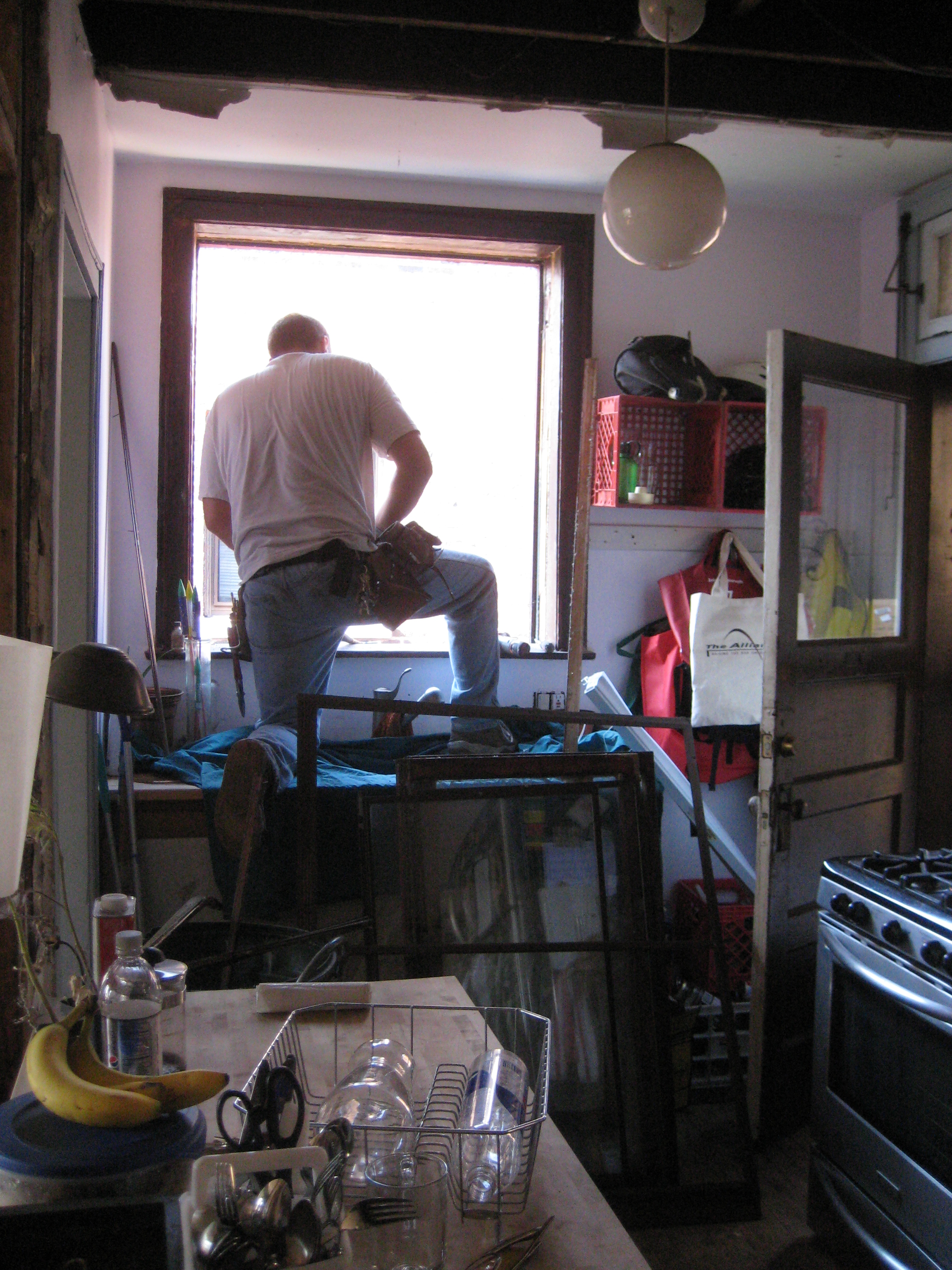
The home we purchased is 18 years old. We knew buying the place that it had its original central air conditioning unit, and with a lifespan of 15 to 20 years, we’d likely have to replace the unit sometime. Since we live in Arizona, surviving without central air is not an option. At $4,000 to $6,000 for a replacement, this home improvement is not a cheap one.
However, that was the only home repair we knew would be coming up soon; the rest of the house passed inspection with flying colors.
Since we moved in, we’ve had several issues that have come up.
The hot water heater burst the first week that we moved in–$560. This went undetected for a few days, so the water leaked into our pantry. The previous owners had given us a homeowner’s warranty, so part of the cost of repairing the hot water heater was covered, but we still had a significant amount to pay out of pocket. In addition, the realtor nicely sent over her contractor to open up the drywall and dry the wet interior. Unfortunately, he never came back to fix the job, so we still have a large hole in our drywall in the pantry and will need to get that fixed at some point.
Air conditioner repair/maintenance–$200. Our first summer here, we didn’t have any trouble with the air conditioning. This summer, I noticed that our air seemed to be running more often and that it wasn’t as cool in the house. In July, our electric bill was $120 more than usual, so I called a repairman. He replaced two pounds of Freon and charged us $200.
Yep, the air conditioner is about ready to give up the ghost, but it will probably bleed us to death financially first.
Home repair tools–$200. Since we always rented, we had to buy basic home repair tools like a ladder, saw, leaf blower (we don’t have leaves but little pieces that drop from our trees and can’t be raked up because our “lawn” is not grass but rocks), etc. My husband discovered that one of our trees was growing into our cement fence, so he had to buy tools to cut down the tree before the tree could push the cement blocks out of place, causing a more expensive repair.
We’ve also had other cosmetic issues that we’ve put off but that will need attention at some point:
Broken doorbell. The doorbell worked during the home inspection, but it hasn’t worked since then.
Broken window treatments. The previous owners left us two blinds that fall down if you try to pull them up. They need to be replaced, but that hasn’t happened yet.
Patio paint. The whole house’s exterior was repainted before we bought it. Our outdoor patio has a roof over it. The previous owners painted the cement ceiling that people can see above the patio. In the 13 months that we’ve lived here, huge patches of paint have come off the ceiling.
How Much Should You Save for Home Repairs
According to US News, “On average, homeowners will spend between 1 to 4 percent of a home’s value annually on maintenance and repairs, which tend to increase as the house ages.” That means if you bought a $200,000 home, you should be setting aside $2,000 to $8,000 annually for repairs, which is no small chunk of change.
However, most people don’t do that, and I can understand why. That’s a lot of money to set aside for an emergency that may, or may not, happen this year.
“‘People know that if they ignore maintenance checks at the 30,000-mile mark on their car or don’t go to their dentist, they could have more serious and more expensive issues to contend with, but we don’t always give our homes the same preventative checks,’ says David Lupberger, a veteran contractor and principal at remodeling and contracting consultancy Remodel Force. ‘The mindset is, if it’s not leaking or smoking, I have time’” (US News).
Considering “just 38 percent of Americans said they could cover an unexpected emergency room visit or even a $500 car repair with cash on hand in a checking or savings account” (CNBC), many, many of us are not saving for unexpected home repairs.
Why You Should Save 1 to 4% Per Year
When we’re talking so much money, why should you save 1 to 4% of your home’s purchase price per year? The answer is simple. Fairly easy repairs, like replacing a water heater, may only cost as much as 1% of your home’s purchase price, but other repairs, like a new roof, can cost much, much more.
If you save 1 to 4% per year, that will allow you to have cash for basic repairs while still saving for bigger repairs that will occur later, like replacing the air conditioning or heating or the roof.
How to Start Saving for Home Repairs and Maintenance
Let’s be honest, when it comes to home repairs it’s not a matter of IF a home repair will come up, but WHEN.
But many people can’t get beyond the sticker shock of saving 1 to 4% per year, especially if it means $2,000 to $8,000 or more annually! However, there are strategies you can use to make it easier to save.
Save what you can. If your budget is tight, like so many people’s, focus on what you can do. Set aside a dollar amount to put into savings. Right now, for my husband and I, that means setting aside $50 a month for home repairs. Yes, that’s only $600 per year, but it’s better than saving nothing. Start where you’re at.
Make your savings automatic. Once you decide on an amount to set aside every month, make your savings automatic. Set up automatic withdrawal from your checking account to a designated account so you don’t even have to think about saving the money.
Increase your savings with each raise you get. As you earn more money, set aside a portion of the earnings to go to your home repair/maintenance fund. Maybe this year, you can only save $50 a month, but maybe after a raise next year, you can bump that amount up to $75 a month. Keep doing this year after year, and you’ll be well on your way to saving 1 to 4% of your home’s purchase price for repairs.
Bank unexpected money. Rather than blowing your tax refund (if you get one) or any unexpected rebates or reimbursements that you get, put some or all of that money in your home repair/maintenance fund.
Invest the money. You don’t want to invest your home repair/maintenance money in the stocks, but you could invest it in mutual funds or a checking or savings account that pays a higher rate of interest, especially as the amount you have grows. By doing this, the money is still liquid, but you are earning more interest.
How about you all? Do you have a home repair/maintenance fund? If so, what percentage of your home’s purchase price do you set aside per year?
Share your experiences by commenting below!
***Photo courtesy of https://www.flickr.com/photos/vinzcha/3898537817/in/
Why Is Share Trading Profitable?

The following is a guest post. Enjoy!
Share trading can be extremely profitable if you have a game plan and know what you are doing. In addition, it is important to have a sound and fundamental strategy. When one uses the term trading stocks they should thing of buying and selling securities within the stock market.
In today’s environment the trader has been equipped with the latest and greatest share trading platforms which allow he/she to take advantage of trading opportunities that traders in the past did not have access to. Prior to on-line trading the best way for a trader to receive information and research a stock was to interact with a broker via the telephone. Today the stock trader has the ability to research stocks both fundamentally as well as technically at the touch of a key stroke.
Presently, there are numerous trading platforms which offer the stock trader execution speed as well as a robust platform with numerous options. The stock trader should do his/her homework to determine what trading options are best for them prior to executing their trades. The term online stock order/trade is simply a set of instructions to either buy or sell a specific stock. The trade is entered into what is called the stock order ticket. The stock order ticket incorporates the action, the number of shares, the specified symbol to be traded, price and the length/duration of the trade.
Although there are many platforms presently available for share trading though trading organizations it is important that one has a general idea on the speed to which their orders are processed. Many share traders today believe that they have a direct connection to the stock markets, however, this is the furthest from the truth. Typically, when you execute a trade the order is sent via the internet directly to your broker who will then decide which stock market to send it to for execution.
As you can see share trade execution is extremely important and you want to be partnered with a broker that can process your trades at the drop of dime. Trade execution is typically seamless but it does take time. Also, prices can change abruptly, particularly in quick moving markets. It is extremely important to understand the significant of order execution. The longer it takes for your order to be placed the chance the trader can lose money on a transition.
There are a number of ways that a trader can develop a strategy focused on share trading. You can evaluate individual stocks and use fundamental analysis and statistics such as earnings per share, and cash flow to determine the future value of a share price. You can also base your strategy off of historical price movements by using technical analysis.
In closing, a stock trader is at the mercy of the technology that he/she works with. If the trader does his/her homework and knows the best tools to you to trade along with the fundamentals of share trading they are bound to be successful with hard work.
How to Build Credit as a College Student

College is amazing—lots of new experiences and new life changes. Even though you’ll be very busy, it is important to also understand that now is the best time to start building your credit for all the other financial changes that you’ll experience after college. From buying your first car to buying your first home, you want to build up your credit while you’re in college so you run into fewer difficulties when those important financial milestones come up.
Here are just a few ways to start building your credit now as a college student:
- Put utility bills and student loans in your name.
If you have bills in your name that require regular payments, this will count toward your overall credit score. Paying cable, gas, water, electricity, or cell phone? Put them in your name! If your roommate(s) are also trying to establish good credit for themselves, consider each of you having one bill with your name on it so that you each can start building up your credit now.
If you have student loans, putting them in your name can also help build your credit.
The most important thing here is that you pay your bills ON TIME. By putting these bills or loans in your name, it is important that the bills are paid on time or else your credit score will suffer.
While you’re at it, be sure to pay off the balance on each bill every month. Carrying over a balance might incur some interest charges as well as look bad to creditors.
- Enroll in credit cards in your name:
Apply for your very own credit card in your name! Make sure you’re not applying for several all at once, and DO NOT under any circumstances agree to co-sign with your friends. If you co-sign on a friends’ card and they slip up by not paying a bill on time or they spend a lot more than they can afford, not only will your friends’ score suffer, but YOUR credit will also suffer.
The same goes for all your other bills in terms of how to maintain good credit with your new credit card: pay your bills on time every month, and pay your balance in full. Try to only use the card for emergencies or small purchases only in order to keep your spending in check and to be sure you can actually pay off the balance every month.
There are many ways to start building your credit early. By following these tips, you’ll be well on your way to financial independence during college and beyond!

Automate Your Savings To Save More Money Quickly

 The following is a post by MPFJ staff writer, Toi Williams, who is a professional personal finance blogger of Fine Tuned Finances. She has backgrounds in personal finance, sales, and real estate.
According to the U.S. Bureau of Economic Analysis, Americans saved roughly $646.3 billion collectively in June. That figure translates to about 4.8 percent of our disposable income. That savings rate is dismal, even though it was up slightly from May. At its most recent peak in December 2012, the savings rate was about 11 percent.
The picture for adults under the age of 35 is even bleaker. In 2014, adults aged 35 and under had a savings rate of negative 2 percent, according to data compiled by Moody’s Analytics. If you are one of the millions of Americans that are not saving enough for the future, don’t despair.
There are a number of methods you can use to automate your savings and save more money quickly. Automating your savings is important because it allows you to continuously save without having to think about it. It also reduces the chances that you will divert the funds for other spending.
Here are some of the best methods to use to automate your savings:
Automatic Direct Deposits
The easiest way to automate your savings is to have the amount you want to save taken out of your paycheck each pay period. Many of the companies that offer direct deposit for paychecks also allow employees to split their check into several different bank accounts. You can have a specific amount or a set percentage of each check deposited into a savings account with the rest deposited into a checking account for spending.
Automatic Money Transfers
If your employer does not provide direct deposit services, you can still automate your savings by setting up an automatic transfer from your checking account to your savings account. Simply log on to your bank’s online portal, determine the amount that you would like to transfer, choose a monthly transfer date, and confirm your choices. Every month, the amount chosen will be automatically transferred from your checking account to your savings account without you having to take any further action.
Sign Up For A Round-Up Program
Several banks now offer a feature where they round up your account transactions and deposit the difference into your savings account. For example, if your debit card purchase from a grocery store totaled $87.60, the bank would deduct $88 from your checking account and deposit $0.40 into your savings account. As anyone who has every saved their change knows, these small increments can add up to a considerable amount of money over time.
Apps That Automate Your Savings
Acorns – The Acorns app automatically invests your spare change in exchange-traded funds. When you purchase items with your credit or debit card, the app rounds the purchase up to the next dollar and invests the difference in previously chosen investments. The service is free for anyone that is under 24 years of age or that is currently a student.
Betterment – The Betterment app allows users to set up automatic deposits that are then invested according to the users’ age, investment horizon, and risk appetite. Betterment then checks your portfolio daily and will automatically rebalance it through buying or selling securities or using deposited cash to purchase additional securities. The program is fully customizable and the parameters can be changed at any time.
Digit – The Digit app analyzes how you spend your money. When it detects that you have extra cash, it automatically deposits it into an FDIC-insured Digit savings account for you. When the money is in your Digit account, it can only be transferred back into savings. It is an easy way to save a little extra money each month.
Qapital – The Qapital app lets users set up savings targets tied to certain financial parameters, such as spending. When a user spends a certain amount of money in one of those parameters, a predetermined amount of money is transferred to a savings account. There is also a feature that lets freelancers save a set percentage of their income automatically to pay their quarterly taxes.
Simple – The Simple app from BBVA allows users to designate a small amount of money that will be transferred to their savings account from their spending funds in small daily increments. Because the transfers are occurring in small amounts on a daily basis, the user will not even miss the money from their account.
Final Thoughts
Automating your savings will save you a lot of time and effort while ensuring you are putting money away for the future. While these options are generally “set it and forget it,” you should still review these accounts on a regular basis to ensure that you are making progress towards your savings goals.
During your review, you may find that upping your contributions to your savings accounts are in order or you may find that too much money is leaving your checking account. Rebalancing these contributions on a regular basis based on your financial situation can increase your future financial stability.
These saving methods work best when the money is allowed to remain in your savings account for a long period of time. Emergency savings that may be accessed at any time should be kept separate from your long-term savings in an easily accessible account with no withdrawal penalties. Your long-term savings should be stashed in an interest bearing account so that your money can grow over time from interest payments.
How about you all? Have you tried any of these automatic money saving strategies? Do you have other automatic money saving strategies you’ve tried successfully?
Share your experiences by commenting below!
***Photo courtesy https://www.flickr.com/photos/68751915@N05/6355251231

Cash – Your Secret Weapon Against Debt

 The following is a post by MPFJ staff writer, Kevin Mercadante, who is a freelance professional personal finance blogger for hire, and the owner of his own personal finance blog, OutOfYourRut.com. He has backgrounds in both accounting and the mortgage industry.
Is there a responsible way to use credit cards? Absolutely! All you have to do is make sure that you pay off your entire balance in full each month – and on time. If you do, you will never incur any interest charges or late fees. And if you have rewards with your credit card, you can even make a little bit extra on your purchases. Good deal? Certainly.
But what if you’re one of the many millions of credit card users who don’t pay off their balance in full each month? And what if you are one of the many billions of credit card users who have accumulated many thousands of dollars in credit card debt?
You’ll need a different strategy. And perhaps the best strategy – as well as the simplest – is to stop using your credit cards and become an all-cash buyer. When we refer to cash, we’re not just talking about the currency in your wallet, but also about using checks and your debit card, since both function effectively as cash.
If you want to get out of debt, going to cash is an outstanding way to do it. Why?
You’ll Never Spend More Than You Have
When you limit yourself to spending only with cash, you can never spend more than the amount of money that you have in your bank account or your wallet. That fact alone will keep you from adding more debt to your current load, and that will hasten the day when you will finally be debt free.
There is one caveat here, and that is overdraft protection. If that in any way, shape or form translates a cash shortage in your bank account into some sort of debt arrangement – such as shifting the shortage over to a credit card account – you’re probably playing with fire. That’s just a backdoor way to spend money using a credit card or some other form of debt.
You Won’t Be Paying For Last Month’s Expenses This Month
One of the biggest reasons why people can’t get out of debt is because they’re always paying for yesterday’s debts. But when you pay by cash, you will put an end to that cycle. If you are already in debt, you have your hands full just paying this month’s expenses – adding last month’s expenses to the list will only put you little bit deeper in the hole.
You’ll Buy Less Because There’s No “Fudge”
One of the inherent problems of spending with credit cards – at least for the undisciplined – is that it is an open invitation to buy more than you can afford. In many cases, people are deep in debt because they have had far too many months in which they spent more money than they had. It’s too easy to add a few extras to the shopping cart, or to trade up on an important purchase, when you know that the extra cost will be covered by your credit card.
No Incentives to Spend
As I mentioned at the beginning, having credit card rewards can be an excellent option to have, but only if you’re paying off your balance each month.
If you aren’t, the rewards are probably functioning as little more than an incentive to spend even more money. This is the entire reason why credit card companies offer rewards programs. They’re betting that you’re going to spend more money on their credit card based on the rewards that they’re providing. In the process, you are far more likely to run up a large balance that will be subject to ongoing interest – which is the life’s blood of all credit card companies.
In short, credit card rewards are a blessing to people who pay their balance off each month, but a curse to people who carry balances.
You Won’t “Pay Extra” For Everything
This gets to the heart of the interest rate issue: when you pay by credit card – and you carry a balance forward – you’re always paying more for everything that you buy because of interest expense. Unless you can pay off your balance in full each month, you will be participating in a financial game that can only work against you, and always will.
As an example, let’s say that you buy a computer for $1,000 and you use your credit card because they are offering 2% cash back. You take the computer, and your cash reward, which means you’ve only paid $980 for the computer. So far, so good.
But if you carry that balance over the next 12 months, and your credit card charges you 15% interest, that will add $147 in interest expense to the cost of your purchase. Instead of paying $980 for the computer, you will actually pay $1,127. And that assumes that you will pay off the credit card balance in one year. If you don’t, you will incur perpetual interest charges on top of your initial purchase.
If you repeat this process many times during the year, you’ll pay more for everything that you bought with your credit card – which is exactly why credit card companies like to offer rewards.
You Won’t Be Increasing Your Debt
No matter what, if you make your purchases in cash, you will not be adding to your existing debt balance. This is critical – if you want to get out of debt, the first step is to stop adding to it. Until you win that battle, any effort that you make to get out of debt will be a losing proposition.
With Cash Your Debt Will Go Away – Eventually
Why is it so important to stop adding to your debt? Apart from the fact that you want to keep your debt from growing, you can eventually get out of debt simply by making your regularly scheduled monthly payments. That can only work if you’re not adding to your existing debt.
Credit card statements typically provide you with information telling you how long it will take pay off your balance using the minimum monthly payment. It may take 10 or 12 years, but if you make those payments and don’t add any fresh debt, you will eventually be debt free.
As those balances decrease, you’ll have room in your budget to make additional principal payments, that will shorten the time that it will take to pay off your balance. But that can only happen if you put a stop to adding new debt. And you can only do that by spending with cash.
If you’re serious about getting out of debt, it’s close to impossible to imagine doing it without becoming a cash buyer.
How about you all? Have you found this to be true? Have you or someone you know been successful in using cash to help you reduce or eliminate your debt?
Share your experiences by commenting below!
***Photo courtesy https://www.flickr.com/photos/stevendepolo/5437288053/sizes/q/