

All posts by Jacob A Irwin
Trois, Deux, Un – Let The 3rd Annual Debt Free Direct Tour de Personal Finance Begin – Let’s Give Away $800!
 It’s almost July!
Hallelujah, we’ve just about made it through half the year. For me, this means that it’s just about time to do a detailed check-in on my financial, blogging, and professional goals as well as my net worth progress so far for 2013.
However, July also means that it’s once again time to break out the spandex shorts, big time trial helmets, and 15.5 lb carbon fiber bikes for the Tour de France bike race, and on My Personal Finance Journey, for the Tour de Personal Finance!
That’s right! For the 3rd year in a row in July 2013, MyPersonalFinanceJourney.com will be hosting the Debt Free Direct Tour de Personal Finance. The Tour de Personal Finance is a month-long Tour de France-themed personal finance-blogging competition. For all of the details on how the competition works, click here.
We greatly appreciate Debt Free Direct for being the title partner of the 2013 event and for all their great support. If you’re interested in learning more about the help and advice Debt Free Direct offers to people in debt or their money-saving tips on how to prevent building up debt, click here.
2013 Tour de Personal Finance Brackets Complete!
This year, we had a record number of post submissions with a total of 64! A very awesome turnout! A big thanks to everyone for participating.
You can view or download a copy of the competition brackets to see which posts will be going head-to-head in each Stage’s Intermediate Sprints by clicking the link below:
2013 Debt Free Direct Tour de Personal Finance Bracket
The Stages will start going live tomorrow!
This year, thanks to a GREAT suggestion from Lance @ Money Life and More after the 2012 Tour de PF, the posts are grouped together by categories instead of scattered using a random number generator. This year’s 9 categories are shown below:
- College Finances
- Side Hustle
- Debt
- Frugal Living
- Job/Career
- Lifestyle
- Psychology of Money
- Retirement Planning
- Saving/Investing
This Year’s Prizes and Charity Give Back Announced
The 2013 edition of the Tour de PF will be doubly exciting because we have some very nice cash prizes to give away to the winner and also to charity to continue helping the community.
These will be as follows:
- Yellow Jersey (1st Place) Winner of the 2013 Tour de Personal Finance will receive $100 cash via PayPal.
- In addition, the Yellow Jersey Winner will also get to decide what charity they want me to donate $700 to in honor of their efforts/victory.
I wish everyone the best of luck, and I’m excited to see how this year’s event will unfold over the next month or so!
***Photo courtesy of http://upload.wikimedia.org/wikipedia/commons/e/ea/Bradley_Wiggins_19_etape_du_Tour_de_France_2012_Chartres_(cropped).jpg

When Should You Leave A High Paying Job?

The following post is by MPFJ staff writer, Catherine Alford. Cat is a freelance personal finance writer who blogs at www.BudgetBlonde.com.
One of the main reasons that people are hesitant to change careers or leave their job is the paycheck, and first let me say, that definitely makes sense.
We all work hard to get paid so that we can do the things we enjoy. That’s the circle of life, or at least, that’s the circle of a professional life. So, the more you earn, technically the more you can save, invest, and spend.
The problem comes in when you’re in a high paying job that you actually don’t like. Dare I say, some of us might hate your jobs, and your high paycheck is the reason you’re paralyzed, stuck, and afraid to take a leap.
I’m not going to be the writer that encourages everyone to quit their careers and backpack around the world. I understand the pressure of having a family to take care of and the fear of the unknown. So, while not everyone will be able to leave a job they don’t like, there are a few instances where I think it should be considered. Here they are below:
Working Too Many Hours
If you’re in a job you don’t like, and you are constantly working, this would definitely be grounds for changing to a different career. You’re staying in your job because of your high paycheck, but you don’t even get to enjoy it! What’s the fun in that?
Remember, we only get one life. Even if you get paid less, imagine how amazing it will feel to have a few evenings off or a Saturday when you don’t have to field endless e-mails. Sometimes, our happiness is worth a smaller paycheck. Plus, wouldn’t it be nice to finally take your wife on that vacation you promised her or take your high school senior to tour colleges?
The Pros Don’t Outweigh The Cons
There are pros and cons to every job. Everyone should be able to agree on that.
Some people have great benefits while others have incredible flexibility. Maybe you get a high paycheck, but you have to work 80 hours a week. Maybe you get endless airline miles from your business trips, but that means less time with your family.
Whenever you are deciding to stay or leave your job, make a list of pros and cons. Add to it over the period of a few days. Think about it, share it with those close to you, and let that help you in your decision.
Perhaps you’ll find that you have way too many pros on your list to leave your job, but the other more exciting side of the coin is that you just might realize there are other possibilities to pursue.
There’s No Room for Improvement
Another valid reason to leave a high paying job is if there is no room for improvement. Sure, you’ve been promised a raise or an even higher paying job, but do you think it’s going to happen?
There are all sorts of reasons why you might not move up in a company. Politics is the biggest reason. Perhaps the CEO’s child is set to take over the company and so it’s highly unlikely you will run it one day. Or, maybe your boss loves you but their boss has disliked you ever since you accidentally took their parking spot on day one.
I know that some of these reasons might not seem substantial, but it’s important to take a hard look at your current position and the people you work with and be honest with yourself about your chances for promotion.
Your Spouse is Over It
Many people wiser than I am have talked about the importance of family and how no job is worth their disappointment. If your spouse is putting pressure on your to quit your high paying job, it’s important to listen to their concerns.
Your spouse knows you better than anyone else, and they can see changes and differences in attitude better than others.
While you may be unable to quit a job you don’t like because you need your paycheck to pay your bills, having an honest conversation about your career path with your spouse is a good first step to exploring possibilities for the future.
It’s Up to You
Ultimately, it’s important to know that this decision is really up to you. You’re the one that has to wake up every day, get dressed, and head to work. You’re the one that has to pay your bills, and you’re the one who has to interact with your coworkers every day.
Quitting a job is no easy feat, especially if you are several years into your career. However, as evidenced in this post, there are a few reasons why you should consider it even if you are pulling in a high paycheck.
How about you all? Have you ever quit a high paying job? What are some other reasons people should consider switching careers?
Share your experiences by commenting below!
***Photo courtesy of http://farm1.staticflickr.com/144/321697588_e6f0478fbf_z.jpg?zz=1
How to Save Money AND Get Free Shipping on Amazon With Amazon Filler Item

 The following post is by MPFJ staff writer, Kelly Gurnett. Kelly runs the blog Cordelia Calls It Quits, where she documents her attempts to rid her life of the things that don’t matter and focus more on the things that do. You can also follow her on Twitter and Facebook.
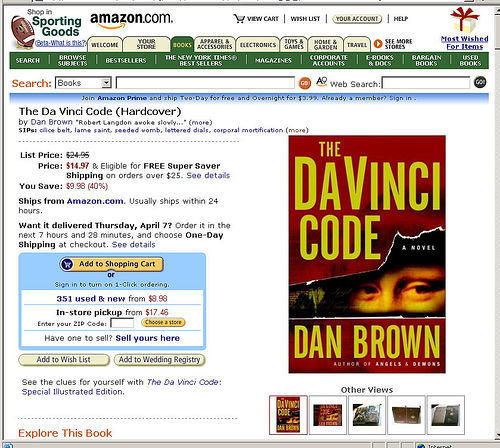
If you’re a regular Amazon shopper, chances are you know the blessing and curse that is Amazon’s “Free Super Saver Shipping.”
At face value, it seems great: just purchase $25 worth of qualifying items, and your order ships for free. What’s not to love?
But if you’re like me, and you don’t always buy $25 worth of merchandise, you can find yourself in a “should I or shouldn’t I” quandary. All you really wanted was the latest book from your favorite author, which comes in at $23.99 for the first-edition hardcover. It would qualify for Free Super Saver Shipping—but you just need a measly $1.01 to be eligible.
Either you find yourself begrudgingly paying for shipping, or you find yourself gazing excitedly at your Wish List like a kid whose mom just told him he can get a candy bar in the checkout line. You were planning on waiting to buy that fun new iPhone case until you had more money for it, but now that buying it will help you save on shipping (both for it and for the book), it actually makes sense to buy it a little early…right?
Fear not, savvy shoppers. For I have discovered a fantastic site that takes away the temptation to over-purchase which, I’m sure, was Amazon’s whole reason for offering the free shipping carrot to begin with. It’s called Amazon Filler Item, and it’s about to become your new best friend.
How It Works
Let’s say you do have $1.01 left to qualify your cart for Free Super Saver Shipping. What this site will do is show you every qualifying item close to that price that will nudge your total over the top without nudging you to buy a pricier item out of the justification that it will “save you money.”
Head on over to Amazon Filler Item and type “1.01” into the box that asks you how you much you need for free shipping. The site will generate a list of items from $1.01 on up to $1.27 that qualify for Free Super Saver Shipping.
Be forewarned that you will need to do a little digging (most of the items are random pieces of hardware like nuts and bolts), but the list is only a few pages long, and it’s totally possible to find something within the $1.01 to $1.27 range that won’t be a waste of your money. (And certainly not as much of a waste as that new iPhone case would!)
For instance, you could get a wire-wound notebook for $1.04 (and you can always find a use for a notebook). You could get a window sealing kit to stop drafts and save money on heating come winter. (Saving you on two fronts!) You could pick up a new scrub brush or roll of Scotch tape (also things you’re bound to use.) Or, if you’re a handyman and you actually could stand to stock up on random pipe fittings, bearings, and other odds and ends, you’re in luck!
Since discovering this site, I’ve gotten note pads and bungee chords for tying our trunk down when transporting large items—both of which have been or will be put to use shortly. I’ve also avoided several impulse purchases I’m pretty sure I would have made if I hadn’t found these handy filler items.
I’ve also gotten the lovely feeling of beating the system, which any true bargain-hunter always appreciates.
How about you all? Are you an Amazon shopper? Have you fallen prey to the Super Saver Shipping temptation before?
Share your experiences by commenting below!
***Photo courtesy of http://www.flickr.com/photos/kokogiak/8626470/sizes/m/in/photostream/
How to Utilize Gazelle Intensity When You’re Facing Years of Debt Repayment

 The following post is by MPFJ staff writer, Melissa Batai. Melissa is a freelance writer who covers topics ranging from personal finance to business to organics to food. She blogs at Mom’s Plans where she shares her family’s journey to healthier living and paying down debt.
CHEEEEEETAAAAHHH!!!!!
If you’ve spent any time listening to Dave Ramsey, whether it be on his popular radio show or his Financial Peace University class, you’ve likely heard his explanation of gazelle intensity. This explanation includes an amusing bit where he imitates the gazelle seeing the cheetah, screaming CHEEEEETAAAHHH!, and running for its life.
That’s how Ramsey advocates people paying down their debt–like a gazelle running for its life from a cheetah.
Are you getting tired running like a gazelle? Too bad, Ramsey’s thought process goes. A tired gazelle gets eaten by a cheetah.
Getting out of debt is hard work, and if you want true freedom, you need to keep going strong until the debt is gone. He even references the Bible verse Proverbs 6:4-5, “Give no sleep to your eyes, nor slumber to your eyelids. Deliver yourself like a gazelle from the hand of the hunter, and like a bird from the hand of the fowler.”
That’s fine if you have a year or less of gazelle intensity to get completely out of debt, but for many people, paying down a large amount of debt should be more of an endurance race than a sprint.
Making Gazelle Intensity Work When You’ll Need Years to Pay Down Debt
So, if you’re facing tens of thousands, perhaps even hundreds of thousands of dollars of debt and years of hard work, how do you make gazelle intensity work for you?
- First, understand that one component of Ramsey’s gazelle intensity is avoiding any new debt. That means cutting up the credit cards and paying in cash. Even if you do have years to pay down debt, this is one aspect of gazelle intensity that you should embrace. You’ve likely seen friends or even bloggers who say they are committed to paying down debt, but then they let their debt increase every few months. After a year or two, their debt isn’t much lower than it was when they started. Make the commitment to avoid any new debt when you decide you’ll be dedicated to a life without debt.
- Second, consider being gazelle intense in spurts. We started our debt repayment journey 20 months ago. At the time, we had nearly $58,000 in student loan and credit card debt. Even worse, our yearly salary was much less than our total debt.
We were gazelle intense for about 5 months before we got fatigued. Then, we didn’t accrue any new debt, but we began to pay it down more slowly. This let us take care of other expenses like car repairs and school tuition.
When our large expenses were paid, we became gazelle intense for a few more months. Then we took another break.
If you have a great deal of debt to pay down, you may find that being gazelle intense for a few months and then taking a break works best. We took a break for most of this winter, but now we’re on a four-month gazelle intense spurt. If everything goes well, by the end of the summer, my last student loan will be paid off.
The Gazelle Intense Period Followed by a Rest Period Can Keep You Motivated
Being gazelle intense is a bit like going on a crash diet. There is only so long you can maintain such strict discipline before you give up or worse yet, gorge yourself and gain the weight back. If you’re gazelle intense for a few months and then ease up, you’ll likely find it easier when you’re working hard to get out of debt.
I’m certain if we would have tried to be gazelle intense for 20 months, we would have given up by now. Instead, we’re energized to meet our latest goal of being free of my student loan.
How about you all? Have you tried to be gazelle intense in spurts during your journey to pay off your debt? If so, did it work for you?
Share your experiences by commenting below!
***Photo courtesy of http://www.flickr.com/photos/frted/5823429550/
This Summer I’m Telling My Kids to Charge It!

The following post is by MPFJ staff writer Travis. Travis is a customer blogger for Care One Debt Relief Services, and also appears weekly at Enemy of Debt. Travis candidly shares his personal journey to pay off $109,000 of credit card debt and the tips he’s learned along the way. As a father and husband he provides a unique perspective on balancing debt, finances, and family.

My wife and I racked up $109K of credit card debt by misusing credit cards. I don’t want my fourteen year old son and eleven year old daughter to follow in our footsteps, so this summer I’m going to do something a little unconventional.
I’m going to let them use credit.
I’m not suggesting I let them become credit card swiping junkies by going on a summer shopping spree. Please, allow me to explain.
For the second summer in a row, we purchased a summer membership at a full service gym. It has a ton of activities including an outdoor pool and a huge indoor play area called The Neighborhood where kids of all ages have access to basketball courts, mini-golf, batting cages and much more. Kids my son’s age can roam the club freely and use it as a social gathering place being dropped off by their parents and picked up after an afternoon of hanging out with their friends.
While at the club, the kids commonly ask to get something to eat or drink at one of the club’s snack shops. Customers can pay with cash, or they can choose to charge the bill to their account and have the purchase included in their next monthly bill.
We told the kids that we will purchase two things for them each week, but anything additional that they charge will come out of their own pocket. I’m not going to force them to charge their items, however. If they would rather bring their own cash along to the club, or just simply not exceed the two items per week maximum, more power to them. Otherwise, when the monthly statement arrives in the mail, we’ll go through it as a family adding up the purchases from their unique membership number that exceeds the limit.
The amount owed must be paid by the due date on the bill.
I’m using our summer membership at this gym as a financial teaching opportunity for the kids. This gives them a relatively safe environment to see how credit is used in daily life, as well as allowing them to get a taste for the temptation of charging and not having to pay anything right away. They can also feel the consequences of giving into that temptation.
Such as realizing buying nachos every afternoon at the pool sucked away most of their allowance for the month.
Our kids are generally aware of our situation. They don’t know the exact numbers, but they do know that we have credit card debt, and that we are digging our way out with the help of a debt management program. They understand we got into this situation by spending too much through abusing credit cards. But, I do not believe they have a full appreciation as to how credit cards work, or how easy it is to misuse them.
I hope that through this exercise they will gain that appreciation, and together with the experience of what our family has gone through to dig out of debt be more fully educated to prevent them from repeating our mistakes.
How about you all? Would you let your kids charge things on credit? Do you think it will better prepare them for handling their finances as an adult?
Share your experiences by commenting below!
***Photo courtesy of hin255 / FreeDigitalPhotos.net
How Do Payday Loans Work?

 The following is a guest post. Enjoy!
We all have times in our lives when we’re a little short of cash. Unless you’re very fortunate, there might be one or two occasions where you find yourself a little short. There’s no reason, however, why this has to turn into a long-term financial problem.
If you find yourself saddled with a couple of significant bills at the wrong time of the month, there is a chance that you could fall behind with your payments, finding yourself playing “catch-up” for long periods of time. With a payday loan, you can borrow the money you need to cover your bills and the lender will set a repayment date that is advised to be convenient for you. This may be more sensible than getting into debt for the sake of a few days.
How Are Loans Arranged?
Payday loans are generally uncomplicated and easy to arrange. There are less stringent credit or bank checks to go through. Simply apply online, and you can get ahold money by emailing, or in some cases, texting when you need it. Check your account as little as fifteen minutes later and the money is there, waiting for you to use it as you see fit. The only thing you need to concentrate on at this point is establishing a repayment structure, which can be where many folks get caught up.
This is not a long-term financial solution, but then again, not every financial problem is long-term. Sometimes, it is the short-term that can cause the problems. Being flexible and having the ability to deal with money problems when they arise will help you greatly in the long-term. Why let debts build up and get on top of you when you can deal with them straight away?
You can find out more information about getting a payday loan online. They make it easy for you to arrange and provide loans to deal with short-term problems. This might be just the solution you are looking for to solve your money worries. Find out more about text loans by clicking here. Imagine a time when you don’t have to worry about waiting for pay-day to sort out the bills and debts. A payday loan could be a do-able way to help you enjoy the rest of the month without the prospect of debts hanging over you.
***Photo courtesy of http://www.flickr.com/photos/68751915@N05/
Why the Lowest Cost States Aren’t Always the Best Places to Retire

An increasingly important retirement strategy is relocating to a place where the weather is warmer and the cost of living is lower. There is considerable debate as to which states offer the most advantages to retirees, and a new list seems to come out just about every month.
Some favor low house prices, others low taxes, and still others, a low cost of living overall. This is of course an important consideration for retirees, since lowering living expenses is the critical other half of retirement planning (retirement investing being the first half).
AARP has a list of preferred states – and the reasons why they are included – on its website, which is actually provided by a site known as MoneyRates.com;:
1. Hawaii — great weather and high life expectancy
2. Idaho — low crime rate and good economy
3. Utah — good economy
4. Arizona — good weather and high life expectancy
5. Virginia — good economy
6. Colorado — high life expectancy
7. Florida (tie) — good weather
7. New Mexico (tie) — good weather
9. South Dakota — low crime rate and high life expectancy
10. California (tie) — good weather and high life expectancy
10. Texas (tie) — warm weather and solid economy
I don’t think that this list is any better – or any worse – than any others that I’ve seen, but since people tend to like lists I decided to include it here as well. It does strike me as a bit peculiar that two very high cost states, California and Hawaii, appear on the list. High cost and retirement are not usually found in the same sentence.
As is my preferred way of blogging, I’d like to take a contrary position on the idea of relocating for retirement. It’s not that relocating to take advantage of certain benefits at remote locations is a bad thing. But as a transplant myself, I would like to point out some of the downsides of relocating so that if you are considering such a move for retirement, you will be fully aware of some of the less attractive (and less reported) aspects of relocation.
Home is where the heart is – and that includes family
As I wrote above, when it comes to retirement, people often look to relocate to take advantage of milder climate and lower prices. But, there can be a cost to chasing those advantages that doesn’t involve money. If your family and friends are concentrated where you live now, a move to another state will take you farther away from them. You have to give very serious consideration to whether or not that is a price you’re willing to pay.
The greatest cost will be emotional of course, but there are more tangible expenses as well.
If you are retiring at 65 or thereabouts, you’ll probably find that you will have a greater need for support from family and friends than ever – after all, you’ll be older. You’ll also have to factor in the hard costs of traveling to visit your suddenly distant kin. In addition, as you get older you may find that you’re neither physically nor emotionally able to make the trip on a regular basis.
There’s still another factor that’s retirees often don’t consider when making an out-of-state move and it’s the inability to adjust to living in a different location. This can be especially true if you’ve spent all or even most of your life living in your current location. The prospect of taking on the unknown in retirement is exciting – but the comfort of familiarity tends to increase as we get older.
Lack of amenities that you take for granted now
If your primary purpose in relocating is to lower your retirement living expenses, you may not realize some of the amenities that you’re giving up by making the move. Consider some of the following:
Cultural amenities. The older, higher cost cities (New York, San Francisco, Chicago, Boston, etc.) that so many people want to flee in retirement, also offer cultural amenities not found almost anywhere else. If you are leaving a large city in favor of a beachfront community or small rural town, you’ll almost certainly be saying goodbye to those amenities in your everyday life. The theater, the variety of restaurants, the museums, quaint old neighborhoods, and shady parks may not be a part of life in the new location.
Medical facilities. Another common feature of high-cost cities is that the health care community tends to be very large and comprehensive. As you get older, this will become an increasingly important factor in where you live. Small, low-cost communities typically don’t offer anything close to the level of medical facilities that large cities do. Just as the case will be with visiting family and friends, you may find yourself traveling to get needed medical care at significant additional expense.
Economic benefits. This is an often overlooked benefit of living in a large, high cost area. The area is typically high-priced because it has a strong economy. While we might not think that this is important in retirement, it very well may be if you are hit by a rash of expenses that forces you to seek some form of employment in order to keep from digging too deep into your retirement portfolio. In many less expensive locations that retirees tend to favor, there may be little more than minimum wage part-time jobs available. In a large city – especially if it is your home turf – you may have significant contacts that would enable you to return to the workforce even temporarily, at a much higher wage.
Inconvenient geography
We’ve already touched upon the need to travel that comes with moving to remote locations, but there’s a lot more to geography than just travel distance.
If you grew up in a mountainous area, you may find yourself uncomfortable living in an area that is primarily flat lands. Similarly, if you grow up in a lush, heavily forested area, you may not be entirely comfortable living in the Arizona desert.
Apart from natural landscape, you may find it difficult to adjust to a small community, after living in a large metropolitan the area. While we usually think of America as being one country, life can be quite a bit different from one region or state to another, and even from one city to another within the same state.
Some people can adjust to this change fairly easily, but not everyone can. If you are really comfortable with “the way things are” in your current location, you may want to think long and hard about your ability to make what could be a radical change in a completely different location.
The weather may not be as great as is seems at first glance
Undoubtedly, there’s been a massive shift of the retirement population from cold weather climates to warm/hot climates. While that may seem like a natural move, it doesn’t always work out so neatly for everyone.
Some people find upon moving to the Sun Belt, that they never fully appreciated the change of seasons where they used to live. If you relocate from the Northeast to Florida, you’ll find out if you can handle this change pretty quickly. Not everyone can and some return home after a few years. You may discover that your primary appreciation for warm weather was the fact that it’s different from the cold weather that you knew so well. As a result, living in an area of perpetual summer may not be quite as enjoyable as you anticipated.
Where the weather is concerned there can also be subtle differences. For example, if you live in a fairly dry climate, and you move to one that is more humid, you may find it to be a lot less comfortable. It can also interfere with, or even cause, respiratory ailments.
If you plan on relocation in retirement, measure the costs – all of them
Does this mean that you should not consider relocation as part of your retirement strategy? Not at all. But if you are planning to relocate, it’s well worth doing some advance planning.
Years ahead of your retirement, you should begin investigating various locations to find the one that is most appealing to you. When you do, you should visit that area as often as you can. This is partially so that you can learn as much as you can about the area, but also so that you can develop some level of familiarity with it.
The worst thing you could do is move to an area at retirement, after having visited only once or twice. The more you visit an area, the more you’ll discover what it is about the area that you like – and what you might not like so much. Give yourself plenty of time to make adjustments before you retire.
You may find that you’ll miss your family, friends and home town too much to replace them with beaches, palm trees and perpetual summer.
How about you all? Are you planning to relocate when you retire? Have you thought about any of these considerations?
Share your experiences by commenting below!
***Photo courtesy of http://www.flickr.com/photos/teegardin/6669045131/sizes/n/in/
Are Small Loans Necessary?


The following is a guest post. Enjoy!
It’s a couple of weeks since your wages got paid into your bank, but you’re running dangerously low on cash and still have another week or two until your next payday. This might be a familiar scenario for many, as your options when faced with this dilemma may seem limited. Short-term cash loans can provide the answer, but just what can you do with a small loan loan?
Short-Term
People consider turning to short-term loans to keep them afloat until payday as their incomes are squeezed even further by financial cutbacks. Whether you’ve had a huge bill land on your doormat or you’ve just spent a bit too much this month, sometimes, a helping hand is desired now and again.
When you’re short on cash, it can be a nightmare trying to juggle your bills but a small loan could help. Most of the time, short-term payday loans can be paid into your bank account within the hour which is great for people who are desperate for extra cash (however, they often have +1000% APR interest rates, so watch out!).
As with all financial matters, there are both pros and cons to a small loan. This makes it important that you weigh up both before going ahead.
Pros and Cons
These short-term and fast approval loans save you the embarrassment of asking your family or friends for cash and also mean that you’ll be able to cover your expenses, but they can be an expensive way to borrow.
Although credit checks are still performed, they may be more relaxed than with applications for long-term credit. This means small loans are available to most people; even those with poor credit scores and repayment histories.
You’re advised never to use these loans for superfluous purchases, but when emergency situations arise then can offer a real lifeline to those strapped for cash. The important thing is to borrow responsibly, only applying for the amount of money you need and not relying on these short-term loans as a long-term debt management plan.
Impartial Advice
If you’re looking to boost your cash position this month, then it’s important you research all of your options. Are you considering a £100 loan? Even though £100 may not seem like a lot of money to borrow, it’s still worth taking the time to seek advice and there are plenty of great resources online who you can consult. Short term cash advances are an possible way to get a bit of extra money, but they aren’t designed to solve long-term debt problems. A £100 loan could be a financial alleviator, but it’s still recommended that you take the time to understand it fully before applying so that you’re sure it is what you need.
***Photo courtesy of http://www.flickr.com/photos/bfishadow/4237025430/
The Best Ways to Manage Properties Successfully

 The following is a guest post. Enjoy!
In this post, we’ll discuss something that would definitely make all the real estate and property managers chary and curious. Here are some influential and effective suggestions for people who are looking for the well tried-and-true ways and practices of an experienced property and real estate manager, who has the knowledge of how to manage and operate a booming property business that can bring a fortune for them and avoid pointless mistakes, financial losses, and wasting of time. These suggestions are very significant, and hence, it is important to invest time in learning and understanding these secrets.
As a property or real estate owner or manager, it’s not at all easy to become satisfied and rely on our success. A single mistake can cost a lot in this profession. So, it is advisable for the real estate managers to stay vigilent. It is good idea to associate with the local associations that comprises of a list of commercial and residential properties, like multi family residential homes and apartment housing areas. Do attend the monthly meetings to learn new methods, to acknowledge latest property trends and to meet well-known and experienced property dealers or managers. This might help you in getting leads for your new client!
The best way to manage the property business is to embody yourself as your company. This can be the most efficient tip, which can help the property managers to enhance their ultimate results. Aims and fresh suggestions blended with inimitable experience and background are the main features that can open the doors of success and bring the expert excellence within you. The process of becoming a successful and efficient property manager includes aspects like never failing to take care of your employees, because a committed staff serves as the best resource for earning reputation and glory. Work hard to enhance your knowledge and proficiency as you are the very first employee of your company.
You not only work for the company but you are the face of your company, so you need to sharpen your talents and skills in order to build trust and confidence amongst your potential clients. Life of a real estate manager is not easy, as he or she needs proper time to eat, rest and exercise in order to keep their body and wits fit. Ensure that your personal relations might not affect your property related decisions, this can cost you a lot in future. With these suggestions, you might not become a perfect property manager, but you will definitely witness that you are better than what you were before.
The key to achieve a flourishing career in the property and real estate sector is to celebrate and enjoy the big as well as small success and gains, and bounce back and learn from the failures. Always keep your level of enthusiasm high and at the same time, always maintain that curiosity, which powers your determination to search for more beneficial methods to achieve more success and transform yourself into a perfect property manager in future!
How about you all? Have you ever served as a landlord? If so, what tips can you share that facilitated your success?
Share your experiences by commenting below!
***Photo courtesy of http://www.flickr.com/photos/kenlund/6052193940/sizes/
Why Are We In More Debt Than Our Parents?

It’s not really a secret that many people in their 20’s and 30’s struggle with debt. However, what I didn’t realize is that young people today have thousands of dollars more in debt than our parents and grandparents did at our age according to a recent article published by NBC news.
Why are we in more debt than our parents? What went wrong?
Here are some possible explanations:
Rising Tuition Costs
The average student loan debt in our country is $25,000. Mine is currently at $36,000. My husband’s is well into the six figures. This is due to pursuing graduate educations but also to the ever increasing tuition costs. They are going up so rapidly that I wonder how I will ever afford to send my kids to college.
The last thing I want is for my kids to be strapped with their own student loans. We’re supposed to make things better for them, right?
I’m not sure what can be done to combat this, since universities certainly aren’t going to lower their tuition rates. What I might do is send my kids to a community college or have them complete some online college classes while they are still in high school to hopefully shave off a year or two of their tuition costs.
Increase in Materialism
There are so many more things to buy than there were when our parents and our grandparents were our age. With the dramatic rise in technology, there are an unlimited amount of expensive gadgets that everyone just has to have. Regardless of whether or not they can afford one, many people have big screen TVs, smart phones, and nice cars.
Essentially, we’ve redefined what “needs” are. The line between needs and wants is much more muddled these days.
Our grandparents would have never even considered a nice meal out during the Depression. Why, when we’re in our own recession, do we have so much trouble living with less?
The Connectivity of Our Generation
You’ve heard it said many times before: We’re more connected than ever before. There are obvious benefits to this, such as talking to friends and family all over the world with great ease, working with businesses across continents, and staying in touch with friends from grammar school.
Yet, the connectivity has also been detrimental to our generation. It’s allowed people to see celebrities tweeting their latest travel destination and reality TV stars buying million dollar mansions. It’s made us feel “closer” to those who live extravagant lives, further perpetrating the myth that we should all live that way (or even worse, that we all deserve to live that way.)
This connectivity has also inspired a lot of comparison and competition, especially among friends. How many times have you felt down about your own marriage or your own children because of something someone else posted on Facebook? How many times have you felt jealous because someone posted about their shopping spree, showcasing their “hauls” on YouTube? All of these issues contribute to the rising need for our generation to buy more things to try to project a positive, ”richer” image to others.
We have to get better about this, and it starts with maintaining more of a level head when it comes to spending.
Lack of Financial Literacy
While rising tuition costs, the recession, and our connectivity all contribute to the debt issues that our generation currently faces, the real perpetrator is a lack of financial literacy. I can’t remember anyone sitting down and telling me to be careful about taking out student loans. In fact, many encouraged me to do it to make my life easier.
While I had to complete several “quizzes” online for my college loans to go through, I didn’t really understand what I was reading. All I really gathered from it was that I’d have to pay them back someday, something that was easy enough to understand.
I fully acknowledge that the information was out there for me to learn about myself, and I should have. I should have sat there and crunched the numbers to understand what I was really, truly doing. But, I didn’t. And neither did millions of other college students my age who took out large loans to go to school and graduated in the middle of a recession.
In my very humble opinion, financial literacy is what we need to tackle first in order to make some much needed changes around here. Essentially, if we don’t teach our kids the hard financial lessons we’ve learned, this debt situation could get much, much worse when it’s their turn.
How about you all? Why do you think that we have more debt than our parents? Is it for the reasons listed above, a combination of them, or something else entirely?
Share your experiences by commenting below!
***Photo courtesy of http://advocacyinternational.co.uk/wp-content/uploads/2010/07/Debt-Cartoon_banner3.jpg