

All posts by Jacob A Irwin
The Importance of Good Customer Service
 The following is a guest post. Enjoy!
It cannot be denied in the current economic and regulatory climate that excellent customer service is crucial.
Where previously, a customer was at the mercy of bank policies and charges, the current focus (especially in the press) is certainly on treating customers fairly. It is difficult to go two days at the moment without the banks being in the news for mis-sold products, complaint volumes, public apologies and system failures.
Here lately, the large financial institutions have been blighted by continual payouts on high-profile issues. Primarily, this has been due to the sale of an insurance product provided with lending called Payment Protection Insurance (PPI). In the 1990’s and 2000’s, banks made significant levels of non interest income. However, the High Courts ruled that customers had not been appropriately informed of the costs and most customers were deemed to not require the product in the first instance. This has lead to Banks having to provide high levels (c£10bn total in UK banks) of profits for potential refund and uphold cases.
This has lead to a wildfire in other banking products with continued regulator focus on the suitability of products and information provided to customers. Non retail small and medium enterprises are the latest group looking to the banks for refunds after the sale of loans incorporating interest rate hedging products. These are products that intended to cap the interest on a product if the interest rates rose further. Unfortunately, most of these products were provided when the UK base rate was 5% (compared to 0.5% at present) hence when the rates fell the associated costs on the hedging products rise in correlation to the interest base rate fall. Similarly, this has lead to the public ensuring products are sold appropriately to fully knowledgeable parties.
Naturally, this has led to many banks reevaluating their marketing strategies to protect their brand image and make their products simpler, more transparent with features that are beneficial and easy to understand. Account switching is also being made easier in the UK to allow customers to take advantage of greater competition in the marketplace. In any case customer service is in the forefront of both the industry and public mind.
***Photo courtesy of http://upload.wikimedia.org/wikipedia/commons/e/ea/First_Customer.JPG
Debt Free Direct Tour de Personal Finance, Stage 3 – Debt Group – Posts 21-24

Without further ado, let’s continue on with the 3rd Stage (featuring posts from the “Debt” category of articles submitted) of the 2013 Tour de Personal Finance (to follow all of the action, click on the Tour de Personal Finance category link and scroll down to read all the posts involved in this subject).
We greatly appreciate Debt Free Direct for being the title partner of the 2013 event and for all their great support. If you’re interested in learning more about the help and advice Debt Free Direct offers to people in debt or their money-saving tips on how to prevent building up debt, click here.
A Quick Reminder On Prizes For The 2013 Competition
The 2013 edition of the Tour de PF will be doubly exciting because we have some very nice cash prizes to give away to the winner and also to charity to continue helping the community.
These will be as follows:
- Yellow Jersey (1st Place) Winner of the 2013 Tour de Personal Finance will receive $100 cash via PayPal.
- In addition, the Yellow Jersey Winner will also get to decide what charity they want me to donate $700 to in honor of their efforts/victory.
To view the most up-to-date brackets of the competition, click the following link – 2013 Debt Free Direct Tour de PF Bracket
Going along with Tour de France cycling tradition, I’ve listed each competition within each stage as an “intermediate sprint” (one post versus another) along with the description provided by the blog author when the post was submitted.
Also, if applicable, I will give a brief description of the stage of the Tour de France that took place the same day as (or that has happened since the previous Stage of) the competition.
How to Vote
You can vote for the two articles (one from each intermediate sprint) you’d like to see proceed in the Tour by commenting in the comments section below and telling which are your favorites. I’ve listed a keyword after each post title to make it easy to vote (as a made-up example, you can just comment: Sprint 1: Mutual; Sprint 2: 401k, etc.)
Be sure to comment which one you like the best out of each set of two! Criteria for the best article is completely up to you, but you can use these factors as a guide: 1) post of your favorite blogger, 2) most interesting post, 3) most thought-provoking post, 4) most unique post, or 5) most actionable post.Here are today’s competitions:
Voting will continue until July 1st for this Stage!
Intermediate Sprint #1
- Which Is Harder: Paying off Debt or Saving Money? (Harder): Every week, I get asked whether someone should pay off their debt first or save instead, and every week I pretty much say the same thing: Go with whichever one makes you feel better. I often wonder afterwards, though, which side – indeed – IS the easiest to accomplish? Is it debt cuz you hate it so much and there’s an absolute number attached to it? Or is it savings cuz having tons of money in the bank is sexy as hell??
VERSUS
- Working Towards A Debt Free Lifestyle In 8 Steps (Steps): Debt Freedom means taking yourself to the next level. Debt Freedom means you want to work towards your goals. Debt Freedom means you want to live a stress free life Debt Freedom Starts Now! Take charge of your freedom, your debt freedom by educating yourself on ways to improve and how to forget about the rest and worry about you and your money.
Intermediate Sprint # 2
- Dealing With Debt: Seven Steps to Debt Busting (Busting): This article is awesome and should win because in it I share the seven ‘easy’ debt management steps that helped us pay off $157,000 worth of debt in three years. These are a combination between changing habits, learning new competencies, and changing our attitudes.
VERSUS
- Should You Pay Off the Mortgage ASAP? (Mortgage): So many people come up with reasons why they shouldn’t pay off their mortgage early, but is it really the smartest option? What if you aggressively paid off your mortgage? What are the benefits? As it turns out, there are a TON of them!
Tour de France Daily Recap
Unfortunately, the Tour de France doesn’t start in real life until TOMORROW – Saturday, June 29th (we had to get started a little early this year due to the larger number of entries!).
This year’s Tour features some really cool things for us to look forward to though.
- First, it is the 100th edition of the event.
- Second, the Tour will start from the island of Corsica, the only time in the race’s history that it has visited that Department.
- Third, it will be the first time since the 2003 that the event will take place entirely on French roads (no visits to neighboring countries).
- Finally, the race features a Stage in which the famous climb of Alpe d’ Huez (one that I’ve actually done myself, and can attest to how hard it is!) will be climbed not once, but twice. I’m not quite sure how the logistics will work out with that, but it should be very entertaining to watch!
Extreme Retirement Saving – Is it For You?

 The following post is by MPFJ staff writer Travis. Travis is a customer blogger for CareOne Debt Relief Services, and also appears weekly at Enemy of Debt. Travis candidly shares his personal journey to pay off $109,000 of credit card debt and the tips he’s learned along the way. As a father and husband he provides a unique perspective on balancing debt, finances, and family.
A person walks through the grocery store, and executes a pre-determined shopping plan, filling cart upon cart with products. After going through the checkout counter and redeeming a pile of coupons, their truckload of goods costs them little more than pocket change.
You may have heard of this, it’s called extreme couponing.
A comment was left recently on a post of mine that completely blew my mind and reminded me of extreme couponing. The author lamented dropping $80 for a restaurant dining experience she didn’t particularly enjoy. She joked it would be wise for her to not do the calculation to determine how much that meal cost her in retirement funds as it may result in heartburn.
I’m sure the statement was simply light-hearted joking, but I couldn’t help but have an image pop in my head of a person going through life analyzing every purchase to the point of knowing how much it would affect their retirement funds.
This isn’t extreme couponing, this is extreme retirement saving.
Tracking your spending and knowing how each expenditure affects the budget can prevent a person’s finances from going off the rails, but can you imagine going to such extreme analysis for each purchase?
Buy a $1 soda? That’s $4.50 less you’ll have in your retirement coffers
How about a $6 value meal at a fast food restaurant? Shave another $27 off that nest egg.
With the right perspective, it could have some benefits. Having such numbers handy for some common items (especially those on which a person typically overspends) could help a person make a decision about whether a purchase is really worth it. But taken to the extreme, it could be almost debilitating as a person agonizes over every purchase.
I wouldn’t want go through my life simply trying to build as much wealth as possible for retirement. With that kind of perspective, I may not know how to start enjoying what I’d saved by the time I get to retirement. I do want to regularly analyze how much I will need to save to maintain the lifestyle I desire when (or if) I decide to retire. As long as I’m meeting that goal each and every month, I will ENJOY any funds are left over.
Because Life is worth living. All of it.
What do you think, readers? Would you want to know the effect each purchase would have on your retirement account? How extreme is your retirement saving?
***Photo courtesy of Stuart Miles / FreeDigitalPhotos.net
Debt Free Direct Tour de Personal Finance, Stage 3 – Debt Group – Posts 17-20

 Without further ado, let’s continue on with the 3rd Stage (featuring posts from the “Debt” category of articles submitted) of the 2013 Tour de Personal Finance (to follow all of the action, click on the Tour de Personal Finance category link and scroll down to read all the posts involved in this subject).
We greatly appreciate Debt Free Direct for being the title partner of the 2013 event and for all their great support. If you’re interested in learning more about the help and advice Debt Free Direct offers to people in debt or their money-saving tips on how to prevent building up debt, click here.
A Quick Reminder On Prizes For The 2013 Competition
The 2013 edition of the Tour de PF will be doubly exciting because we have some very nice cash prizes to give away to the winner and also to charity to continue helping the community.
These will be as follows:
- Yellow Jersey (1st Place) Winner of the 2013 Tour de Personal Finance will receive $100 cash via PayPal.
- In addition, the Yellow Jersey Winner will also get to decide what charity they want me to donate $700 to in honor of their efforts/victory.
To view the most up-to-date brackets of the competition, click the following link – 2013 Debt Free Direct Tour de PF Bracket
Going along with Tour de France cycling tradition, I’ve listed each competition within each stage as an “intermediate sprint” (one post versus another) along with the description provided by the blog author when the post was submitted.
Also, if applicable, I will give a brief description of the stage of the Tour de France that took place the same day as (or that has happened since the previous Stage of) the competition.
How to Vote
You can vote for the two articles (one from each intermediate sprint) you’d like to see proceed in the Tour by commenting in the comments section below and telling which are your favorites. I’ve listed a keyword after each post title to make it easy to vote (as a made-up example, you can just comment: Sprint 1: Mutual; Sprint 2: 401k, etc.)
Be sure to comment which one you like the best out of each set of two! Criteria for the best article is completely up to you, but you can use these factors as a guide: 1) post of your favorite blogger, 2) most interesting post, 3) most thought-provoking post, 4) most unique post, or 5) most actionable post.Here are today’s competitions:
Voting will continue until July 1st for this Stage!
Intermediate Sprint #1
- Is the College Debt Bubble about to Burst? (Bubble): Student loan debt has officially become a crisis. I explore one of our most important questions and greatest challenges as a nation. Is the College Debt about to Burst?
VERSUS
- Should I Pay Off My Mortgage Early? (Mortgage): If you own a home, a significant portion of your income each month goes towards paying down your mortgage. Although most Americans would rather have no debt and interest payments, with interest rates at record lows, the traditional thinking and logic behind accelerating your mortgage payments may not apply anymore. From the benefits of liquidity and emergency funds to higher yield investments and retirement funding, there are much better ways to use your free cash flow. Stop seeing all debt as bad, and realize that a healthy amount can actually help further your financial goals.
Intermediate Sprint # 2
- What Kind Of People Live Without Credit Cards? (Cards): Credit cards are increasingly being ingrained into our daily life. Occasionally a story surfaces about people that still function without swiping the plastic. Are these people real, or do they only exist in fairy tails and legends? I hunted high and low and found a husband and wife that claim to be two of these mythical people.
VERSUS
- Credit Card Debt and Drug Addiction: Are They Related? (Addiction): While Dave Ramsey advocates the Debt Snowball method for paying down credit card debt and brain scan studies confirm the notion because of the limbic system’s joy at closing down accounts, nobody really tracks what happens after you close down an account. Specifically, nobody has studied the causes and incidences of relapse, where people who were on the road to becoming debt free suddenly veer off the path and rack up debt again. This article examines the neurological and behavioral similarities between credit card debt and drug addiction and suggests ways in which we can apply lessons learned from helping people with drug addiction to the process of getting out of credit card debt.
Tour de France Daily Recap
Unfortunately, the Tour de France doesn’t start in real life until TOMORROW Saturday, June 29th (we had to get started a little early this year due to the larger number of entries!).
This year’s Tour features some really cool things for us to look forward to though.
- First, it is the 100th edition of the event.
- Second, the Tour will start from the island of Corsica, the only time in the race’s history that it has visited that Department.
- Third, it will be the first time since the 2003 that the event will take place entirely on French roads (no visits to neighboring countries).
- Finally, the race features a Stage in which the famous climb of Alpe d’ Huez (one that I’ve actually done myself, and can attest to how hard it is!) will be climbed not once, but twice. I’m not quite sure how the logistics will work out with that, but it should be very entertaining to watch!
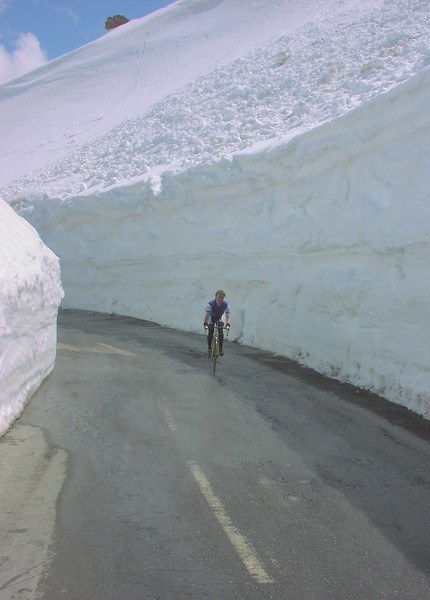
***Photo courtesy of http://upload.wikimedia.org/wikipedia/commons/3/3c/Col_du_Galibier_in_Mei.jpg
Debt Free Direct Tour de Personal Finance, Stage 2 – Career/College Finances Groups – Posts 13-16

Without further ado, let’s continue on with the 2nd Stage (featuring posts from the “Job/Career” and “College Finances” categories of articles submitted) of the 2013 Tour de Personal Finance (to follow all of the action, click on the Tour de Personal Finance category link and scroll down to read all the posts involved in this subject).
We greatly appreciate Debt Free Direct for being the title partner of the 2013 event and for all their great support. If you’re interested in learning more about the help and advice Debt Free Direct offers to people in debt or their money-saving tips on how to prevent building up debt, click here.
A Quick Reminder On Prizes For The 2013 Competition
The 2013 edition of the Tour de PF will be doubly exciting because we have some very nice cash prizes to give away to the winner and also to charity to continue helping the community.
These will be as follows:
- Yellow Jersey (1st Place) Winner of the 2013 Tour de Personal Finance will receive $100 cash via PayPal.
- In addition, the Yellow Jersey Winner will also get to decide what charity they want me to donate $700 to in honor of their efforts/victory.
To view the most up-to-date brackets of the competition, click the following link – 2013 Debt Free Direct Tour de PF Bracket
Going along with Tour de France cycling tradition, I’ve listed each competition within each stage as an “intermediate sprint” (one post versus another) along with the description provided by the blog author when the post was submitted.
Also, if applicable, I will give a brief description of the stage of the Tour de France that took place the same day as (or that has happened since the previous Stage of) the competition.
How to Vote
You can vote for the two articles (one from each intermediate sprint) you’d like to see proceed in the Tour by commenting in the comments section below and telling which are your favorites. I’ve listed a keyword after each post title to make it easy to vote (as a made-up example, you can just comment: Sprint 1: Mutual; Sprint 2: 401k, etc.)
Be sure to comment which one you like the best out of each set of two! Criteria for the best article is completely up to you, but you can use these factors as a guide: 1) post of your favorite blogger, 2) most interesting post, 3) most thought-provoking post, 4) most unique post, or 5) most actionable post.Here are today’s competitions:
Voting will continue until June 30th for this Stage!
Intermediate Sprint #1
- The Hidden Job Market – How to Find a Job that Isn’t Advertised (Hidden): I’ll let you in on a little a secret: most companies don’t make their job openings publicly available until they have exhausted every opportunity to fill them in house or through recommendations. Some experts estimate roughly half the available jobs are in the hidden job market. This article shows you how to find and apply for those jobs through your network before they become available to the general public.
VERSUS
- My Husband is Now WORKING FROM HOME WITH ME!!! (Husband): It’s important to work out a plan before leaping into self-employment. It’s even more important when that entrepreneurial spirit hits both of the income earners of the household. But after running the numbers, looking at worst case scenarios, and mulling the idea over…it was time for us to put on our big girl panties and jump in. 🙂 Here’s the post about the excitement and fear when we officially put all of our financial eggs in one basket and happily skipped away into the unknown…
Intermediate Sprint # 2
- 529 Savings Plans: 101 (Savings): Given the shift in the economics of higher education it’s time that we change the conversation on paying for school. The conversation needs to shift to adequately saving for college expenses so that the next generation can avoid “mortgaging their future” and graduating with a mountain of student loan debt. A 529 Savings Plan is qualified tuition plan that has appealing tax benefits for college savings. Read this post for a complete guide of all you need to know about 529 Savings Plans!
VERSUS
- FAFSA.com Scam – 2.1 Million Students Potentially Ripped Off! (Scam): In January 2012, we exposed FAFSA.com as a For Profit Company misleading millions of students and charging them to complete the free FAFSA.gov application. The immoral marketing tactics including a very misleading domain name were exposed by this article. The article drew anger from the company and stories of students being ripped off by this company.
Tour de France Daily Recap
Unfortunately, the Tour de France doesn’t start in real life until this Saturday, June 29th (we had to get started a little early this year due to the larger number of entries!).
This year’s Tour features some really cool things for us to look forward to though.
- First, it is the 100th edition of the event.
- Second, the Tour will start from the island of Corsica, the only time in the race’s history that it has visited that Department.
- Third, it will be the first time since the 2003 that the event will take place entirely on French roads (no visits to neighboring countries).
- Finally, the race features a Stage in which the famous climb of Alpe d’ Huez (one that I’ve actually done myself, and can attest to how hard it is!) will be climbed not once, but twice. I’m not quite sure how the logistics will work out with that, but it should be very entertaining to watch!
Mid-Year 2013 Financial Goals Check-In and Progress Update

 Happy first few official days of Summer 2013 everyone! I hope you’ve been enjoying the warmer weather and have been able to get outside every once in a while!
I’ve really been enjoying getting out on the weekends and doing some nice long bike rides in the hills, mountains, and valleys here around Central Virginia! The picture to the right is me and our golden retriever, Crystal, chasing after a ball in a local dog park recently.
Back in January of this year, I set my financial goals for 2013. Since the year is now almost officially half finished, I figured it would be a good time to sit down and take a few minutes to review how I’ve been doing thus far in reaching or NOT reaching (in some cases) the various targets I set for myself.
Overall, I would rate the 1st half of the 2013 year as being all-around top-notch, from a personal, financial, and professional perspective. The financial markets are doing well, the real estate market seems to be coming back (good for me since I may be looking to sell my condo in the next 1-2 years), I got engaged in mid-March, and have started exploring a whole new realm of in-vivo (mouse studies) in developing our Alzheimer’s disease drugs in my graduate school studies.
So, here goes, a progress update (in bold below) on how I’ve been doing so far in 2013 reaching my financial goals. Enjoy, and I look forward to reading any comments you all have!
- Contribute $5500 (or ~$458 per month) to my Roth IRA with Vanguard this year (maximum allowed, which increased $500 in 2013 compared to the $5000 maximum allowed in 2012!).
- Done. I finished maxing out these contributions in around the May timeframe. Yahoo!
- Reach short-term net worth target for this year (1.42X my current net worth).
- I’m getting a lot closer, but not quite there yet.
- I need an increase of about 23% more from where I am now, so that’s definitely better than a 42% increase needed back in January!
- Maintain target 6-9 months of expenses in cash reserve emergency fund in Dollar Savings Direct account.
- On target.
- Rebalance mutual fund portfolio to meet asset allocation target %’s (70% equity, 30% fixed income overall).
- Done. Going well.
- Put together a will and have it reviewed by a lawyer.
- Have put together a will, but still have not gotten it reviewed by a lawyer. Need to though!
- Continue to save money for trip to Grand Canyon or to see Niagara Falls.
- On target.
- Invest $500 in Microloans with Microplace.com to support Latin American micro entrepreneurship. This equates to $41.67 to invest per month.
- On target.
- Donate $1,150 to Multiple Sclerosis Foundation in 2013 (5% of take-home pay in my graduate school research assistantship job).
- Done. I actually donated $3,000 this year. Yah!
- Fund raise $7500 for MS 150 bike event in June 2013.
- Done and surpassed. I ended up raising $11,000 total this year for the MS Society, which puts my total in the past 5 years at above $25,000. Nice!
- It looks like I’ll end up being the 2nd or 3rd highest fundraiser in this year’s MS event.
- Save 3% of take home pay each month (after taxes) for Dream Account.
- On target.
- $30 per month save for doing running races / bike rides as part of health life values account.
- On target.
- $20 per month save for buying fresh vegetables as part of health life values account.
- On target.
- Save ~20% of (blogging income (if any) – amount of income deferred to Individual 401k with Vanguard + untaxed graduate fellowship income from my research job) in a high yield online savings account in preparation for 2013 taxes.
- On target. Since I am investing so much in staff writers/content creation for my blog, my overall income is lower this year, meaning that I don’t need to pay as much in taxes.
- Apply for new graduate research fellowships since the one I have from the NSF will run out in 2014 (and need to apply for new ones about a year ahead of time).
- On target.
- I have discussed this with my graduate school advisor, and we have selected 2-3 good-looking fellowships that I will apply for later this year.
- $30 per month save for trips to visit friends/family in other states.
- On target.
- $10 per month save for purchasing food for backpacking trips in the Blue Ridge Mountains once a month.
- On target.
- Contribute at least 20% of blogging income to Individual Roth 401(k) with Vanguard.
- Have not done yet, but will start soon.
- According to the account hierarchy priority order, I have first been maxing out my Roth IRA this year prior to funding my Individual 401k (which I recently found out has a Roth option, so I’ll soon start taking advantage of that!).
- Execute any business tax deductions I can for 2012 taxes.
- Done.
- Use 1% home value home maintenance fund to fix various small things that are broken around my condo after 2.5 years of use. These things include a closet door off the hinges, the light-switch in the bathroom not working all the time, the bathroom towel rack holder coming unscrewed, and some pipes under the sink that need to be re-caulked. Once I get these things repaired, I will then need to replenish the depleted funds in the home maintenance account.
- Have not yet done.
- Execute 4 estimated tax payments for blogging + graduate research fellowship income on the following dates – 1) April 15, 2013, 2) June 17, 2013, 3) Sept. 16, 2013, and 4) Jan. 15, 2014.
- Done/on track.
- Save $111 per month until have a total of $1600 for health expenses for dogs we adopted (for annual health checkup, Frontline/Interceptor, and miscellaneous health emergencies/treatments needed. I will have the $1600 total after March 2013.
- Done.
- Help friends become debt-free.
- On track.
- Continue investing in long-term content growth of blog.
- On track.
- ***New Goal Added During 1st Half 2013*** – Continue building, optimizing, and balancing a Three-Legged Stool for Retirement
- Since I am in the 15% tax bracket, I first maxed out my Roth IRA for 2013.
- My next move has been to contribute an equivalent amount in an after-tax investment account in order to have money that is accessible for needs prior to retirement.
- Now that I have completed that, I am going to work towards contributing to a Roth Individual 401k with Vanguard. Should be good!
- Continue contributing $5500 to Roth IRA and Individual Roth/Traditional 401k each year using dollar cost averaging.
- Reach intermediate net worth target (2.8X my current net worth).
- Own a rental property by 2018.
- Obtain a net worth of $1,000,000.
- Own a home free of mortgage payments.
- Own a vacation home in the mountains or a ski resort.
- Accumulate enough funds not have to work, but will probably anyways because I would get bored.
How about you all? How are you doing so far in reaching the goals you laid out for yourself in 2013? What techniques do you find are most effective in holding yourself accountable and on-track for your goals you set?
Share your experiences by commenting below!
Debt Free Direct Tour de Personal Finance, Stage 2 – Career Group – Posts 9-12

 Without further ado, let’s continue on with the 2nd Stage (featuring posts from the “Job/Career” category of articles submitted) of the 2013 Tour de Personal Finance (to follow all of the action, click on the Tour de Personal Finance category link and scroll down to read all the posts involved in this subject).
We greatly appreciate Debt Free Direct for being the title partner of the 2013 event and for all their great support. If you’re interested in learning more about the help and advice Debt Free Direct offers to people in debt or their money-saving tips on how to prevent building up debt, click here.
A Quick Reminder On Prizes For The 2013 Competition
The 2013 edition of the Tour de PF will be doubly exciting because we have some very nice cash prizes to give away to the winner and also to charity to continue helping the community.
These will be as follows:
- Yellow Jersey (1st Place) Winner of the 2013 Tour de Personal Finance will receive $100 cash via PayPal.
- In addition, the Yellow Jersey Winner will also get to decide what charity they want me to donate $700 to in honor of their efforts/victory.
To view the most up-to-date brackets of the competition, click the following link – 2013 Debt Free Direct Tour de PF Bracket
Going along with Tour de France cycling tradition, I’ve listed each competition within each stage as an “intermediate sprint” (one post versus another) along with the description provided by the blog author when the post was submitted.
Also, if applicable, I will give a brief description of the stage of the Tour de France that took place the same day as (or that has happened since the previous Stage of) the competition.
How to Vote
You can vote for the two articles (one from each intermediate sprint) you’d like to see proceed in the Tour by commenting in the comments section below and telling which are your favorites. I’ve listed a keyword after each post title to make it easy to vote (as a made-up example, you can just comment: Sprint 1: Mutual; Sprint 2: 401k, etc.)
Be sure to comment which one you like the best out of each set of two! Criteria for the best article is completely up to you, but you can use these factors as a guide: 1) post of your favorite blogger, 2) most interesting post, 3) most thought-provoking post, 4) most unique post, or 5) most actionable post.Here are today’s competitions:
Voting will continue until June 30th for this Stage!
Intermediate Sprint #1
- You Know What Really Sucks? Cubicles. (Cubicles): I used to drive a $400 car, live in a cramped apartment and wear only thrift-store clothes. When people hear me tell stories from those days, they say: “Wow, your life must have sucked.” You know what really sucks? Cubicles. Consumer debt. Getting shackled due to overspending. THAT sucks much more than an ugly car.
VERSUS
- Swarming Pigeons, Dog Poop, Happiness, and $60,000 (Happiness): What does pigeons, dog poop, and $60,000 have to do with happiness? I gave up a six figures/year career to be a stay at home dad/blogger and I couldn’t be happier. If you have money and are unhappy, you’re not doing it right. Figure out what really makes you happy and focus on that. I did, and I am much happier.
Intermediate Sprint # 2
- 20 REAL Companies That Will Pay You To Work From Home (Companies): With all the spammy work-from-home marketing we all see out there, we decided to find some LEGIT companies that actually offer jobs that allow you to work from home. These are 20 of the best ones we found.
VERSUS
- How Coming Health Insurance Exchanges Will Drastically Impact Career And Retirement Decisions (Insurance): In the coming months, the first Health Insurance Exchanges will open, and along with them will begin a new era of personal finance decisions. For the first time, having a job to get onto an employer’s health insurance plan will no longer be a necessary requirement to have access to health insurance. Instead, anyone will be able to get health insurance from a state exchange, guaranteed, without any limitations for pre-existing conditions or the risk of cancellation due to health changes. While figuring out how to afford coverage will still be a challenge for many – though there are new premium assistance tax credits and cost-sharing subsidies to help – at the most basic level, the question simply becomes: “If you were assured of having access to health insurance and you (or your spouse) didn’t have to work where you do in order to get access to it, would you still be working and doing what you are doing now?” If your answer is “no” – welcome to the new world of health insurance!
Tour de France Daily Recap
Unfortunately, the Tour de France doesn’t start in real life until this Saturday, June 29th (we had to get started a little early this year due to the larger number of entries!).
This year’s Tour features some really cool things for us to look forward to though.
- First, it is the 100th edition of the event.
- Second, the Tour will start from the island of Corsica, the only time in the race’s history that it has visited that Department.
- Third, it will be the first time since the 2003 that the event will take place entirely on French roads (no visits to neighboring countries).
- Finally, the race features a Stage in which the famous climb of Alpe d’ Huez (one that I’ve actually done myself, and can attest to how hard it is!) will be climbed not once, but twice. I’m not quite sure how the logistics will work out with that, but it should be very entertaining to watch!
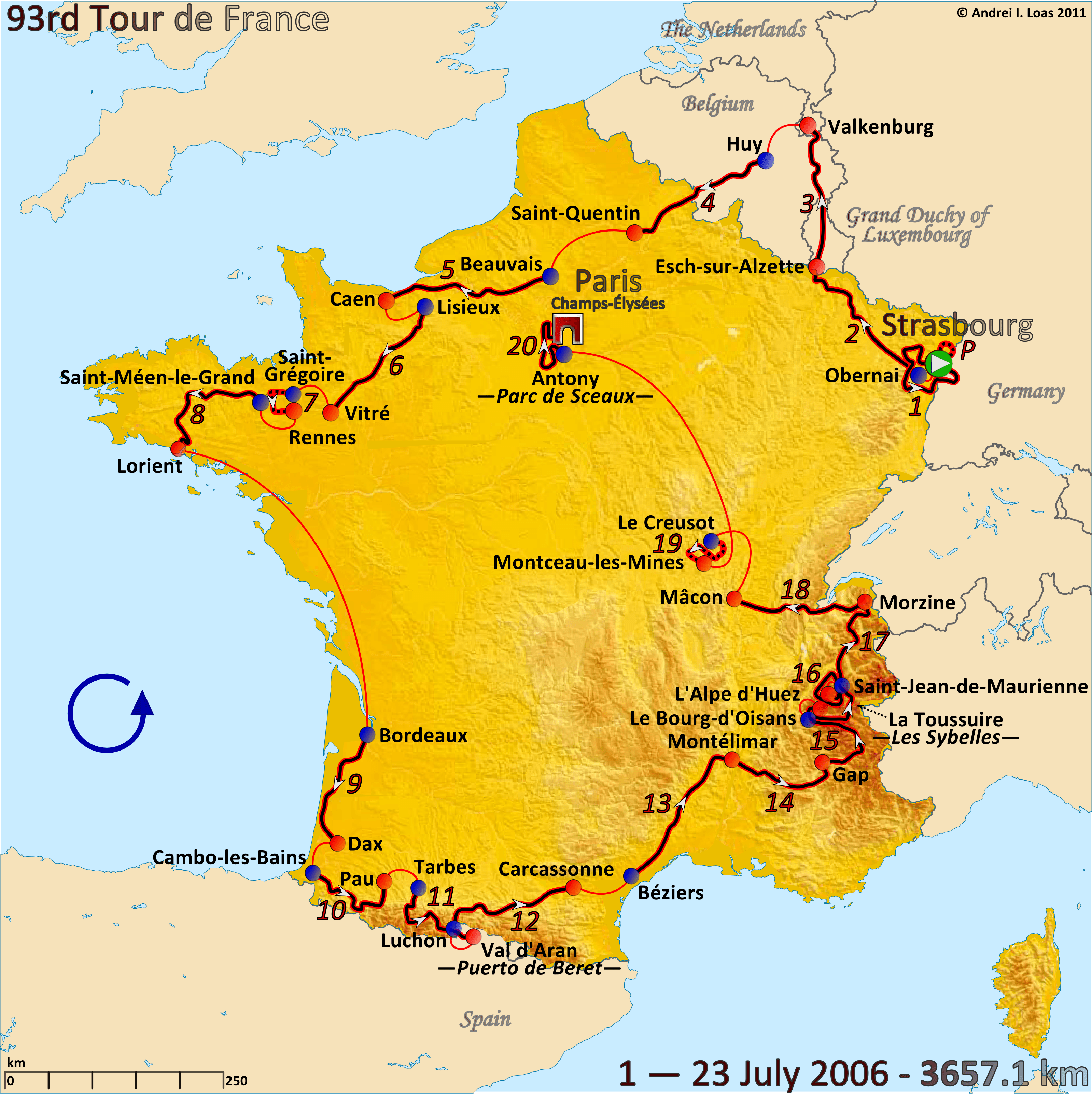
***Photo courtesy of https://upload.wikimedia.org/wikipedia/commons/0/0a/Route_of_the_2006_Tour_de_France.png
Debt Free Direct Tour de Personal Finance, Stage 1 – Career Group – Posts 5-8

Without further ado, let’s continue on with the 1st Stage (featuring posts from the “Job/Career” category of articles submitted) of the 2013 Tour de Personal Finance (to follow all of the action, click on the Tour de Personal Finance category link and scroll down to read all the posts involved in this subject).
We greatly appreciate Debt Free Direct for being the title partner of the 2013 event and for all their great support. If you’re interested in learning more about the help and advice Debt Free Direct offers to people in debt or their money-saving tips on how to prevent building up debt, click here.
A Quick Reminder On Prizes For The 2013 Competition
The 2013 edition of the Tour de PF will be doubly exciting because we have some very nice cash prizes to give away to the winner and also to charity to continue helping the community.
These will be as follows:
- Yellow Jersey (1st Place) Winner of the 2013 Tour de Personal Finance will receive $100 cash via PayPal.
- In addition, the Yellow Jersey Winner will also get to decide what charity they want me to donate $700 to in honor of their efforts/victory.
To view the most up-to-date brackets of the competition, click the following link – 2013 Debt Free Direct Tour de PF Bracket
Going along with Tour de France cycling tradition, I’ve listed each competition within each stage as an “intermediate sprint” (one post versus another) along with the description provided by the blog author when the post was submitted.
Also, if applicable, I will give a brief description of the stage of the Tour de France that took place the same day as (or that has happened since the previous Stage of) the competition.
How to Vote
You can vote for the two articles (one from each intermediate sprint) you’d like to see proceed in the Tour by commenting in the comments section below and telling which are your favorites. I’ve listed a keyword after each post title to make it easy to vote (as a made-up example, you can just comment: Sprint 1: Mutual; Sprint 2: 401k, etc.)
Be sure to comment which one you like the best out of each set of two! Criteria for the best article is completely up to you, but you can use these factors as a guide: 1) post of your favorite blogger, 2) most interesting post, 3) most thought-provoking post, 4) most unique post, or 5) most actionable post.Here are today’s competitions:
Voting will continue until June 29th for this Stage!
Intermediate Sprint #1
- How to Kick Unemployment Depression in the Ass (Kick): Ever been unemployed? Ever been depressed because you’re unemployed? Without a doubt, unemployment is the most depressing thing that’s ever happened to me. Kick that depression in the ass by reminding yourself you are still awesome! This post also includes guidance to what money you might be entitled to.
VERSUS
- Confessions of a Professional Blogger: Why I Don’t Have High Paying Freelance Jobs (Confessions): I’ve been raising my rates, but I’m still not in the “big money” range as a professional blogger. Here’s why I don’t have high paying freelance jobs.
Intermediate Sprint # 2
- How to Become Self-Employed Like These Top Bloggers (Bloggers): Everyone dreams of becoming self-employed sometimes. These top bloggers did it! Hear their stories and see how they set themselves up for financial success post-employment.
VERSUS
- How To Handle Being Denied A Promotion After My Boss Screwed Me Over (Promotion): Sometimes, life throws you curve balls, and this year my boss struck me with an unexpected hard ball right in the gut. Find out how I reacted to the emotional and bitter truth when I didn’t make the cut for a promotion I really wanted. Then learn 10 key tips on how to handle being denied a promotion that I picked up from my experience.
Tour de France Daily Recap
Unfortunately, the Tour de France doesn’t start in real life until this Saturday, June 29th (we had to get started a little early this year due to the larger number of entries!).
This year’s Tour features some really cool things for us to look forward to though.
- First, it is the 100th edition of the event.
- Second, the Tour will start from the island of Corsica, the only time in the race’s history that it has visited that Department.
- Third, it will be the first time since the 2003 that the event will take place entirely on French roads (no visits to neighboring countries).
- Finally, the race features a Stage in which the famous climb of Alpe d’ Huez (one that I’ve actually done myself, and can attest to how hard it is!) will be climbed not once, but twice. I’m not quite sure how the logistics will work out with that, but it should be very entertaining to watch!
***Photo courtesy of http://upload.wikimedia.org/wikipedia/commons/4/49/Corsica_(Landsat_7).png
Unexpected Expenses That Increase The Cost Of College

The following is a post by MPFJ staff writer, Toi Williams, who is a professional personal finance blogger of Fine Tuned Finances. She has backgrounds in personal finance, sales, and real estate.
Leaving home to attend college is one of the most exciting times in a young person’s life.
Families plan for years to be able to pay for tuition, books, food, and housing for the student, often utilizing federal and public loans along with money saved in 529 college saving plans to make sure all of the costs are covered.
Unfortunately, there are a number of unexpected expenses that may arise that can significantly increase the cost of a college education. Planning ahead for these expenses and including them in your budgeting can greatly increase your financial security while attending college.
Here are some of the unexpected college expenses you may encounter and tips on how to plan for them:
Expenses For Replacing Supplies
While you may believe that you have purchased an adequate amount of supplies prior to attending your first classes at college, you will quickly find that you need to purchase replacement supplies on a regular basis to ensure that you have everything that you need for each class. Pens run out of ink, pencils get broken, and paper is used up for assignments faster than you may think. It is important to plan ahead and have a budget in place that takes into account additional purchases of supplies on a regular basis.
Many students make the mistake of relying on the university supply store for all of their supply needs during the time they are attending college. Since they are already at the location to pick up their textbooks, they pick up all of the other supplies they need as well. It is important to note that the prices that are found at the campus supply store may be more expensive than what you may be able to find at local office supply stores, grocery stores, or mass merchandisers. This is especially true when shopping around the beginning of the school year in late summer or early fall. To get the best price on school supplies, take the time to shop around convenient locations and take advantage of back to school sales.
Additional Class Expenses
For many classes taken in college, the only real expense is the textbook that you need to purchase for the class. However, some classes that are necessary to complete your degree may require the purchase additional books and supplies to complete the class effectively. These additional expenses may include supplementary books, lab equipment, software programs, or special electronics. Depending on the amount of stuff you are required to purchase, these additional class expenses can take a big bite out of your budgeted funds.
When budgeting the amount of money you will need for each semester, be sure to include an additional amount to cover any unexpected expenses that may be associated with the classes. A good rule of thumb is to budget an extra $80 for each class you are taking. If there are no additional expenses for a particular class, the budgeted money can be used for another class where the additional expenses are more than $80 or saved to be used for the next semester.
Health Insurance Expenses
Dormitories are breeding grounds for germs and all of the human interaction occurring regularly on campus ensures that illnesses will spread quickly. Recent changes to the health care laws allow students attending college to remain on their parent’s health insurance policies until the age of 26. However, there are many students whose parents have lost their health insurance coverage, have parents who are unwilling to continue paying for their adult children’s health insurance premiums, or are over the age where they can remain on their parents’ plans. These students will have to find an alternative to ensure that they are covered by health insurance and will be able to obtain medical care when they need it.
One option is seeing if the university you are attending offers a health plan for students. These health insurance plans give the student access to on-campus health services that can treat most minor illnesses and injuries without charge. If other treatments or services are needed, the campus health providers can refer the student to the services needed without the student incurring substantial costs. Student health plans administered by the college are typically the least expensive option for obtaining health insurance and the premiums are paid directly to the college.
If the college does not offer a student health plan, you will need to consider the different individual health insurance plans available on the open market. If you are in good health, you will be able to get a reasonably priced plan that covers preventative care and reduces the price of more comprehensive treatments. With an individual health insurance plan, you have more options for doctors and medical resources, but you need to make sure that the providers participate in the plan before receiving treatment or you may find yourself facing a hefty bill.
Expenses For Learning Experiences
Colleges provide many opportunities for learning experiences that can help prepare students for the world outside of college once they have graduated. These learning experiences may include clubs, organizations, special activities, and trips. Many of these experiences will have a nominal cost that the student must pay to participate. It is important to plan ahead so you can save the money you need for these experiences before the money is due. Otherwise, you may miss out on an activity that you would have really liked to experience with the new friends that you have made.
How about you all? What unexpected college expenses have you encountered? How do you budget for these items?
Share your experiences by commenting below!
***Photo courtesy of http://www.flickr.com/photos/vauvau/5799056895/
Debt Free Direct Tour de Personal Finance, Stage 1 – Side Hustle Group – Posts 1-4

 Without further ado, let’s get started with the 1st Stage (featuring posts from the “Side Hustle” category of articles submitted) of the 2013 Tour de Personal Finance (to follow all of the action, click on the Tour de Personal Finance category link and scroll down to read all the posts involved in this subject).
We greatly appreciate Debt Free Direct for being the title partner of the 2013 event and for all their great support. If you’re interested in learning more about the help and advice Debt Free Direct offers to people in debt or their money-saving tips on how to prevent building up debt, click here.
A Quick Reminder On Prizes For The 2013 Competition
The 2013 edition of the Tour de PF will be doubly exciting because we have some very nice cash prizes to give away to the winner and also to charity to continue helping the community.
These will be as follows:
- Yellow Jersey (1st Place) Winner of the 2013 Tour de Personal Finance will receive $100 cash via PayPal.
- In addition, the Yellow Jersey Winner will also get to decide what charity they want me to donate $700 to in honor of their efforts/victory.
To view the most up-to-date brackets of the competition, click the following link – 2013 Debt Free Direct Tour de PF Bracket
Going along with Tour de France cycling tradition, I’ve listed each competition within each stage as an “intermediate sprint” (one post versus another) along with the description provided by the blog author when the post was submitted.
Also, if applicable, I will give a brief description of the stage of the Tour de France that took place the same day as (or that has happened since the previous Stage of) the competition.
How to Vote
You can vote for the two articles (one from each intermediate sprint) you’d like to see proceed in the Tour by commenting in the comments section below and telling which are your favorites. I’ve listed a keyword after each post title to make it easy to vote (as a made-up example, you can just comment: Sprint 1: Mutual; Sprint 2: 401k, etc.)
Be sure to comment which one you like the best out of each set of two! Criteria for the best article is completely up to you, but you can use these factors as a guide: 1) post of your favorite blogger, 2) most interesting post, 3) most thought-provoking post, 4) most unique post, or 5) most actionable post.Here are today’s competitions:
Voting will continue until June 29th for this Stage!
Intermediate Sprint #1
- 5 Different Passive Income Ideas (Passive): There are so many different ways to make money, but so few are actually passive. Here are five ways that you can actually earn a passive income stream if you put the work in up front.
VERSUS
- Earning Quick Cash – Ways to Earn $100 in a Day Legally Without Investment (Cash): Various tips to earn quick cash in a day without investment. This article is a compilation of bloggers feedback and lists ways to earn $100 in a day legally and without a single penny of investment.
Intermediate Sprint # 2
- Starting a Business on a Shoestring (Shoestring): You don’t have to start out in debt or have a lot of capital in order to start a business. You can do so on a shoestring.
VERSUS
- Think Like An Entrepreneur (Think): Having the mindset and thinking like an entrepreneur is the #1 key to success in life.
Tour de France Daily Recap
Unfortunately, the Tour de France doesn’t start in real life until this Saturday, June 29th (we had to get started a little early this year due to the larger number of entries!).
This year’s Tour features some really cool things for us to look forward to though.
- First, it is the 100th edition of the event.
- Second, the Tour will start from the island of Corsica, the only time in the race’s history that it has visited that Department.
- Third, it will be the first time since the 2003 that the event will take place entirely on French roads (no visits to neighboring countries).
- Finally, the race features a Stage in which the famous climb of Alpe d’ Huez (one that I’ve actually done myself, and can attest to how hard it is!) will be climbed not once, but twice. I’m not quite sure how the logistics will work out with that, but it should be very entertaining to watch!
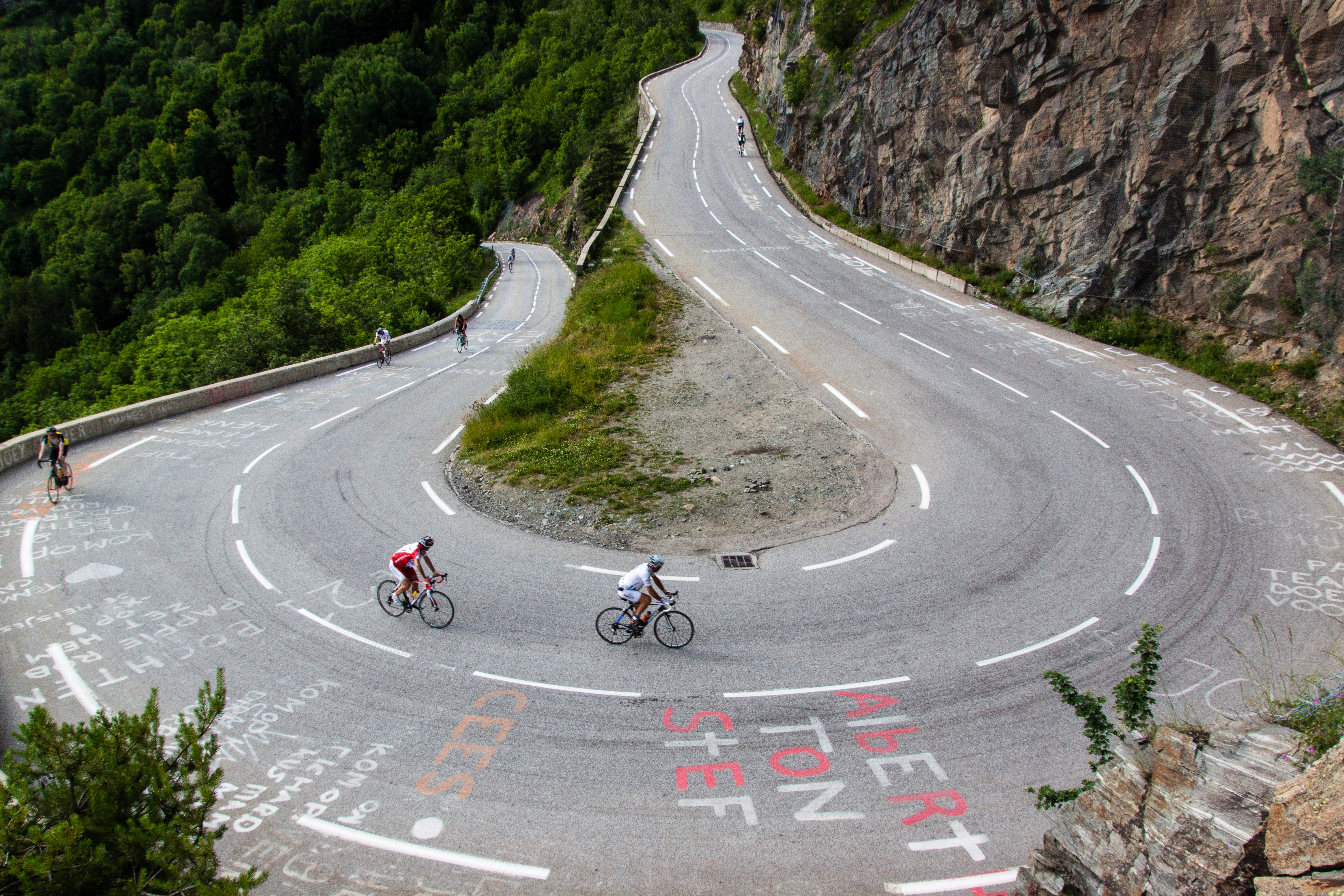
***Photo courtesy of http://farm9.staticflickr.com/8314/7957045090_f092384087_o.jpg