
All posts by Jacob A Irwin
How Do You Analyze A Penny Stock?
If you’ve been reading MPFJ for a while, you’ve probably heard me mention before that I am not a big advocate of people investing large amounts of their own money in active management, either through the buying and selling of individual stocks yourself, following the advice of a newsletter, with the help of a “professional” investment advisor, or through an actively managed mutual fund.
Why do I shy away from large investments in individual stocks? Simple. Because the track record of individuals (even professionals) selecting individual stocks does not show proof positive that it is worth the cost involved. In fact, 70% of the stock professionals fail to beat out the market, so why would I think I can do this consistently?
Having said that, I do, however, think that analyzing individual stocks for investing using smaller amounts of play money is a fascinating exercise, and it’s something that I would like to believe in. I just haven’t seen proof that it can be done consistently in an efficient manner, but maybe someone will prove me wrong one day and cause me to switch from my current approach of passive investing using index mutual funds and ETFs.
Anyhow, recently, I received an email from a blog reader asking about how I analyze an individual penny stock and also what my thoughts were on the specific stock, PLC Medical Systems, Inc. (OTCQB symbol: PLCSF). Since other readers may also be curious of what approach I take to analyze a penny stock for potential investment (or not – using only very small amounts of play money of course!), I figured this would be a good topic for a blog post and to also answer the reader’s question at the same time.
Step 1 – 30,000 Foot Elevation View of the Company and Long-Term Price Performance
To get a very high level overview of the company, I first turn to Google, Reuters, and/or Yahoo Finance to simply look up the ticker symbol.
On these sites, I specifically am looking at 3 things – 1) the long-term price history, 2) the financials, and 3) the company overview/description. I also like to use Yahoo Finance for all of my historical pricing data when performing historical backtests.
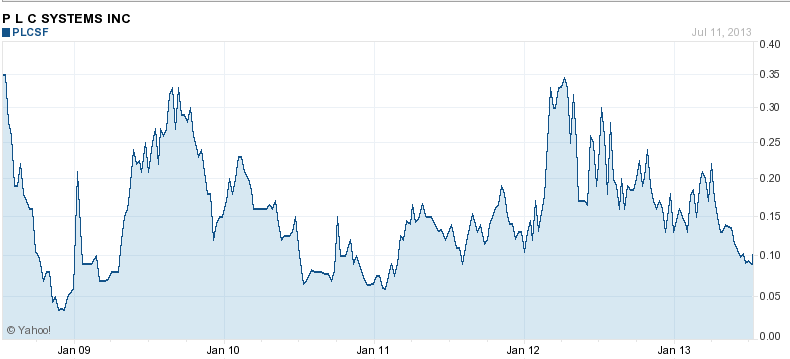
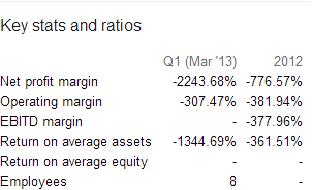
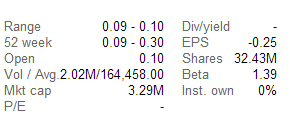
Shown below are these three items for the stock that the reader wanted me to take a look at, PLCSF. From these screens, I can conclude the following things for this specific stock:
- Because of the low stock price per share (around 9-10 cents per share), low institutional ownership, low market cap (only $3.39 million, and horrible looking financials (margins and ROA in the negative hundred to thousands of percent range), this stock is an extremely speculative play, with a very high level of risk involved.
- In reading the general description provided, it is easy enough for me to understand what PLC Medical Systems does and what product(s) they offer as a medical device company.
- The company has been around for a long time now. In reading the company history, it was started back in 1987.
- From what I could tell, the company went public quite a long time ago (~10-20 years). However, it is hard to find readily available historical pricing data for this stock going back prior to 2008. I’m not sure if this is simply due to the fact that it’s a penny stock and isn’t covered as closely by Yahoo Finance and Google Finance, or if something else happened internally with the company between 2000-2008 that took the company public to private and then back public more recently. This will be something I would want to check on also.
- In addition, if the company has in fact been around so long, it makes me wonder why is their stock still only worth less than 10 cents per share?
- In looking at the price history graph below, the stock price has decreased 200-300% since 2008. During these 5 years or so, there have been 3 sharp downturns and 2 sharp upturns on the stock. The first downturn between 2008-2009 was likely associated with the overall market. However, I want to investigate why the company couldn’t sustain the 2 upward runs that it had in 2009 and again in 2012.
 |
| PLC Systems Long Term Stock Price History |
  |
| PLC Systems Financials |
 |
| PLC Systems Company Overview/Description |
Step 2 – See How the Stock Fits Within Phil Town’s Rule # 1 Investing Analysis System
As I mentioned previously in my 6 month test run of Phil Town’s Rule # 1 investing system (which showed that its usage did not deliver a market beating return due to the trading commissions involved), I do not believe that Phil’s system is the “magic formula” for beating the market. However, Phil’s approach does involve some very prudent technical and fundamental analysis which I feel can give me a deeper understanding of how the company would function as a potential investment.
- Phil Town Criteria # 1 – Only invest in companies that you would be proud to own, trade for > $1 per share, and have > 500,000 average daily trading volume. The type of companies you should invest in should be at the intersection of what you love to do, what you are good at doing, and what you can earn money doing.
- PLC Systems is trading for much less than $1 per share (9-10 cents per share) and only has an average daily trading volume of 164,000 shares, which means that it is not very liquid and also can swing many percentage points each trading day. In regards to these metrics, PLC would not qualify under Phil Town’s standards.
- Since PLC Systems Inc is involved in the medical field, I would be interested in owning the stock.
- Phil Town Criteria # 2 – Identify if the company has a “moat” – What he explains we are looking for here is >10% annual growth rate over 10 years for the following things: 1) Return on investment capital, 2) sales revenue, 3) EPS growth, 4) Equity per share, and 5) free cash flow growth. We also make sure that the company has enough current free cash flow to be able to pay back it’s long-term debt in 3 years or less.
- A great place to get all of this 10 year historical data in one place is Stock2Own.com. If you type in the ticker symbol of the stock you’d like to analyze in the box at the top, it will then automatically display the 10 year data for these ratios. These can be accessed by clicking the Annual Statements option on the left sidebar. This data for the PLCSF stock is shown in the figure below:
- For PLCSF, unfortunately, the financial calculations above do not look very good because of all of the negative values it is carrying, and as such, are definitely NOT in line with Phil Town’s criteria. Return on investment capital, sales revenue, EPS, Equity per share, and free cash flow growth rates are all either deeply negative or zero. Furthermore, the company has negative free cash flow, but at the same time, they have no long-term debt.





Even though PLC does not meet the 10 % / 10 year average growth rate criteria set forth in the Phil Town method, this is not very surprising because as I mentioned above, it is expected to be a more speculative play (as a very cheap penny stock), not a rock solid, long term investment.
Because of this, we must also examine the actual financial figures shown in the bar graph above over the past ten years a little more in-depth.
As you can clearly see in the chart above, many of the numbers are negative, which is definitely a bad thing. Furthermore, if you examine the CHANGE TRENDS closely from left to right, it can be seen that the company does not really seem to be heading in the right direction since EPS, Book Value Per Share, and Free Cash Flow have all been steadily decreasing for the past 10 years or so. Although Sales and ROE have started to rebound only recently in the past 2-3 years, in my opinion, this does not take away the negative trends seen with EPS, FCF, and BVPS mentioned above.
- Phil Town Criteria # 3 – Calculate the appropriate sticker price, or what the stock should be selling at given it’s current EPS and EPS growth rate. We then calculate the Margin of Safety price (MOS) to make sure that we buy the stock at a significant enough (50%) discount to shield ourselves from mistakes and be able to achieve higher returns.
- Fortunately, the tool listed above, Stock2Own.com also has a handy feature that automatically calculates the sticker price (Value Price) and Margin of Safety (MOS) price.
- To view this in Stock2Own, simply click the Value Price option in the left sidebar.
- Unfortunately, for PLC, since their EPS is negative, a MOS/Value Price cannot be calculated, so we don’t have this gauging point to base our decisions off of.
- Phil Town Criteria # 4 – Use technical analysis tools to make sure you are either buying or selling at the right time. Phil recommends using three technical tools to make sure of this – 1) 8-17-9 MACD indicator, 2) 14K, 5D Slow Stochastic Oscillator, and the 3) 10-day moving average. Phil recommends that you only buy when all 3 of the tech. indicators say “buy.”
- To generate these three graphs for a stock analysis, I again use Google Finance. To set it up, you simply click, “Technicals,” at the bottom of any Google Finance stock price history window, and fill out the fields as shown in the below screenshot:
- Once you’ve set up the indicators, view the 3 month history graphs for the stock you’re analyzing. Three months seems to be a good time period in order to clearly see whether the technical indicators are saying “buy” or “sell.”
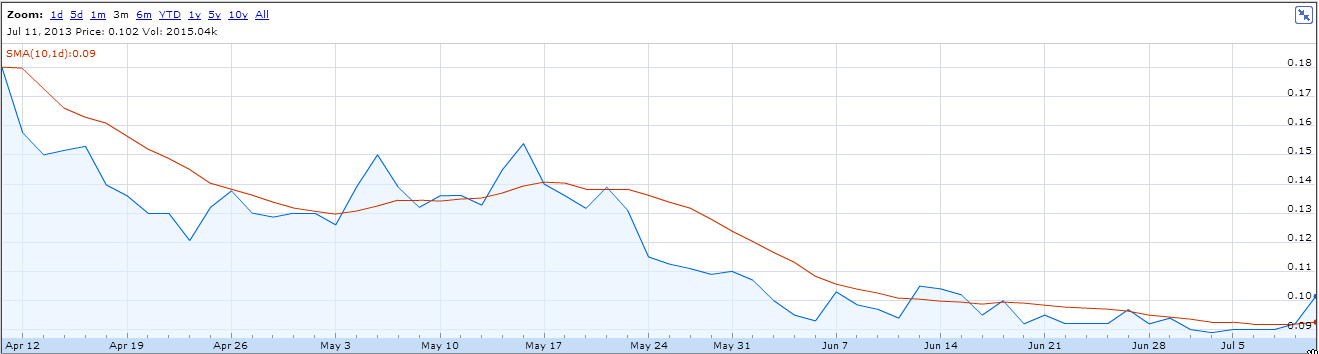
- For analyzing PLC, we’ll go through the technical indicators one by one. First, the 10 day simple moving average, as shown below (red line), compared to the actual stock price (blue line). With the simple moving average, a “buy” signal is indicated by when the stock price line crosses above the moving average. In the case of PLC, the stock price is currently above the moving average, indicating that we would want to buy right now.
- PLC’s 14K, 5D Slow Stochastic Oscillator is shown below. With stochastic, the K line (blue) is the “buy” line, and the D line (red) is the “sell” line. With this technical indicator, a “buy” signal is indicated by when the buy/K line crosses above the sell/D. In the case of PLC, the K line is currently above the D line, indicating that we would want to buy right now.

- PLC’s 8-17-9 MACD indicator is shown below. With this technical indicator, a “buy” signal is indicated by when the MACD line crosses above the EMA line. In the case of PLC, the MACD appears to be above the EMA, indicating that we would want to buy right now.

Step 3 – Qualitative Research on the Company, the Management (CEO Especially), Current News, and That No Insider Selling is Happening
As the title above suggests, the next step I take to analyze a company is to perform some qualitative research about what they do and how they do it. This is also a good time to research any questions that have popped up from the more quantitative investigations discussed above.
Listed below is how I tackle this step, using the stock, PLC, as an example:
- Management Analysis (done through Google Finance and Reuters.com) – The current CEO of PLC, Mark R. Tauscher, joined the company in 2000, bringing 20 years or sales/marketing (non-technical) experience in the medical device industry to the company. I performed an in-depth search around the Internet on Mark Tauscher and how he’s been doing as CEO of PLC Systems. I also reviewed several interviews he has done.
- Although he seems to be doing a “sufficient” job as CEO, I could not find anything mentioning that he has had a STELLAR impact on PLC or that he was a superb leader. Because of this, it makes me think that he isn’t the magnificent officer that would ideally be running the company with big hairy audacious goals!
- Insider Trading (done through company website or MSN Money) – In looking at the recent transactions of company insiders at PLC, it appears that there has been no activity (buying or selling) since several of the officers purchased shares back in 2009. In my opinion, this is probably not the best sign, since it may mean that the officers aren’t placing their own money in their personal efforts.
- It was interesting to read that recently, 3 large institutional investors have parked a great deal of money in PLC Systems, signifying that they are betting on it for the future.
- Additional Clarity About What the Company Does/Its Current Position (find the “news” columns on Reuters, Yahoo/Google Finance, etc after you bring up the chart for a specific stock) – On the PLC company website, I found a presentation from 2013 and a company fact-sheet that enabled me to learn a little more depth about what PLC does as well as what milestones and goals it is trying to accomplish.
- The company has only 1 product – RenalGuard.
- During heart procedures, a contrast dye is used to enable the doctor to see what he or she is doing. In 10-20% of the people having these procedures, they are at risk to developing toxicity to dyes.
- RenalGuard works to flush out these dyes from the patient’s system to prevent this toxicity from happening.
- In my opinion, this sounds like a great product – fairly easy to understand, answers an unmet need, and doesn’t really have any competition.
- The future success of the stock depends on receiving FDA approval for RenalGuard use in the USA. However, it looks promising that this will be obtained.
- Lastly, as I mentioned in my high level review, I had several questions about PLC’s stock price performance history.
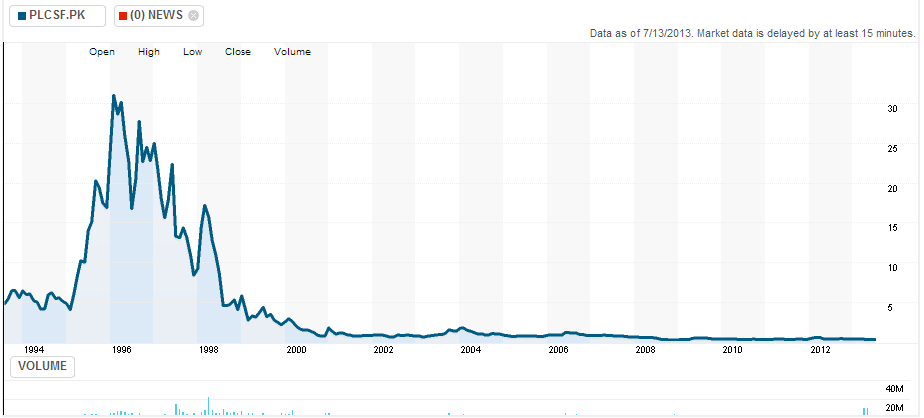
- On Reuters.com, I was lucky to find a more-lengthy stock price history for PLC Medical Systems (shown in the figure below).
- As you can see, from 1995-1996, the stock price ran up to the $30 per share range, which is quite incredible!
- And, ever since then, it has trickled along in the penny stock range.
- Unfortunately, despite extensive searching, I couldn’t find any articles or interviews explaining why PLC has been unable to increase it’s stock price during this 20 year period or so. Essentially, I wanted to know, “What makes the company different now that it is worth investing in compared to before when nothing happened?”
- To me, this is a fairly big red flag. It makes me
Step 4 – Review and Decision to Buy or Not
Having now completed all of the analysis, it’s now time to bring it all together, summarize the findings, and make a decision for if I would buy a specific stock using a very small amount of play money or not.
Using our example of PLC Systems, here are my conclusions:
- Seems like an understandable and good business model (now that I have performed a little more analysis).
- Even though the company only has one product, it answers a good unmet need and would have fairly little competition. Furthermore, it seems promising that it will receive FDA approval on the trial being conducted eventually.
- All 3 of the technical indicators dictate that NOW is a good time to buy shares of PLC.
- Even though the company’s product has potential, the CEO does not seem to be a “superstar.” I also was not satisfied with finding a compelling reason to invest in PLC Systems now compared to their past history when their stock has not gone anywhere since the 1990’s.
- Since the long-term financials are not very good and/or negative, the investment involves a lot of risk. In addition, it is not promising to see that most of the recent trends are still pointing downwards for PLC.
- Because of the items in red above, my final conclusion for this play is to NOT buy PLC Systems, symbol PLCSF right now.
- It may become a good play in the future, but until the financials are firmed up and the company story is more logical/compelling, I would hold off.
How about you all? What is your approach to analyzing individual penny stocks for potential investment? How much of your money do you allocate to individual stocks vs. mutual funds?
Share your experiences by commenting below!
Debt Free Direct Tour de Personal Finance, Stage 20 – Round 5, Posts 1-32
 Without further ado, let’s continue on with the 20th Stage (there are only 4 blogs left the 2013 event) of the 2013 Tour de Personal Finance (to follow all of the action, click on the Tour de Personal Finance category link and scroll down to read all the posts involved in this subject).
We greatly appreciate Debt Free Direct for being the title partner of the 2013 event and for all their great support. If you’re interested in learning more about the help and advice Debt Free Direct offers to people in debt or their money-saving tips on how to prevent building up debt, click here.
A Quick Reminder On Prizes For The 2013 Competition
The 2013 edition of the Tour de PF will be doubly exciting because we have some very nice cash prizes to give away to the winner and also to charity to continue helping the community.
These will be as follows:
- Yellow Jersey (1st Place) Winner of the 2013 Tour de Personal Finance will receive $100 cash via PayPal.
- In addition, the Yellow Jersey Winner will also get to decide what charity they want me to donate $700 to in honor of their efforts/victory.
To view the most up-to-date brackets of the competition, click the following link – 2013 Debt Free Direct Tour de PF Bracket
Going along with Tour de France cycling tradition, I’ve listed each competition within each stage as an “intermediate sprint” (one post versus another) along with the description provided by the blog author when the post was submitted.
Also, if applicable, I will give a brief description of the stage of the Tour de France that took place the same day as (or that has happened since the previous Stage of) the competition.
How to Vote
You can vote for the two articles (one from each intermediate sprint) you’d like to see proceed in the Tour by commenting in the comments section below and telling which are your favorites. I’ve listed a keyword after each post title to make it easy to vote (as a made-up example, you can just comment: Sprint 1: Mutual; Sprint 2: 401k, etc.)
Be sure to comment which one you like the best out of each set of two! Criteria for the best article is completely up to you, but you can use these factors as a guide: 1) post of your favorite blogger, 2) most interesting post, 3) most thought-provoking post, 4) most unique post, or 5) most actionable post. Here are today’s competitions:
Voting will continue until July 19th for this Stage!
Intermediate Sprint
- My Husband is Now WORKING FROM HOME WITH ME!!! (Husband): It’s important to work out a plan before leaping into self-employment. It’s even more important when that entrepreneurial spirit hits both of the income earners of the household. But after running the numbers, looking at worst case scenarios, and mulling the idea over…it was time for us to put on our big girl panties and jump in.
 Here’s the post about the excitement and fear when we officially put all of our financial eggs in one basket and happily skipped away into the unknown…
 Here’s the post about the excitement and fear when we officially put all of our financial eggs in one basket and happily skipped away into the unknown…

VERSUS
- How My Retirement Plans Got Derailed – Big Time! (Derailed): I left my secure job at a major bank to open a small retail store with my husband. We struggled along for three years, using up almost all our savings and making the terrible mistake of financing the business with our many credit cards. Eventually we gave up and closed the store. With no money and over $100,000 in credit card debt, we sank to our lowest point of despair.
Tour de France Daily Recap
The Tour de France in real life continues today after a rest day yesterday with a medium-mountains Stage taking the riders 168 km from Vaison-la-Romaine to Gap. There shouldn’t be too many big changes today in the overall standings, but you never know these days now that most of the riders are clean of drugs! It makes the thing a little more unpredictable! haha 🙂
***Photo courtesy of http://www.flickr.com/photos/28149760@N04/9274241979/in/photolist-f8wV2M-cQzHuy
Six Ways To Make Constructive Use of Your Daily Commute

 The following is a post by MPFJ staff writer, Kevin Mercadante, who is a professional personal finance blogger, and the owner of his own personal finance blog, OutOfYourRut.com. He has backgrounds in both accounting and the mortgage industry.
Next to work itself, it’s probably safe to say that (depending on where you live of course) the daily commute to work is usually the second most stressful thing that you do in any given day. It can even seem like a one-two knockout punch – your job keeps you running and jumping all day, but the commute saps whatever energy you have left.
There’s not much you can do to eliminate your commute to work, but you can make some changes so that it works in your favor.
Change the way you see your commute
You can change your whole outlook on your commute by being purposeful about using the time to your advantage. For example, you can think of it as a warm-up period that will help you get ready for work. This can be especially beneficial if you have a very stressful job – and who doesn’t these days?
If you are going to be in your car for 30 minutes or even an hour or more, you can find ways to make your commute productive (which we’ll get into in more detail below). The point is to view your commute time just the way you do any other time in your day, and put it to work in your favor. If you can, your whole outlook toward it will probably change.
Leave a few minutes earlier than you do now
At least part of what makes a commute so stressful – at least the morning commute – is the possibility of not making it to work on time.
If your job is really stressful, or you just don’t like it, you may be leaving late for work in an unconscious attempt to rebel against going at all (I know all about that one – I’ve been there!).
But that’s something you can fix. By leaving for work a few minutes early each day, you can greatly reduce the stress that comes from commuting in heavy traffic. And if you really don’t like your job, the commute time could be used to help you deal with it.
Listen to motivational or inspirational tapes and CDs
One of the best uses of your morning commute is to mentally prepare yourself for the day ahead. You can do this by listening to motivational or inspirational tapes or CDs. They can put you in a better frame of mind either by helping you to de-stress, or by getting you into the frame of mind to be productive.
You might also want to avoid listening to the news or to news programs on your commute. I don’t know about you, but news programs can stress me out all by themselves, but even more when I’m stuck in traffic.
Create your Things-To-Do List
A problem that contributes to stress on the job is a lack of organization. This can often be remedied simply by creating a things-to-do list. You can use your morning commute to help you do this. If your commute involves numerous traffic lights, you can probably do this old-school with a handwritten list. If it’s mostly freeway driving, you’ll want to use some sort of recording system so you can simply dictate.
Set your to-do list up in a way that will prioritize your most important tasks – the ones that will cause the greatest conflict if don’t complete them. Whatever else you need to do can go on the bottom of the list. Just by taking this time to organize your agenda for the day you could go a long way toward reducing stress on your job. And that will make your commute less stressful as well.
Listen to “how to” tapes and CDs
Sometimes a stressful job, in combination with a stressful commute, can leave you with little mental energy to see beyond your circumstances. Use your commuting time help you overcome this.
If you would like to acquire a new skill that will help you to advance on your job – or to prepare you for your next job – you can get the ball rolling with instructional tapes and CDs. Learning anything new is often a matter of preparing your mind through repetition, and your daily commute will provide just the opportunity for that.
Learn a new language
Taking the tapes and CD idea to a higher level, you can even use your commute to learn a new language. This will have at least three advantages for you:
- Learning something new is a way of recharging and validating yourself; it could be just the lift you need spice up your days.
- A new language can come in handy if you are planning a vacation to a foreign country.
- Being bi-lingual can an advantage in a number of career fields, so by starting the process during your daily commute, you may be giving yourself a valuable skill for your next career move forward.
Even though it’s unlikely that you will be able to master a new language simply by listening to audios in your car every day, it will help to prepare you to get additional training.
Time is perhaps the most valuable commodity we have, and by using your commuting time for personal benefit, you’re increasing the amount of productive time that you have.
How about you all? What do you do with your daily commute?
Share your experiences by commenting below!
Debt Free Direct Tour de Personal Finance, Stage 19 – Round 4, Posts 33-64

Without further ado, let’s continue on with the 19th Stage (the last Stage of the 4th Round of the event) of the 2013 Tour de Personal Finance (to follow all of the action, click on the Tour de Personal Finance category link and scroll down to read all the posts involved in this subject).
We greatly appreciate Debt Free Direct for being the title partner of the 2013 event and for all their great support. If you’re interested in learning more about the help and advice Debt Free Direct offers to people in debt or their money-saving tips on how to prevent building up debt, click here.
A Quick Reminder On Prizes For The 2013 Competition
The 2013 edition of the Tour de PF will be doubly exciting because we have some very nice cash prizes to give away to the winner and also to charity to continue helping the community.
These will be as follows:
- Yellow Jersey (1st Place) Winner of the 2013 Tour de Personal Finance will receive $100 cash via PayPal.
- In addition, the Yellow Jersey Winner will also get to decide what charity they want me to donate $700 to in honor of their efforts/victory.
To view the most up-to-date brackets of the competition, click the following link – 2013 Debt Free Direct Tour de PF Bracket
Going along with Tour de France cycling tradition, I’ve listed each competition within each stage as an “intermediate sprint” (one post versus another) along with the description provided by the blog author when the post was submitted.
Also, if applicable, I will give a brief description of the stage of the Tour de France that took place the same day as (or that has happened since the previous Stage of) the competition.
How to Vote
You can vote for the two articles (one from each intermediate sprint) you’d like to see proceed in the Tour by commenting in the comments section below and telling which are your favorites. I’ve listed a keyword after each post title to make it easy to vote (as a made-up example, you can just comment: Sprint 1: Mutual; Sprint 2: 401k, etc.)
Be sure to comment which one you like the best out of each set of two! Criteria for the best article is completely up to you, but you can use these factors as a guide: 1) post of your favorite blogger, 2) most interesting post, 3) most thought-provoking post, 4) most unique post, or 5) most actionable post. Here are today’s competitions:
Voting will continue until July 17th for this Stage!
Intermediate Sprint #1
- Is it Time to Get Out of the Stock Market? (Time): Whenever we see highs or lows in the stock market we see an increasing number of talking heads telling us what we should do with our portfolios. The problem with listening to them is they have no idea of your personal situation. That said, these are great times to analyze your portfolio while remembering the importance of maintaining a long-term view of your investing.
VERSUS
- My Life Insurance Mistake (Mistake): Get an inside look at my encounter with the seedy underbelly of the life insurance sales world. Learn from my mistakes so that when the time comes you can avoid getting suckered into a bad deal.
Intermediate Sprint #2
- Financial Lessons Learned from The Bachelor (Bachelor): I’m a fan of the TV show, The Bachelor, on ABC. After a few episodes, I realized that not only is the show about finding love, it can teach us about investing, debt and general personal finance as well. So what financial lessons has The Bachelor taught you?
VERSUS
- 10 Simple Ways to Suck at Life (Life): Ever wanted to know exactly what you need to do to make sure you fail at everything? Ever wanted to know what do to the exact opposite of to succeed? It’s all right here, in these handy, easy to follow, steps.
Tour de France Daily Recap
The Tour de France in real life continued today with a brutal finish at the top of what is often termed the hardest climb in the world, Mont Ventoux. In the end, Chris Froome demolished the field and took the win. He also extended his overall lead to more than 4 minutes.
Debt Free Direct Tour de Personal Finance, Stage 18 – Round 4, Posts 17-32

 Without further ado, let’s continue on with the 18th Stage (now the 4th Round of the event) of the 2013 Tour de Personal Finance (to follow all of the action, click on the Tour de Personal Finance category link and scroll down to read all the posts involved in this subject).
We greatly appreciate Debt Free Direct for being the title partner of the 2013 event and for all their great support. If you’re interested in learning more about the help and advice Debt Free Direct offers to people in debt or their money-saving tips on how to prevent building up debt, click here.
A Quick Reminder On Prizes For The 2013 Competition
The 2013 edition of the Tour de PF will be doubly exciting because we have some very nice cash prizes to give away to the winner and also to charity to continue helping the community.
These will be as follows:
- Yellow Jersey (1st Place) Winner of the 2013 Tour de Personal Finance will receive $100 cash via PayPal.
- In addition, the Yellow Jersey Winner will also get to decide what charity they want me to donate $700 to in honor of their efforts/victory.
To view the most up-to-date brackets of the competition, click the following link – 2013 Debt Free Direct Tour de PF Bracket
Going along with Tour de France cycling tradition, I’ve listed each competition within each stage as an “intermediate sprint” (one post versus another) along with the description provided by the blog author when the post was submitted.
Also, if applicable, I will give a brief description of the stage of the Tour de France that took place the same day as (or that has happened since the previous Stage of) the competition.
How to Vote
You can vote for the two articles (one from each intermediate sprint) you’d like to see proceed in the Tour by commenting in the comments section below and telling which are your favorites. I’ve listed a keyword after each post title to make it easy to vote (as a made-up example, you can just comment: Sprint 1: Mutual; Sprint 2: 401k, etc.)
Be sure to comment which one you like the best out of each set of two! Criteria for the best article is completely up to you, but you can use these factors as a guide: 1) post of your favorite blogger, 2) most interesting post, 3) most thought-provoking post, 4) most unique post, or 5) most actionable post. Here are today’s competitions:
Voting will continue until July 16th for this Stage!
Intermediate Sprint
- Which Is Harder: Paying off Debt or Saving Money? (Harder): Every week, I get asked whether someone should pay off their debt first or save instead, and every week I pretty much say the same thing: Go with whichever one makes you feel better. I often wonder afterwards, though, which side – indeed – IS the easiest to accomplish? Is it debt cuz you hate it so much and there’s an absolute number attached to it? Or is it savings cuz having tons of money in the bank is sexy as hell??
VERSUS
- How My Retirement Plans Got Derailed – Big Time! (Derailed): I left my secure job at a major bank to open a small retail store with my husband. We struggled along for three years, using up almost all our savings and making the terrible mistake of financing the business with our many credit cards. Eventually we gave up and closed the store. With no money and over $100,000 in credit card debt, we sank to our lowest point of despair.
Tour de France Daily Recap
The Tour de France in real life continued today again with Stage 14, a medium-mountains race taking the riders 191 km from Saint-Pourçain-sur-Sioule to Lyon. A big breakaway of around 20 riders stayed away from the peleton. In the end, the win was taken out by Quick Step rider, Matteo Trentin, with a beautifully-timed “mini-sprint” from the breakaway group.
***Photo courtesy of http://www.flickr.com/photos/marsupilami92/6927557694/sizes/m/in/photostream/
Why People Struggle Getting Finances On Track

 The following post is by MPFJ staff writer, Catherine Alford. Cat is a freelance personal finance writer who blogs at www.BudgetBlonde.com. Enjoy!
Paying off debt is a long road, and just like any goal, it definitely has its ups and downs. There are times when I’m so motivated to knock out my student loan debt, and there are other times when I worry I’m paying off too much at the risk of my savings account.
It’s hard to keep finances on track. I know that first hand, and I have had many moments in my life where I thought I’d never be financially independent. An off day in the stock market, a car crash, or a broken hot water heater can set people back thousands of dollars. However, there are many ways to deal with these setbacks and still get your finances on track in the future.
Below are some of the most common reasons that people struggle getting their finances on track, and luckily, each and every one of these reasons can be easily fixed! Let’s take a look.
1. Being Afraid to Look At The Number
I totally get it. Looking at the numbers is absolutely terrifying. It’s the first step to every debt payoff goal, though. You have to sit down, grab the calculator, and add it up. Once you know the number, you can move forward. Once you know the number, you can start reducing it.
Many people know that they are in debt, and they might even know a ballpark figure, but having “the number” front and center is so important. I’m a very visual person, so I have my goals hung up all around my desk. They include my debt payoff goals, goals for my blog, and tons of inspiring quotes to get me through the tough times. A system like this is necessary to keep you motivated to get your finances on track.
2. Disorganization
When you have a lot of bills coming through the door and hundreds of e-mails to sort through, it’s easy to get overwhelmed. However, organization is one of the most important things when it comes to getting your finances on track. There’s nothing more annoying than having your credit card interest rate jump up 10% just because you forgot to pay it. Additionally, no one likes paying late fees.
Stay organized by having a calendar or a planner. I like to kick it old school by having a planner I write on, and I am such an organization freak that I designed my planner myself to fit my lifestyle. However, many people also swear by many online money management tools, which I am just now starting to use in conjunction with my planner.
3. Accountability
Accountability is absolutely necessary when getting your finances on track. When someone is looking over your shoulder, you are much more likely to do the right thing.
A blog is one of the best forms of accountability you can have. Your blog friends will cheer you on as you pay off debt and keep you accountable. Of course, they’ll also let you know when someone you say or do is a bad idea!
If you don’t have a blog, work together with your spouse or a friend. For example, you can choose a co-worker to have bagged lunches with so that you don’t feel pressured to go out to eat every day. These types of relationships are so important when you are on your journey to financial independence.
4. Celebrating Too Much Too Soon
One of the most dangerous terms in the debt repayment world is, “I deserve this.” This phrase alone has convinced people all over the world that buying expensive shoes (or whatever product!) is okay even if you are deep in debt.
I’m all about celebrating victories, but the reward should match the occasion. So, if you want to go out on a reasonable dinner and a movie date every time you successfully put $1,000 towards your debt repayment goals, that’s awesome. However, you should probably stay away from extensive shopping splurges until the debt is under wraps.
5. Not Trying Again
Getting your finances on track can be a discouraging journey. There may be many times when you go over budget and have an unplanned expense. I have totally been there, and it’s so easy to beat yourself up when one of these unforeseen events happen. However, the biggest mistake you can make is not trying again. Seriously, don’t give up!
Financial independence is a worthwhile goal, but it’s a long and arduous journey. There will definitely be times when it’s easier said than done, but it’s important to stay motivated even when it seems like you just can’t. Good luck. I’m rooting for you!
How about you all? Have you ever struggled getting your finances on track? What were some of the ways that you came out of the slump?
Share your experiences by commenting below!
***Photo courtesy of http://www.flickr.com/photos/70278809@N00/7125521691/
Debt Free Direct Tour de Personal Finance, Stage 17 – Round 4, Posts 1-16

 Without further ado, let’s continue on with the 17th Stage (the first Stage of the 4th Round of the event – there are only 8 articles/blogs left in this year’s event!) of the 2013 Tour de Personal Finance (to follow all of the action, click on the Tour de Personal Finance category link and scroll down to read all the posts involved in this subject).
We greatly appreciate Debt Free Direct for being the title partner of the 2013 event and for all their great support. If you’re interested in learning more about the help and advice Debt Free Direct offers to people in debt or their money-saving tips on how to prevent building up debt, click here.
A Quick Reminder On Prizes For The 2013 Competition
The 2013 edition of the Tour de PF will be doubly exciting because we have some very nice cash prizes to give away to the winner and also to charity to continue helping the community.
These will be as follows:
- Yellow Jersey (1st Place) Winner of the 2013 Tour de Personal Finance will receive $100 cash via PayPal.
- In addition, the Yellow Jersey Winner will also get to decide what charity they want me to donate $700 to in honor of their efforts/victory.
To view the most up-to-date brackets of the competition, click the following link – 2013 Debt Free Direct Tour de PF Bracket
Going along with Tour de France cycling tradition, I’ve listed each competition within each stage as an “intermediate sprint” (one post versus another) along with the description provided by the blog author when the post was submitted.
Also, if applicable, I will give a brief description of the stage of the Tour de France that took place the same day as (or that has happened since the previous Stage of) the competition.
How to Vote
You can vote for the two articles (one from each intermediate sprint) you’d like to see proceed in the Tour by commenting in the comments section below and telling which are your favorites. I’ve listed a keyword after each post title to make it easy to vote (as a made-up example, you can just comment: Sprint 1: Mutual; Sprint 2: 401k, etc.)
Be sure to comment which one you like the best out of each set of two! Criteria for the best article is completely up to you, but you can use these factors as a guide: 1) post of your favorite blogger, 2) most interesting post, 3) most thought-provoking post, 4) most unique post, or 5) most actionable post. Here are today’s competitions:
Voting will continue until July 15th for this Stage!
Intermediate Sprint
- Confessions of a Professional Blogger: Why I Don’t Have High Paying Freelance Jobs (Confessions): I’ve been raising my rates, but I’m still not in the “big money” range as a professional blogger. Here’s why I don’t have high paying freelance jobs.
VERSUS
- My Husband is Now WORKING FROM HOME WITH ME!!! (Husband): It’s important to work out a plan before leaping into self-employment. It’s even more important when that entrepreneurial spirit hits both of the income earners of the household. But after running the numbers, looking at worst case scenarios, and mulling the idea over…it was time for us to put on our big girl panties and jump in. Here’s the post about the excitement and fear when we officially put all of our financial eggs in one basket and happily skipped away into the unknown…
Tour de France Daily Recap
The Tour de France in real life continues today with Stage 13, a flat ride taking the race 173 km from Tours to Saint-Amand-Montrond. It should be a stage for the sprinters. Can Marcel Kittel make it 4 wins in the 2013 TdF, or will Cavendish and Grippel beat him out?! 🙂
***Photo courtesy of http://www.flickr.com/photos/rmkcycling/6971377382/sizes/m/in/photostream/
How to Teach Your Kids To Be Entrepreneurs

 The following post is by MPFJ staff writer, Melissa Batai. Melissa is a freelance writer who covers topics ranging from personal finance to business to organics to food. She blogs at Mom’s Plans where she shares her family’s journey to healthier living and paying down debt.
Times have changed from when I was little.
When I was young, people in my family thought that the good jobs were factory jobs. Those jobs paid a fair wage, had good benefits, and were secure. Or so they thought. But then, my dad’s factory union went on strike, and scab workers (or the more politically correct “strikeworkers”) were brought in. He was unemployed for over two years before he found another factory job. Those were tough times.
Now, thankfully, times are different. One of the best differences is that the Internet makes it easy for many people to have a side gig or even create their own business. If my parents would have had a side income stream when he was laid off, those two years might not have been so difficult.
As a parent, one of the things I want to teach my kids is how to create a side gig and make it successful. My son is only 9, but I’ve already started training him about business. When he’s ready for a part-time job in his teens, I don’t want him to go to McDonald’s like I did when I was young. Instead, I want to see him create his own business.
If you want the same for your child, here are some ways to get started:
1. Let him sell something at a garage sale.
Do you have a garage sale every year or two? Let your tween start selling something such as refreshments to learn about profits, pricing, and marketing.
We had a garage sale this year and bought two dozen donuts for $12 beforehand. My son sold them for $1 apiece and sold quite a few of them. We taught him that he would have to sell a dozen before he recouped his initial investment. He sold about 18 but was left with 6 as the morning wore on. He cut the price to 75 cents and then 50 cents and managed to sell them all. He also learned that if he nicely asked people when they walked up, they were more likely to buy than if he just sat there quietly. In that one morning, he got to practice his math skills, learn about sales and marketing as well as how to turn a profit.
2. Let her look for opportunities around the neighborhood.
Chances are there are plenty of opportunities for your tween or young teen around the neighborhood. Perhaps a neighbor needs a babysitter or a working couple needs someone to let out their dog during the day.
One of the best skills an entrepreneur can have is to recognize a need that has to be filled. A savvy entrepreneur can step in and fill that need, creating a job for herself. That’s what you want to teach your child as she looks for jobs around the neighborhood.
3. Let him cash in on what he’s good at.
Is your son a math whiz? If so, maybe he could start tutoring younger students or even those in his class who are at a lower level.
If he’s good at web site creation, why not spread the word among family and friends? Chances are there are one or more people you know who need some help with a website. This can give him experience and word of mouth referrals that can help his business grow.
As a parent, one of my jobs is to teach my child that often the most stable job out there is one that you create yourself when you recognize a need that has to be filled. If you teach your child to think like an entrepreneur, hopefully she will be able to create her own job. . .and her own success.
How about you all? How else do you develop the entrepreneurial spirit in your child?
Share your experiences by commenting below!
***Photo courtesy of http://www.flickr.com/photos/allisonjohnstonn/
Debt Free Direct Tour de Personal Finance, Stage 16 – Round 3, Posts 49-64

Without further ado, let’s continue on with the 16th Stage (now the 3rd Round of the event) of the 2013 Tour de Personal Finance (to follow all of the action, click on the Tour de Personal Finance category link and scroll down to read all the posts involved in this subject).
We greatly appreciate Debt Free Direct for being the title partner of the 2013 event and for all their great support. If you’re interested in learning more about the help and advice Debt Free Direct offers to people in debt or their money-saving tips on how to prevent building up debt, click here.
A Quick Reminder On Prizes For The 2013 Competition
The 2013 edition of the Tour de PF will be doubly exciting because we have some very nice cash prizes to give away to the winner and also to charity to continue helping the community.
These will be as follows:
- Yellow Jersey (1st Place) Winner of the 2013 Tour de Personal Finance will receive $100 cash via PayPal.
- In addition, the Yellow Jersey Winner will also get to decide what charity they want me to donate $700 to in honor of their efforts/victory.
To view the most up-to-date brackets of the competition, click the following link – 2013 Debt Free Direct Tour de PF Bracket
Going along with Tour de France cycling tradition, I’ve listed each competition within each stage as an “intermediate sprint” (one post versus another) along with the description provided by the blog author when the post was submitted.
Also, if applicable, I will give a brief description of the stage of the Tour de France that took place the same day as (or that has happened since the previous Stage of) the competition.
How to Vote
You can vote for the two articles (one from each intermediate sprint) you’d like to see proceed in the Tour by commenting in the comments section below and telling which are your favorites. I’ve listed a keyword after each post title to make it easy to vote (as a made-up example, you can just comment: Sprint 1: Mutual; Sprint 2: 401k, etc.)
Be sure to comment which one you like the best out of each set of two! Criteria for the best article is completely up to you, but you can use these factors as a guide: 1) post of your favorite blogger, 2) most interesting post, 3) most thought-provoking post, 4) most unique post, or 5) most actionable post. Here are today’s competitions:
Voting will continue until July 14th for this Stage!
Intermediate Sprint #1
- Could You Live on Minimum Wage? (Wage): 4.4 Americans live on minimum wage. SPENT is a game designed to show the tough choices made everyday by the working poor.
VERSUS
- Financial Lessons Learned from The Bachelor (Bachelor): I’m a fan of the TV show, The Bachelor, on ABC. After a few episodes, I realized that not only is the show about finding love, it can teach us about investing, debt and general personal finance as well. So what financial lessons has The Bachelor taught you?
Intermediate Sprint # 2
- 10 Simple Ways to Suck at Life (Life): Ever wanted to know exactly what you need to do to make sure you fail at everything? Ever wanted to know what do to the exact opposite of to succeed? It’s all right here, in these handy, easy to follow, steps.
VERSUS
- 10 Things I Don’t Get (Things): Do you ever wonder why people do things that, to you, are the same as flushing money down the toilet? Here’s my list of ten time and money wasters.
Tour de France Daily Recap
The Tour de France in real life continued today with Stage 12, a flat 218 km stage taking the riders from Fougères to Tours. The pack stayed together up until the up, with the race finishing in a bunch sprint. Marcel Kittel took the win ahead of Mark Cavendish and Peter Sagan.
Mid Year 2013 Current Asset Allocation and Net Worth Growth – January-June 2013

Hello there everyone! Jacob here! The past few months have been quite eventful, with starting to do animal trials for our Alzheimer’s disease therapeutics in graduate school, getting engaged, and now, with the awesome Tour de Personal Finance going on!
Anyhow, with 2013 now being half over, it’s time to review the progress on my net worth goals I’ve realized so far this year! So, without further ado, let’s get started – first with reviewing my net worth growth during the 1st half of 2013! As always, if you have any questions, please ask via email or commenting below!
As I’ve mentioned before, the goal of this running net worth and asset allocation progress update series is twofold:
- 1) To share how I (as a fairly normal non-financial professional) approach various financial issues that come at me throughout life so that you can use my learnings to assist you in your financial decision-making, and
- 2) To make me more accountable in sticking to my various financial goals that I set forth by periodically evaluating my status and making adjustments.
Overall, I would say that the 1st half of 2013 went amazingly well from a financial perspective. I’ve been able to make a lot of progress towards my personal, professional, and financial goals (even raised a total of $11,000 for the MS Society with my MS Bike Ride!). And, I’ve been able to invest significantly in to reaching my blogging goals with the help of several amazing staff writers on the site the past few months! On top of that, the overall market has been doing very well during the past 6 months!
With all of the up and down that has occurred, let’s take a look and see how it affected my net worth progress…shall we?
Liquid Net Worth Growth (Not Including Condo Nor Blog/Graduate Fellowship Unpaid Income Tax Savings)
In October of 2011, I had to make a fairly significant change in how I calculate my net worth and asset allocation percentages each month. The change pertained to the cash I consistently save up throughout the year in a high interest online savings account (Dollar Savings Direct) in order to pre-pay self-employed or unpaid (from my graduate research fellowship) income tax to the government in the form of quarterly tax payments. What was happening was that the balance in this tax savings account (which was being counted in to the cash portion of my asset allocation) was becoming too large, and it started to skew my asset allocation calculations.
To remedy this, since October of 2011, I’ve started using a system of calculating my liquid net worth, which includes all of my various equity and fixed income holdings but excludes 1) my equity and debt related to my condo and 2) the amount of savings I have accumulated so far during the year earmarked to pay the tax man. I’ve decided that doing the analysis in this fashion helps me remain more objective in making financial decisions without being influenced by assets that are needed for shorter-term living/tax expenses.
Keeping this important change in mind, let’s continue…
Overall Net Worth Growth
From 27-December-2012 (when the last portfolio update was computed – see link below for more information) to the beginning of July, 2013 the S&P 500 index increased 13.68%. Pretty awesome by any standard you think about really!
2nd Half of 2012 Portfolio and Net Worth
During that time period (January-June 2013), my liquid net worth (excluding condo ownership and unpaid tax savings) increased 14.54%, which seems just about right since I follow a passive investing approach.
Condo Equity Growth
I still currently have 19.88% home ownership in my condo, with this accounting for 16% of my real net worth (so net worth subtracting the condo loan – this is different from the net worth figure discussed above).
As I continue to learn more and more about advanced personal finance topics, I have become quite sure about one thing – I am not the biggest fan of aggressively building up as much home equity as is possible. While I am sure that home ownership is a great idea for personal finance success, I don’t believe that pre-paying a mortgage far beyond what is required is a very good investment. Why is this? Because the money that you pay over and beyond what is required (even though it is saving a little bit on interest, which is tax-deductible, so not really that much savings) is not gaining you any type of return whatsoever – it is essentially money stuffed under a mattress.
Instead, I have been taking the money I have leftover and maxing out my Roth IRA, then saving an equivalent amount in an after-tax account, and then using any that is then left over to contribute close to the maximum allowed for my Individual Roth 401k account.
Permanent Portfolio Performance Update
In November 2011, I became fascinated/interested enough in Harry Browne’s Permanent Portfolio asset allocation strategy in order to give it a small trial run with my own money (less than 1% of my liquid net worth). As such, I’ve decided (for fun!) to start tracking the performance of my small ETF version of the Permanent Portfolio in order to compare it to how the market is doing.
While holding the Permanent Portfolio from the end of December 2012 to the end of June 2013, the Permanent Portfolio decreased in value by 6.27%. During this same time period, the S&P 500 index increased by ~14%. So, looks like it did not perform better than the general equity market during this time period. However, one really cool thing I’ve noticed about this portfolio is that it is indeed very stable – with it never dropping or gaining more than 1% or so in any given month. So, just as Harry Browne predicted, eh?!
We’ll continue to keep an eye on this portfolio in 2013 and beyond. Should be interesting to see what happens!
Review of Current Asset Allocation (Excludes Condo and Tax Savings)
- Overall Fixed Income / Equity Allocation
- Currently, 34% of my net worth is invested in fixed income instruments (cash or bond funds), and 66% is invested in equity.
- This is 4% off from my targets for these categories of 30% (fixed income) and 70% (equity). So, it is still within my +/- 5% allowable band limits.
- Equity Allocation
- In the equity portion of my portfolio, 74% is invested in US Domestic Equities with the remaining 26% being held in international equities.
- This is within the tolerance banding limits of my equity breakdown targets of 70% and 30%, respectively, for US Domestic and international holdings. So, no action is needed at this time regarding this component of the analysis.
While the overall percentages for these categories look fairly good, a detailed look (table/listing below) at the allocation breakdown reveals the real story and provides for better analysis of the current state.
Remember: In order to maximize the benefits of your asset allocation strategy, a red flag goes off if your current % allocation in a category is greater than +/- 25% change from the target allocation. This is my trigger that I need to rebalance that aspect of my portfolio.
% Non-inflation Protected Bond Funds (target 12%) 13.81%
% TIPS Bonds (target 8%) 7.59%
% International Equity (Target 10%) 8.23%
% International Emerging Markets (Target 11%) 9.37%
% Domestic Large Cap (Target 7%) 6.97%
% Domestic Small Cap (Target 7%) 7.47%
% Domestic Small Cap Value (Target 13%) 13.11%
% Domestic Large Cap Value (Target 12%) 12.27%
% REIT (target 10%) 9.01%
Analyzing my current asset allocation percentages, it appears that my current asset allocation is aligned with my target levels within the +/- 25% band limits. Thus, no action is needed at this time.
My Next Moves For The 2H2013 Time Frame Will Be To Do The Following:
- Begin saving for the 2014 Tour de Vine National MS Society Fundraising event.
- Next year, I’ll again be looking to contribute 5-10% of my annual income to the bike MS event that I do each year.
- Thus, I’ll be looking to get an early start on saving the cash for this (using automatic monthly bank transfers to my ING Direct savings account) starting in August 2013.
- Use my 1% home value home maintenance fund to fix various small things that are broken around my condo after 3 years of use.
- These things include a closet door off the hinges, the light-switch in the bathroom not working all the time, the towel rack in the bathroom needing to be re-attached, and some pipes under the sink that need to be re-caulked. Once I get these things repaired, I will then need to replenish the depleted funds in the home maintenance account.
- Set up and contribute to an Individual Roth 401k Account with Vanguard.
- I added a new financial goal added during the 1st half of 2013 to continue building, optimizing, and balancing a Three-Legged Stool for Retirement
- Since I am in the 15% tax bracket, I first maxed out my Roth IRA for 2013. My next move has been to contribute an equivalent amount in an after-tax investment account in order to have money that is accessible for needs prior to retirement.
- Now that I have completed that, I am going to work towards contributing to a Roth Individual 401k with Vanguard.
- However, I hit a small hitch when I was notified by Emily at Evolving PF (a big thanks for the heads up by the way!) that I actually cannot count my graduate fellowship income as “earned income” for Roth IRA contribution purposes. This was quite shocking because I still have to pay all the taxes on it, but since the income is not reported on a W2, I cannot count it as income I can save for retirement. In order to read all of the details, check out Emily’s great post here.
- Nevertheless, this leaves me with having to count on my self-employment income as the only “earned income” I can utilize for retirement savings / contributions. Because of this, I’ll have to make sure that my self-employed income (minus the tax-deductible portion for self employment tax) gets high enough this year to cover both 1) my Roth IRA contributions which I have already maxed out and 2) any contributions I want to make my Roth 401k before starting to contribute to my Roth 401k!
- It’s important to note that with Individual 401k’s, even though you can make contributions for a certain tax year up until the April tax deadline, you must have the account open by December 31st of the year you want to make the contributions for.
- Since adding a Roth 401k component to my Individual 401k technically counts as a “new account,” I will need to make sure to have the Roth 401k portion set up before the end of this year, even if that means only funding it with $1k (which is the minimum required by the Vanguard STAR Fund, the fund that Vanguard offers with the lowest possible required minimum contribution).
Wish List
- At some point, purchase the Vanguard Total Stock Mkt Idx (MUTF:VTSMX) to replace S&P 500 index fund, whenever more money is needed to increase my domestic large cap asset class holdings. This gives better, broader diversification to the US stock market.
How about you all? How did you progress with your net worth in the January-June 2013 time-frame? What are your thoughts about the strength of the market right now?
What financial challenges are you currently facing?
Share your experiences by commenting below!