

Category Archives for Saving Money & Frugal Living
Which Money-Saving Smart Phone Apps Do You Use?
 The following post is by MPFJ staff writer, Kelly Gurnett. Kelly runs the blog Cordelia Calls It Quits, where she documents her attempts to rid her life of the things that don’t matter and focus more on the things that do. You can also follow her on Twitter and Facebook.
In today’s world, there’s little our smartphones can’t do.
They help us stay on task, stay connected, and stay amused while waiting at the doctor’s office. (I don’t care how many times I’ve played Scramble With Friends; it’s still addicting!)
But, are you using your phone for all it’s worth? Is it saving you as much money as it’s saving you time and energy?
If not, you’ll want to check out these great apps that can help you cut back in all sorts of ways:
Shopping/Coupon Apps
Grocery iQ. (iPhone and Android). Turn your grocery list digital by searching for items or scanning the bar code of items currently in your pantry. Grocery iQ lets you arrange items by store layout for quicker shopping, save frequently bought items for easy addition to future lists, search for matching coupons, and synchronize lists across multiple devices. (Husband has just used the last of the milk? He can just update the list on his phone, and you’ll see it even as you head down the aisles!)
Grocery Pal. (Get iPhone version here and Android version here.) If you’re the sort that likes to make multi-store runs to snag whichever items are cheapest at different stores, this is the app for you. It scans local grocery stores and mass retailers for current specials. You can either shop by store or, if you already have a list prepared, see where each item on your list is the cheapest.
Apples2Oranges. (iPhone only.) One thing savvy shoppers know is that to find the best price for an item, you’ve gotta look at the unit price. That “value-sized” bottle of detergent may actually cost more per ounce than the smaller bottle that’s on sale. If you’re lucky, your store will put the unit price in the upper corner of the price card on the shelf. But if they don’t, this app’s got your back. (For a similar app for Android devices, try the A2A Unit Price Calculator.)
RedLaser. (iPhone and Android.) When your shopping consists not of food but of things like clothes, toys, and other goods, RedLaser helps you comparison shop much like Grocery Pal. Simply scan an item’s barcode, and you’ll see where you can find it at the best price (be it at a physical store or online). You’ll also see if any deals are currently available for the item.
CardStar. (Get iPhone version here and Android version here.) De-bulk your wallet by importing all of your store loyalty cards right into your phone. You can scan the cards’ barcodes with your camera and then have the cashier scan the bar code on your phone at checkout, instead of fumbling through stacks of rewards cards.
Dining Apps
Foursquare. (iPhone and Android.) Sure, it’s fun becoming the “mayor” of somewhere, but did you also know that Foursquare can snag you some good deals? The more you check in at your favorite places, the more deals and specials you’re likely to get, like a free appetizer at your local bar pub or a percent off coupon code.
KidsMealDeals. (iPhone and Android.) Let’s face it; eating out with kids can be expensive, even when they order off the kids’ menu. This handy app lets you check local restaurants for kids’ meal specials or kids eat free days based on the day of the week.
Happy Hours. (Get iPhone version here and Android version here.) For a more adult bent, this app shows you what food and drink specials are going on in your area and also gives you extra details to help you decide which place to choose: menus, amenities, and reviews by users who can vote for their favorite hot spots.
Dining Deals. (Android only.) Check out which area restaurants are currently offering deals, set up alerts for deals from your favorite places, even share deals with friends through text or email. (For a similar app for iPhone devices, try BiteHunter.)
Miscellaneous
GoodRX. (Get iPhone version here and Android version here.) You may not have realized prescription drug costs can vary from pharmacy to pharmacy, but they can—and this app can help you find where your meds are the cheapest (even with insurance).
GasBuddy. (iPhone and Android.) Hate it when you fill up the tank only to discover the station down the road has gas for a lower price? This app helps avoid that frustration by showing you the current prices at various area pumps. (Prices are reported by users, and each time you report a price, you earn points towards prize giveaways.)
C*Mobile Craiglist Client. (Android only; iPhone version has recently been removed from iTunes.) Okay, so apps are great for retail shopping, but you’re on your own for your weekend garage sailing, right? Not necessarily. With this app, you can see local Craigslist listings, get directions, and even communicate with posters.
How about you all? What other money-saving apps are on your must-have list? Do you use any of the ones listed here?
Share your experiences by commenting below!
***Photo courtesy of www.flickr.com/photos/54450095@N05/9070772122/in/photolist-ePy5wN-v8Qw2-e9EcFQ-HBv9b-4U21qC-b75Gxn
Extreme Retirement Saving – Is it For You?

 The following post is by MPFJ staff writer Travis. Travis is a customer blogger for CareOne Debt Relief Services, and also appears weekly at Enemy of Debt. Travis candidly shares his personal journey to pay off $109,000 of credit card debt and the tips he’s learned along the way. As a father and husband he provides a unique perspective on balancing debt, finances, and family.
A person walks through the grocery store, and executes a pre-determined shopping plan, filling cart upon cart with products. After going through the checkout counter and redeeming a pile of coupons, their truckload of goods costs them little more than pocket change.
You may have heard of this, it’s called extreme couponing.
A comment was left recently on a post of mine that completely blew my mind and reminded me of extreme couponing. The author lamented dropping $80 for a restaurant dining experience she didn’t particularly enjoy. She joked it would be wise for her to not do the calculation to determine how much that meal cost her in retirement funds as it may result in heartburn.
I’m sure the statement was simply light-hearted joking, but I couldn’t help but have an image pop in my head of a person going through life analyzing every purchase to the point of knowing how much it would affect their retirement funds.
This isn’t extreme couponing, this is extreme retirement saving.
Tracking your spending and knowing how each expenditure affects the budget can prevent a person’s finances from going off the rails, but can you imagine going to such extreme analysis for each purchase?
Buy a $1 soda? That’s $4.50 less you’ll have in your retirement coffers
How about a $6 value meal at a fast food restaurant? Shave another $27 off that nest egg.
With the right perspective, it could have some benefits. Having such numbers handy for some common items (especially those on which a person typically overspends) could help a person make a decision about whether a purchase is really worth it. But taken to the extreme, it could be almost debilitating as a person agonizes over every purchase.
I wouldn’t want go through my life simply trying to build as much wealth as possible for retirement. With that kind of perspective, I may not know how to start enjoying what I’d saved by the time I get to retirement. I do want to regularly analyze how much I will need to save to maintain the lifestyle I desire when (or if) I decide to retire. As long as I’m meeting that goal each and every month, I will ENJOY any funds are left over.
Because Life is worth living. All of it.
What do you think, readers? Would you want to know the effect each purchase would have on your retirement account? How extreme is your retirement saving?
***Photo courtesy of Stuart Miles / FreeDigitalPhotos.net
Mid-Year 2013 Financial Goals Check-In and Progress Update

 Happy first few official days of Summer 2013 everyone! I hope you’ve been enjoying the warmer weather and have been able to get outside every once in a while!
I’ve really been enjoying getting out on the weekends and doing some nice long bike rides in the hills, mountains, and valleys here around Central Virginia! The picture to the right is me and our golden retriever, Crystal, chasing after a ball in a local dog park recently.
Back in January of this year, I set my financial goals for 2013. Since the year is now almost officially half finished, I figured it would be a good time to sit down and take a few minutes to review how I’ve been doing thus far in reaching or NOT reaching (in some cases) the various targets I set for myself.
Overall, I would rate the 1st half of the 2013 year as being all-around top-notch, from a personal, financial, and professional perspective. The financial markets are doing well, the real estate market seems to be coming back (good for me since I may be looking to sell my condo in the next 1-2 years), I got engaged in mid-March, and have started exploring a whole new realm of in-vivo (mouse studies) in developing our Alzheimer’s disease drugs in my graduate school studies.
So, here goes, a progress update (in bold below) on how I’ve been doing so far in 2013 reaching my financial goals. Enjoy, and I look forward to reading any comments you all have!
- Contribute $5500 (or ~$458 per month) to my Roth IRA with Vanguard this year (maximum allowed, which increased $500 in 2013 compared to the $5000 maximum allowed in 2012!).
- Done. I finished maxing out these contributions in around the May timeframe. Yahoo!
- Reach short-term net worth target for this year (1.42X my current net worth).
- I’m getting a lot closer, but not quite there yet.
- I need an increase of about 23% more from where I am now, so that’s definitely better than a 42% increase needed back in January!
- Maintain target 6-9 months of expenses in cash reserve emergency fund in Dollar Savings Direct account.
- On target.
- Rebalance mutual fund portfolio to meet asset allocation target %’s (70% equity, 30% fixed income overall).
- Done. Going well.
- Put together a will and have it reviewed by a lawyer.
- Have put together a will, but still have not gotten it reviewed by a lawyer. Need to though!
- Continue to save money for trip to Grand Canyon or to see Niagara Falls.
- On target.
- Invest $500 in Microloans with Microplace.com to support Latin American micro entrepreneurship. This equates to $41.67 to invest per month.
- On target.
- Donate $1,150 to Multiple Sclerosis Foundation in 2013 (5% of take-home pay in my graduate school research assistantship job).
- Done. I actually donated $3,000 this year. Yah!
- Fund raise $7500 for MS 150 bike event in June 2013.
- Done and surpassed. I ended up raising $11,000 total this year for the MS Society, which puts my total in the past 5 years at above $25,000. Nice!
- It looks like I’ll end up being the 2nd or 3rd highest fundraiser in this year’s MS event.
- Save 3% of take home pay each month (after taxes) for Dream Account.
- On target.
- $30 per month save for doing running races / bike rides as part of health life values account.
- On target.
- $20 per month save for buying fresh vegetables as part of health life values account.
- On target.
- Save ~20% of (blogging income (if any) – amount of income deferred to Individual 401k with Vanguard + untaxed graduate fellowship income from my research job) in a high yield online savings account in preparation for 2013 taxes.
- On target. Since I am investing so much in staff writers/content creation for my blog, my overall income is lower this year, meaning that I don’t need to pay as much in taxes.
- Apply for new graduate research fellowships since the one I have from the NSF will run out in 2014 (and need to apply for new ones about a year ahead of time).
- On target.
- I have discussed this with my graduate school advisor, and we have selected 2-3 good-looking fellowships that I will apply for later this year.
- $30 per month save for trips to visit friends/family in other states.
- On target.
- $10 per month save for purchasing food for backpacking trips in the Blue Ridge Mountains once a month.
- On target.
- Contribute at least 20% of blogging income to Individual Roth 401(k) with Vanguard.
- Have not done yet, but will start soon.
- According to the account hierarchy priority order, I have first been maxing out my Roth IRA this year prior to funding my Individual 401k (which I recently found out has a Roth option, so I’ll soon start taking advantage of that!).
- Execute any business tax deductions I can for 2012 taxes.
- Done.
- Use 1% home value home maintenance fund to fix various small things that are broken around my condo after 2.5 years of use. These things include a closet door off the hinges, the light-switch in the bathroom not working all the time, the bathroom towel rack holder coming unscrewed, and some pipes under the sink that need to be re-caulked. Once I get these things repaired, I will then need to replenish the depleted funds in the home maintenance account.
- Have not yet done.
- Execute 4 estimated tax payments for blogging + graduate research fellowship income on the following dates – 1) April 15, 2013, 2) June 17, 2013, 3) Sept. 16, 2013, and 4) Jan. 15, 2014.
- Done/on track.
- Save $111 per month until have a total of $1600 for health expenses for dogs we adopted (for annual health checkup, Frontline/Interceptor, and miscellaneous health emergencies/treatments needed. I will have the $1600 total after March 2013.
- Done.
- Help friends become debt-free.
- On track.
- Continue investing in long-term content growth of blog.
- On track.
- ***New Goal Added During 1st Half 2013*** – Continue building, optimizing, and balancing a Three-Legged Stool for Retirement
- Since I am in the 15% tax bracket, I first maxed out my Roth IRA for 2013.
- My next move has been to contribute an equivalent amount in an after-tax investment account in order to have money that is accessible for needs prior to retirement.
- Now that I have completed that, I am going to work towards contributing to a Roth Individual 401k with Vanguard. Should be good!
- Continue contributing $5500 to Roth IRA and Individual Roth/Traditional 401k each year using dollar cost averaging.
- Reach intermediate net worth target (2.8X my current net worth).
- Own a rental property by 2018.
- Obtain a net worth of $1,000,000.
- Own a home free of mortgage payments.
- Own a vacation home in the mountains or a ski resort.
- Accumulate enough funds not have to work, but will probably anyways because I would get bored.
How about you all? How are you doing so far in reaching the goals you laid out for yourself in 2013? What techniques do you find are most effective in holding yourself accountable and on-track for your goals you set?
Share your experiences by commenting below!
How to Save Money AND Get Free Shipping on Amazon With Amazon Filler Item

 The following post is by MPFJ staff writer, Kelly Gurnett. Kelly runs the blog Cordelia Calls It Quits, where she documents her attempts to rid her life of the things that don’t matter and focus more on the things that do. You can also follow her on Twitter and Facebook.
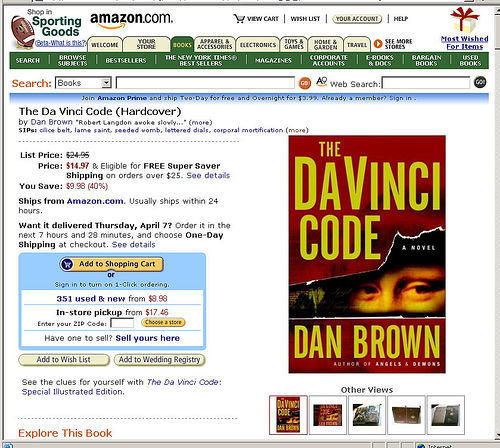
If you’re a regular Amazon shopper, chances are you know the blessing and curse that is Amazon’s “Free Super Saver Shipping.”
At face value, it seems great: just purchase $25 worth of qualifying items, and your order ships for free. What’s not to love?
But if you’re like me, and you don’t always buy $25 worth of merchandise, you can find yourself in a “should I or shouldn’t I” quandary. All you really wanted was the latest book from your favorite author, which comes in at $23.99 for the first-edition hardcover. It would qualify for Free Super Saver Shipping—but you just need a measly $1.01 to be eligible.
Either you find yourself begrudgingly paying for shipping, or you find yourself gazing excitedly at your Wish List like a kid whose mom just told him he can get a candy bar in the checkout line. You were planning on waiting to buy that fun new iPhone case until you had more money for it, but now that buying it will help you save on shipping (both for it and for the book), it actually makes sense to buy it a little early…right?
Fear not, savvy shoppers. For I have discovered a fantastic site that takes away the temptation to over-purchase which, I’m sure, was Amazon’s whole reason for offering the free shipping carrot to begin with. It’s called Amazon Filler Item, and it’s about to become your new best friend.
How It Works
Let’s say you do have $1.01 left to qualify your cart for Free Super Saver Shipping. What this site will do is show you every qualifying item close to that price that will nudge your total over the top without nudging you to buy a pricier item out of the justification that it will “save you money.”
Head on over to Amazon Filler Item and type “1.01” into the box that asks you how you much you need for free shipping. The site will generate a list of items from $1.01 on up to $1.27 that qualify for Free Super Saver Shipping.
Be forewarned that you will need to do a little digging (most of the items are random pieces of hardware like nuts and bolts), but the list is only a few pages long, and it’s totally possible to find something within the $1.01 to $1.27 range that won’t be a waste of your money. (And certainly not as much of a waste as that new iPhone case would!)
For instance, you could get a wire-wound notebook for $1.04 (and you can always find a use for a notebook). You could get a window sealing kit to stop drafts and save money on heating come winter. (Saving you on two fronts!) You could pick up a new scrub brush or roll of Scotch tape (also things you’re bound to use.) Or, if you’re a handyman and you actually could stand to stock up on random pipe fittings, bearings, and other odds and ends, you’re in luck!
Since discovering this site, I’ve gotten note pads and bungee chords for tying our trunk down when transporting large items—both of which have been or will be put to use shortly. I’ve also avoided several impulse purchases I’m pretty sure I would have made if I hadn’t found these handy filler items.
I’ve also gotten the lovely feeling of beating the system, which any true bargain-hunter always appreciates.
How about you all? Are you an Amazon shopper? Have you fallen prey to the Super Saver Shipping temptation before?
Share your experiences by commenting below!
***Photo courtesy of http://www.flickr.com/photos/kokogiak/8626470/sizes/m/in/photostream/
Why the Lowest Cost States Aren’t Always the Best Places to Retire

An increasingly important retirement strategy is relocating to a place where the weather is warmer and the cost of living is lower. There is considerable debate as to which states offer the most advantages to retirees, and a new list seems to come out just about every month.
Some favor low house prices, others low taxes, and still others, a low cost of living overall. This is of course an important consideration for retirees, since lowering living expenses is the critical other half of retirement planning (retirement investing being the first half).
AARP has a list of preferred states – and the reasons why they are included – on its website, which is actually provided by a site known as MoneyRates.com;:
1. Hawaii — great weather and high life expectancy
2. Idaho — low crime rate and good economy
3. Utah — good economy
4. Arizona — good weather and high life expectancy
5. Virginia — good economy
6. Colorado — high life expectancy
7. Florida (tie) — good weather
7. New Mexico (tie) — good weather
9. South Dakota — low crime rate and high life expectancy
10. California (tie) — good weather and high life expectancy
10. Texas (tie) — warm weather and solid economy
I don’t think that this list is any better – or any worse – than any others that I’ve seen, but since people tend to like lists I decided to include it here as well. It does strike me as a bit peculiar that two very high cost states, California and Hawaii, appear on the list. High cost and retirement are not usually found in the same sentence.
As is my preferred way of blogging, I’d like to take a contrary position on the idea of relocating for retirement. It’s not that relocating to take advantage of certain benefits at remote locations is a bad thing. But as a transplant myself, I would like to point out some of the downsides of relocating so that if you are considering such a move for retirement, you will be fully aware of some of the less attractive (and less reported) aspects of relocation.
Home is where the heart is – and that includes family
As I wrote above, when it comes to retirement, people often look to relocate to take advantage of milder climate and lower prices. But, there can be a cost to chasing those advantages that doesn’t involve money. If your family and friends are concentrated where you live now, a move to another state will take you farther away from them. You have to give very serious consideration to whether or not that is a price you’re willing to pay.
The greatest cost will be emotional of course, but there are more tangible expenses as well.
If you are retiring at 65 or thereabouts, you’ll probably find that you will have a greater need for support from family and friends than ever – after all, you’ll be older. You’ll also have to factor in the hard costs of traveling to visit your suddenly distant kin. In addition, as you get older you may find that you’re neither physically nor emotionally able to make the trip on a regular basis.
There’s still another factor that’s retirees often don’t consider when making an out-of-state move and it’s the inability to adjust to living in a different location. This can be especially true if you’ve spent all or even most of your life living in your current location. The prospect of taking on the unknown in retirement is exciting – but the comfort of familiarity tends to increase as we get older.
Lack of amenities that you take for granted now
If your primary purpose in relocating is to lower your retirement living expenses, you may not realize some of the amenities that you’re giving up by making the move. Consider some of the following:
Cultural amenities. The older, higher cost cities (New York, San Francisco, Chicago, Boston, etc.) that so many people want to flee in retirement, also offer cultural amenities not found almost anywhere else. If you are leaving a large city in favor of a beachfront community or small rural town, you’ll almost certainly be saying goodbye to those amenities in your everyday life. The theater, the variety of restaurants, the museums, quaint old neighborhoods, and shady parks may not be a part of life in the new location.
Medical facilities. Another common feature of high-cost cities is that the health care community tends to be very large and comprehensive. As you get older, this will become an increasingly important factor in where you live. Small, low-cost communities typically don’t offer anything close to the level of medical facilities that large cities do. Just as the case will be with visiting family and friends, you may find yourself traveling to get needed medical care at significant additional expense.
Economic benefits. This is an often overlooked benefit of living in a large, high cost area. The area is typically high-priced because it has a strong economy. While we might not think that this is important in retirement, it very well may be if you are hit by a rash of expenses that forces you to seek some form of employment in order to keep from digging too deep into your retirement portfolio. In many less expensive locations that retirees tend to favor, there may be little more than minimum wage part-time jobs available. In a large city – especially if it is your home turf – you may have significant contacts that would enable you to return to the workforce even temporarily, at a much higher wage.
Inconvenient geography
We’ve already touched upon the need to travel that comes with moving to remote locations, but there’s a lot more to geography than just travel distance.
If you grew up in a mountainous area, you may find yourself uncomfortable living in an area that is primarily flat lands. Similarly, if you grow up in a lush, heavily forested area, you may not be entirely comfortable living in the Arizona desert.
Apart from natural landscape, you may find it difficult to adjust to a small community, after living in a large metropolitan the area. While we usually think of America as being one country, life can be quite a bit different from one region or state to another, and even from one city to another within the same state.
Some people can adjust to this change fairly easily, but not everyone can. If you are really comfortable with “the way things are” in your current location, you may want to think long and hard about your ability to make what could be a radical change in a completely different location.
The weather may not be as great as is seems at first glance
Undoubtedly, there’s been a massive shift of the retirement population from cold weather climates to warm/hot climates. While that may seem like a natural move, it doesn’t always work out so neatly for everyone.
Some people find upon moving to the Sun Belt, that they never fully appreciated the change of seasons where they used to live. If you relocate from the Northeast to Florida, you’ll find out if you can handle this change pretty quickly. Not everyone can and some return home after a few years. You may discover that your primary appreciation for warm weather was the fact that it’s different from the cold weather that you knew so well. As a result, living in an area of perpetual summer may not be quite as enjoyable as you anticipated.
Where the weather is concerned there can also be subtle differences. For example, if you live in a fairly dry climate, and you move to one that is more humid, you may find it to be a lot less comfortable. It can also interfere with, or even cause, respiratory ailments.
If you plan on relocation in retirement, measure the costs – all of them
Does this mean that you should not consider relocation as part of your retirement strategy? Not at all. But if you are planning to relocate, it’s well worth doing some advance planning.
Years ahead of your retirement, you should begin investigating various locations to find the one that is most appealing to you. When you do, you should visit that area as often as you can. This is partially so that you can learn as much as you can about the area, but also so that you can develop some level of familiarity with it.
The worst thing you could do is move to an area at retirement, after having visited only once or twice. The more you visit an area, the more you’ll discover what it is about the area that you like – and what you might not like so much. Give yourself plenty of time to make adjustments before you retire.
You may find that you’ll miss your family, friends and home town too much to replace them with beaches, palm trees and perpetual summer.
How about you all? Are you planning to relocate when you retire? Have you thought about any of these considerations?
Share your experiences by commenting below!
***Photo courtesy of http://www.flickr.com/photos/teegardin/6669045131/sizes/n/in/
Father’s Day Gift Ideas for the Hard-to-Buy-For Dad in Your Life

 This is a post by MPFJ staff writer, Jeff. Jeff writes about Sustainable living and finances at his website, Sustainable Life Blog. Jeff really enjoys traveling with his wife as much as he can, to wherever he can.
With Dad’s day just around the corner, it’s still not to late to pick out the perfect gift for him this year.
If your dad is like mine and just goes out and buys what he needs (or wants) when he needs it, it makes him difficult to shop for because he has everything that he wants! Even though he’s hard to shop for, I want to make sure my dad knows that I appreciate all he’s done for me, so I try and find a great gift every year.
Here are a few I’m looking at this year:
- Tools. My dad always said growing up that to do the job right you needed the proper tools. The catch was that he never really had the proper tools, so he always just improvised. This year, I’m considering getting him a tool that he’s talked about needing/wanting for a while but for some reason hasn’t gotten for himself.
- Wash his car. Dads love to have their cars cleaned, and mine is no exception. Make sure to either take it to a nice place, or if you’re tight on cash do it yourself in the front yard. Remember to vacuum the interior as well – dad will really appreciate it.
- Movies. Send your dad (and mom) on a trip to the movies. Get them a gift card to your local theater for the cost of 2 movies and a popcorn and let them enjoy the afternoon. Nothing better than a relaxing fathers day at the movies.
- BBQ. Invite your family over and some of dad’s friends and host a BBQ. Let dad relax and catch up with everyone while you take care of the grilling and the rest of the food. If you don’t think you can pull it off yourself, ask relatives to bring salads or side dishes.
- Something to eat. Everyone enjoys goodies, and what better way to celebrate fathers day than with a box of your dads favorite candies?
- A game of golf/box of personalized golf balls. If your dad is into golf at all, offer to take him out on fathers day and hit the links with him. If he’s unavailable, why not get him a set of personalized golf balls to use next time that he hits the links?
- Something tech-related. There are awesome new tech innovations out there, and if your dad is really into tech stuff, consider finding one of them for him. Maybe a belkin wemo or a pebble watch for dad on fathers day.
There are a few great ideas for fathers day gifts. I may just take my dad out for a nice steak lunch or dinner this year though.
How about you all? What do you typically do for your dad on Father’s Day? What was his favorite thing that you’ve done in the past?
Share your experiences by commenting below!
***Photo courtesy of http://fc03.deviantart.net/fs71/i/2010/173/4/3/Happy_Fathers_Day_by_Nin10dohfanatic.jpg
Would You Consider Car Sharing?

The following post is by MPFJ staff writer, Shondell of Call Me What You Want, Even Cheap. She blogs about her recent car loan and mortgage pay off and a whole bunch more. Check out her blog right here.
Owning your own car is nice; it gives you the opportunity to go where ever you want whenever you want.
However, a car does cost money to buy and more money to keep. There is gas, insurance, servicing, and repairs, which over time, piles up to a huge amount money. If you just need a car to drive occasionally, there are several options. You can rent, borrow, buy, or you can consider car sharing.
What is car sharing?
Car sharing is a type of car renting where members rent cars for short periods of time, usually on an hourly rate. This arrangement is beneficial for people who use cars occasionally and also for those who like to change their cars quite often. The nature of the organization renting out the cars could be a private company, a cooperative, or an ad hoc grouping.
How long has it been around?
The idea of car sharing is not a new phenomenon; the concept has been around in one form or another since as early as the 1940s. It has become so widespread that there are now over a million members in cities around the world. The popularity of this model of car renting has forced even big name traditional car rental companies to start their own car sharing services to stay in business.
How does it differ from traditional car rental?
To some people, car sharing and traditional car renting sounds the same. But, car sharing should not be confused with traditional car renting. They are fundamentally different things.
- Car sharing is not limited to or by the office hours. You can rent a car at any time you like (day or night).
- You will not be provided with a chauffeur. From reservation to pickup to return, it’s self-service all the way.
- You will be able to rent a car by the minute, or by the hour or even by the day.
- You have to be pre-approved to rent the car, with background checks performed and a payment mechanism established.
- Vehicles are located at different locations throughout the service area, often in places accessible by public transit.
- Insurance is paid by the company. Every car has at least minimum liability insurance. Comprehensive and collision insurance are also common.
- Repair and maintenance are done by the company.
How does it work?
You have to make a reservation before you can use a car. You can reserve a car online, by phone, or by text message depending on the company’s reservation policy. Many companies accept all three methods. You will be required to provide the following information:
- The time you will need the car
- The duration you intend to use the car
- The type of car you want
- The place where you would like to pick up the car
After you have made the reservation, the car will be delivered to you at the time and place you have mentioned. A small card reader mounted on the windshield will keep the time. It will be your responsibility to clean and refuel the car. Some companies include the fuel costs in the rates so that the car is full when delivered to you.
What are the benefits?
Car sharing is growing in popularity because it has many benefits.
- Access to car: The first and foremost benefit of car sharing is that people who do not have a car, or can’t afford to buy a car or do not want to buy a car will get access to a car whenever they need it. In a way, it’s like owning your own car, but without the issues associated with ownership.
- Access to different cars: If you like to drive different cars every time you need one, then car sharing could be perfect for you because you can choose a different car every time you need one.
- Saves money: You can save a lot of money if you use the car only occasionally or only when you absolutely need it. You won’t have to buy insurance or pay for repairs and maintenance. This saves you a lot of money in the long run.
Car sharing can be a great way of life, especially for people who live down town and don’t need a vehicle 24/7. You will have access to a fleet of different types, brands and models of cars every time you need one without any of the hassles associated with ownership of a car. In some ways, it’s much better than owning a car.
I need a car for work so I have to own a car, but car sharing is very popular in my city.
How about you all? Would you or have you ever considered car sharing?
Share your experiences by commenting below!
***Photo courtesy of creativecommons.org
Are You Making These Rookie Couponing Mistakes?

————————————————————————————————————————
Welcome to My Personal Finance Journey! If you are new here, please read the “About” or “First-Time Visitor” pages to find out more about us. If you would like to receive free updates on articles like this by email, then sign up here or you can subscribe to the RSS feed. Also, check us out on Twitter or Facebook. Thanks for visiting! Keep on learning!
————————————————————————————————————————
It’s an easy way to shave money off the things you normally buy…but only if you’re doing it the right way. If you’re not, you may actually be costing yourself money rather than saving.
Mistake # 1 – Failing to Develop a System
Mistake # 2 – Buying Something Just Because You Have a Coupon For It
Mistake # 3 – Not Comparing Unit Prices
Mistake # 4 – Not Doubling Up on Your Savings
Mistake # 5 – Leaving Your Coupons at Home
Forewarn us in the comments!
***Photo courtesy of http://www.flickr.com/photos/86530412@N02/8187121312/
Teach Your Children This One Skill to Help Them Financially for the Rest of Their Lives

————————————————————————————————————————
Welcome to My Personal Finance Journey! If you are new here, please read the “About” or “First-Time Visitor” pages to find out more about us. If you would like to receive free updates on articles like this by email, then sign up here or you can subscribe to the RSS feed. Also, check us out on Twitter or Facebook. Thanks for visiting! Keep on learning!
————————————————————————————————————————
The following post is by MPFJ staff writer, Melissa Batai. Melissa is a freelance writer who covers topics ranging from personal finance to business to organics to food. She blogs at Mom’s Plans where she shares her family’s journey to healthier living and paying down debt.
My parents, who were wonderful at teaching me about budgeting and stretching a dollar, taught me nothing about saving for retirement because they didn’t know much about it themselves. As a result, I want to teach my son the importance of opening a Roth IRA at a young age.
However, just as important as teaching children about managing their finances is teaching them practical life skills that will save them money over their lifetimes. Teaching them how to pay less for every major purchase is important. However, another one that is often overlooked can save them tens of thousands of dollars over their lifetime. This skill seemingly has nothing to do with personal finance.
What skill am I talking about?
Cooking.
Teach your child to cook and, better yet, to enjoy cooking, and you will help him save thousands of dollars over his lifetime.
Why Is Learning to Cook Important?
Each of these items costs more than meals cooked at home from scratch. Depending on how often they go out to eat, my guess is that they could save 30 to 50% off their weekly food expenditures by buying basics and cooking at home.
Don’t forget that eating huge quantities of processed food and unhealthy restaurant food can take a toll on your physical health. You may gain weight, and with the weight gain, you expose yourself to a host of medical issues including diabetes, heart attack and stroke. Sure, these things won’t happen overnight, but after a few decades of this type of food, you’ll likely face medical interventions that can also be expensive.
How to Teach Your Children to Cook
- 2 to 4 year olds: Help add ingredients, stir, and pour batter in a pan. Set the timer.
- 5 to 7 year olds: Now is a great time to buy a kids’ cookbook and let your child pick a recipe he would like to make. He can work with you one-on-one reading the instructions and measuring out the ingredients. Older kids can also practice their math by learning how to double or triple recipes as needed.
- 8 to 9 years olds: Kids this age take even more interest in cooking, especially if they’ve been exposed to the process since they were little. They can peruse Pinterest with you to choose possible recipes. They can stir things on the stove with supervision and begin to become more independent in the kitchen.
- 10 to 12 year olds: Determine a basic list of recipes that you would like your child to master. They may be simple breakfast items like scrambled eggs and fruit salad. You’ll also want to teach them how to make some staple dinner meals that aren’t too complicated.
- 13 year olds: Now is the perfect time to teach them independence in the kitchen. You can put them in charge of making dinner one night a week. As they get older, you may also consider letting them plan the meals for the week. A great financial lesson is to give them a weekly grocery shopping budget and have them plan the meals around what you already have on hand and what is on sale.
Many of us want to teach our children the important tenets of personal finance such as saving for retirement, investing, and saving. However, teaching our children basic life skills can also go a long way to helping them preserve both their money and their health.
Share your experiences by commenting below!
***Photo courtesy of http://www.flickr.com/photos/11921146@N03/4004900258/sizes/l/in/photolist-76Uajs-76UWkw-7ge
Grow Your Own Vegetables In Your Conservatory

————————————————————————————————————————
Welcome to My Personal Finance Journey! If you are new here, please read the “About” or “First-Time Visitor” pages to find out more about us. If you would like to receive free updates on articles like this by email, then sign up here or you can subscribe to the RSS feed. Also, check us out on Twitter or Facebook. Thanks for visiting! Keep on learning!
————————————————————————————————————————
Click here to enter my free $65.84 giveaway for a chance to win 5% of My Personal Finance Journey blog income and give another 5% to charity! Deadline to enter is May 31st, 2013.
The following is a guest post. Enjoy!
Making a start
- Tomatoes (smaller climbing varieties can be trained to climb trellis or arch and look beautiful)
- Peppers (bell, jalapeno etc.)
- Carrots (round ones do well in pots)
- Radishes
- Potatoes (seed tubers, plant and top up with compost as they grow)
- Mushrooms (dark spot needed – buy prepared special compost with mushroom spawn and keep at around 50-60 degrees)
- Peas and beans (dwarf varieties and mange tout can be used)
- Herbs (basil, chives, coriander, dill, parsley, fennel, mint, to name a few)
- Aubergines
Next steps
How about you all? Have you ever tried growing your own fruits or vegetables as a way to save some money? How well did it work out? How much do you think it saves you? Are the savings worth the time involved?
Share your experiences by commenting below!
***Photo courtesy of http://upload.wikimedia.org/wikipedia/commons/1/13/Fresh_cut_fruits_and_vegetables.jpg