

Category Archives for Saving Money & Frugal Living
Cavalcade of Risk #190 – August 21st, 2013 Edition
 Welcome everyone to the (190th!) August 21st, 2013 edition of the Cavalcade of Risk. The Cavalcade of Risk (or Cav of Risk for short), as is implicated by the name, is a bi-weekly blog carnival that features the top articles regarding risk management. Several of the realms of risk management covered relate to finances, insurance, and health.
My Personal Finance Journey is honored to be hosting the Cav this week! I hope you enjoy the articles below and can stop by my site on my non-carnival days as well. If you’re interested in receiving email updates of my posts, simply click here to sign up.
Without further ado, let’s get on with the Carnival. Listed below are this week’s Top 3 Editor’s Picks! Enjoy!
1. Matt from Mom and Dad Money presents, My Life Insurance Mistake, saying, “Just about two years ago, my wife and I found out that we were pregnant with our first child. After a few weeks of pure excitement, we got down to the business of planning. Finances were of course at the forefront of my mind. One of the first big things I knew we needed was life insurance. While I had a decent understanding of the general principles of life insurance, it was not something I had ever bought before and I felt a little uncertain as to how to go about it the right way. This uncertainty, combined with an anxiety to get things done quickly, led me to make some classic mistakes..”
2. RJ from Weissins presents, If You’re About To Hit One Of These 6 Milestones In Life, You Can Save Money On Auto Insurance, saying, “When it comes to saving money on auto insurance, timing can be just as important as which company you go with. Here’s six milestones in life in which you’re likely tio be able to save money on auto insurance soon after. .”
3. Bob from Worker’s Compensation presents, Why Men are More Likely to be Killed by Lightning (on the Job), saying, “A study just released shows that an overwhelming percentage of US lightning strike deaths are male, with a ratio of 6 to 1 over female strike deaths. I conducted my own analysis to parlay work related death information from this study, and came to some unique conclusions regarding why this may be..”
And, listed below are the rest of this week’s submissions. Enjoy!
Claire from The Insurance Information Institute presents, Many Companies See Value in Cyber Insurance, saying, “A majority of companies now rank cyber security risks as greater than natural disasters. However, only 31 percent of risk management professionals at companies surveyed by the Ponemon Institute say they have a cyber insurance policy. Companies with no plans to purchase this coverage (43 percent of respondents) say that it’s because of cost and too many exclusions, restrictions and uninsurable risks. Yet among those who do buy cyber insurance 62 percent believe the premiums are fair given the nature of the risk. Satisfaction with policies also runs high, the Ponemon study found..”
Jason from Healthcare Economist presents, Behavioral Hazard, saying, “Many familiar with insurance will know about the concept of moral hazard, but what is behavioral hazard? The Healthcare Economist explains..”
Well – that concludes this edition. Thanks for tuning in!
You can submit your blog article to the next edition of Cavalcade of Risk (hosted by Julie Ferguson at Worker’s Comp Insider) using the handy carnival submission form.
Also, if you are interested in hosting the Cavalcade of Risk in the future, just send Henry (the organizer) an email by clicking here.
***Photo courtesy of http://www.flickr.com/photos/obvio171/1056667567/sizes/m/in/photolist-2BnGsk-2BnMoD-2BnW8B-2Bo1uM-2B
Have You Considered Buying an Electric Car?

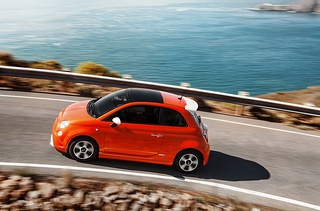 The following is a post by MPFJ staff writer, Kevin Mercadante, who is a professional personal finance blogger, and the owner of his own personal finance blog, OutOfYourRut.com. He has backgrounds in both accounting and the mortgage industry.
If you know much about electric cars, then you know that the technology hasn’t entirely been perfected. They lack the power of gas-powered cars, they tend to be on the small size (commuter cars for the most part), and perhaps most disappointing here in the US, they have very limited range.
But as the years pass, the technology is improving, if only slowly, and the prices are becoming more reasonable in relation to conventional vehicles. Is it time to consider an electric car, even if they aren’t perfect?
Why now might be a good time to buy an electric car
Despite the limitations of electric cars, there are some strong advantages to owning one even now. This is especially true if you don’t drive great distances, and tend to keep your driving to less than 100 miles a day. If that describes your driving habits, here are some benefits to consider:
Saving money on gas. This is the most obvious and tangible benefit of owning an electric car. At current prices, if you are buying 15 gallons of gas to operate your vehicle every week (or driving about 300 miles per week), then you’re spending over $50 per week on fuel. That’s over $2,600 per year that you won’t have to pay if you have an electric car. Sure, your electric bill will increase to cover the cost of charging your car, but it won’t approach the amount of money you are currently paying for gasoline.
Protecting the environment. Since emissions from gas-powered cars are the leading source of air pollution, you’ll be doing your part to clean up the environment by driving an electric car. There is some environmental impact from the electricity that is being used to power your car, but since much of that comes from hydroelectric and nuclear power – an increasing amounts from solar and wind – the negative impact will be far less than for gas-powered cars.
Avoiding the worst of the next gas crisis/price spike. You’ll the counting your blessings if another gas crisis or major price spike hits and you already have an electric car. As a result, you will miss the worst effects of the rise in the price of fuel, but also of the endless hours waiting in line for a reduced amount of gas (we had that situation here in Atlanta in 2008, but it also happened twice in the 1970s). At a minimum, an electric car will allow you to get to and from work so that you will be able to earn a paycheck during the worst of crisis.
Getting in ahead of the herd. If some sort of gas crisis does occur – and you shouldn’t bet against it – an electric car may turn out to be a strategic asset. The price of these cars will soar as gasoline prices rise, but since you purchased yours already, you will have one in the lower price.
Electric car prices are falling steadily
As the technology improves and electric cars gain popularity and sales, prices on them are coming into line with that of conventional vehicles. While they are still more expensive than comparable economy cars, electrics are now reasonably priced compared to other vehicle types. If you are looking at full-sized cars, luxury cars, or SUVs, you may want to take a look at electrics. They can be less expensive, and provide many or all of the benefits listed above.
As a way to increase sales of electric cars, some manufacturers have even cut their prices, or are offering preferred financing deals, and even selling the cars at a loss. They see electrics as the wave of the future and worth subsidizing for the time being.
According to Kelly Blue Book, here are prices for five popular electric vehicles:
- 2014 Chevy Spark EV $29,650
- 2013 Nissan Leaf $27,495
- 2013 Fiat 500e EV $32,600
- 2013 Ford Focus EV $35,995
- 2014 Chevrolet Volt $39,995
Admittedly, these prices will rise with the addition of certain options. And electric cars are not without their limitations. The Nissan Leaf is unable to drive as many as 100 miles per day (a common limitation of electrics) and may not work if your job is upwards of 50 miles from home, or you like to go on long trips.
But all limitations notwithstanding, electric cars offer certain undeniable advantages. And as prices come into range with other vehicle types, those advantages become worth paying for.
How about you all? What do you think about electric cars? Has the time finally come? Or, do you think that the technology and price structure still need more time?
Share your experiences by commenting below!
***Photo courtesy of http://www.flickr.com/photos/chryslergroup/8229193772/sizes/
How To Stop Emotional Spending

 The following post is by MPFJ staff writer, Catherine Alford. Cat is a freelance personal finance writer who blogs at www.BudgetBlonde.com.
Emotional spending is when someone, fueled by a particular impulse, feels like they have to shop. It can be something as complicated as getting into an argument with a spouse and spending a fortune at the mall or something as small as going to get a manicure just because you’re bored.
While spending money is not necessarily a bad thing in moderation, it’s important to be mindful of emotional spending since it’s one of the easiest ways to get your finances off track.
Below are some of the most common thoughts that emotional spenders have and tips on how to combat them.
1. I’m bored.
You know the drill: It’s the weekend. You don’t have to work. You don’t have any plans. So, you head to the mall and start browsing. Pretty soon, you’ve spent $200.00 on shoes and have to face the reality of a credit card bill a few weeks later.
Solution: Identify the cause of your boredom. Are you bored because you don’t have any plans for that day? Call up your friends and make some! Are you bored because you finished all of your work? Then, by all means, take a nap, watch a movie, or enjoy a glass of wine to reward yourself. Essentially, this emotion is all on you. You can’t rely on others to keep you entertained. Do the things that you enjoy when you’re bored, whether it’s reading a book or watching your favorite TV show, and stay away from the malls.
2. I’m feeling down.
I can definitely understand why many people shop when they are down or depressed. That small moment when you get to put a new skirt in a shiny new shopping bag can definitely lift your spirits. However, this is a dangerous habit to get used to, since your automatic response to every crisis will become shopping.
Solution: Whenever you are feeling down and want to shop, ask yourself if shopping will make you feel better long-term. Sure, you might get exhilarated by finding something great on sale, but will your happiness last after you go back home? If the answer is no, take some time to tackle the real issue and try not to mask it by swiping your credit card.
3. I want to celebrate!
I definitely think it’s important to treat yourself when something great happens like a promotion or your birthday, but many people who are prone to emotional spending turn everything into a celebration.
Solution: It’s great to acknowledge when things are going well and even more fun to reward yourself. However, if you are on a budget and are trying to stop emotional spending, try treating yourself to a cozy night at home or a nice bubble bath instead. Even better, have a picnic outside with your significant other or take your kids to the park. Essentially, special treats don’t have to cost anything!
4. I’m really angry.
This emotion applies mostly to relationships. Often times, couples will get into arguments, and one will go shopping just to spite the other one. Or, a college student might get mad at their parents and swipe their parents’ card just to prove a point. All of these behaviors aren’t going to make anyone feel better in the long run, and it’s best to avoid them.
Solution: If you feel angry enough to shop till you drop, first take a deep breath and try to calm down. Usually time alone to think through the problem will be enough to quell your shopping craving. You can also remind yourself that shopping won’t fix the issue at hand. Only talking through problems and working on major issues will help you in the long run.
5. I want that right now!
Impulsive emotions are definitely the riskiest form of emotional spending. Seeing something that’s awesome or interesting and buying it on the spot is okay from time to time. However, if it becomes a habit or you never deny yourself anything, it can definitely hurt you financially.
Solution: Tell yourself no as often as possible. Whenever someone asks me for my number one piece of financial advice, that’s what I tell them. Every time you say no, you are saying yes to a bigger savings account. Ask yourself if you really need the item in front of you or if you are just buying it because you like the way it looks.
Essentially, emotional spending is something everyone struggles with, and it’s important to know which type of emotional spending you most likely experience. Once you know which one sparks a need to shop, you can better tackle that issue head on. Remember, shopping is great for a little bit of temporary happiness, but once that fades, the problem you were running away from is unfortunately still there.
How about you all? Are you an emotional spender? How do you try to combat those tendencies?
Share your experiences by commenting below!
***Photo courtesy of http://www.flickr.com/photos/alexk100/350644178/sizes/
Is Emergency Roadside Assistance Worth The Cost?

 The following post is by MPFJ staff writer Travis. Travis is a customer blogger for Care One Debt Relief Services, and also appears weekly at Enemy of Debt. Travis candidly shares his personal journey to pay off $109,000 of credit card debt and the tips he’s learned along the way. As a father and husband he provides a unique perspective on balancing debt, finances, and family.
Both hands held a suitcase, and additional bags were hanging off each arm as I walked through the parking lot. We had stayed overnight in a hotel out-of-town and I was packing up the van to head home. It was a struggle to click the button on the key to open the back-end, but after several attempts I finally heard the familiar beep that meant the door would be swinging upward momentarily.
With quick flick of my wrist I flung the van key which landed inside the van and then bounced a few inches forward. I strategically placed the bags inside the van, and slammed the hatch door closed. As soon as the door latched I knew I had made a mistake. Checking all the doors I confirmed my fear, I had locked the keys in the van.
Insert several moments of very colorful language.
I then remembered that during a recent review of our auto insurance, I was reminded that we had emergency roadside assistance that covered just this kind of incident. It would be slight inconvenience, but at least my mistake wouldn’t cost me out anything out-of-pocket.
I dialed up the number on the back of my insurance card and explained what had happened. They asked me for some information, and then using the GPS capability on my phone, they were able to pinpoint my location. They stated that they would contact someone in the area to unlock my vehicle, and they would call me directly when they were on their way. Less than 10 minutes later, a tow truck pulled into the hotel parking lot and unlocked my doors. I thanked the man as he jumped back into his truck and pulled away without even needing a signature from me.
Being the curious guy that I am, I wanted to find out what kind of value I was getting out of my emergency roadside assistance insurance. I later called up the towing company sent to help me and found that they would have charged me $45 had it not been covered by my insurance. Since I pay $9.40 per year for emergency roadside assistance, I just recouped about 5 years of my premium payments. But, even more valuable than that is the peace of mind and convenience my insurance provides.
1.) In an unfamiliar area, I don’t have to worry about finding a service that is affordable or even open at the time need it.
2.) I do not have to pay for the expense out-of-pocket. It turns an unexpected expense, into an expected monthly expense.
For a guy that has a habit of locking the keys in his car, these are very important points.
Additionally, my roadside assistance insurance covers:
1.) Towing of a disabled vehicle
2.) Roadside assistance for running out of gas
Every couple of months my wife and I scrub our monthly expenses looking for things to cut to save us money. Emergency roadside assistance has been discussed more than once, but happily it has always made the cut. It’s not a matter of if we’ll need it, it’s a matter of when.
How about you readers, do you have roadside assistance insurance? How often have you used it?
Share your experiences by commenting below!
***Photo courtesy of anankkml / FreeDigitalPhotos.net
8 Reasons To Always Carry Cash

 The following is a post by MPFJ staff writer, Kevin Mercadante, who is a professional personal finance blogger, and the owner of his own personal finance blog, OutOfYourRut.com. He has backgrounds in both accounting and the mortgage industry.
There’s an open question on the debate between credit cards and debit cards. But, let’s throw a monkey wrench into the conversation, and add cash to the mix.
There are at least eight reasons to always carry cash, no matter how convenient plastic may be, or what benefits it may offer.
1. In case your credit or debit card is denied
There are a number of reasons why a credit or debit card can be denied. Though the most likely reason is insufficient cash on a debit card, or a maxed-out line on a credit card, those are hardly the only reasons. Here are some others:
- A merchant’s card reader may be malfunctioning.
- There could be a technical problem with the issuing bank.
- There could be a problem with the merchant’s bank.
- Your card may be damaged and unreadable – a deactivated magnetized strip is hardly uncommon.
- There could be a mysterious computer glitch anywhere in the process.
- A general power outage could shut down everything.
Having some cash in your wallet, or at home, could come in handy in any of these situations.
2. Giving to a homeless person or charity collection
How many times have you come across a homeless person or someone collecting money for charity, but found yourself unable to give because you have no cash in your wallet? That’s the kind of thing happens when we become completely reliant upon plastic to pay for everything. Opportunities to give will be blown for a lack of a small amount of cash.
3. Spitting a bill at a restaurant
If you have ever been out to dinner with family or friends, and one of them paid the entire meal on plastic, splitting the bill after the fact can be very difficult unless you have cash. Sure, you can get around this easily if each party puts up a credit or debit card at the time of payment. But sometimes in the confusion of the moment, one person puts out their card in an attempt to keep things simple. If you have no cash to pay your portion, that can lead to an uncomfortable situation of leaving the restaurant owing someone money.
4. The gas station dilemma
Many gas retailers have a minimum balance requirement in order for you to pay at the pump with a debit card. It is very typical for example for a gas station to require a minimum balance of $100 in your account in order for you to use the pump. This is likely because the computer does not know how much the sale will be when you begin the transaction – it has to make the worst-case assumption, and $100 will generally cover the largest sale possible. If you only have $95 in your account, you will be unable to pay at the pump.
You can get around this is simply by using your credit card – but who wants to spend the next 10 years paying for gas in a tank that will be empty in a week? You can also go to the attendant and swipe your card for a flat amount, but that’s no more convenient than paying with cash.
5. Tolls and vending machines
Toll takers and vending machines generally don’t take credit cards. If you live in an area with toll roads, or work in a place where vending machines might be the only source of nourishment between meals, having some cash in your wallet will be an oasis in the desert.
6. There are still few places that only take cash
Even in an increasingly cashless society, there are still a few places out there were you can’t pay with plastic. Some examples include street vendors and fruit and vegetable stands. This is also quite typical at fairs and street festivals. While you may find some merchants and vendors will accept plastic, there are still many who work on a cash only basis. Still another place is garage sales – they don’t take plastic, and if they’re smart, they won’t take checks either.
7. If you have kids
If you have kids, you must have cash – period. Even if your child already has a credit or debit card, there are always situations were they need cash. It might be a minor purchase at school, a school related collection effort, or a school fair. Credit and debit cards won’t work in these situations, and you can’t be writing checks for every little thing that happens.
In addition, if the kids want go out with their friends – to go to the movies, bowling, or even just to the mall – you probably won’t hand them your credit card, and checks won’t do them any good. You’ll have to have some cash on hand to fork over, and usually on very short notice.
8. Minimizing identity theft
I’ve saved this for last because it may be the most important.
Every time you make a purchase using a credit or debit card, a paper trail is created. That is an open opportunity for identity theft, particularly since much of it is perpetrated by employees who have access to the trail. You can minimize the chance of identity theft by at least making small purchases in cash, rather than by plastic. Identity thieves hate cash!
How much cash should you carry?
The answer to this question will be different for everyone. Much depends upon what your situation is – for example, how frequently you encounter tolls, how many kids you have, and how likely you are to frequent vendors who only accept cash.
For most people who fall somewhere in the middle, carrying $50-$100 in cash in your wallet will get the job done. Alternatively – to minimize the damage from the theft or loss of your wallet – usually $20-$30 in your wallet, while keeping $100 or so at home.
And whatever you keep either in your wallet or at home, should be held in small bills. A $100 bill will do you little good at a vending machine, or if one of your kids wants $20 to go to movies.
How about you all? Do you carry cash, or do you prefer to go completely cashless? If you do carry cash, how much do you think is enough?
Share your experiences by commenting below!
***Photo courtesy of http://www.flickr.com/photos/jmrosenfeld/2903513401/sizes/n/in/
Will Your Spending Habits Change When You’re Out of Debt?


The following post is by MPFJ staff writer Travis. Travis is a customer blogger for CareOne Debt Relief Services, and also appears weekly at Enemy of Debt. Travis candidly shares his personal journey to pay off $109,000 of credit card debt and the tips he’s learned along the way. As a father and husband he provides a unique perspective on balancing debt, finances, and family.
My wife and I are planning a surprise mini-vacation for the kids at a tourist place known for amusement parks of all types, but specializing in water rides. Even the hotels in the area have huge indoor water parks that people flock to during the winter months. As part of our planning, Vonnie and I were comparing prices and amenities of different hotels. One in particular was more expensive than the rest, but had a lot more things to do, including some activities for which guests have to pay extra.
We decided to cross that one-off our list, as the hotel was out of our price range, and we felt that the activities weren’t worth what they were charging. As we prepared to continue to discuss the remaining hotels on our list, my wife made a comment that shocked me.
“Why don’t we save that place for when we’re out of debt and paying $45 a person for a zip line tour won’t matter.”
Excuse me?
The reason I don’t want to stay at that hotel is because it’s overpriced. The rooms, the zipline, the go karts, the entire package is not worth what they’re charging. We can do the same activities at one of the amusement parks for less. That kind of spending with complete disregard of value is how we go into debt in the first place. So, no thank you to that hotel whether we have credit card debt or not. However, our conversation got me thinking.
Do my wife and I have the same spending expectations for after we are credit card debt free?
I honestly don’t think things should change all that much. The grocery budget will likely increase a little because I love food and I’m a firm believer that having great food at home prevents us from wasting our money eating out. Maybe we’ll take a family vacation here or there. But mainly I just think of being debt free as being convenient. Convenient that I don’t have to save up for months to host Thanksgiving dinner, or school clothes. The money will be there, sitting in our savings account ready to be used when we need it. The decision-making process as to what to spend out money on will remain the same. Value is value, wasting will still be wasting.
But does my wife have a different view?
I suddenly wonder if she dreams of the day when she can spend money just because it’s there. Will she impulsively buy a new pair of shoes just because they’re adorable only have them sit on the closet shelf because the right opportunity to wear them never arrives? Will she use rolls of twenty-dollar bills to start our fire pit?
Ok, I’m getting a little off track, but I think you get my point. Even after we have completed our debt management program I want us to still be smart with our money, and get the very most we can out of it. We had best have that discussion soon, as we are less than eight months away from eliminating our 109K mountain of credit card debt.
How about you, readers? How will your spending habits change when you get out of debt? Does your significant other share the same view?
Image courtesy of artur84 / FreeDigitalPhotos.net
4 Ways to Save on Pet Expenses

 The following post is by MPFJ staff writer, Melissa Batai. Melissa is a freelance writer who covers topics ranging from personal finance to business to organics to food. She blogs at Mom’s Plans where she shares her family’s journey to healthier living and paying down debt.
My family had pets for as long as I can remember–cats, dogs, even rabbits for a while. When I moved out on my own, I took my two cats with me. After they both died within 2 years of one another, my husband and I couldn’t stand how empty the house felt without a pet. Within 2 months, we adopted another cat, who we still have today.
Pets can certainly enrich your lives, but they can be expensive! Some financial experts recommend that if you have debt, you shouldn’t own a pet. I wouldn’t go that far, but I would suggest that you take steps to minimize the cost of owning a pet while still providing the pet with a good quality of life.
Luckily, there are many ways to save on pets and their care:
1. Consider pet insurance.
Just like humans’ medical care, animals’ medical care has advanced. It’s now possible to treat an animal’s condition that previously was untreatable. The problem is that you may not be able to financially afford the treatment. Pet insurance is one way to be able to afford more services, but consider this carefully.
Many people find that there are so many restrictions and upfront, out-of-pocket costs that pet insurance doesn’t really save them money.
A better idea, if you’re disciplined, may be to set aside money yourself to create your own “pet insurance” fund. If you own a cat, for instance, set aside $25 a month for the animal’s care. At the end of the year, you have $300, but the cat’s annual check-up and shots may only cost $150. Now you have $150 to roll over for next year. Do this for the first 7 years of the cat’s life, when most indoor only cats have very few medical needs, and you have over $1,000 in an emergency fund strictly for the animal’s care. Continue to put this money aside and let it grow, and when the cat is older, you’ll have the money to cover her care.
2. Find alternatives to boarding.
Another large expense can be finding someone to care for the animal when you’re gone. Sure, you could board your animal at a kennel or the vet’s, but that is not cheap. Instead, consider hiring the neighbor child to come in and feed and water your pet as well as taking him out to play, if necessary. If that’s not an option, you could also use a site like dogvacay.com. People who are vetted and insured are available to care for your animal for just $15 a day.
3. Find reasonably priced food.
Unless your dog or cat has a health condition, there’s no need to buy the most expensive food available at your veterinarians. While you probably don’t want to feed your animal the cheapest food available, keep in mind that there are several mid-priced brands that offer good quality food for a reasonable price. Often, shopping at Amazon instead of the grocery store or a pet store can make the price even lower.
4. Love your animal, but realize it’s not your child.
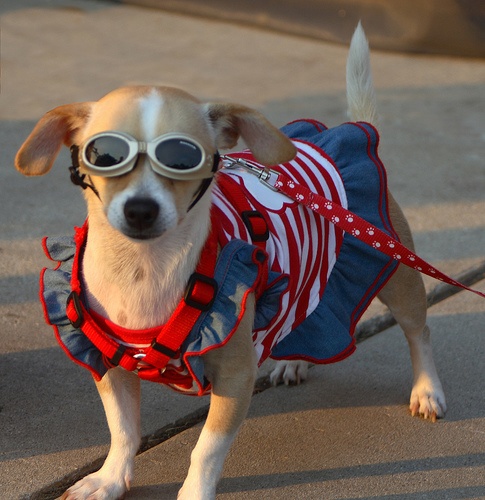
Some people go overboard when they become pet owners. They dress their animals in cute little outfits and buy them expensive, cozy beds. These animals get many presents under the tree at Christmas.
If you want to have a pet on a budget, realize that Fido is your pet, one you love very much, but he doesn’t have to be spoiled like that. Your wallet will thank you.
Owning a pet can be expensive, but there are ways to lower that cost and make pet ownership much more affordable. We still have debt that we’re working on paying down, but we wouldn’t miss being pet owners. Instead, we just monitor our costs carefully.
How about you all? What other ways do you save on pet expenses?
Share your experiences by commenting below!
***Photo courtesy of http://www.flickr.com/photos/randysonofrobert/2639402501/
Reader Profile – Christine from The Pursuit of Green


Today, in the ongoing Reader Profile Series, we’re getting to know MPFJ.com reader and commenter, Christine, from the site, The Pursuit of Green. Let’s all give Christine a big round of applause for sharing her life with us and listen to her story. Enjoy!
Also, if you’re interested in sharing your own financial story/journey with us in a reader profile of your own, just shoot me a quick email, and we can get the ball rolling!
1. Please Tell Everyone a Little Bit About Yourself (Background, Education, Family Situation, etc).
Hi, I’m Christine! I’m an Ohioan who was born and raised there, then transplanted to Los Angeles after college. My parents are considered middle class now, but that wasn’t always the case. Growing up, I learned how to be frugal and make the best of what you have. It’s helped me a lot after I moved out to Los Angeles where the cost of living and rent is so much higher than in Ohio.
I went to school for digital design, which encompasses basically anything you do on a computer. I’ve been building up my career and last year decided to become self-employed.
Along the way, I started learning about personal finance to figure out the best way to manage the income I was earning. I also focused my time on doing more to be earth-friendly, minimizing my impact on the earth with every step I take. These two things have melded in the last few years as I found that a lot of times they go hand in hand. Many times I’ll do something to be earth-friendly and find that it saves money, and vice versa.
Earlier this year, I had a big party otherwise known as a wedding. It was a challenge for sure to keep from spending too much!
2. Describe Your Current Financial Situation (Who Works in Your Family, How Your Income Is, Your Expenses, etc).
My income has been fluctuating ever since I became self-employed. In my industry, the holidays are extremely slow times. I’ve had a few months where I haven’t found any work and months where I’m extremely busy. It’s definitely an eye opener to be your own boss. My hours are flexible, but there’s always that unknown of whether or not I’ll have work. I’ve also learned a lot in the last year about taxes. Paying your own taxes really does make you aware of how hard you work and how much goes toward the government.
Luckily, my husband has a steady full-time job. It helps to offset the unsteady aspect of self-employment and gives us assurance. We’ve worked out our finances so that we are able to live well under his income only. Any income I bring in every month is extra!
We’ve cut out a lot of expenses to reach our goals. That includes a lot of eating out. We both love food and that is one of the hardest expenses we’ve had to cut. Restaurants simply add up too much. We’ve also taken other measures such as canceling our cable, cutting his hair at home, and buying less clothing and unnecessary items. We’ve kept some of the cheaper items as indulgences; for example, my chocolate and the occasional dinner out at a reasonably priced place.
3. What Are the Current Financial Challenges You Are Facing (Saving, Paying Off Debt, Student Loans, Merging Finances After Being Married, etc)?
We’re still figuring out the finer points of merging finances. We have the same goals overall, but the way we get there is a bit different for both of us. My husband is in favor of throwing everything towards one goal. I like a more balanced approach where we have one main goal but also work towards longer term goals. We’re both learning to talk more about our financial goals together and compromise on how to get there.
Currently, we’re really trying to focus on saving up for a down payment on a house. We live in Los Angeles and the house prices here are insane. Just saving up for a down payment itself is pretty daunting, and we’ve been plugging away at it for two years now. Of course, buying a house will be another challenge to come!
Another goal we are working towards is making ourselves as ready as possible to start a family. Buying our own home is one thing that helps us there. The other is living off one income.
4. What Are Your Plans for the Future (Retire Early, Build Your Career, etc)?
It would be wonderful to be able to retire early! It’s something that I dream about but am not sure if it will happen. I’m steadily saving for retirement, but it’s hard to say anything. Most likely I will “retire,” but keep working in some form or another because I enjoy it.
Currently I am trying to build up my career so that I have a good portfolio where I can be self-employed with steady work. The traditional work place is definitely changing, so I am trying to be more flexible in the way I think about work. I mostly work on a computer and information is exchanged online, so it’s entirely possible to be self-employed doing this kind of job.
Eventually if everything goes well, then we’ll have fully funded retirement accounts, savings, a paid-off house, paid-off cars, and investments that create spending money.
5. What’s Your Best Piece(s) of Financial Advice and/or Your General Philosophy on Personal Finances?
While there are many financial goals that you should be working towards, remember to sit back and enjoy the present. I want to be happy when I retire, but I also want to be able to live life when I am young enough to not have creaky bones. The things you do today don’t have to be expensive or lavish, but it can still be fun and enjoyable. Live life in the present, but plan for the future. It’s all a matter of keeping everything in balance.

We Became a One-Car Household: Could You?

The following post is by MPFJ staff writer, Kelly Gurnett. Kelly runs the blog Cordelia Calls It Quits, where she documents her attempts to rid her life of the things that don’t matter and focus more on the things that do. You can also follow her on Twitter and Facebook.
Back in April, I said goodbye to my beloved first car, and my husband and I became something I never thought we would be: a one-car household.
As I’ve written about before, we lost half our income in April when my husband had to stop working due to his Fibromyalgia. (We’re currently applying for disability benefits.) This happened just as I was planning to make the leap from having a day job and working a side hustle to freelancing full-time—thus decreasing our income even further. I’d already made plans to sell my car when I was considering the leap, but once my husband lost his job, it went from a smart money-saving idea to a necessity.
We’ve now been a one-car household for a little over a month, and it’s had its pros and cons. Since I’m fortunate enough to work from home, and my husband doesn’t work at all anymore, our situation is certainly easier than couples who both have jobs outside the home (not to mention children, of which we have none except furry ones). That said, we have friends with more “standard” lives who are also one-car households, including a married couple who both hold down jobs with shifting schedules—and just had a baby.
So, it can be done. As with any other big financial/lifestyle change, it all comes down to what you’re willing to give up, and put up with, in order to gain certain tradeoffs.
For anyone considering becoming a one-car household, here are some of the big things to ask yourself:
What are your work schedules like?
Our friends who have jobs without set schedules never know what their hours will look like each week, so every week is a different balancing act of “Who’s going to need the car when?” If you have some flexibility over the days you work, or you both work different shifts, it’s much easier than if you both work standard 9-5s that can’t be negotiated.
At the same time, plenty of one-car households get around this by having one-half of the couple carpool or take public transit. The cost of a bus pass could be considerably less than the cost of paying for and maintaining a second vehicle.
Are you o.k. with not having instant mobility?
Gone will be the days of running out for a latte spur-of-the-moment (although that could be good for your budget, too). If your partner has the car, you’re homebound (or stuck wherever else you are) until it’s your turn or they can come pick you up. Some people will have serious problems with the lack of freedom and independence this poses.
Also, if you have an illness, children, or any other situation that makes you feel uncomfortable not being able to drive somewhere in an emergency, that’s something else to consider. Should something happen, do you have people you can call on to give you a ride? If your partner gets stuck late at work, how will you get the kids to soccer practice? These are all day-to-day logistics you should work out before you find yourself in theses situations.
Are you good at compromising with each other?
There will be times when you both need the car, and it can come down to either a game of rock-paper-scissors (followed by resentment by the loser) or a level-headed, adult conversation about whose needs take priority and how accommodations can be made.
If you think sharing a home with someone teaches you how to compromise and be patient, try sharing a car when you’ve each accidentally made plans for the same night. Just like everything else in your relationship, negotiating car turns can take sacrifice at times. If your relationship doesn’t already have a healthy level of give-and-take, you’d better be prepared to develop some pretty quickly.
So…Why exactly would we do this?
After considering questions like the above, you could understandably wonder this. Much like selling your house to downgrade to a smaller one or taking on a second job to pay off debt, going down to one car is a sacrifice, and the decision ultimately comes down to whether you will get more out of doing it than you will lose.
So, what will you get? In addition to saving on car payments, you’ve got all the incidental costs that come along with owning a car, like insurance, repairs, gas, registration fees, tolls, and parking. And if you own your car outright, selling it can get you a little extra cash. (We used the proceeds from my car to pay off my husband’s car and finish my debt repayment plan.)
For me personally, I also enjoy not having to deal with the stress of driving. Working from home, I can avoid the crazy rush hour commute altogether—but even if I still had my office job and my husband was working, I think I’d choose to let him have the car so I could ride the bus to work. No frustration over inconsiderate drivers, no worries about navigating through Buffalo snow storms, just a chance to sit back, do a crossword, and let someone else do the driving.
If you’re particularly green-oriented, losing a car is also a great way to reduce your carbon footprint.
So, do you think you could become a one-car household? Why/why not?
***Photo courtesy of http://www.flickr.com/photos/lescientist/8747173579/
Why People Struggle Getting Finances On Track

 The following post is by MPFJ staff writer, Catherine Alford. Cat is a freelance personal finance writer who blogs at www.BudgetBlonde.com. Enjoy!
Paying off debt is a long road, and just like any goal, it definitely has its ups and downs. There are times when I’m so motivated to knock out my student loan debt, and there are other times when I worry I’m paying off too much at the risk of my savings account.
It’s hard to keep finances on track. I know that first hand, and I have had many moments in my life where I thought I’d never be financially independent. An off day in the stock market, a car crash, or a broken hot water heater can set people back thousands of dollars. However, there are many ways to deal with these setbacks and still get your finances on track in the future.
Below are some of the most common reasons that people struggle getting their finances on track, and luckily, each and every one of these reasons can be easily fixed! Let’s take a look.
1. Being Afraid to Look At The Number
I totally get it. Looking at the numbers is absolutely terrifying. It’s the first step to every debt payoff goal, though. You have to sit down, grab the calculator, and add it up. Once you know the number, you can move forward. Once you know the number, you can start reducing it.
Many people know that they are in debt, and they might even know a ballpark figure, but having “the number” front and center is so important. I’m a very visual person, so I have my goals hung up all around my desk. They include my debt payoff goals, goals for my blog, and tons of inspiring quotes to get me through the tough times. A system like this is necessary to keep you motivated to get your finances on track.
2. Disorganization
When you have a lot of bills coming through the door and hundreds of e-mails to sort through, it’s easy to get overwhelmed. However, organization is one of the most important things when it comes to getting your finances on track. There’s nothing more annoying than having your credit card interest rate jump up 10% just because you forgot to pay it. Additionally, no one likes paying late fees.
Stay organized by having a calendar or a planner. I like to kick it old school by having a planner I write on, and I am such an organization freak that I designed my planner myself to fit my lifestyle. However, many people also swear by many online money management tools, which I am just now starting to use in conjunction with my planner.
3. Accountability
Accountability is absolutely necessary when getting your finances on track. When someone is looking over your shoulder, you are much more likely to do the right thing.
A blog is one of the best forms of accountability you can have. Your blog friends will cheer you on as you pay off debt and keep you accountable. Of course, they’ll also let you know when someone you say or do is a bad idea!
If you don’t have a blog, work together with your spouse or a friend. For example, you can choose a co-worker to have bagged lunches with so that you don’t feel pressured to go out to eat every day. These types of relationships are so important when you are on your journey to financial independence.
4. Celebrating Too Much Too Soon
One of the most dangerous terms in the debt repayment world is, “I deserve this.” This phrase alone has convinced people all over the world that buying expensive shoes (or whatever product!) is okay even if you are deep in debt.
I’m all about celebrating victories, but the reward should match the occasion. So, if you want to go out on a reasonable dinner and a movie date every time you successfully put $1,000 towards your debt repayment goals, that’s awesome. However, you should probably stay away from extensive shopping splurges until the debt is under wraps.
5. Not Trying Again
Getting your finances on track can be a discouraging journey. There may be many times when you go over budget and have an unplanned expense. I have totally been there, and it’s so easy to beat yourself up when one of these unforeseen events happen. However, the biggest mistake you can make is not trying again. Seriously, don’t give up!
Financial independence is a worthwhile goal, but it’s a long and arduous journey. There will definitely be times when it’s easier said than done, but it’s important to stay motivated even when it seems like you just can’t. Good luck. I’m rooting for you!
How about you all? Have you ever struggled getting your finances on track? What were some of the ways that you came out of the slump?
Share your experiences by commenting below!
***Photo courtesy of http://www.flickr.com/photos/70278809@N00/7125521691/