

Category Archives for Saving Money & Frugal Living
Don’t Let Yelp Do All the Heavy Research for You
 The following is a post by the newest staff writer addition to MPFJ, Sally. Sally is the blogger behind TinyApartmentDesign.com, a blog about design, living well, and simple, tiny spaces. Enjoy and welcome her to the MPFJ family! – Jacob
Yelp is my favorite social website.
It takes the power of the crowd and applies it to your local area, helping you find places to eat, a place to get your pants hemmed and a dentist. When you’ve just moved to a new area, Yelp can be a lifesaver. How else do you decide between the two identical pizza places that are within walking distance? Dry cleaning is another big win on Yelp. I want to know if it’s the kind of place that breaks buttons in advance.
But, too much of a good thing can be dangerous. Let Yelp take over your buying decisions too much and you’ll end up having fewer really new experiences and your wallet will pay the price as well.
1) There’s No Accounting For Taste
I first realized that I could not rely on the taste buds of strangers on a taco quest in LA.
I had just moved to the city, and Yelp had fast become my new best Internet friend. I was Yelp-checking everything I did (how’s this dog park? How about this grocery store?) and I had yet to find my go-to taco spot in a town of 10,000 taco stands. And I kept seeing Tito’s Tacos on TV, which even has its own jingle: I love Tito’s Tacos, you love Tito’s too. The only thing better than a Tito’s Taco…is TWO! And then I Yelped it, and the place had thousands of reviews, most of which were pretty positive.
I knew I had to try it, and so I headed up Washington Blvd. to stand in that infamous line. I ordered two takeout boxes worth of tacos for my and my boyfriend and headed home excitedly. Well, once we opened up those boxes, I was in for a major letdown. These tacos were the most Americanized, Sysco-food-supplied basic tacos you could have. Hard shell tacos with iceberg lettuce and American cheese and pretty bland salsa. This was not the street taco I had envisioned. There wasn’t a fresh cilantro sprig anywhere in sight. I thought the food sucked. And although there are plenty of Yelp reviews that agree with me, the majority of Yelpers seem to love the place and their opinion swayed me.
Now, I take Yelp reviews with a grain of salt. Because food’s deliciousness is in the five senses of the beholder.
2) Yelp Feeds on Your Impulsiveness
Using Yelp too often and too mindlessly can drain your wallet. I’ve often found myself browsing restaurants on Yelp, and soon enough, I start to feel hungry and everything is looking really tasty. Yelp makes it easy too, there are check-in offers, the map quickly sends you to your map app for better driving directions and they even have the store’s hours prominently displayed (something even restaurant owners sometimes forget to clearly display on their own website).
Before you reach for your trusty Yelp app, ask yourself if you really need to eat out or try that new place, or go for the expensive car wash. It might be just groupthink overwhelming you.
3) Try Something Different and Stay Independent
I can name you dozens of restaurants that I love in LA, and I don’t think I found more than one or two on Yelp. It was mostly a result of walking or driving by a place and wanting to know more about it, getting a recommendation from a friend or even ending up there because of a business meal.
Yelp is awesome and definitely useful when you need a recommendation or new place quickly, but I also want to try things in my town and are part of the local community, not just what’s popular with Yelpers.
How about you all? Do you use Yelp to help find information on local venues/restaurants/businesses?
Do you think it has saved or costed you money in the long run?
Share your experiences by commenting below!
***Photo courtesy of http://www.flickr.com/photos/zigazou76/7054766111/
10 Things to Keep in Your Car During Wintertime

This is a post by MPFJ staff writer, Jeff. Jeff writes about sustainable living and finances at his website, Sustainable Life Blog. Jeff really enjoys traveling with his wife as much as he can, to wherever he can.
I live in a state where I often have to travel long distances through pretty barren places, and the weather doesn’t always agree with me.
When I first moved here, I was driving 100 miles to work (round trip) and there was really nothing between point a and point b. I was driving a very terrible car at the time, so I needed to be ready for any sort of issues that it may have every day.
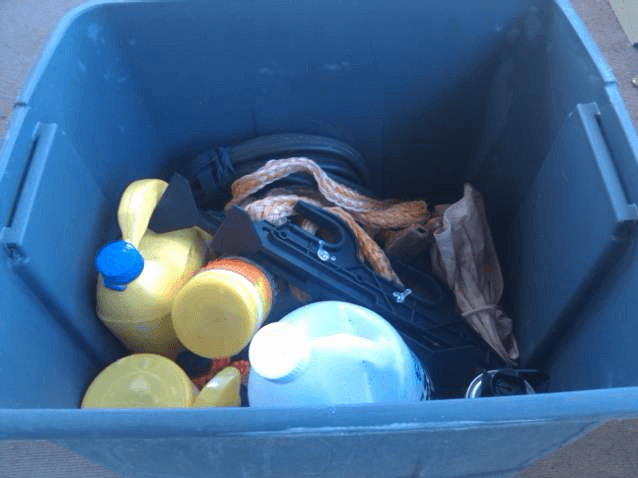
Thankfully, I never got stranded on the side of the road (in the cold or otherwise), but it was always in the back of my mind. I don’t know if I was ever prepared for every possible thing that could happen, but I tried to get prepared for the highest likelihood of things that would happen. I also figured this would be a great way to save money (by avoiding a long tow). Here’s what I took with me (I had a milk crate in the trunk).
- Jumper Cables – This one should be relatively self explanatory, but they are used in case your battery dies. Simply hook them up to your car and someone elses and wait a few minutes before you try to turn it over. I got really good at this because my starter was going bad and that really drained the battery. While a dead battery is a pretty big pain, it’s not the end of the world and can easily be fixed with some jumper cables.
- Blankets/warm clothes – Just in case you get stuck somewhere, it’s great to have a little bit of spare warmth with you. I usually have an extra sleeping bag on hand. I also have an extra pair of gloves and a winter hat, just in case I need to be outside for part of the time.
- Flashlight – This is something that you can pick up for free at a conference or something as they are always giving them away. Keep it in your glove box, and it should come in handy.
- Shovel – Keep a small shovel with you so you can dig out if need be. You don’t need a full size shovel, a smaller one will do just fine. Try looking for a child sized one – those should be small enough to fit in the truck and not take up too much room.
- Old Cell Phone – Right now, my wife and I are about to switch cell phone providers and will be getting new phones. We each plan on charging our old phones and putting them in the car. Even if the phone isn’t on a service plan, you can still make emergency calls with them (to 911).
- Antifreeze – Once when I was driving the old car, a hose burst on me when I was on my way somewhere. I was able to pull off the road and get the problem diagnosed pretty quickly, but I was still out a whole car full of antifreeze. Thankfully I had some with me at the time, and was able to fill the radiator back up. When you’re buying, make sure to buy the premixed stuff. When you’re out there in a bad spot, you most likely wont have a vessel to mix up a new batch of diluted antifreeze.
- Water – A bottle or two of water will also come in handy in the event of an emergency.
- Tow Rope – After I had gotten rid of the bad car and gotten my truck, I was driving to work one day and saw a guy slide off the road. He wasn’t in that bad, but it was pretty clear that he wouldn’t be able to get out on his own. I had a tow rope with me, so I stopped and we hooked him up and I pulled him out of the ditch when traffic was clear.
- Sand bag – Great to weigh down the vehicle over the drive axles, or can be broken open and used for traction if you end up getting stuck at some point. Just sprinkle the sand into the hole your stuck in and hopefully that will get you enough traction to get out.
- Windshield wiper fluid – It doesn’t sound like a big deal, and it really inst, until you’re driving in slushy roads that the snow, sand and gravel are in the process of melting off of. If you run out of fluid, it’s always a handy thing to have as a back up.
This is what I keep in my car year round in case I get stuck, and I’ve yet to have a problem that I couldn’t get myself out of (without a bit of help).
Is there anything that I left off the list?
What do you keep in your car in case of emergencies? Have those items ever saved you big money?
6 Tips to Avoid Crazy Holiday Spending This Year and Next

 The following post is by MPFJ staff writer, Catherine Alford. Cat is a freelance personal finance writer who blogs at www.BudgetBlonde.com.
Wow, I forgot how crazy the holidays get here in the States! Why were there three Christmas aisles at every store in October? It’s so overwhelming to me, and I feel like I have some fresh perspective on the American holiday season having been out of the country for two years.
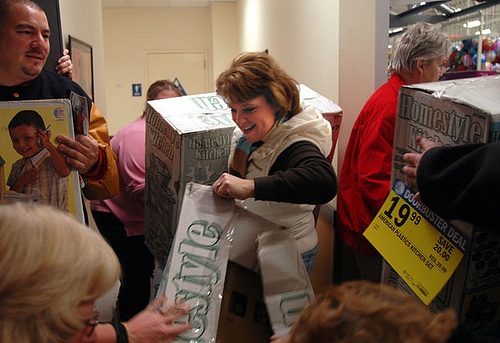
If there’s one thing I learned from living in the Caribbean for so long, it’s that we just don’t need a lot to be a happy. We don’t need a lot of Christmas junk. We don’t need 5,000 decorations, and we don’t need to go wild at a Black Friday sale. In fact, you couldn’t pay me to go to a Black Friday sale (okay, okay, if somehow my baby cribs go on sale for $50 a piece, I will go. It’s very unlikely, but hey, I have to buy two cribs since I’m having twins, so have mercy on me!)
All that said, there are a lot of ways that we can avoid crazy holiday spending this year AND next year! Here’s how:
This Year
1. Only Buy For Your Family and Your Best Friend
Holiday gift giving is so awkward. Inadvertently, someone will send you a Christmas gift, only to find out that you didn’t have one already purchased for them. To those people, just simply say thank you. I know it’s hard but you don’t need to waste money on a pile of “just in case” gifts to give to people. Just say, “Thanks! That’s so thoughtful!” and send them a thank you note. Remember, most gifts are quickly forgotten as the months go by. Plus your coworkers already have 42 scarves each, so buy gifts for the people closest to you and don’t fret about the rest!
2. Bake Your Heart Out
One inexpensive way to get through the holiday season and send some awesome gifts out into the world is to bake! Most people would absolutely love a loaf of homemade bread or Christmas cookies. This is great for aunts and uncles, grandparents, and other people who already have more material items than they could possibly need!
3. Give the Gift of Experience
One thoughtful gift you could give is a card that has a completely written out plan for how you’re going to spend the day together with someone. So, if you wanted to spend more time with your sister, you could give her a card that says, “Eligible for one girls night sleepover just like when we were kids.” Then, make sure to actually pencil it in your calendar! I feel like so many people give the gift of “coupons” for a date night and things like that but never use them! So, give the gift of thoughtfulness and actually follow through!
Next Year
4. Save As You Go
It would be hard to save up for Christmas for this year, so let’s start fresh for next year. If you know that you spend a certain amount on the holidays, go ahead and start putting aside that money every month. It will feel so great to be proactive and have a nice savings account ready to go. This will stop you from overspending and it will also prevent you from going into credit card debt just because society tells us it’s the season of giving.
5. Buy Throughout the Year
I am always thinking ahead for Christmas and birthday gifts. If I see something I think my sister would like and it’s a good price, I will go ahead and buy it for my sister, my two sisters-in-law and maybe even my mom and mother in law too. In the past, I’ve given the women in the family jewelry, organizers, monogrammed towels, lotions, etc. and I’ve thought about most of them way ahead of time. It just makes things much less stressful when you have it all planned out.
6. Adopt the “4 Gift Rule” for Kids
It might be hard for kids to adjust to fewer gifts at first, but if they are awesome gifts, I bet they won’t care. I love the “4 Gift Rule” which stands for “Something you want, something you need, something to wear, something to read.” Come on; you know your kids are going to get a million gifts from their grandparents, aunts, and uncles, so don’t spoil them too much at home!
Of course, these aren’t the only ways to beat the crazy holiday spending this year and next so I want to hear from you!
How about you all? Do you always have a big Christmas celebration or a small one? Do you buy lots of gifts to family and friends or make them yourself? Would your kids be upset at only getting 4 gifts?
Share your experiences by commenting below!
***Photo courtesy of http://www.flickr.com/photos/bethcanphoto/3065695690/sizes/m
You Are What You Eat: Saving Money Buying Processed Foods Will Likely Cost You in Healthcare Expenses

 The following post is by MPFJ staff writer, Melissa Batai. Melissa is a freelance writer who covers topics ranging from personal finance to business to organics to food. She blogs at Mom’s Plans where she shares her family’s journey to healthier living and paying down debt.
Three years ago, I thought I was being quite responsible with my family’s available money when I searched the bargain shelves at the grocery store.
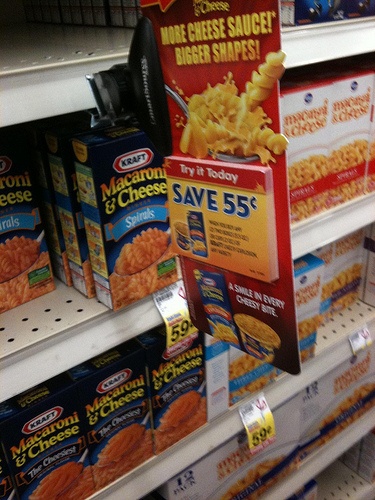
I bought meat that was deeply discounted because it was at the expiration date. I cut coupons, and I stocked up on boxed products like Hamburger Helper and Knorr pasta sides that I could buy for pennies. I bought the cheapest fruits and vegetables I could find, often on the clearance rack because they were already well past their prime.
Did I mention that saving all this money helped us have more money to go out to eat a few times a week? We often had sushi, but we also had our share of unhealthy meals like pizza and fast food.
While I might have been responsible with my family’s money, I wasn’t being responsible with our health, as I discovered the next year when I became sick with gastrointestinal distress every day and couldn’t find what the problem was. It would be over two years before I found a doctor who diagnosed a leaky gut and an intestinal yeast overgrowth as well as an intestinal parasite and multiple food intolerances. (Gross, I know.)
That was all discovered a year ago, and our eating habits have changed dramatically. Now we buy fresh organic fruits and vegetables, local and in season, if possible. In the summer and fall, we buy direct from the farmer through a vegetable CSA.
Rather than buying meat that’s about to expire, we buy grass fed meat direct from the farmer.
We eat very little processed foods; we cook from scratch and eat at home for all of our meals, and we don’t eat at restaurants save a few times a year when we’re traveling.
Thanks to my own experience, I’ve come to believe the old adage, “Pay now for good food or pay later for medical care.”
Michael Pollan, author of In Defense of Food: An Eater’s Manifesto, elaborates on this when he explains, “In 1960, 18 percent of our national income was spent on food, and only 5 percent on healthcare. Today 9 percent of our income is spent on food and a whopping 17 percent on healthcare. ‘The less we spend on food, the more we spend on healthcare'” (Oprah).
What Are You Doing with the Money You’re Saving at the Grocery Store?
I’ve been an avid blog reader for four years now. I used to love reading women’s posts about how much they saved at the grocery store. It felt like they were cheating the system (even though they weren’t), and I wanted to do the same thing. I was so proud of myself when I got food for pennies on the dollar even though it was slowly making me obese and very sick.
Before you draw the conclusion that I think it’s terrible to buy processed foods and use coupons, let’s be clear–there are some people who do not have money to buy quality groceries. These people are scraping by, and if they don’t buy the cheapest food available, their family won’t eat. I don’t begrudge them. They are doing the best they can to take care of their family.
But too often, what I see are people who scrimp and save on their grocery bills so they can splurge in other areas. Maybe they spring for an iPhone or buy designer clothes for work or, like us, use the savings to go out to eat more often.
Of course, that’s their prerogative, but why is it that people always try to skimp on groceries as much as possible rather than other areas of our lives? Why is what goes into our bodies, gives us energy, and keeps us healthy and strong, always placed last? Why do we want the cheapest food for ourselves just so we can go out to eat more, buy the latest smart phone, or get new clothes?
How Saving Pennies Now Can Cost Us Thousands Later
Most of the processed foods that we buy in the supermarket contain trans fats, which, in part, give foods a smooth texture and help extend shelf life. You can see why manufacturers would like to add this to as many foods as possible.
However, the convenience of trans fat for the manufacturer comes with a steep price for the consumer. Dr. Enig, a nutritionist well-known for her research on fats and oils states, “More than a decade of research at the University of Maryland, as well as research that was being done at other institutions, showed that consumption of trans fatty acids from partially hydrogenated (a process that adds hydrogen to solidify or harden) vegetable fats and oils had many adverse effects in health areas such as heart disease, cancer, diabetes, immunity, reproduction and lactation, and obesity” (Healthy.net)
Those super couponers who are buying processed foods on the penny are eating large quantities of trans fats every day, and it’s slowly killing them. But even if you’re not a super couponer, if you’re not cooking from scratch with whole foods, you’re probably consuming trans fats.
You may argue that I’m being too extreme, but I would disagree.
Michael Pollan explains, “Even if you think you’re making smart choices, the processed foods you buy at the store may affect your health. ‘Before the Western diet comes in, which is around the turn of the last century, populations did not have high levels of heart disease, type 2 diabetes, obesity, all these diseases'” (Oprah).
A few years ago, I, too, would have argued that processed foods weren’t hurting my health. But then I radically changed my diet in an effort to heal my body. Within eight months of giving up processed foods and eating a nutritionally sound whole foods diet, I lost 70 pounds. My cholesterol dropped 20 points and my blood pressure improved.
Suddenly, I could see that by skimping on the foods I bought for myself and my family, I was affecting our health.
How Much More Does a Whole Food Diet Cost
I won’t lie to you. Eating processed foods that you can buy with coupons is much, much cheaper than eating a whole foods diet. Our grocery bill for our family of 5 jumped from about $350 a month to $800 a month. It’s our largest monthly expense behind our rent payment.
We have had to make significant sacrifices to eat this way, but I feel it’s worthwhile. We’re improving the quality of our life with the food we’re eating. Best of all, there are ways to save when eating whole foods.
First, you don’t have to buy all organic produce to be healthy. I’ve chosen to do so because I want my body to heal faster. However, if you can’t afford organics, eating a wide variety of fruits and vegetables, even if they are conventionally grown, is a much better choice than buying freezer meals or boxed foods.
That being said, there are ways to save when eating organic produce such as buying vegetables from local CSAs or buying frozen organic vegetables (without any additives). Sometimes I can get a 5 lb. bag of organic vegetables from Costco for $6. That’s a lot of vegetables!
If you’re a meat eater, buying grass-fed meat is best. That can get expensive, but you can lower costs by buying meat direct from the farmer. I buy a 1/4 cow from an Angus beef farmer and pay on average $5.50 per pound. That is for steaks and hamburger and all other cuts of meat. You can also choose to have some vegetarian meals so you don’t have to spend as much on grass fed meat meals.
In the end, it comes down to your choices. Is extra “stuff” that important? Or would you rather nourish your body with whole foods that improve your health and can potentially help you live a longer, more satisfying life?
As someone who was sick for two years, I can tell you that I’ll never go back to cheap, processed foods. I’d rather skimp and save in other areas to feed my family better food.
How about you all? Do you try to save as much as possible on groceries, or do you spend more for higher quality foods?
Share your experiences by commenting below!
***Photo courtesy of http://www.flickr.com/photos/24218656@N03/4587200719/sizes/m/in/
Ways To Save During Football Season

 This is a post by MPFJ staff writer, Jeff. Jeff writes about sustainable living and finances at his website, Sustainable Life Blog. Jeff really enjoys traveling with his wife as much as he can, to wherever he can.
College football season is in full swing, and if you’re a big fan of the sport, it’s easy to spend a lot of money at the tailgates, attending games, or getting jerseys from your favorite team. Don’t forget the constant donations that your university is calling you about, costs during college football season can really add up.
Watching college football is one of my pastimes (second only to college basketball), but sometimes, it can get a bit expensive with all of the watch parties, big games, and attending the game at your alma matter.
There are plenty of ways to cut down some costs, and still enjoy the game with your friends. So with bowl seasons coming up, here’s a few great ways to cut costs.
1. Host game watch potlucks – One of the greatest ways that I have found to still enjoy all of trappings of a game watch party is to have a game watch potluck. Invite all of your friends over for the game, and ask them to bring some game time snacks. You’ll have to do a bit of planning to make sure that you dont end up with 100 hot wings (Unless you want 100 hot wings). I always try and get people to get some chips and dip, veggies for the non-meat eaters, and hot wings. Get some great snacks in and enjoy the game.
2. Game day specials – Lots of bars in college towns or places that are affiliated with universities typically have specials for game day. Some offer buy one get one free beers, some offer discounted food and there are tons of other types of specials for game days. Taking advantage of those specials will help you save money and enjoy the game
3. Group ticket purchase – If you’re looking to actually attend the game, you can typically get discounted group tickets, as well as some special service. For the college in my state, regular tickets are $38 if you buy them for 1 person but the group discount will give you tickets to the game for $29 per game. Its always fun to watch the game live, and is an easy way to save money – just make sure that you don’t buy too much stuff at the game.
4. Attend a watch party – Usually my friends and I switch days that we host the parties, so we don’t always have to clean, provide party supplies and all the other incidentals that come with hosting a party. Since we have a good group of 5-6 couple friends, so each person gets a chance to host a watch party for one of the games.
5. Set a gambling limit – Some of my friends bet on games every week, and usually do OK, but sometimes they get taken because they picked wrong. I learned last year to set a limit for how much you’re willing to risk gambling and only bet that each week. My limit for the entire NCAA basketball tourney last year was $40, and I ended up winning $320. It was a good day, but I would have been fine losing $40.
These are a few a of my favorite ways to save some money during the college football season.
How about you all? How do you save money during the college football season?
Share your experiences by commenting below!
3 Ways My Daughter Is A Halloween Costume Shopping Superstar

 The following post is by MPFJ staff writer Travis. Travis is a customer blogger for CareOne Debt Relief Services, and also appears weekly at Enemy of Debt. Travis candidly shares his personal journey to pay off $109,000 of credit card debt and the tips he’s learned along the way. As a father and husband he provides a unique perspective on balancing debt, finances, and family.
My daughter walked through the front door with a disappointed look on her face.
She had just returned from a trip to a nearby Halloween costume shop with our next door neighbors and was unhappy that she had not been able to find a costume that she liked.
She didn’t let it keep her down for long, however.
She knew she wanted something that had a hood, and looked kind of like a witch. She also had an idea where to look based on where we had purchased costumes in years past. As I passed by her sitting at the breakfast bar with our laptop, I could see she was scouring the internet for new costumer ideas. Every few minutes, she would give me a progress report as to what she was up to.
- Price comparing: For each costume she liked, she searched websites of all the nearby stores she could think of that may carry costumes to find where the costume was cheapest.
- Reviews: She read reviews of each costumes to find out what other customers were saying about the product.
- Extras: When she had settled on a specific costume, she noticed some small print next to the associated picture stating that not all the items shown were included with the costume. She found similar items that could be purchased and added them up so we would have an accurate grand total of the price of her desired costume.
When she had completed her research, she approached my wife and I with information regarding what costume she wanted, where we should purchase her costume, what items would need to be purchased, and a total cost of all the items. She also presented reasoning based upon the reviews as to why she believes she would be happy with the costume.
We didn’t ask her to do such thorough research, but were pleasantly surprised that she did. When I asked her why she went through such great lengths to nail down her costume specifics, she gave me the following reasons:
- She wanted to make sure she got a great costume that she liked
- She knows we’re very busy, and didn’t want to waste our time or hers going from store to store simply looking for a costume.
- She knows we’re on a budget and wanted us to get the costume as inexpensively as possible.
As our kids grow up, we’re trying to teach them the tools to to financially savvy and responsible adults. One one hand, it’s surprising that an eleven year old would have the presence of mind to do all of these things. On the other hand, these are activities she sees her mother and I do frequently when we’re investigating making a purchase. Kids learn things not only by direct instruction, but also very much by watching what we say and do.
How about you all? Are you setting a good example for your child through your financial decision making? What planning steps did you take this year in figuring out/purchasing your Halloween costume?
Share your experiences by commenting below!
Image courtesy of Stuart Miles / FreeDigitalPhotos.net
5 DIY Projects To Improve The Value Of Your Home

 The following post is by MPFJ staff writer, Shondell of Call Me What You Want, Even Cheap. She blogs about her recent car loan and mortgage pay off and a whole bunch more. Check out her blog right here.
Home improvement projects can increase your chances of selling your home quickly and at or very close to the asking price. Although many remodeling ideas are quite expensive, there are certain projects that you can handle yourself and don’t entail investing a fortune.
Here are 5 DIY projects that will improve the value of your home without extraordinary costs:
- Fresh Paint – Painting can change everything when it comes to a home. Whether you paint the inside or the outside of your house, painting will have an immediate positive impression on potential buyers. Fresh paint will cover all those imperfections that are unavoidable after years of living in a home. All homes need painting from time to time and nothing beats the impeccable look of a freshly painted home. Although painting can be time consuming and hard for some, you can still do it yourself, especially with a little help from the family. Just make sure to protect everything else that you don’t want to paint, such as furniture.
- Update Your Bathroom – Bathrooms need to look flawless to bring the value up in your home. An updated bathroom can be the decisive factor in a person’s decision to buy. You can replace all bathroom furnishings, perhaps re-grout your tile floors and walls if they are still in good condition, change fixtures to more cost-efficient ones, or add a low-flow toilet. All of these little things along with some decorative factors can bring the value up in your home. A small cabinet in the right place is also a small investment but a great addition. A new mirror or new bathroom accessories all in the same trend will also look amazing. New lighting can change everything as well. Life is made of details and your bathroom is no exception. Details are what people pay attention to. So take care of the details and you will have a more valuable home.
- Brighten Up Your Kitchen – If you have a kitchen with neutral color appliances and a worn backsplash, you definitely need a bit of work done to revive this valuable space of your home. Changing cabinets can be costly, so you can basically move on to a smaller financial challenge: replace the kitchen backsplash with a new modern one with glass and metal mosaic tile, for example. A colorful backsplash with a modern design will immediately brighten up your kitchen. You can also re-grout to give your floors and walls a new look. A bit of painting on the walls and ceiling can help as well while sealing the joints of the floor will ensure even more value.
- Hardwood Floors – Although you may think that replacing your carpets with hardwood floors is not a DIY project, you cannot be further from the truth. Your home is not new and you already know where and what needs to be replaced better than anyone else. You know the weaknesses and strengths. Just make sure you get informed and protected and start calculating the materials you need in order to have new floors. It is not a difficult job if you know the steps that are involved and you have the right materials at your disposal. Make a plan and move on to replacing those dusty worn carpets with shiny brand-new hardwood floors.
- Take Care Of Your Front And Back Yard – A messy-looking front yard will not invite buyers in or attract them in anyway. If you mobilize your family and allocate just a small part of your budget to this project, you can have a wonderland in the front and in the back of your home. To minimize your investment, forget about outdoor furniture, if you don’t have any already. Just add a small paved patio, take care of the lawn, add flower pots with ever green plants, take care of all the weeds, and simply clean everything up.
There are many small projects that can bring the value up of your home. For buyers, the things you’ve already taken care of represent less of a financial burden and stress to them. First impressions always count, especially for women. I have often heard that women make the decision when buying a home, regardless if it’s a family home or not. The kitchen and the bathroom are often the favorite places in a home, and typically drive up the value of a home more than any other room in the home, so I would suggest spending more time on those rooms if you are planning to sell your home.
How about you all? What are some DIY projects you’ve done in your home?
Share your experiences by commenting below!
***Photo by Design Inspiration Gallery
Should You Start A Family In Your Mid 20’s?

 The following post is by MPFJ staff writer, Catherine Alford. Cat is a freelance personal finance writer who blogs at www.BudgetBlonde.com.
Just a few weeks ago, I got the surprise of my life. I went in for a routine ultrasound after getting a positive pregnancy test, and my husband and I found out we were having twins! We had planned and hoped for a baby, but getting two was pretty exciting and shocking all at the same time! It didn’t take me long to realize that at 26 years old, I’d be a mom to two kids, not just one!
I thought a lot about the perfect time to have children for my family, and I realized that being 26 (almost 27) when they are born just seemed to work out perfectly for us. Do I wish we had more financial stability? Yes. Do I wish we had less student loans? Yes. However, we’ve learned so much about our finances and being responsible over the past few years, and I think we’re ready for this next adventure!
Pros:
1. Peak Energy and Fertility
Just recently, I read that a woman’s peak fertility is between the ages of 16-28, so I had some concerns about waiting until I was in my 30’s to have kids. Many women safely have them during that time every single day, but I am a worry wart, and I wanted to make sure I could have a family when I wanted without running into fertility problems later. Another perk is that when you are in your mid-20’s, you are young and have a lot of energy to chase around a toddler (or in my case, two!) Your body bounces back faster according to some moms too.
2. Lots of Time to Re-Enter the Work Force
Because many women are just starting their careers in their mid-20’s, they likely won’t be stepping away from or giving up high profile careers just yet. While many women in their 30’s successfully balance both their work and home lives, they have extra challenges to contend with and sometimes find it hard to gain acceptance about their new role as a mother. When you are in your mid-20’s you might have similar challenges, but many women in this age group often report feeling more comfortable with taking longer maternity leaves and even staying at home with their children for a year or more. At that age, you have a lot of time to re-enter the work force at a later date and “catch up” to where you were before.
3. You’ll Still Be Young When They Go To College
If you have kids in your mid-20’s, you still have a ton of years ahead of you when they go to college. You’ll miss them for sure, but you’ll also have a lot of energy and youth on your side to head on trips with just your spouse while your kids are buried in their college textbooks.
Cons:
1. Financial Instability
While not all people in their 20’s experience financial instability, it is the time where people tend to make financial mistakes, figure out their relationship with spending, and hopefully start saving for retirement. Most people in their mid-20’s are still relatively fresh out of college. They only have a few years of work experience and might still be paying back loans. Additionally, depending on the industry, they might not be in a high pay grade just yet and might have to put in extra hours to prove that they are worthy of promotions. All of these things combined make many people wait until they are in their late 20’s and early 30’s to have their first baby.
2. Halted Travel Plans
Many people say that they want to see the world before having their first child. They are often able to start traveling in college during spring break or on a study abroad trip. However, having a baby in your mid-20’s can sometimes put at least a temporary halt to extensive travel experiences. While I do plan to travel with my children, as I want them to become good at it, I won’t be making any international trips for quite some time.
3. Tendency for Lifestyle Inflation
One of the first things I noticed when I got pregnant and started talking to other pregnant women is that so many of them wanted to buy a new car. One of them was even adding on a room to her house! I think when many people get pregnant with their first child, they instantly think they need to upgrade everything to fit in with a cultural mold. Furthermore, when people are in their mid-20’s, it’s harder to resist some of these temptations. While I’d love a new car, I know we can’t afford it, and I’m lucky to have a fully paid for safe vehicle for my kids to ride in, even if it is 12 years old!
Ultimately, there are many pros and cons to having kids in your mid-20’s. For us, it was a good decision, one that worked well with our current phase of life and my husband’s time frame with school. He will be in between semesters when our twins are born and thus will have a solid month to help me get used to their arrival. We thought through a lot of pros and cons and tried hard to choose the right time for us to have a baby. I really think that’s all anyone can do: exactly what’s right for them and their families!
How about you all? When did you have your first baby? Do you wish you would have waited until you were a bit older?
Share your experiences by commenting below!
***Photo courtesy of http://www.flickr.com/photos/houghtonbird/9601034003/s
How To Settle Your Medical Debts For Less

 The following is a post by MPFJ staff writer, Kevin Mercadante, who is a professional personal finance blogger, and the owner of his own personal finance blog, OutOfYourRut.com. He has backgrounds in both accounting and the mortgage industry.
Even if you have health insurance, you can still be saddled with medical debts after a major procedure.
It can run anywhere from a few hundred dollars to many thousands, to even tens of thousands. If you have no health insurance coverage at all, they can easily hit six figures. As a rule, you can’t make them go away, but you can settle your medical debts for less than what the providers are asking.
Here are five ways that you can work to at least reduce your medical debts.
Review your insurance payments
Anytime you have any kind of medical claim, and especially a big one, you should always carefully review all the documents to make sure that all insurance payments have been properly made. This is a tedious job, no doubt about it, but you have to match provider bills with insurance payments, and make sure that each is paid.
Never assume this to be the case – both medical providers and insurance companies make mistakes on a regular basis. It is entirely likely that certain payments have either been denied without your knowledge, and also that some charges may have been double-billed. Look for any such occurrences, and as soon as you discover them you need to call both the provider and the insurance company and force the issue.
When it comes to insurance payments, you have to be your own best advocate.
Offer to settle for less than the full amount owed
Assuming that all of the bills have been properly paid by insurance, you can offer to settle any remaining balances for less than the full amount. Medical providers will often do this in an effort to collect outstanding payments as quickly and easily as possible.
You can do this simply by contacting the medical providers finance department and proposing a settlement for less than full amount. There will be a give-and-take process, so you need to be prepared. Offer less than you are ready to settle for, knowing that the provider will naturally seek a higher amount. You want to negotiate the balance as low as possible, but it will likely be higher than your initial offer.
Two things to keep in mind in trying this approach:
- The provider will want the money as quickly as possible, so don’t even make the offer unless you have the cash to settle.
- All agreements of the lower amount must be confirmed in writing before you send any money.
On that last point, negotiating a lower settlement amount is a business transaction. With any business transaction, all agreements must be confirmed in writing. Verbal agreements won’t hold up in court.
Set up a payment plan with the lowest payment possible
If you don’t have sufficient cash to settle a balance due for less than the full amount, the next best approach is to set up a payment plan. Fortunately, most medical providers will do this without much resistance. They just want to get paid, and will work out a payment agreement in order to make it happen.
But just like settling the debt for less, setting up a payment plan is also a negotiated event. That means you should always offer a lower payment than you are prepared to pay. The medical provider will likely counter with a higher monthly payment – after all, they want get paid as quickly as possible. Expect to meet somewhere in the middle, and that amount should be a payment you can comfortably afford to make.
Once again, make sure that your agreement is confirmed in writing before sending any payments.
Throw yourself on the providers mercy!
As extreme as this sounds, I actually mean just that. If you have a medical debt that is impossibly high based on your finances, you need to contact the medical provider and let them know as soon as possible. Sometimes they will work with you, sometimes they won’t. But it’s always worth a try.
If your financial situation is really is poor, and you can document it, the medical provider just might deeply discount the debt, or even forgive it completely. Not only do providers occasionally recognize severe hardship cases, but if it is evident that they will never be paid they might just write off your debts so that no more time and effort is wasted.
Admittedly, it’s a long shot – but one well worth trying if there are no other options.
If the debt is too large – that’s what bankruptcy is for
Speaking of options, if the debt is clearly unserviceable, and you can’t get any sympathy from the provider, you may have to consider filing for bankruptcy. Let’s say that you make $50,000 per year, you have a family support, no substantial savings – and a $100,000 medical debt. What are the chances that you will ever pay that back?
If the situation is that obviously lopsided, filing for bankruptcy may be the only alternative. In fact, excessive medical debt is one of the most common reasons why anyone files for bankruptcy.
Hopefully, you have decent health insurance and can work out other options. Bankruptcy will of course negatively affect your credit for many years to come, so it should be held only as a last resort.
How about you all? Have you ever had to deal with a very large medical do? What did you do to settle it, or did you completely pay it off?
Share your experiences by commenting below!
***Photo courtesy of http://www.flickr.com/photos/phalinn/8116034974/sizes/n/in
How to Save Money When Hiring a Tradesman For Your Home

 The following article is by MPFJ staff writer, Miss T from Prairie Eco-Thrifter. If you want to learn how to live your dream life in a sustainable, healthy, and money savvy way, check out her site here.
I don’t know about you, but I find there are times when something breaks down around the house that is beyond my “handyperson” skills.
I mean, I think I’m pretty handy around the house when it comes to simple repairs and maintenance, but even I know when something is out of my league. An expert is needed when the job is difficult, needs tools I don’t have, or when the job is covered by law like electrical work. This is when you need to think about hiring a tradesman.
Tradesmen have, rightly or wrongly, earned a reputation for charging through the nose for just turning up. I remember several years ago when I hired a plumber for the first time, discovering that he charged more than my doctor! Anyway, whatever the reason people believe that tradesmen are expensive, when you need one, you don’t have a lot of choice. There are, however, several ways you can save money when hiring a tradesman and this is what we’ll look at here in this article.
First, Know When Hiring Someone is Required
Make sure you understand when a job demands more than your skills allow; it is going to cost you a whole lot more cash to fix your mistakes than it would have to have just hired the expert in the first place. Be realistic; know your limitations and hire the tradesman when necessary. Playing around with something you don’t fully understand like electricity, can be dangerous as well as expensive. Some renovation and repair work needs to be completed and signed off by a qualified person by law. You can save yourself time and money by hiring the professional to do the work.
Check Their Certifications
When looking for a tradesman, it’s really important to check their credentials. That friend of a mate’s neighbor might do electrical or plumbing work on the cheap but is he properly trained, qualified, insured and licensed? Never employ anyone who cannot show you their license. Always ask about the level of insurance they carry as well as what warranties and guarantees they offer. It can be really expensive having to fix up the bad workmanship of an unqualified tradesman. Always get any certificates of compliance that are needed for the work you have done, so that you are able to prove the work was carried out according to legal requirements.
Before you make the phone call to any tradesman, make sure you really do need one. Any licensed electrician can tell you of numerous occasions when they had been called to a home to fix something that wasn’t broken in the first place; and of course, they still want to be paid for the call-out. This is simply wasted money, so don’t get caught out like this.
Some of the most common unnecessary call-outs occur when a power socket was reported to have failed but it was actually the appliance plugged into it that was faulty; always check with a different appliance. If a light doesn’t turn on, check the bulb before calling an electrician. If all your power goes off, check the fuse box as it might just be a switch that needs flicking back on, or again, it might be a faulty appliance. If a toilet won’t flush, check that the faucet hasn’t been turned off. If you find a leak during a rain storm, check that the gutters aren’t blocked.
Get Written Quotes From Several Different Sources
The best way to save money when hiring a professional is to get quotes from different tradespeople. This ensures that you know exactly how much the job will cost you before work is started but also allows you to select the best person for the job, based on price. Common advice is to never go with the cheapest or the most expensive but to choose a quote from the middle of the range. This is why it’s a good idea to get at least three or four quotes for comparison.
Any quotes you get need to be in writing to be reliable and for you to be able to hold the tradesman to the quoted price. You also need to have an understanding of exactly what is covered by the quote to avoid any nasty little surprises at the end. Asking lots of questions will not only help to understand what is involved in the quote but can often also give you a better impression of how the tradesman works.
Hiring a tradesman can be fraught with problems and I’m sure you know of people who have horror stories to tell about their own experiences. By following these few tips on how to save money when you need to have a professional do some repair or maintenance work for you, you can be confident that you will get a good job while keeping cash in your pocket.
How about you all? Have you ever hired anyone to do work around your house? How did you make sure they were both reliable and affordable?
Share your experiences by commenting below!