

- You are here:
- Home »
- Blog

Do Country Club Memberships Make Financial Sense?
 The following is a post by MPFJ staff writer, Sally, the blogger behind TinyApartmentDesign.com, a blog about design, living well, and simple, tiny spaces. Enjoy!
My first introduction to country clubs was the classic Simpsons episode “Scenes from the Class Struggle in Springfield”, when Marge buys a discounted pink Chanel suit and soon ends up spending time with the idle rich of Springfield Country Club.
I’ve since spent lots of time around the “clubs”, whether I was working there (as a hostess one summer) or visiting for work and alumni functions. In California, there are a number of prestigious clubs, which may not be as old as East Coast clubs, but are still heavyweights with big price tags for memberships, like the La Jolla Beach and Tennis Club, the Jonathan Club, and the Bel Air Bay Club, to name a few. There are also plenty of yacht clubs and country clubs with hefty admissions fees (usually a one-time fee) and ongoing annual dues. Some of these clubs have the added social clout that require one or two current members to “sponsor” or nominate the potential member into the club’s ranks. If it all sounds very exclusive, well, it was designed to be that way. Country clubs and other private clubs are pretty much know for exclusivity, promoting a homogenous membership (if not racially, then socioeconomically) and associating among themselves. Think “Not Our Kind, Dear” and other heavily entitled phrases used flippantly.
So, why would you ever want to join a country club? Well, there’s the golf, tennis and swimming facilities. Many have a club restaurant, and it can become a place for all of your social gatherings. One acquaintance who’s been a country club member since birth explained why he and his wife are now becoming full members into the same club: they have all of their family gatherings at the club, celebrate lots of holidays at the club, many of their friends are members of the club. It’s not a lifestyle I can relate to exactly, but I understand the comfort factor, and the convenience factor.
The actual cost varies wildly. Some clubs in Southern California have a smaller initiation fee and annual dues, like $10,000 and $3,000, respectively. Others are known for $60,000+ fees for a full member plus $10,000 in annual dues. On top of that, some clubs may require you spend a certain amount each month in the restaurant and pro shop. This is definitely a luxury expense unless the cost of playing tennis or golf in your area is much higher on a per-use basis than joining a club. But I’ve never seen an area that doesn’t have at least one public tennis court and a public golf course with reasonable fees. Personally, while the idea of belonging to a club is appealing, and I like the thought of taking friends and out of town guests to my club, I don’t think I would ever join any club just because of its long history of exclusion and segregation.
How about you all? What do you think, would you join a country club or are you already a member?
Share your experiences by commenting below!
***Image: http://www.freeimages.com/photo/1369498

Six Things To Know Before You Shop Online

 The following post is by MPFJ staff writer, Travis. Travis is a customer blogger for Care One Debt Relief Services, and also appears weekly at Enemy of Debt. Travis candidly shares his personal journey to pay off $109,000 of credit card debt and the tips he’s learned along the way. As a father and husband he provides a unique perspective on balancing debt, finances, and family.
Online shopping is big business these days.
It’s even inspired a new phenomenon in recent years called Cyber Monday when savvy online shoppers start their holiday shopping the Monday after Thanksgiving. I’ve done my share of online shopping, and can’t disagree with the convenience of searching, price comparing, ordering and having the item delivered to your doorstep all without leaving the comfort of your own home.
However, as my son found out recently there are things consumers need to be wary of when they shop the cybermall.
Last summer, my son saved his lawn mowing earnings and bought an entry level gaming computer. Over the last year, he’s continued to save his money in order to upgrade his system with items such as a new monitor, headset with microphone, and upgraded graphics adapter. All of these items he researched himself and ordered online so I didn’t think much of it when he approached me asking to order a gaming mouse.
The specially designed mouse cost $59.99 with an additional $9.99 tacked on for shipping. Once it arrived, I could tell immediately as he started using it that he didn’t like it. It was bigger than a standard mouse, and he found it uncomfortable. After a weekend of using it, he was sure he wanted to send it back. I opened up a support ticket with the manufacturer, and received authorization to send it back. The return authorization was good for three weeks, so we decided to order a replacement mouse that he was sure would be better, ensure that he liked that one, then send the original mouse back.
We ordered the new mouse, which also cost $59.99, plus $6.98 for shipping. Thirty minutes after getting mouse #2, I knocked on his bedroom door to see how he liked it. Seeing the mouse unplugged laying on his bed answered my question. “I think I’ll keep the first mouse, Dad. This one feels weird. Plus I’ve gotten used to the first one anyway.”
The next day I shipped the second mouse back to the manufacturer.
When I returned home, my son and I had a discussion about the lessons learned from our great mouse adventure.
Make Sure You Know What You’re Getting
The initial complaint my son had with the first mouse was that it was too big. The complaint about the second mouse was that it was an odd shape. It’s reasonable to believe that he may not be able to tell 100% whether the mouse would be comfortable in his hand until he was able to physically hold it. However, I also doubt that he looked at the dimensions or specifications of the mouse to see how truly big it was before he ordered it. He was more enamored with the button placement, and the fancy lights on the product. I suggested that before we order anything else online we do as much research on the product as possible to give us the best chance of being happy with the product.
Shipping Isn’t Always Free
Many retailers will offer free shipping when your order exceeds a certain amount. During the holiday season, free shipping is even more common. Unfortunately, the two retailers we dealt with here made no such offers. Because my son was not satisfied with the product he ordered, he had to pay multiple shipping charges for multiple items to be shipped to our house.
Beware Of Restocking Fees
Both manufacturers boasted a money back guarantee. However, once we started down the path of returning the second mouse, we found that there was a 15% restocking fee. That’s $9 that we just flat out lost.
Return Shipping Fees
In addition to the restocking fee, the shipping fee to return the product came out of our pocket. Shipping the mouse through the United States Post Office with insurance and tracking cost $12.95.
First Impressions Aren’t Always Right
My son didn’t like either product right out of the box. He didn’t give the second product a chance, but after two weeks of using the first mouse, he became used to it. In fact, now that it’s been almost two months he actually likes it a lot and is glad that he decided to keep it.
Know The Return Policy
Had we known that the return shipment was our responsibility, as well as the restocking fee, we may have been more diligent in our product research before ordering anything.
Finally, I totalled up for him the extra fees that he had to pay for due to ordering two products and returning one:
- $6.98 to ship the second mouse that we ended up returning
- $9 restocking fee of the second mouse
- $12.95 return shipping cost
Total: $28.93
I could see the wheels turning in his head, as we both realized that due to the fees of ordering and returning the second mouse, he ended up paying almost $100 for one he kept.
That’s an expensive rodent.
Shopping online definitely has it’s benefits. Not only is it convenient, but products can be purchased that may not be available locally to some consumers. But there are still pitfalls that consumers need to be aware of, or they may end up dropping their hard earned cash down a mouse hole.
How about you all? How much shopping do you do online? Have you ever had to return something, only to find out it was going to cost a significant amount of money to do so?
Share your experiences by commenting below!
***Image courtesy of marin at FreeDigitalPhotos.net

Why You Should Payoff Your Car Loan Ahead Of Your Credit Cards

 The following is a post by MPFJ staff writer, Kevin Mercadante, who is a professional personal finance blogger, and the owner of his own personal finance blog, OutOfYourRut.com. He has backgrounds in both accounting and the mortgage industry.
There are different ways to prioritizing the payoff of debt and no one method is right for everyone. As long as you’re paying off debt, you’re headed in the right direction.
The most common advice on paying off debt however usually centers on tackling credit card debt first. But we’re going to focus on a different approach and suggest that she should payoff your car loan ahead of your credit cards.
There are at least five reasons why paying off your car loan first will work to your advantage:
1. A Car Loan Payment is Usually Bigger than Any Single Credit Card Payment
One of the most compelling reasons to pay off your car loan ahead of your credit cards is that a typical car payment is much larger than any single credit card payment. In fact, it’s probably is big as several credit card payments. By paying it off first, you achieve the greatest budgetary relief.
One of the reasons why people often fail at paying off their debt is because they simply don’t have enough room in their budget. By paying off your car loan first, you knock out a big chunk of your monthly debt service, that will make your progress obvious much earlier in the game.
2. A Car Loan is a Fixed Payment
Though most people will see the fixed payment feature of a car loan as a positive, the flipside is that you’ll get no relief on your car loan payment until the loan is paid in full. That should provide the motivation to pay it off as soon as possible.
By contrast, monthly credit card payments drop as the balance owed is paid down. But that can be both good and bad. Sure, the prospect of lower credit card payments will improve your cash flow in the short run. The bad side however is that as your monthly payments decline you may start to get comfortable with them again and decide that paying them off isn’t quite as important as it seemed at the beginning. You might even get lazy and start running them up again.
Once a car loan is paid, it’s gone. With credit cards – well – they don’t call them “revolving” for nothing!
3. Freeing Up Your Budget to Concentrate on Your Credit Cards
In #1 we focused on the fact that a car loan payment is typically much bigger than even the largest credit card payments. But the budgetary freedom you’ll gain from paying it off will free up a lot of cash flow that can be used to pay off your credit cards.
For example, let’s say that you manage to carve an extra $600 per month out of your budget to use toward reducing your debts. If you concentrate the extra cash flow on paying off your car loan first – because the car loan payment is an uncomfortable $400 per month – you will have an extra $1,000 per month to throw at your credit cards once your car loan is paid (the $600 budgeted for debt payoff, plus $400 from the now paid off car loan).
Using $1,000 per month to payoff your credit cards will make the process a lot faster than trying to do it with $600.
Paying off debts with big monthly payments – like a car loan – makes the biggest difference in your cash flow.
4. Paying Off Your Car Removes the Likelihood of Repossession
This is a factor that never gets discussed in the debt payoff priority debate, but it certainly needs to. If you reach the point where paying off debt becomes necessary, it’s most likely because your financial situation has long since begun to experience stress. If you are walking the financial edge in life, the last thing you need to have happen is having your car repossessed.
That’s exactly what will happen if you’re unable to make your monthly car payment. It’s unlikely that you will experience an outcome nearly as dramatic should you fail to make the payments on one or more credit cards. That’s because credit cards are entirely unsecured loans.
No matter what happens with your debts, you will still need to earn a living, which you may not be able to do if you lose your car. By paying it off, you will remove the possibility of that disastrous outcome from happening.
In a real way, your car is a business asset if it is used in connection with earning an income in any way, even if it’s only to commute back and forth to work. That makes it an asset worth protecting.
5. Paying Off Your Car Will Give You More Options When You Need to Replace It
Cars are no respecter’s of your debt payoff plans. They can crap out at any time, and require repairs so expensive that either the car will need to be replaced, or your debt payoff efforts will be thrown for a massive loss. For that reason, you should want to keep your self in the best possible position to be able to replace your car on short notice, should it be necessary.
Having a loan on your car always complicates replacement efforts. This is especially true if you have little equity in the car over and above the loan amount, and even more so if you owe more on the car than it is worth.
By paying off your car loan, you remove this is a potential problem. And if you do have to buy a new car, the absence of a loan will improve your ability to do that immensely.
Keeping your car free and clear of debt is the best possible way to keep your options wide open – whether you plan to keep the car, and especially if you need to replace it.
How about you all? Can you see the logic in paying off your car loan ahead of your credit cards?
Share your experiences by commenting below!
***Photo courtesy of https://www.flickr.com/photos/lendingmemo/11442079145/sizes/n/

How To Give Your Kids A Well Rounded Education For Less

 The following post is by MPFJ staff writer, Catherine Alford. Cat is a freelance personal finance writer who blogs at www.BudgetBlonde.com.
Although my children are only four months old, I have been thinking about their education for many years before they even came into existence.
I’ve always ascribed to the typical idea that “being educated” means, of course, going to college. However, now that college has become an overpriced industry, I’m becoming more flexible on what I expect out of my kids.
Mostly, I am open to them pursuing their college education in a variety of ways, and I hope at least they will become independent above all else and learn to make a successful life for themselves. Nothing would make me happier than raising kids who are self-sufficient and who are willing to find ways to get their degrees for less.
However, when I think of a well-rounded education especially, I think of more than just school and books.
Here are some ways I plan to educate my twins for less and ensure they are well rounded along the way:
1. Encourage Community College
I wish I had gone this route. Both Jacob and I went to highly competitive schools in the great state of Virginia. However, did you know that if you complete two years of community college in Virginia and maintain above a 3.5 GPA, you are eligible to get accepted to schools like UVA and William and Mary?
Many people I met in college went this route. Not only did they have two years of cheaper tuition, but also they got the same diploma I did along with all the perks of attending a top tier school.
I will definitely be encouraging my children to take as many community college classes as possible during their high school years and college years. The education is good, the classes might be easier to get better grades, and you can go to college with a semester or two of classes already under your belt. I’m not sure why people don’t take advantage of this more.
2. Take Them New Places
I believe that travelling is an amazing way to give your children a well-rounded education. When you travel, you can show them different parts of the world and how people navigate their lives through different experiences and traditions. When you travel and let your children lead the way, you are also teaching them how to use airports, how to behave in public, how to be level headed in stressful situations, and how to find their way quickly in a new place.
All of these skills are extremely valuable in life, and as long as my income allows it, I plan to have a smaller house and more modest cars so that I can take both my kids traveling with us as much as possible. This might not be getting an education “for less” but when you think of the price of college these days, a trip here or there hardly seems extravagant by comparison.
3. Take Them Out to Eat
If you want your children to succeed in life or learn how to interact with other people, make sure you include them in your dinners out.
In order for your kids to be well rounded, they should know how to order dinner at a restaurant and know how to sit there without an iPad entertaining them. I doubt Donald Trump let his kids play with their phones or act out while out to eat dinner, and while that’s a big example to give, it goes to show kids are capable of sitting still and having a conversation at the dinner table without gadgets keeping them quiet.
I’m sure there will be many times when I’m embarrassed by something my kids do in public. They’re kids after all. However, I think with enough exposure and training, they can come to know what’s expected of them when they are out and about.
Ultimately, I think parents get caught up in the idea of college and making sure their children get the “right” opportunities in the “right” places. However, I don’t plan on over-extending my kids, over-scheduling them, or paying $20,000 a year for high school just so they can get a chance at an ivy-league education.
I believe with the right tools, with the right exposure, with the right level of independence, they can do anything they want whether it’s attend a fancy school, start their own business, or take a year off to travel the world. In this day and age with the rising cost of tuition, I think it’s important to be flexible and open when it comes to education and realize that being education is so much more than a college degree.
How about you all? How do you ensure your kids get a well-rounded education? Do you plan on sending them to a 4-year college or university or are you flexible in your expectations of them?
Share your experiences by commenting below!
***Photo courtesy of https://www.flickr.com/photos/jblndl/1413647425/in/

What Do You Devote Your To Money Once You Are Debt Free?

 This is a post by Staff Writer Jeff, who blogs about sustainability and finances at Sustainablelifeblog.com and blogs about his efforts to earn a (semi) passive income online at Online Side Income.
In mid July, me (and my wife) hit a target we have been aiming for since 2009 – we are now debt free except for the house. I had one last student loan of mine that was hanging around like an annoying sibling, and after changing jobs and cashing out what was left of my vacation time, I used all those banked days to knock out the student loan once and for all.
We are very excited about this, as we know we are one step closer to freedom, and we have started working that much harder to earn it and make that day come even quicker. Previously, we were paying $400 a month to the student loan, and now we have gotten that all back – it’s time to invest, and here’s what we are going to do with it.
1. Max Out Both Roth IRAs for 2014
We have both been contributing monthly to these accounts, but we were not at the level to hit a yearly max. Each one of these accounts needs approximately $1,750 to reach the IRS limit of $5,500 for 2014, and we will be able to hit that now that we have freed up all this cash.
2. Pay down our Mortgage
While our mortgage isnt that large (it’s approximately 1 year of earnings for both of us) we would like to pay this down sooner rather than later as our mortgage payments eat up a very large chunk of our monthly nut – almost 80% of our monthly fixed expenses are from the mortgage alone, so once this is gone it will be nice in terms of cash flow. To pay this down, we will be increasing our payment frequency and our payment amount.
3. Ride Out Lower Paychecks
I switched jobs in June to a position where I was getting about 15% less in base pay, and paying approximately 750 more per month for health insurance. This has resulted in a take home income of almost $1,100 less on my side per month, which we have been able to manage fine (mainly because we have very little debt). However, since my wife and I had a child earlier this year, she will only be going back to work part time come fall, and income from her side of the equation will go down about 33%. All told, we are going to see an income reduction of about 25k per year starting in 2015.
4. Invest the remainder in a Tax Advantaged Account
We continue to save diligently for our goals and have a 3 month emergency fund that we are slowly building as well. We are going to start putting money into a tax advantaged account (probably my wife’s 457 plan) as well.
This is our plan to build our savings and investments, fund our retirement and pay down our mortgage now that we are out of debt. All of these small goals will help us fuel our larger goals in life, which we are talking about pretty much on a daily basis at this point, and I will reveal on my blog soon.
How about you all? What are your plans for when you become debt free except the mortgage? If you have already reached that point, what are you doing with your money?
Share your experiences by commenting below!
***Image Source: Flickr

Does Online and Mobile Banking Excite Or Scare You?

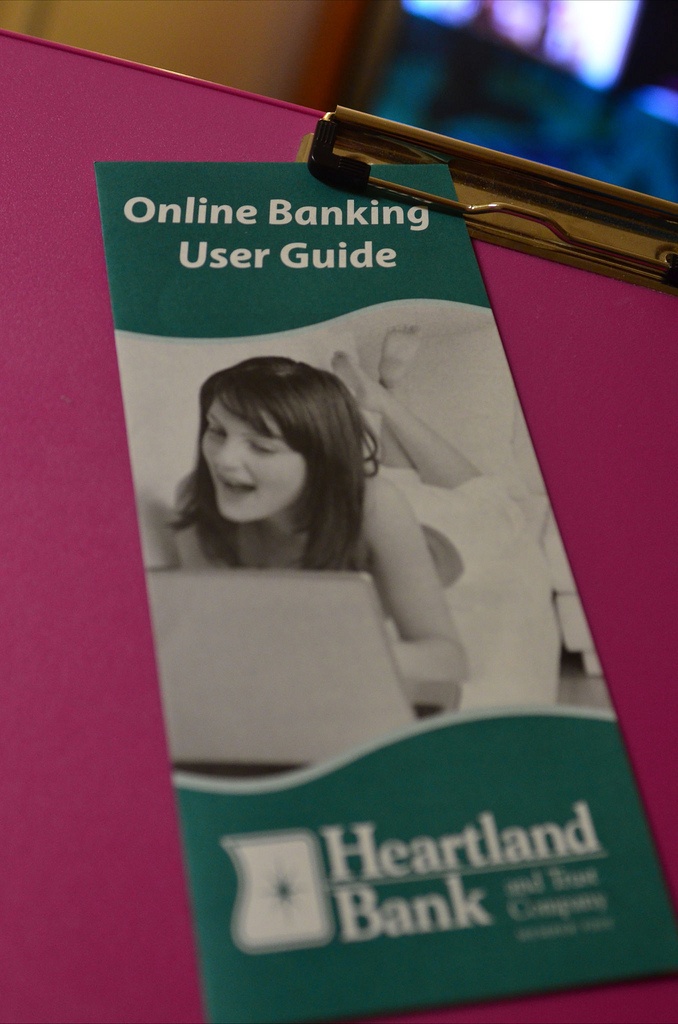 The following post is by MPFJ staff writer, Grayson Bell. Grayson, who runs the finance blog Debt Roundup, is a fan of personal finance, brewing beer, and working on cars.
More than two-thirds of the American public have basic banking privileges.
This means they have access to a bank or credit union to store their hard-earned cash. Yet with a majority of the population having bank accounts, why are many not utilizing online/mobile banking? According to the Pew Research Center, just 61 percent of internet users bank online, while only 35 percent of cell phone users bank using their phones. What is it about these services that scare us? This begs the question: Does mobile banking excite or scare you?
The Pros of Online/Mobile Banking
There are many advantages to online banking. Most are based around use and convenience for the account holder. There are also some advantages for banks to use such a service, mainly surrounding cost reduction. Here are some basic pros to using online banking.
- Quick Access – You can easily check your balance or see recent transactions with a few clicks of your mouse or swipe of your finger. With our account information available when we need it, we can be more informed. You can even transfer money to other people or accounts with ease.
- Better Rates – When you bank strictly online, you will most likely get a better rate on your checking or savings account. You can even get better loan rates. Online only banks can provide their customers with higher rates because they have less overhead.
- Convenience – You can now deposit a check without even driving to the bank. If you have a smartphone with a camera, then you might have the ability to deposit your check right from your couch. Most banks have mobile apps for this feature.
These pros translate to both online and mobile banking. As long as you have an internet connection or mobile data, you can be connected with your money at any time.
The Cons of Online/Mobile Banking
I am the type of person who doesn’t see too many issues with online banking. That said, I realize there is one big con for online/mobile banking and that is undoubtedly security. With massive data breaches from sites like Target and other retailers, we have to be very careful about our financial data.
When we get too careless, we tend to make mistakes. When people ask me about how I do my banking and I tell them I haven’t stepped foot in a bank in a long time, they look at me funny. I don’t have much need for my traditional bank. They hold my money for me and it is FDIC insured, so why worry about it? After they stopped looking at me in a funny manner, I tell them about how I try to keep my information secure. My main defense is keeping my passwords regularly updated and hard to crack. Sometimes they are so hard to crack that I forget them.
The other way I protect myself is by having money in different banks with different usernames and passwords. Yes, it requires more time for me to manage my money, but it is less likely I will be the victim of total loss because my money is spread out. When I use mobile banking, I make sure to never have the mobile app remember my username. I also have a security pin to unlock my phone. These are just small steps I can take to protect myself and make it harder to hackers or criminals to get access to my financial data.
Are You Excited or Scared by Online/Mobile Banking?
This question is more geared toward those who haven’t jumped into online/mobile banking. What is stopping you? Is it the lack of knowledge on how to do basic bank transactions online or via your phone? Does the advancement of technology scare you or make you feel intimidated?
As more and more of our financial lives move into the online space, we have to be cognizant about our security. It is extremely hard to get back on your feet from fraud. Since fraud just continues to rise each and every year, we have to be prepared. That doesn’t mean we should shy away from advancement or be slow to adopt new changes. Online and mobile banking are here to stay and taking the time to understand the security and how to protect your information is the key to enjoy the full benefits.
How about you all? Do you fully utilize online and/or mobile banking? Have you ever been a little scared of fully utilizing all of the tools due to security purposes?
Share your experiences by commenting below!
***Photo courtesy of http://www.flickr.com/photos/84335369@N00/6791147275/

Strategies To Help You Choose Health Insurance When Taking A New Job

 The following post is by MPFJ staff writer, Melissa Batai. Melissa is a freelance writer who covers topics ranging from personal finance to business to organics to food. She blogs at Mom’s Plans where she shares her family’s journey to healthier living and paying down debt.
My husband recently took a new job in Arizona. We’re from Illinois, so the move itself was a big deal. After the headache of packing up and moving halfway across the country, I discovered we had several other obstacles.
Namely, I couldn’t believe how complicated picking a new health insurance plan was. We were faced with three choices–a health savings account (HSA), an EPO (similar to an HMO), and a PPO. After we made that decision, we then had to choose between four insurance companies to meet our needs. Geesh! I don’t remember it being this complicated when I started my full-time job 14 years ago.
If you, too, are faced with choosing a health insurance policy from a new employee, consider using some of these strategies that made our decision making process a little bit easier:
What Providers Are Included?
If you’re new job doesn’t involve moving from your current location, you may want to give preference to the plan that lets you keep your current provider, assuming you like your doctor and are comfortable with the services offered.
We had to get a new doctor anyway since we’re new to the area, so this had very little weight in our decision.
What Are Your Own Biases?
My husband and I were trying to decide between the EPO and PPO plan. Initially I was drawn to the PPO plan because I had heard bad things over the years about HMOs. I had concerns because the EPO wouldn’t cover providers who were out of network, and I had heard that HMOs can sometimes not be a wise choice if critical injuries or illnesses occur. Sometimes it can be difficult to get the treatment needed.
I entered the decision making process with a strong bias while my husband entered it with an open mind. In retrospect, the decision making process would have been easier if I’d been a bit more open-minded.
Talk to Others Who’ve Used the Insurance
I called Human Resources for more information about the insurance plans. The woman I talked to had been using the EPO for the past 10 years and had had no problems. She highly recommended it.
When I called an independent insurance agent for homeowner’s insurance, she mentioned that her husband also worked where my husband’s got his new job. I took the time to ask her what insurance plan she and her husband had chosen. They’ve used the EPO for the past 12 years and have had no problems. The insurance agent had even had a serious heart problem and a pacemaker installed, and the EPO covered her entire expense. She paid nothing out of pocket.
Talking to others to get their opinion about the insurance coverage can help you choose which plan you’d like and make you feel more comfortable with the decision you make.
How Much Does the Plan Cost?
Although it can be tedious, take the time to do a side-by-side comparison on the policies you’re deciding between. When I did this exercise, I was shocked!
The PPO would cost us over $6,500 per year in premiums alone! Then, there was a $1,000 in-network and $2,500 out-of-network deductible to meet per year.
The EPO, on the other hand, would only cost us $2,200 per year in premiums. There were no yearly deductibles to meet.
Both plans had the same co-pays for doctor’s appointments, prescriptions, and other expenses.
Do You Have any Special Needs?
You’ll want to consider your own unique issues. For instance, if you and your spouse want to start a family, you may want to consider a plan that has the best maternity coverage. If you are having trouble conceiving, you may want to choose the plan that has the most generous plan for fertility specialists.
Consider your own unique medical issues and look for the plan that best suits your needs.
In our case, my oldest son and I are dealing with food intolerances and see a specialist to treat the issues. The EPO plan wouldn’t cover these expenses at all. The PPO plan would cover them at 50%. Still, even though the EPO wouldn’t cover the expenses, choosing an EPO and paying out of pocket for these expenses would still cost less than going with the PPO due to the high premium expense of the PPO.
Are There Any Tax Implications?
The plan you choose may have tax implications. For instance, if you choose a health savings account (HSA), you reap several tax advantages. The money to fund your account is taken out of pre-tax dollars. The interest on the account accumulates tax deferred. Finally, you don’t have to pay taxes when you withdraw the money for qualified health expenses.
However, when you withdraw the money for qualified health expenses, you need to put the withdrawal amount as “other income” on your tax return. Before choosing a HSA, check the tax implications with your accountant.
Look Into More Ways to Save
Regardless of what plan you choose, you can always opt for a flexible spending account (FSA) or a health savings account (HSA) to help you pay qualifying out-of-pocket expenses. (To qualify for a HSA you must have a yearly deductible of $1,200 or more.) There are benefits and drawbacks to both.
The FSA works with any insurance plan, and the money is taken out from pre-tax dollars. However, whatever money that you do not use by the end of the year is taken by the government.
The HSA, like the FSA, is funded through pre-tax dollars. On the other hand, unlike the FSA, the balance continues to roll over year after year. However, if you don’t have a high enough deductible, you will not be able to use an HSA.
Consider Other Alternatives
Unfortunately, not all employer based health insurance plans are created equal. A friend of mine chose not to go with his employer’s insurance because the premiums are $10,000 a year, and the deductible is $5,000 per year! He and his family simply could not afford to pay up to $15,000 a year out of pocket for health care.
In this situation, some people have looked at Christian-based health savings plans. These plans are not health insurance per se. Instead, members pay a standard amount every month (usually $350 to $500 depending on your family’s size and health), which goes to pay other members’ health care needs. When you have health care needs, other members send their monthly payment to you for your expenses. Those who join this kind of plan are exempted from the Obamacare penalty.
You Can Always Switch
While choosing a health insurance plan is a big decision, keep in mind you can always switch plans during the open enrollment period. If you have one plan that you don’t care for, you can try out another one for a year.
Our Decision
Ultimately, we couldn’t ignore the high price difference between the two plans. We decided to go with the EPO to save nearly $5,000 a year on premiums and deductibles.
The decision was much easier after I talked to two people who had no complaints about the plan, including one who had faced serious health issues.
How about you all? What other factors go into your decision when choosing a health insurance plan with a new employer?
Share your experiences by commenting below!
***Photo courtesy of https://www.flickr.com/photos/68751915@N05/6793821977/

5 Ways To Save On College Expenses

 The following is a post by MPFJ staff writer, Derek Sall. Derek is the owner of the blog, LifeAndMyFinances.com, where he teaches people how to get out of debt, save money, and become wealthy.
As college prices continue to rise, students really need to focus on keeping costs down so that they don’t owe back monster loan amounts when they graduate. The fewer loans the student can get away with, the better they typically fair in life.
So what are some quality ways that students can save on their college expenses?
1) Live at Home
Many college students balk at the thought of living at home. According to them, “College is about independence and learning how to live on your own.” Well, somewhat, yes. But, if you talk to many grads that are struggling to pay back their student loans, their typical advice is to “live with your parents as long as you can.”
Living at home is not all bad. Most of the days you will be on the college campus anyway, and if you want the “college experience” you can always visit your friends that are living on campus. By avoiding the dorm life, you can save upwards of $10,000 per year! Over the course of four years, that’s $40,000! That’s a pretty huge savings if you ask me. Well worth the sacrifice.
2) Do Without the Car
The next largest expense when you’re at school is that car you’re driving around. You have to insure it, put gas in it, and pay for all the repairs that are inevitable. Often times, even if you own the car outright, you can spend $400 or more per month.
If you can get by with a bicycle, do it. Bum rides from your friends (you can throw them a couple bucks here and there) and stop taking senseless trips off campus. The savings will be quite noticeable.
3) Don’t Buy the Textbooks
Many colleges are still requiring you to buy the textbooks for your classes, but often times the professors cover everything that’s necessary anyway, which means that you could easily do without it. If you are required to answer questions at the end of each chapter, find the book in the campus library and make a free copy of those pages. Either that, or just borrow the book from your friend. By avoiding these purchases, you can save $500 or more per semester.
4) Keep Applying for those Scholarships
Quite a few students apply for scholarships before their freshman year, but then don’t bother to search out scholarships after that. There are so many funds that are designated for sophomores, juniors, and seniors that you should make a point to continue applying! A thousand dollars here and there can really help out a ton in the grand scheme of things. You’ll be glad that you got some of these scholarships when it comes time to pay for your student loans.
5) Learn to Buy Cheap Food
Believe it or not, pizza is really not all that cheap. If you are spending $10 on a pizza and devouring it in one or two sittings, then you are still spending $5-10 per meal! Instead of ordering pizza from the local restaurant, buy some cheap foods from the grocery stores – items like bread, tuna, eggs, pasta, rice, canned beans and corn, etc. Also, keep your eyes peeled for functions around campus that offer free food. After all, you can’t beat free.
How about you all? What other ways can you think of to save on college expenses?
Share your experiences by commenting below!
***Photo courtesy of https://www.flickr.com/photos/smemon/5188351708/in/

Everything You Need To Know To Get A Peer To Peer Loan

 The following is a post by MPFJ staff writer, Toi Williams, who is a professional personal finance blogger of Fine Tuned Finances. She has backgrounds in personal finance, sales, and real estate.
Peer to peer lending is an alternate funding method that is becoming increasingly popular across the United States.
This lending method is funded by individual investors willing to provide money for loans in return for an attractive interest rate on the money they invest in the loans. Peer to peer loans may be a viable alternative if you are unable to obtain a loan from a traditional bank or lender. Once obtained, the funds can be used for anything the borrower desires, including paying off high interest debt, purchasing a vehicle, or starting a business.
Peer to peer loans are often cheaper for borrowers than traditional loans. These loans allow borrowers to bypass the banks, which often have higher fees, higher interest rates, and lower loan limits for their loans. Investors earn a higher return on their money than they would using many of the saving options available at traditional banks, supplying borrowers with a large pool of investors willing to fund their loans. This keeps interest rates reasonable and payments low for borrowers.
Peer To Peer Lending Companies
Prosper.com
Prosper.com was one of the first players in the peer to peer lending industry. All of the loans made through the company are fixed rate loans with terms lasting either three or five years. Prosper’s website advertises a 6.73 percent starting APR for the best borrowers, meaning the borrowers with the highest credit scores. According to the website of the Better Business Bureau, Prosper has recently received an A+ rating from the rating agency.
LendingClub.com
LendingClub.com was founded shortly after Prosper.com. The company has helped thousands of borrowers secure millions of dollars in loans from private investors over the years. During Lending Club’s first year of operation, it facilitated more than $3.5 million in loans. That figure has since grown to $3.4 billion annually. LendingClub offers personal loan amounts up to $35,000 and interest rates as low as 6.78 percent on loans with terms of three or five years.
FundingCircle.com
FundingCircle.com is another popular peer to peer lending business. The company specializes in small business loans to finance expansions, inventory purchases, marketing launches, and the hiring of new employees. The company offers loans up to $500,000 at interest rates of little more than 9 percent for borrowers with excellent credit. The term of the loan can be three, four, or five years.
Obtaining A Peer To Peer Loan
Securing a peer to peer loan is easier than you may think. The first step in the application process is providing your personal information to the peer to peer lending company so a credit check can be performed. Most companies offering peer to peer loans require applicants to have a credit score of at least 600. The minimum credit score for both Lending Club and Prosper is 640. Funding Circle uses a complicated calculation process designed to determine the company’s ability to repay the requested loan.
Before applying for a peer to peer loan, make sure that your credit score is as high as possible so you will get the best rate for your loan. Obtain your credit report and go over it with a fine toothed comb for any errors that could be bringing down your credit score. You can obtain a free copy of your credit report from each of the three major credit bureaus annually from www.annualcreditreport.com.
Correcting errors on your credit report can increase your credit score by a significant amount. These errors could include someone else’s information combined with your own, missed payment entries for payments you know were made on time, or accounts in your name that you did not open. If any errors are found, you should alert the credit bureau that issued the report immediately to get the process started for removing that information from your credit report.
You will also be asked to disclose your debt to income ratio so the underwriters can determine your ability to repay the loan you are requesting, so it is important to reduce your debt to income ratio as much as you can before applying for the loan. After your personal and information has been reviewed, your request will be assigned a score based on your perceived credit-worthiness, essentially a credit score for the website. This score is typically displayed in the form of a letter grade, with AA or A1 ratings equaling the best ratings down to E or G1 ratings for riskier borrowers. The rating you receive determines the interest rate that you will be charged for the loan and the interest rate that the lenders will receive for funding your loan.
In order to obtain the loan, you must provide the peer to peer lending company with a valid bank account number. The requested funds will be deposited into this bank account and the payments for the loan will be automatically withdrawn from this account on the payment due date each month. Your loan may be completely funded by a single lender or divided into smaller portions by multiple lenders. Regardless of the number of people that fund your loan, you will make a single payment to the peer to peer lending company that facilitated the loan. That payment is then divided into the accounts of the investors that funded your loan.
Final Tips
In order to ensure that the peer to peer loan process goes as smoothly as possible, fill out the requested information completely and honestly. The information you provide will be scrutinized and any potential errors can hold up the process or result in your application being rejected. Depending on the funding process, it could take a couple days or a couple weeks for your loan to be entirely funded. Make sure that you read all of the terms and conditions associated with the loan so you will know how much you will pay in fees and interest as well as when the monthly payments will be taken out of your bank account.
How about you all? Have you obtained a peer to peer loan from one of these companies?
Share your experiences by commenting below!
***Photo courtesy of http://pixabay.com/en/hand-finger-thumb-high-positive-105725/

5 Tips For Switching To A New Job Industry

 The following post is by MPFJ staff writer, Catherine Alford. Cat is a freelance personal finance writer who blogs at www.BudgetBlonde.com.
Once upon a time, I was an historian for the National Park Service. I knew very, very tiny details about the American Civil War and spent 40 hours a week tromping through the battlefields in Richmond, Virginia telling the public about the American past. I got chiggers on my legs, got harassed by old guys who thought female rangers were “hot” and received a lot of professional satisfaction from making history interesting and fun to a wide variety of people.
Despite the fact that I loved my job and later moved on to teaching at the college level, today I’m doing something completely different. As many of you know, now I spend countless hours of my week writing about finance.
I have no formal background in finance. I never even took a business class in college (note from Jacob – I got a finance degree in college, but I didn’t learn anything in it about personal finance, so you didn’t miss much! haha). However, my life experiences and ability to learn things quickly has allowed me to embrace this new path and really enjoy it along the way.
If you would have told me a few years ago that I’d be self employed and spending my Saturday morning researching Apple’s performance last quarter, I would have looked at you and laughed.
It’s amazing the twists and turns our life can take, especially for someone who is such a planner like me (who had her whole life figured out complete with a life-long career in the history field!)
Here is my advice for anyone who wants to actively switch to a new job industry:
1. Seek New Connections
Your network in your current job might not be able to carry you over to your new field, but you can use it as a place to start. Maybe one of your co-workers’ parents or spouses works in the field you want to be in, and you can ask for their contact information. You can also search on LinkedIn for people in your area who you might be able to take out to coffee or dinner to ask them questions about their work.
2. Self-Teach Important Advancements
If you want to make a move to marketing, for example, but you have no formal background, it’s important that you take the steps to get there. It will be hard for a boss to hire someone with no background over someone who has a marketing degree, so you’ll have to use all your resources and energy to really leverage yourself. Take some extra classes, work for free in order to learn more about the industry, and in general get as engrossed as possible in the new field so you can speak about it knowledgeably.
3. Gear Your Resume
Chances are, you can “gear” your resume to your new field, even though you’ve never worked in it before. By “gear” I mean you can take some of your current experiences, even volunteer experiences, and show how it makes you qualified for your next job. For example, if I was applying for a job at a finance company, I would point to all of my blog writing experience and not necessarily to my history degrees.
4. Exude Confidence In Your Interview
We’re pretty fond of saying “Fake it ‘till you make it” in my house. It’s said in jest, of course, but much of what my husband and I do requires a lot of confidence. With his career in medicine, medical students are definitely on the bottom of the totem pole and are often grilled with questions. An air of confidence or being confident enough to admit when you don’t know something is actually a good thing. Even if I don’t know how to do something in the world of finance or I’m not sure what a word means, I’m confident at least that I’m resourceful enough to figure it out. When someone questions my qualifications, I always point to my ability to find the answers – that’s one thing that my career as an historian taught me.
5. Work Harder than Everyone Else
When you switch to a new field without the background that other people likely have, it’s up to you to work harder than everyone else. You should get to work earlier and leave later than them. Show your boss that he or she was right to hire you. When you don’t know something, spend extra time looking it up or asking a trusted co-worker for advice. With enough hard work, you can definitely “catch up” or even speed past your co-workers who have years more experience than you do.
Ultimately, my own career switch was gradual and happened over a period of a few years, but if I were to make the switch all at once I would definitely utilize the tips above.
How about you all? Have you ever wanted to switch career fields or have you ever been able to do so successfully?
Share your experiences by commenting below!
***Photo courtesy of https://www.flickr.com/photos/bionicteaching/10885834946/in/