

- You are here:
- Home »
- Blog
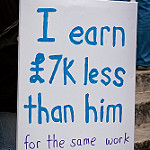
What the ‘Hes’ Do Is More Valuable Than What the ‘Shes’ Do – Really??
 The following post is by MPFJ staff writer, Marie. You can read more of Marie’s articles over at her own blog, Family Money Values. Enjoy!
Ladies, work hard, study STEM, get a high paying job and close the gender pay gap – right? Your efforts are an important and valued part of society, right?
Apparently not.
Three researchers analyzed Census data from 1950 to 2000 trying to figure out if women get paid less than men because they don’t go after the high paying jobs or if the high paying jobs lose their luster when dominated by women (the study’s ‘devaluation view’).
Guess what. According to site Payscale :
“Ultimately, the evidence came down on the side of the devaluation view, meaning that occupations with more women pay less because they’re female-dominated.”
Women’s work. Worth less. Wrong and Wrong.
Computer science is a field that has changed from being female dominated to male dominated.
Computer programming used to be ‘women’s work’ way back in the 60’s and 70’s. Grace Hopper (who most programmers will recognize as the woman who wrote the compiler that was a precursor to the COBOL language and coined the term ‘computer bug’ due to a moth in her hardware) and the girls who programmed the University of Pennsylvania’s ENIAC computer in the 1940’s started it.
For decades after (until the early 1990’s), women tended to dominate the field. I myself started programming in 1983 and there were a number of women right there with me.
Men weren’t being altruistic or favoring the woman’s movement back then. They thought that programming was a low level skill that was akin to typing – not one of those ‘manly’ jobs.
In Stanford News article Researcher reveals how “Computer Geeks” replaced “Computer Girls” author Brenda D. Frink explains how that changed into primarily a male dominated field today.
Two trends helped. First, according to Frink:
“Male computer programmers sought to increase the prestige of their field, through creating professional associations, through erecting educational requirements for programming careers, and through discouraging the hiring of women. Increasingly, computer industry ad campaigns linked women staffers to human error and inefficiency.”
Secondly, sets of hiring tests were devised to help steer folks into jobs related to programming. These tests were highly slanted to select male type traits.
Additionally, during the early 1990s, after the advent of personal home computing, geeking out on a home computer became a guy thing – like working on a car or playing football. Families tended to give their boys access to the PCs, leaving the girls behind. When it came time to attend computer classes then, girls were immediately at a disadvantage.
Oh, and did I mention that computer science fields are among the highest paying fields today in the 21st century?
I pursued a career in software development. It paid more than any other job I could have found back in the 1980’s. Through the years, women continued to disappear from my companies. Most of my coworkers (both managers and staffers) were male.
Over the years, the pay differential between my salary and the salaries of my peer managers (mostly male) in my geographic region diverged by more than 11 %. How do I know that? My HR department did a study one year and gave me an 11% raise to bring my salary up to the norm so I wouldn’t leave. The worst part of it was that my own boss was mad at HR because they didn’t consult him so he could adjust his part of my raise downward to compensate!!!
It’s not just a pay gap issue.
Aside from gender pay inequality, work that women have traditionally done and are starting to do now – gets undervalued.
My case in point. I was the high wage earner in our family – as a computer software manager. I made more than twice as much as hubby, even before bonus’s and stock options and retirement benefits. I’m not sure anyone in my circle even recognized that.
Hubby retired 3 years before me and went to work landscaping our 6 acres. He cuts grass, plants or removes trees, picks up trash and plants gardens. After I retired, I started a revenue producing website, managed rentals for our condo resulting in tax cuts and profits, and established myself as an author (through writing a book as well as for sites such as this). Guess whose work is valued more by our friends and family?
His ability to retire early, in part, relied on my success in my field. Yet few of our circle realized that, my contributions were mainly invisible.
In Quartz article; At work as at home, men reap the benefits of women’s “invisible labor”, the author included information on a study done on tenured men vs women and reported:
“In December of 2015, Heather Sarsons, an economist completing her PhD in economics at Harvard, released a working paper: “Gender Differences in Recognition for Group Work (pdf).” As part of her study, Sarsons analyzed 40 years’ worth of publications produced by economists at top US universities. She found that women who wrote on their own had the same chance of receiving tenure as men. However, women who collaborated with men had lower chances. The value of the women’s contributions were erased.
Meanwhile, men who collaborated with women didn’t suffer any penalty. In fact, they were four times more likely to succeed. Sarsons’ working conclusion? Women get almost no credit at all for collaborating and are tacitly perceived as subservient employees. Their gender, essentially, renders them assistants by default.”
Again, women doing the same (or more) work than men and being undervalued.
Will it ever end?
My advice? In your next life, be born male.
How about you all? What are your thoughts on the man vs woman pay gaps? What have you experienced compared to your colleagues of the other gender?
Share your experiences by commenting below!
***Photo courtesy https://www.flickr.com/photos/nickefford/26642377714/

Reflections and Lessons Learned From Obtaining Term Life Insurance

 Ten months ago, my wife and I went through the process of obtaining term life insurance policies. The major life event that gave us the final nudge to obtain policies was the soon-to-occur birth of our son, Alex.
In the end of the life insurance-obtaining journey, we had taken out two term life policies (one for each of us) with face values of 10x our current respective annual incomes from Protective Life Insurance Company from a local Colorado independent insurance agent. You can read the full details of the process we went through in a previous post I wrote. The monthly premium payments are $49 and $15.
Reflections
Reflecting on now having our life insurance policies for 10 months (including those lovely dependable premium payments waiting for us to pay each month), I definitely feel like we made the decision to get term life insurance at the correct time in our lives and were also in the correct financial position to make the commitment.
It was the correct time in our lives because we were just about to give birth to our first child. In addition, being in our early 30’s, we were not too aged for life insurance to be affordable and not too young for life insurance to be relevant. The insurance premiums are taken out of our checking accounts each month, and I often don’t even notice that the premiums have been debited from our accounts.
Does having life insurance actually provide added peace of mind in real life? Truthfully, I hadn’t given this question a great deal of thought. It seems that since our son was born, we’ve been so busy that I don’t have as much time for reflections on financial planning decisions. However, two weeks ago while out on a group bike ride, several members of the group had a crash. All of the crash victims will make a full recovery, but one of them did have to head to the hospital. After examination, it was discovered that he had multiple broken ribs and a partially punctured lung. It was definitely a reminder that anything can happen at any time. Later that day while reviewing the incident in my mind, I did feel better knowing that if anything was to happen to me, that my son and wife would be taken care of financially, at least for a few years.
Lessons Learned
Going through the process obtaining life insurance was more involved than I was expecting based on previous experiences of obtaining renter’s/home, health, and auto insurance. Described below are several of the key lessons learned I picked up along the way.
1) Shop around online FIRST
Even if you think you will obtain life insurance through a local insurance agent, it is a valuable first step to obtain price quotes from the Internet first. This ensures that any premium quote you receive is competitive in the overall market.
2) Don’t fear insurance companies you’ve never heard of
On a daily basis, we as consumers are bombarded with advertisements from insurance carriers, most of which also offer term life insurance policies for sale. As a result of these ads, we have an inherent familiarity with them. You know – the Geico lizard, “We are Farmers, da, da-da, da-da, da da,” the Aflac duck, “Nationwide is on your side,” “Allstate – are you in good hands,” State Farm, Liberty, Northwestern Mutual, etc. And, most of these are great companies that have stellar track records.
However, there is a little known “secret” (actually not a secret at all) in this country. There are a number of life insurance companies that have been humming along for 80-100+ years in the USA, churning out consistent performance, never missing an insurance payout, never being over-leveraged/over-risk-exposed, and consistently being rated highly by credit agencies. But, guess what? You’ve probably never heard a single national commercial from them, and perhaps they’re not even listed on the national stock exchanges. For example, have you ever heard of companies like Ohio National Life, Lincoln National Life, American General Life, Banner Life, Savings Bank Life, TransAmerica, Protective Life, Massachusetts Mutual?
Anyhow, my point here is that you shouldn’t shy away from opening up a life insurance quote from a company you are unfamiliar with. Instead, investigate the company yourself. The key things I look for is a long historical record (i.e. company has been around for over 50 years, which is short in the life insurance industry) and a high credit rating by the rating agencies/bureaus (AM Best is the most common choice)
3) Automatic payments
After you have signed a life insurance policy, my next recommendation would be to set up an automatic payment plan to cover your premium each month. The purpose of this is two-fold. First, an automatic premium payment plan reduces the chance that you’ll miss a payment and your policy will be nullified/lapse. This is important with term life insurance because as you age, the pricing of a plan goes up dramatically. You don’t want to be put in a situation where you have to open up a new policy at a higher price, just because you weren’t paying attention during a job/family move or other life-changing event. Second, I find that when I have automatic payments in place, I “miss” the money much less than if I have to physically open my account and transfer the money manually. If it is automatic, I often forget that the money has already been transferred.
4) Obtain a policy with a mutual insurance company
Although there are many great insurance companies around today and ultimately, you should go with the company that provides the best deal/most value, my favorite type of insurance companies are mutual-type. With a mutual insurance company structure, the company is owned by the policy-holders, instead of by a private individual/group or stock shareholders.
5) Read all the fine print prior to signing and be careful with DocuSign
The last lesson I learned from obtaining life insurance policies was to be careful to read all of the fine print in an insurance policy prior to placing your final signature on the document. This is especially true in today’s online world with the use of electronic signature programs, such as DocuSign. With these programs, it is very easy to simply click “go to next signature” which can auto-scroll down multiple pages, causing you to miss important details in a document you could be bound by for tens of years.
How about you all? Do you have life insurance? Do you find it gives you added peace of mind on a daily basis? What do you find most important for life insurance?
Share your experiences by commenting below!
***Photo courtesy of https://www.flickr.com/photos/chrigu/2635274509/in/

4 Money Milestones You Should Have in Place Before You Have Kids

 The following post is by MPFJ staff writer, Laurie Blank. Laurie is a wife, mother to 4 and homesteader who blogs about personal finance, self-sufficiency and life in general over at The Frugal Farmer. Part witty, part introspective and part silly, her goal in blogging is to help others find their way to financial freedom and to a simpler, more peaceful life.
With the latest reports stating that it costs nearly $250,000 to raise a kid, it might be a good idea to have your money situation in order before you think about having kids. It also might be a good idea to get your money situation in order if you already have kids.
I should start off by saying that we didn’t start getting our money in order until the oldest of our four kids turned thirteen years old. I share this to encourage those starting late: it’s never too late to start getting your money together.
I remember having a talk with our oldest one time, expressing remorse and regret that all of her years as a child had been watching us struggle for money. I didn’t want to give her that same experience that I had as a child; one where money had been a constant source of fear because we never had enough growing up. Yet my husband and I fell into the same path with our kids that our parents fell into with us. A lack of education about personal finance had been passed down throughout the generations.
Oldest daughter answered my regrets with the heart of a champion. “Mom, what matters is that you are getting it together now. Even if it takes ten years to get out of debt, at least you’re getting out. You can spoil us then.”
Kids are resilient. They often have a wisdom that adults lose in the face of trying circumstances. It’s for them that we’re working on achieving the money milestones that are best in place before kids arrive on the scene. Here are four of my favorite money milestones that you might want to think about achieving before you have kids.
Get Your Debt Situation in Order
A best case scenario would be zero consumer debt (and a commitment to stay that way) and a very manageable mortgage (say, 25-30% of the primary income earner’s take home pay). When we had our first baby, both Rick and I were working. I had a great job: part-time, they allowed me to work from home and I made really good money.
I thought I’d work forever, but after kid number two came along I really had a heart to stay home and manage the kids and the house full-time. Kid number two had a minor but time-intensive medical condition for the first year of her life that left me wanting time to care for her more than I wanted money.
I got laid off in a group layoff at my company when kid number two was 9 months old, and we chose for me to stay home, but money was tight due to our debt situation. We had borrowed based on two incomes. If we had to do it over again we would’ve bought a house based on hubby’s income alone and avoided consumer debt altogether.
Be Contributing to Retirement Accounts Consistently
“I haven’t arrived, but I’ve left” is a good motto when it comes to combining retirement planning and kid-raising. It’s not necessary to be fully prepared for retirement, but it’s a good idea to be consistently contributing to either a 401(k) or an IRA of some sort. It’s tempting to stop saving for retirement during the kid-raising years so you can be sure to have money to cover kid expenses, but you’ll thank yourself if you keep saving for retirement because then your kids won’t have to help support you financially during retirement years.
Make Saving a Habit
A plush emergency savings fund is always a good idea, but even more so when you’ve got kids. All expenses double and triple when you add additional family members, so it’s a good idea to set aside a specific percentage of your paycheck into a savings account that can cover a new car need, an expensive bill or repair, or that can carry your family through during an unexpected reduction in income such as a job layoff. It’s also a good idea to carry a sizeable life insurance policy if you don’t have enough money saved to be considered self-insured in your own eyes.
Have a College Savings Plan
College costs and student loan debt numbers are rising every single year. If you’re having a baby, it’s a smart idea to research the different college savings plans available in your state and to have a plan in place for how much you’re going to contribute to your child’s college education and to work that number into a monthly amount that you can include in your budget as early as possible. Time flies even faster when kids come along. It’s a wonderfully, beautifully hectic life where one day you’ll be bringing your kid home from the hospital and then next you’ll be teaching him or her to drive.
If you get a college savings plan in place sooner rather than later, you’ll lessen the financial burden of college on yourself and on your kids.
How about you all? What money milestones do you think are important to have in place before kids come along?
Share your experiences by commenting below!
***Photo courtesy https://www.flickr.com/photos/digitalsextant/29908738/
Is CFD Trading Risk Free?

The following is a guest post. Enjoy!
A lot of traders these days, from different markets, are stepping into the arena of CFD Trading, or Contract for Difference trading. In simple words, CFDs types of trading allow investors to gain an upper hand in certain markets. And, in such markets, they can make precise calculations of prices in either long or short positions. It was during the 1990s when the contract for different trading was started in England, and it was basically backed by the concept of equity swaps. One of the prime benefits of CFDs was that they didn’t come under the tax slab. This is the reason why CFDs turned out to be so popular among the traders.
How do CFDs work?
Well, contract for different trading work simply by starting a contract between a CFD provider and an investor. In the beginning, a trade begins through a particular instrument that passes through the provider of CFD, which in turn creates a position. Interestingly, these trades do not come with an expiry date; however, they get closed automatically with the completion of the other trade. Eventually, the trade difference is released either as a loss or a profit. Besides, the provider can change the trade as per one of the provisions of the standard deal. And, it can be done using a commission or certain fees relevant to the trade. So, CFD trading is quite similar to gambling on the trade market. In case an investor takes a good decision then he or she will eventually earn a lot if he or she has precisely forecasted the events in the trade. After all, CFDs help them increase income as well as value brackets of each investor.
Choose your Broker Wisely
Quite certainly, there are certain CFD brokers out there in the market who are available to help you with CFDs. Such brokers certainly have expertise in this process and they know completely how to handle these types of trading work. And, you can definitely trust them. But, before you head towards any CFD broker, it is better to gain some idea by understanding the different aspects of CFDs. You can refer to different CFD training books, DVDs, programs, audio files, and manuals that teach the methodology of CFD training to novices and beginners.
One of the key aspects of CFD Trading is that the risk involved is too low. This is the reason why it is so lucrative for beginners. If you want to step into the world of trading then CFD can be an excellent option to start with. The aptest way to begin with CFDs is to figure out a reputable company and start trading with small amounts. Once the company starts yielding a profit for you, it would be easy for you to make some more investments.
The reason that CFD trading is so popular is that it features several benefits over other types of trading programs. The most valuable of these advantages is leverage, which is 10:1 or possibly 20:1 in a few situations. With this kind of leverage, it is possible to make use of a small deposit to generate greater profits. As an example, if the seller wants 10% or 10:1 leverage, it will mean that through investing $10,000, you may buy CFDs really worth $100,000. Another advantage is that making use of CFDs, you can easily go short as well as go long.
Most CFD providers allow you to buy and sell 24 hours per day. Thus, you can trade in the evenings, essentially after the market closes. It is possible to trade within seconds and you don’t need to wait for a dealer to process your order.
In CFD trading, you’ll be able to earn considerable profits in shorter durations, as well. Furthermore, you will have many investing alternatives to select from. You are able to invest in futures, currencies, assets, etc. A lot of CFD providers also offer you the possibility to utilize guaranteed stop loss orders.
However, CFD trading has certain drawbacks, too. Leverage may possibly wind up becoming disadvantageous for you at certain times. If you invest a modest sum of money and the stock prices go down by a pretty large percent, say 80%, then in that single trade, your loss is going to be a lot more than your original investment. Slippage may possibly at times also move a successful trade into a substantial loss. CFDs aren’t appropriate if there’s a large amount of money to be invested or for those who want to invest cash for a very long duration of time.
There is no investment choice that is best. There are advantages and disadvantages of all of them. There can never be an obvious winner. You must choose the very best investment strategy for yourself, depending on what precisely you need from your investments. But you can easily lessen your losing trades by completely comprehending CFD trading, its benefits plus the risks.

Millennial Money Problem: Saving Up 20% For a Down Payment on a Home

 The following post is by MPFJ staff writer, Chonce. You can read more articles by Chonce over at her personal blog, My Debt Epiphany. Enjoy!
Purchasing your first home is a huge milestone and the ultimate sign of adulthood. Many people like homeownership over renting because it allows them to have more freedom over what they can do with their home.
With that being said, home ownership is quite expensive, and according to Apartmentlist.com, of the millennials who want to be homeowners, a whopping 79% can’t afford it.
This is due to a variety of factors including the cost of living around the U.S. If you live in a busy metropolitan area, houses may be expensive near you.
Not to mention, you may need a sizable down payment to purchase your home. It’s best to put at least 20% down if you want to avoid paying private mortgage insurance.
But if homes are priced around $250,000 in your area for example, that can mean you’ll need a down payment of around $50,000 which is a huge amount to someone who has student loans and an annual salary around $50,000.
Needless to say, purchasing a home is hard for millennials from a financial standpoint which causes them to rent longer than they wish. If you’re trying to come up with a way to afford your first home, here are some options to help you come up with a down payment.
Get an FHA Loan
I wanted to mention FHA loans early on because you don’t absolutely need to put 20% down on your new home even though it’s highly recommended. The Federal Housing Administration is a government agency that helps homebuyers (especially first time home buyers) get approved for a mortgage.
With an FHA loan, you are only required to put down at least 3.5% as long as you are a first-time homebuyer or military service member. While this type of loan helps make owning a home much more affordable for millennials, they’ll need to find a property that accepts an FHA lender first.
Also, putting less than 10% down on your home can be risky because you won’t start out with much equity. If the value of your home started to plummet and you barely put 4% down, you may be underwater for a while.
Also, when you put less than 20% down on your home, you’ll need to pay private mortgage insurance (PMI) which can add to the cost of your mortgage even though you can probably get rid of it later.
Given all the downsides of using an FHA loan, it’s still a solid option for millennials who don’t think they’ll be able to afford a home anytime soon. Plus, if you are planning on getting a starter home to occupy only for a few years, you might want to use the FHA loan since it won’t be available to you if you purchase a second home later down the road.
If you are not sold on the FHA loan yet or would prefer to consider other options to help you come up with a 20% down payment, here are some alternatives.
Extend Your Timeline
If you can’t afford a home right now but really want to be a homeowner, it can be hard to extend your timeline but it can allow you to save up enough money and make a wiser purchase. If you have kids, debt, or other expenses like planning a wedding, for example, it’s best to tackle one major goal at a time so you can dedicate all your attention to it.
It’s important to determine what your budget is for a home and how much you’ll need to put down. Then, set a timeline based on how much you can afford to save each month and not your emotional connection with a pretty home across town.
For example, if your budget for a home is $200,000 and you’d like to purchase a house in the next 5 years, that means you’ll need to save $40,000 for your down payment or $8,000 per year which adds up to $666.66 per month.
Let’s say you don’t want to wait 5 years and think you can do it in 4 years instead. That’s $10,000 that you need to save every year or $833.33 per month. It can be doable if you split that monthly amount with your partner and your income and living expenses can support that goal.
Cut Down on Living Expenses
Cutting down on living expenses is one of the best things you can do to boost your savings so you can reach that 20% down payment. You may want to cut or reduce smaller expenses like cable and other subscriptions, your shopping budget and other impulse purchases, and your daily coffee habit.
You can even cut larger expenses like your current living expenses. Living in a basic apartment that falls way below 30% of your income can help you save a ton or you can even become a one car family or see if you can move in with your parents or other relatives in order to save more.
Live on One Income
If you want to purchase a home with your significant other or spouse, you can leverage both of your incomes to help you reach that goal quicker.
Living on one income and using the other income to save is a strategic way to round up enough money for a 20% down payment.
My husband and I started living on one income when we got married and as a result, we paid down $4,000 in debt within our first 3 months of marriage.
You may need to cut some of your expenses and make some sacrifices to make it work, but you can start out by saving the lower income and living off the higher income.
Start Side Hustling
If you’ve cut expenses all you could and still need money to live off, you can always try to earn extra money through a side hustle. If the income from your full time job isn’t getting you to your goal quick enough, look into freelancing your skills whether it’s freelance writing, graphic design, photography, dog walking, or babysitting.
There are tons of things you can do in your spare time to earn extra money and you can throw all your earnings toward your down payment fund.
Again if you are planning to purchase a house with a spouse, both of you can establish a side hustle so you can earn twice the amount of extra money and avoid burnout.
When my husband and I were planning our wedding, I did freelance writing and blogging as a side hustle and he tested websites online and took surveys. Now, he is looking into becoming an Uber driver to earn extra money so we can pay off our debt quicker.
Use Extra Lump Sum Payments
If you receive any extra lump sum payments like a tax refund, bonus at work, or commission, you can put it directly in your house down payment fund.
If you have a birthday or special event coming up like a college graduation, you can request that family and friends make a contribution to your house down payment fund instead of buying you a gift.
The money can really add up.
How about you all? Can you think of any other great ways to save up for a down payment on a home? What has worked for you in the past?
Share your experiences by commenting below!
***Photo courtesy https://www.flickr.com/photos/76657755@N04/6881505052/

When a Side Gig Isn’t All That

 The following post is by MPFJ staff writer, Melissa Batai. Melissa is a freelance writer who covers topics ranging from personal finance to business to organics to food. She blogs at Mom’s Plans where she shares her family’s journey to healthier living and paying down debt.
When I started working at my full-time teaching job out of grad school, the pay was pitifully small, especially for the cost of living in a big city (Chicago). From the minute I started the job, I looked for extra ways to make money. I taught extra classes, I took on additional work assignments that had monetary stipends to boost my pay, and I took more graduate classes to get a pay raise.
I wasn’t afraid to work hard, and I needed to. My husband was in graduate school himself and also working as a grad assistant.
But all of those extra jobs weren’t enough. I tried my hand at running an eBay business for a while (which was a disaster!), and then I started blogging. After my second child was born, I only worked as a teacher for another year before I quit after the birth of my third child.
Within a year of having a third child, I was working 30+ hours a week from home doing virtual assistant work and freelance writing.
I had a side gig for nearly 15 years.
Thanks to the Internet and the ability to work flex-time from home online, many, many bloggers talk about the benefits of a side hustle. After all, you have the ability to gain more and more work and ramp up your income. What’s not to love?
Well, I’m here to tell you that a side hustle as a permanent way of life is not always a good thing.
The Drawbacks of a Side Hustle
Though the money from a side hustle is nice, that’s definitely not the only consideration. Working too hard can have serious repercussions on your life.
Health. Working more than 40 hours or every day of the week can have serious repercussions on your health. “Over time, working long hours can increase your risk of depression, heart attack, and heart disease” (Business Insider).
Not only is the physical stress bad for you, but when you’re working so many hours, finding time to exercise and eat healthy foods is difficult.
Your amount and quality of sleep is also likely to suffer. A “study, published last year in the Journal of Sleep Research, found a link between long work hours and reduced quality of sleep. The health effects of too little sleep are well documented and include decreased memory, increased weight gain, irritability, and other mood problems, serious cardiovascular health problems, and possibly cancer, to name a few” (LinkedIn).
Depression. Since working too many hours can lead to stress, health issues, and weight gain, it’s no surprise that working too many hours can lead to depression. In fact, a “European study suggests that those who work long hours are twice as likely to experience a major depressive episode” (ABC News) as those who don’t. One worker, Shari McGuire, was frustrated working 70 to 80 hours a week because she had no time to spend with her toddler son. She ended up on not one but two depression medications. When she finally quit her job, she set new boundaries at her new job, and she was able to get off her depression medications. “The key, she said, is not managing time better but ‘changing your behavior. I now only work 40 hours a week and I’m happier,’ she said. ‘I can live my life again. . . .If your job doesn’t allow you to do that, you are in the wrong job’” (ABC News).
Relationships. To have a successful relationship with your family, you need to be able to spend time together and to talk. However, when you’re working all the time, this simply can’t happen. Without the nurturing relationships require, you may find yourself with little in common with your family, and, as a result, little to say to them.
What If You Need a Side Gig?
I get it, sometimes in life you just need a side gig. I certainly did when I was making such a low salary. Like me, you may need one because you simply need the extra money or maybe because you’re planning to quit your job and make your side gig your full-time job.
However, to make sure that you don’t burn out or let your side gig affect your health or your personal relationships, you need to set some boundaries.
Put a time limit on the side gig. When most people start a side gig, they’re doing something that they enjoy, so at first, the extra job isn’t a burden. Plus, the extra money is always nice. However, early on in your side gig, you should make an exit strategy. How long will you have your side gig? Set a concrete goal so you don’t end up like me, having a side gig for 15 years and facing health repercussions because I always worked too hard. Maybe set a goal of two years with the side gig, which should be enough to boost your income or transition your side gig into your full time job.
Change your lifestyle so you don’t need the money as much. If you have to work a side gig for the money, consider changing your lifestyle so you don’t need the money as much. I’ll be honest, a few years into my side gig, I was in a vicious circle. Because I was working so much, I was stressed and tired. Because I was so busy, I didn’t have time to grocery shop as I should have, so my husband and I started going out to eat more. Essentially, then, my side gig was helping to pay for a luxury we didn’t really need. I would have been better off working less on my side gig and taking better care of myself.
Be smart and responsible with the money you earn. Create a nice emergency fund so you won’t have to rely on the side gig as much. Try not to give in to lifestyle inflation because you’re exhausted. Cut your expenses where you can to make the extra income go further so you can reduce your hours and gain your life back.
Set office hours so you’re not working all the time. Set limits on your side gig. Let’s be honest, there’s always work to do. But a lot of the work can wait. If you’re working 40 hours at your full-time job, maybe cap your side gig hours to 10 to 15 hours a week. Don’t run yourself into the ground. Give yourself time to relax and enjoy time with family and friends. Set strict office hours for your side gig and abide by them.
Thanks to the Internet, more and more people can find side gigs online. While a side gig can be great, try to limit the hours that you work and be responsible with the extra money so that you don’t become a slave to your side gig. When you routinely work too much, you face a host of physical and mental health issues as well as the possible loss of family and friends.
How about you all? Do you have a side gig? If so, how long have you had it? Have you faced any serious physical or mental health issues because of your side gig?
Share your experiences by commenting below!
***Photo courtesy of http://www.idpinthat.com/edit/2476

How I Grew Up Poor But Still Messed Up My Money As An Adult

 The following post is by MPFJ staff writer,Laurie Blank. Laurie is a wife, mother to 4 and homesteader who blogs about personal finance, self-sufficiency and life in general over at The Frugal Farmer. Part witty, part introspective and part silly, her goal in blogging is to help others find their way to financial freedom and to a simpler, more peaceful life.
I grew up in a poor family. For a while, we were really poor. I remember one time – shortly after my parents’ divorce – when we had zero food in the house. Aside from ketchup and mustard, the fridge and the cupboard were completely bare. My dad paid child support faithfully each month, but the monthly amount of support rendered by the judge was enough to pay the house payment and not much more.
The rest of our money came from government assistance until my mom taught herself to type and got a job as a secretary. It was during this transition period that we had the days of the bare cupboard. I vividly remember my mom sitting in the recliner, sobbing with fear over how she would feed her three young kids until the welfare check came in two days later.
You would think an experience so traumatic would make me keen on saving money and staying out of debt, but instead it had the opposite effect.
How could I go through the experience of living a life of poverty and still mess up my money as an adult? Here’s how.
I Thought That People Who Had Money Had Stuff
Somehow in childhood I learned to equate poverty with a lack of stuff and wealth with an abundance of stuff. So my goal when I started working at age fifteen was to own a lot of stuff. I bought all of the clothes my mom couldn’t afford to buy for me. When I got my own home and family, I made sure we had an abundance of food, clothing and whatever else I thought we needed.
I later learned that I had a subconscious fear of not being able to afford to buy stuff, but I didn’t make the connection between the stuff and the money (or lack of it) in my bank account. What mattered to me was that I could buy whatever I wanted, regardless of the means it took to purchase it.
The Cure
The cure for this mindset mistake was to learn to think long-term. The book, The Millionaire Next Door, really helped. It was through that book that I learned that wealth isn’t about having stuff, it’s about having financial security.
I Had a Poverty Mindset
A poverty mindset consists of the belief that “I’ll always be poor/struggling for money.” For many years I believed that wealth or a lack of it was a “luck of the draw” thing. One was either a “have” or a “have not” and whatever group they were lumped in with was up to the gods; individual actions have no effect.
The Cure
Ironically, it was discovering the world of personal finance blogs that cured me of this incorrect belief. Through PF blogs, I found story after story of people who were deeply in debt, yet they managed to dig themselves out of the hole and begin building wealth. The people who shared their stories taught me that a person’s financial situation boils largely down to daily, weekly, monthly and yearly financial choices.
I Used Spending as a Band-Aid
For years I dealt with emotional problems, relationship problems, work problems and any other problems by buying stuff. I “deserved” stuff was my reasoning. I spent money to heal, to celebrate and to confirm my worth as an individual.
The Cure
The cure for this problem came when I began to work to uncover long-held emotional problems and to work through them, one-by-one. Through this technique I began to establish unconditional acceptance of myself and to teach myself what I really deserved and what I truly desired where money was concerned: financial security.
I think the take-away here is that when a person is deep in debt, there are often misguided beliefs behind the problem. If one can work to discover what those misguided beliefs are, and to exchange them with healthier mindsets, both financial and emotional healing for the long-term can truly begin.
Do you have any subconscious beliefs or life experiences that have impacted the way you handle money?
How To Save To Afford A Car

The following is a guest post Written by Max. Enjoy!
So you have hit that point where you want to buy a new or used car, and are looking into methods to saving. Cars can be expensive; a new car’s average price can be up to $30,000. While used cars are less money, they can average around $13,000. Knowing what you can realistically afford is key to setting goals to hit. Simple math will tell you it’s as easy as spending less than you earn. However, It’s much easier said than done. Trying to save up a ten thousand dollars can be a very tough task. Setting out a plan on paper will help you be disciplined and consistent with your savings. When saving for a car there are a few things to consider beyond price. From insurance, to gas money and maintenance, the price of the car from the dealership is not the only price you will incur. Below are three steps you can take to save up for all of these costs.
Track your Expenses
This is step one. You must make note of how much you are spending each week, and on what. There are some cool phone apps like Mint that help you track all of your credit card purchases and divides them up into categories, and gives you averages. I have found that this is one of the more useful ways for me to plot out my monthly expenses. Once I figure out where I am spending my money, in which areas, I move on to step 2.
Cutting out what is Unnecessary
So now I’m at a point where I see what I spend on gas, groceries, restaurants, bars. I spend about 20% of my income on food. This number is a little bit higher than what I would like to spend. Ideally, I would like to spend around 15% or 10%. I think those are realistic goals for next month. So, on my fridge, or on a post-it-note on my desk I will write, “Spend less money going out to eat” and “Reduce weekly supermarket shopping by a few items.” These quick reminders will keep me in check, and do help me be more aware of my spending. In the iPhone iOS 9 you can even set location based reminders. This means when you walk into the grocery store, you can get a pop-up that says “Spend less than you regularly do!” I find this feature particularly helpful.
Review Each Month
Cutting out unnecessary spending is essential towards saving money. But you may not be cutting out enough, or from the right areas in your life. Things like going out to eat, drinks, or even gas money can quickly add up. Each month you need to review your savings and plot out to see if you are on track to save enough. If you set a timeline like 12 months, you must evaluate if you continue to save at that level, where your projected savings are. This will help you revise your budget and your savings. Reforming your strategy and making tweaks each month will help you reach your goal. Feedback is the most important step in actually achieving your goals.
Hunting for House Help: Top Things to Avoid When Looking for an Estate Agent

The following is a guest post by Andrew. Enjoy!
Even though you’re making the decision to sell your home, it’s going to be your estate agent who sells it for you. So, making sure you get the right estate agent is imperative when selling your property because this could mean the difference between not selling your home at all and getting a really good price.
The first thing to remember is that the estate agent is working for you and you’ll get the final say as to whether you sell your property for a certain price. The estate agent needs people like you to make a commission, so bear this in mind if you’re negotiating fees or being pressured into accepting a price that you’re not happy with.
How to Create a Shortlist of Agents
Before you start getting quotations and valuations from estate agents, it’s a good idea to create a shortlist based on a number of things. Some of the most beneficial recommendations you will receive are from your family and friends so find out who they used and whether they were happy with the service they received.
You should also try to build up some facts on various estate agents and your property. Look around to see how quickly a certain estate agent sells properties, how close to the asking price they get and what their success rate is. Furthermore, look for specialist agents if you’re selling a property that is unique or unusual, as their expertise will come in handy when marketing your home. You can check out the current properties an agent has to see whether they’re selling houses that are similar to yours. If they aren’t, they might not be the best choice for you.
What Marketing Does the Estate Agent Use?
You’re also going to need to find out what marketing the estate agent does on the properties they have on their books. And one of the main things to look at is what portals they’re using to advertise properties on, e.g. Zoopla, Rightmove and Primelocation. If their website isn’t the best, don’t worry about this too much, so long as they’re using some of these other popular avenues.
You should also check that the fee they’re offering you at the start includes this form of marketing and the property details that they’ll put together for you. If you can find an agent that includes all of this within their price, then it will be more straightforward for you. However, you may find that some require an upfront fee to produce brochures and that there may be other fees involved with advertising.
Online-only estate agents are another kettle of fish as some of these won’t advertise on popular property portals and can be limited in what they offer you. For example, they may offer you a flat-rate fee which is considerably lower than other estate agents but you may have to do all of the viewings, marketing etc. yourself, so always look into the finer details before deciding to go ahead with an online agent.
Check Out Their Fees and Their Valuations
The pricing offered by estate agents to sell your home will normally vary from around 1% to 2.5% + VAT (make sure you know if they’re including VAT in their prices). Based on a £300,000 home, you could be paying between £3,600 and £9,000 for the estate agent fees. That’s why it’s worth trying to get the estate agents to compete on fees.
When it comes to valuations, you need be open-minded with what the estate agent is telling you and that you’ve made sure you’ve done your research prior to them visiting. You may find that some estate agents will be overly optimistic with their pricing in order to get you to go with them before trying to talk the pricing down once you’ve signed on the dotted line. Equally, you may find that some are more straight-talking and will be honest about the realistic price you can get, telling you not to be fooled by any valuations that are too high.
By doing your own research and looking at similar properties in the area, you should be able to get a good idea of what your property should be worth. And, by asking more than one estate agent to come and value your property, you’ll be able to get a ballpark figure of your property’s value. Remember – you get the final say on what you want your property to be priced at, not them! However, being realistic could help you to sell your house in a quicker time frame instead of trying to push for a higher amount that is too optimistic.

Do You REALLY Want to Be Rich?

 The following post is by MPFJ staff writer, Marie. You can read more of Marie’s articles over at her own blog, Family Money Values. Enjoy!
Let’s face it, most of us aren’t part of the elite 1% financially. Many of us live paycheck to paycheck. A lot of us using part of that paycheck to service our debts.
As of 2014, in Canada, the median income was $78,870. However, the average salary in Dec of 2014 was just over $49,000 (Statistics Canada). Canadian consumer debt topped out at $21,348 in early 2016 (CBC News).
Forty Nine Grand isn’t a lot to cover the cost of housing, food, transportation, education, health care and entertainment for the typical family of four, let alone trying to get those debts paid off and put something aside for old age.
Perhaps we struggle through our daily lives, rising groggily for that 5 AM buzzing alarm to hit the road to hang onto that 9-5 job; searching all avenues to find the best prices on the items we need or want to buy; choosing between paying down the credit card or the mortgage; and shopping that garage sale instead of buying retail while wondering how life would be different if we were rich.
Who hasn’t bought a lottery ticket, knowing the odds against winning are substantial? The mere possibility of having gobs of money raises visions of luxury and abundance in our minds.
A Vision of what it is like to be Rich
Just think about it! You would not have to work for a living, someone else would clean your house, mow your grass, and worry about paying the bills. Vacations would be a blast – whether staying at your own vacation villas in different parts of the world, touring the world from the deck of your condo/cruiser or taking off in your private jet for a dinner meeting in another city.
You would never again have to decide whether to pay down the credit card or beef up your savings; wait to buy the latest tech toy; or dream about having your own swimming pool.
The vision is tempting, but is real life as a rich person really going to match that vision? Probably not.
There is a reason that old saying ‘The grass is always greener on the other side of the fence” is still around. Even Royals may wonder – as in the musical Camelot when GUENEVERE sings:
” What else do the simple folk do To help them escape when they’re blue? and King Arthur answers:
“They sit around and wonder what royal folk would do And that’s what simple folk do”
Wondering how the other half lives is a prime pastime, allowing folks like Robert Frank (CNBC & Secret Lives of the Super Rich host) to even make a good living from exploring the topic publicly.
What being rich can mean
Becoming rich won’t make you a new person. Being rich won’t fix most of the things you feel are wrong in your life. Rich or poor, we all have issues. We all make good and bad choices. The rich just have more opportunity to make the bad ones!
What can be good about being rich
You have financial independence – no more trudging to that boring 9 – 5 job each day. You can do what you want, when you want (as long as you know what you want!). Riches usually bring a level of comfort to your situation. It reduces stress to know that you have the backing to keep your life from tanking if a few things go wrong.
You have the financial ability to pursue multiple interests.
Lets face it, sometimes pursuing opportunities, hobbies or interests costs money. You can set yourself up in your own business, move to that elite neighborhood so the kids can team up with neighbors in the know; start that charitable organization to help out your favorite cause or buy and restore that vintage auto.
Being rich provides opportunities to help others. Money can help you make a difference in your world – allowing you to sponsor the education of a child in your area; helping out that senior who can no longer get out to maintain her home; or even just shoot off a check to your favorite political candidate.
Money helps you make more money.
It can be a great passive income generator if you invest smartly – allowing you to maintain your new level of wealth and perhaps even pass it along to your next generation.
Riches can solve problems.
Having plenty of money may help alleviate some stress and help you sleep better – no more staying up worrying about paying the bills.
Wealth allows you to get where you need to be. You don’t have to plan months ahead to catch a flight or get to that event – you have the backing needed.
If you have medical issues, wealth can help. You can afford that special medicine or ignore the constraints of insurance. In fact you may decide to enlist special health care, such as concierge doctors.
Some of the potential negatives rich people may experience
No matter how rich you are, it is probable that you can’t have all of the things you want all of the time. Like the rest of us, you are limited to enjoying some of the things you want (but maybe all of the time) or all of the things you want (but maybe just some of the time). Rich people still have to make choices about what they spend.
Being rich might make you a target.
Many really wealthy folks try to hide their wealth, attempting to avoid situations where relatives, friends and strangers ask for money.
Rich folks may have security issues.
Depending on wealth level and general public knowledge of their wealth, the rich may need to have safe rooms, bodyguards and may worry about their children being kidnapped and held for ransom.
Wealth can make you subject to lawsuits.
It is an unfortunate fact that the world is full of unscrupulous folks who might make unjustified accusations about you – filing lawsuits to try for some of your wealth.
Some rich folks work long hours at high stress jobs.
If you earned your wealth, there is a good chance you have been and will continue to put in long hours to keep the money flowing. Work life balance remains out of kilter and health issues can result. Time away from home affects family life and relationships. In fact, it can be a major complaint for children of first generation wealth producers. They don’t really develop typical relationships with the earning parent. That parent is not there. The child is raised by surrogate parents, like nanny’s or sitters and can only see the parent from afar.
Having money may result in behavioral expectations.
The sad story of Princess Diana comes to mind. The Queen, the Prince and others in the royal household had definite expectations about how she should look, speak and behave as well as the kinds of activities in which she should engage. If expectations don’t match your desires, problems result.
Privacy may be at a premium.
Not only may you be surrounded at all times by household or other employees, you may also be subjected to pestering by the press, or the public. What you do, say, spend on or wear may become news!
Managing household employees may not be your cup of tea.
Although it might be great to never have to dust or clean out a toilet bowel, I doubt if it is much fun interviewing or managing maids, gardeners, butlers and the like. Having to let someone go is a stressful event, yet you can’t allow shoddy work, right?
You may lose your sense of worth or purpose.
If you become rich, you may find that striving for money and having it are two different feelings. While you are striving, you are working towards a goal, making an accomplishment happen. Once you are there, you may look around and say, so – now what.
Your kids may grow up spoiled.
Giving children everything even before they think of wanting it can lead to a sense of entitlement. How do you raise grounded kids when you are rich? What is your logical stance for having them learn the value of work – when you pay other people to do yours?
People may treat you differently.
Stories of lottery winners losing life long friends abound. People knowing about your wealth can make them treat you differently, or cause them to expect you to behave differently (like pick up the tab for everything!). Former friends may start to exclude or ignore you. You may be treated with (undeserved) obsequious behavior by strangers in hopes of favors.
You may either give up some control over finances or spend a lot more time managing investments.
Having money brings the responsibility for making sure it is managed well. Doing it yourself may eat up more time that anticipated. Having someone else do it results in a loss of control and a less than desirable sharing of private information.
You aren’t inhibited financially from making really bad life choices.
If you have a propensity for drinking, gambling or drugs, finances are no longer an issue. You may find yourself deep in an addiction cycle.
Likewise, you can’t blame a lack of funds for avoiding pursuit of opportunities that come your way.
Although many of us think we want riches, having them isn’t all cake and pie. Money is only a tool. It won’t make you a better person, give you everything you want or make your life paradise.
So, are you sure you really want that the rich life?
***Photo courtesy of https://www.flickr.com/photos/jayphagan/8610311915/