

All posts by Jacob A Irwin
How to Spot Money Making Opportunities
 The following post is by MPFJ staff writer, Catherine Alford. Cat is a freelance personal finance writer who blogs at www.BudgetBlonde.com.
Money making opportunities are in front of us every single day. We just have to be open to recognizing them. Whether you want to make some extra side cash or change careers altogether, its time to put your antennas up and find a way to make it happen.
Here’s how:
1. Be Open to Opportunities All the Time
When I say be open “all the time” to opportunities, I mean that sometimes ideas and interesting contacts come to you outside of normal business hours. If you are the type of person who strictly works 9-5 and then switches directly into “off of work” mode when you walk in the door, it can be hard to grab up opportunities when you see them.
I can’t tell you how many times I’ve secured different business contracts because I was in the right place at the right time, happened to see a tweet for a job opening at the moment it posted, or just happened to be sitting next to an interesting person on a flight.
You have to make it your mindset that you are looking for new ideas and new business opportunities constantly, and the more open you are, the more they will come.
I know it doesn’t sound great from a family perspective, but I’m not advocating that you’re on your phone constantly looking for ways to make money instead of spending time with your kids. What I am saying is that next time you drop off your son at a playgroup and talk to the other moms or dads, be open to having conversations about your business or interests because you never know where it will lead or who knows who in your community.
2. Recognize a Need
If you work with people every day, whether online or in the “real world” as I call it, chances are you are going to get the same questions a lot and hear about the same problems.
For example, if you are a teacher and a parent asks you, “Where can I find a really good tutor for my son?” there’s a money making opportunity for you right there. If you own a local store and a customer says, “I wish I could buy your products online so I don’t have to come in the store,” there’s another. If you talk to a group of stressed out parents and all they want to do is find a way to have a date night in peace, think of how that can translate to a business opportunity for you or your teenage daughter, if she’s interested in babysitting.
Conversations with people and normal everyday complaints often point to a wider problem that can be solved with a little ingenuity and elbow grease. Find the problem, brainstorm about the solutions, and you could find yourself in an entirely new career.
3. Continuously Hone Your Skills
One of the big issues with all professionals is that we get kind of stuck in what we know. We like the comfort of our own industries and our own business contacts and our own lives. I’m guilty of the same thing.
Yet, if you’re feeling a desire to make more money or to make a change in general, it’s time to hone your skills. What is one thing that you’ve been wanting to learn? What is one program that’s always interested you? Are you a blogger who finally wants to learn how to program (me! me!)? Are you a small business owner who wants to expand but doesn’t know how? Have you always wanted to go back to school?
All of these changes and all of the new ideas that you can gain from them can lead to an incredible number of money making opportunities. If you go back to school and get your MBA, you could get a great education and make important contacts with your professors and fellow students. If you want to learn more about personal finance, just getting a stack full of new books at the library can be invigorating and fun and bring all sorts of unique perspectives about how to make the most of your money.
Regardless of what path you take and what you do, just remember to constantly hone your skills and stay aware of the types of skills that are desirable in your industry or the new industry you want to be in. Hirable skills mean more money making opportunities in the future.
Ultimately, I think that money making opportunities are around us all the time, every day. We just need to know our path and have a bit of direction so we’re open to finding them.
I’m interested in new money making opportunities. Are you? Please share your thoughts in the comments below.
***Photo courtesy of http://www.flickr.com/photos/68751915@N05/6757871357/sizes/m/in/photolist-biaRHp-d8Zd
You Are What You Eat: Saving Money Buying Processed Foods Will Likely Cost You in Healthcare Expenses

 The following post is by MPFJ staff writer, Melissa Batai. Melissa is a freelance writer who covers topics ranging from personal finance to business to organics to food. She blogs at Mom’s Plans where she shares her family’s journey to healthier living and paying down debt.
Three years ago, I thought I was being quite responsible with my family’s available money when I searched the bargain shelves at the grocery store.
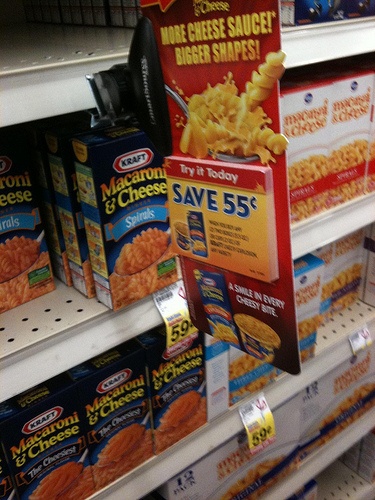
I bought meat that was deeply discounted because it was at the expiration date. I cut coupons, and I stocked up on boxed products like Hamburger Helper and Knorr pasta sides that I could buy for pennies. I bought the cheapest fruits and vegetables I could find, often on the clearance rack because they were already well past their prime.
Did I mention that saving all this money helped us have more money to go out to eat a few times a week? We often had sushi, but we also had our share of unhealthy meals like pizza and fast food.
While I might have been responsible with my family’s money, I wasn’t being responsible with our health, as I discovered the next year when I became sick with gastrointestinal distress every day and couldn’t find what the problem was. It would be over two years before I found a doctor who diagnosed a leaky gut and an intestinal yeast overgrowth as well as an intestinal parasite and multiple food intolerances. (Gross, I know.)
That was all discovered a year ago, and our eating habits have changed dramatically. Now we buy fresh organic fruits and vegetables, local and in season, if possible. In the summer and fall, we buy direct from the farmer through a vegetable CSA.
Rather than buying meat that’s about to expire, we buy grass fed meat direct from the farmer.
We eat very little processed foods; we cook from scratch and eat at home for all of our meals, and we don’t eat at restaurants save a few times a year when we’re traveling.
Thanks to my own experience, I’ve come to believe the old adage, “Pay now for good food or pay later for medical care.”
Michael Pollan, author of In Defense of Food: An Eater’s Manifesto, elaborates on this when he explains, “In 1960, 18 percent of our national income was spent on food, and only 5 percent on healthcare. Today 9 percent of our income is spent on food and a whopping 17 percent on healthcare. ‘The less we spend on food, the more we spend on healthcare'” (Oprah).
What Are You Doing with the Money You’re Saving at the Grocery Store?
I’ve been an avid blog reader for four years now. I used to love reading women’s posts about how much they saved at the grocery store. It felt like they were cheating the system (even though they weren’t), and I wanted to do the same thing. I was so proud of myself when I got food for pennies on the dollar even though it was slowly making me obese and very sick.
Before you draw the conclusion that I think it’s terrible to buy processed foods and use coupons, let’s be clear–there are some people who do not have money to buy quality groceries. These people are scraping by, and if they don’t buy the cheapest food available, their family won’t eat. I don’t begrudge them. They are doing the best they can to take care of their family.
But too often, what I see are people who scrimp and save on their grocery bills so they can splurge in other areas. Maybe they spring for an iPhone or buy designer clothes for work or, like us, use the savings to go out to eat more often.
Of course, that’s their prerogative, but why is it that people always try to skimp on groceries as much as possible rather than other areas of our lives? Why is what goes into our bodies, gives us energy, and keeps us healthy and strong, always placed last? Why do we want the cheapest food for ourselves just so we can go out to eat more, buy the latest smart phone, or get new clothes?
How Saving Pennies Now Can Cost Us Thousands Later
Most of the processed foods that we buy in the supermarket contain trans fats, which, in part, give foods a smooth texture and help extend shelf life. You can see why manufacturers would like to add this to as many foods as possible.
However, the convenience of trans fat for the manufacturer comes with a steep price for the consumer. Dr. Enig, a nutritionist well-known for her research on fats and oils states, “More than a decade of research at the University of Maryland, as well as research that was being done at other institutions, showed that consumption of trans fatty acids from partially hydrogenated (a process that adds hydrogen to solidify or harden) vegetable fats and oils had many adverse effects in health areas such as heart disease, cancer, diabetes, immunity, reproduction and lactation, and obesity” (Healthy.net)
Those super couponers who are buying processed foods on the penny are eating large quantities of trans fats every day, and it’s slowly killing them. But even if you’re not a super couponer, if you’re not cooking from scratch with whole foods, you’re probably consuming trans fats.
You may argue that I’m being too extreme, but I would disagree.
Michael Pollan explains, “Even if you think you’re making smart choices, the processed foods you buy at the store may affect your health. ‘Before the Western diet comes in, which is around the turn of the last century, populations did not have high levels of heart disease, type 2 diabetes, obesity, all these diseases'” (Oprah).
A few years ago, I, too, would have argued that processed foods weren’t hurting my health. But then I radically changed my diet in an effort to heal my body. Within eight months of giving up processed foods and eating a nutritionally sound whole foods diet, I lost 70 pounds. My cholesterol dropped 20 points and my blood pressure improved.
Suddenly, I could see that by skimping on the foods I bought for myself and my family, I was affecting our health.
How Much More Does a Whole Food Diet Cost
I won’t lie to you. Eating processed foods that you can buy with coupons is much, much cheaper than eating a whole foods diet. Our grocery bill for our family of 5 jumped from about $350 a month to $800 a month. It’s our largest monthly expense behind our rent payment.
We have had to make significant sacrifices to eat this way, but I feel it’s worthwhile. We’re improving the quality of our life with the food we’re eating. Best of all, there are ways to save when eating whole foods.
First, you don’t have to buy all organic produce to be healthy. I’ve chosen to do so because I want my body to heal faster. However, if you can’t afford organics, eating a wide variety of fruits and vegetables, even if they are conventionally grown, is a much better choice than buying freezer meals or boxed foods.
That being said, there are ways to save when eating organic produce such as buying vegetables from local CSAs or buying frozen organic vegetables (without any additives). Sometimes I can get a 5 lb. bag of organic vegetables from Costco for $6. That’s a lot of vegetables!
If you’re a meat eater, buying grass-fed meat is best. That can get expensive, but you can lower costs by buying meat direct from the farmer. I buy a 1/4 cow from an Angus beef farmer and pay on average $5.50 per pound. That is for steaks and hamburger and all other cuts of meat. You can also choose to have some vegetarian meals so you don’t have to spend as much on grass fed meat meals.
In the end, it comes down to your choices. Is extra “stuff” that important? Or would you rather nourish your body with whole foods that improve your health and can potentially help you live a longer, more satisfying life?
As someone who was sick for two years, I can tell you that I’ll never go back to cheap, processed foods. I’d rather skimp and save in other areas to feed my family better food.
How about you all? Do you try to save as much as possible on groceries, or do you spend more for higher quality foods?
Share your experiences by commenting below!
***Photo courtesy of http://www.flickr.com/photos/24218656@N03/4587200719/sizes/m/in/
Ways To Save During Football Season

 This is a post by MPFJ staff writer, Jeff. Jeff writes about sustainable living and finances at his website, Sustainable Life Blog. Jeff really enjoys traveling with his wife as much as he can, to wherever he can.
College football season is in full swing, and if you’re a big fan of the sport, it’s easy to spend a lot of money at the tailgates, attending games, or getting jerseys from your favorite team. Don’t forget the constant donations that your university is calling you about, costs during college football season can really add up.
Watching college football is one of my pastimes (second only to college basketball), but sometimes, it can get a bit expensive with all of the watch parties, big games, and attending the game at your alma matter.
There are plenty of ways to cut down some costs, and still enjoy the game with your friends. So with bowl seasons coming up, here’s a few great ways to cut costs.
1. Host game watch potlucks – One of the greatest ways that I have found to still enjoy all of trappings of a game watch party is to have a game watch potluck. Invite all of your friends over for the game, and ask them to bring some game time snacks. You’ll have to do a bit of planning to make sure that you dont end up with 100 hot wings (Unless you want 100 hot wings). I always try and get people to get some chips and dip, veggies for the non-meat eaters, and hot wings. Get some great snacks in and enjoy the game.
2. Game day specials – Lots of bars in college towns or places that are affiliated with universities typically have specials for game day. Some offer buy one get one free beers, some offer discounted food and there are tons of other types of specials for game days. Taking advantage of those specials will help you save money and enjoy the game
3. Group ticket purchase – If you’re looking to actually attend the game, you can typically get discounted group tickets, as well as some special service. For the college in my state, regular tickets are $38 if you buy them for 1 person but the group discount will give you tickets to the game for $29 per game. Its always fun to watch the game live, and is an easy way to save money – just make sure that you don’t buy too much stuff at the game.
4. Attend a watch party – Usually my friends and I switch days that we host the parties, so we don’t always have to clean, provide party supplies and all the other incidentals that come with hosting a party. Since we have a good group of 5-6 couple friends, so each person gets a chance to host a watch party for one of the games.
5. Set a gambling limit – Some of my friends bet on games every week, and usually do OK, but sometimes they get taken because they picked wrong. I learned last year to set a limit for how much you’re willing to risk gambling and only bet that each week. My limit for the entire NCAA basketball tourney last year was $40, and I ended up winning $320. It was a good day, but I would have been fine losing $40.
These are a few a of my favorite ways to save some money during the college football season.
How about you all? How do you save money during the college football season?
Share your experiences by commenting below!
3 Ways My Daughter Is A Halloween Costume Shopping Superstar

 The following post is by MPFJ staff writer Travis. Travis is a customer blogger for CareOne Debt Relief Services, and also appears weekly at Enemy of Debt. Travis candidly shares his personal journey to pay off $109,000 of credit card debt and the tips he’s learned along the way. As a father and husband he provides a unique perspective on balancing debt, finances, and family.
My daughter walked through the front door with a disappointed look on her face.
She had just returned from a trip to a nearby Halloween costume shop with our next door neighbors and was unhappy that she had not been able to find a costume that she liked.
She didn’t let it keep her down for long, however.
She knew she wanted something that had a hood, and looked kind of like a witch. She also had an idea where to look based on where we had purchased costumes in years past. As I passed by her sitting at the breakfast bar with our laptop, I could see she was scouring the internet for new costumer ideas. Every few minutes, she would give me a progress report as to what she was up to.
- Price comparing: For each costume she liked, she searched websites of all the nearby stores she could think of that may carry costumes to find where the costume was cheapest.
- Reviews: She read reviews of each costumes to find out what other customers were saying about the product.
- Extras: When she had settled on a specific costume, she noticed some small print next to the associated picture stating that not all the items shown were included with the costume. She found similar items that could be purchased and added them up so we would have an accurate grand total of the price of her desired costume.
When she had completed her research, she approached my wife and I with information regarding what costume she wanted, where we should purchase her costume, what items would need to be purchased, and a total cost of all the items. She also presented reasoning based upon the reviews as to why she believes she would be happy with the costume.
We didn’t ask her to do such thorough research, but were pleasantly surprised that she did. When I asked her why she went through such great lengths to nail down her costume specifics, she gave me the following reasons:
- She wanted to make sure she got a great costume that she liked
- She knows we’re very busy, and didn’t want to waste our time or hers going from store to store simply looking for a costume.
- She knows we’re on a budget and wanted us to get the costume as inexpensively as possible.
As our kids grow up, we’re trying to teach them the tools to to financially savvy and responsible adults. One one hand, it’s surprising that an eleven year old would have the presence of mind to do all of these things. On the other hand, these are activities she sees her mother and I do frequently when we’re investigating making a purchase. Kids learn things not only by direct instruction, but also very much by watching what we say and do.
How about you all? Are you setting a good example for your child through your financial decision making? What planning steps did you take this year in figuring out/purchasing your Halloween costume?
Share your experiences by commenting below!
Image courtesy of Stuart Miles / FreeDigitalPhotos.net
5 DIY Projects To Improve The Value Of Your Home

 The following post is by MPFJ staff writer, Shondell of Call Me What You Want, Even Cheap. She blogs about her recent car loan and mortgage pay off and a whole bunch more. Check out her blog right here.
Home improvement projects can increase your chances of selling your home quickly and at or very close to the asking price. Although many remodeling ideas are quite expensive, there are certain projects that you can handle yourself and don’t entail investing a fortune.
Here are 5 DIY projects that will improve the value of your home without extraordinary costs:
- Fresh Paint – Painting can change everything when it comes to a home. Whether you paint the inside or the outside of your house, painting will have an immediate positive impression on potential buyers. Fresh paint will cover all those imperfections that are unavoidable after years of living in a home. All homes need painting from time to time and nothing beats the impeccable look of a freshly painted home. Although painting can be time consuming and hard for some, you can still do it yourself, especially with a little help from the family. Just make sure to protect everything else that you don’t want to paint, such as furniture.
- Update Your Bathroom – Bathrooms need to look flawless to bring the value up in your home. An updated bathroom can be the decisive factor in a person’s decision to buy. You can replace all bathroom furnishings, perhaps re-grout your tile floors and walls if they are still in good condition, change fixtures to more cost-efficient ones, or add a low-flow toilet. All of these little things along with some decorative factors can bring the value up in your home. A small cabinet in the right place is also a small investment but a great addition. A new mirror or new bathroom accessories all in the same trend will also look amazing. New lighting can change everything as well. Life is made of details and your bathroom is no exception. Details are what people pay attention to. So take care of the details and you will have a more valuable home.
- Brighten Up Your Kitchen – If you have a kitchen with neutral color appliances and a worn backsplash, you definitely need a bit of work done to revive this valuable space of your home. Changing cabinets can be costly, so you can basically move on to a smaller financial challenge: replace the kitchen backsplash with a new modern one with glass and metal mosaic tile, for example. A colorful backsplash with a modern design will immediately brighten up your kitchen. You can also re-grout to give your floors and walls a new look. A bit of painting on the walls and ceiling can help as well while sealing the joints of the floor will ensure even more value.
- Hardwood Floors – Although you may think that replacing your carpets with hardwood floors is not a DIY project, you cannot be further from the truth. Your home is not new and you already know where and what needs to be replaced better than anyone else. You know the weaknesses and strengths. Just make sure you get informed and protected and start calculating the materials you need in order to have new floors. It is not a difficult job if you know the steps that are involved and you have the right materials at your disposal. Make a plan and move on to replacing those dusty worn carpets with shiny brand-new hardwood floors.
- Take Care Of Your Front And Back Yard – A messy-looking front yard will not invite buyers in or attract them in anyway. If you mobilize your family and allocate just a small part of your budget to this project, you can have a wonderland in the front and in the back of your home. To minimize your investment, forget about outdoor furniture, if you don’t have any already. Just add a small paved patio, take care of the lawn, add flower pots with ever green plants, take care of all the weeds, and simply clean everything up.
There are many small projects that can bring the value up of your home. For buyers, the things you’ve already taken care of represent less of a financial burden and stress to them. First impressions always count, especially for women. I have often heard that women make the decision when buying a home, regardless if it’s a family home or not. The kitchen and the bathroom are often the favorite places in a home, and typically drive up the value of a home more than any other room in the home, so I would suggest spending more time on those rooms if you are planning to sell your home.
How about you all? What are some DIY projects you’ve done in your home?
Share your experiences by commenting below!
***Photo by Design Inspiration Gallery
De-Tangling Your Life – It‘s the Key To Everything Else

 The following is a post by MPFJ staff writer, Kevin Mercadante, who is a professional personal finance blogger, and the owner of his own personal finance blog, OutOfYourRut.com. He has backgrounds in both accounting and the mortgage industry.
You ever feel that your life is just too…complicated? That you have no time to do what it is you really want to do with your life? These days, that’s probably true for more people than not. The pace of life is just faster than it’s ever been.
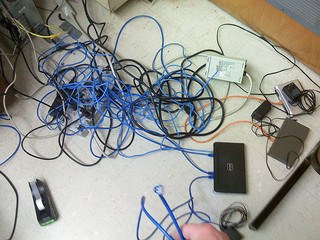
We can blame television, computers, cell phones, and a host of other factors – and all of them will be true. But, none of that actually fixes the problem. You may need to work on de-tangling your life. It could be the key to everything else.
There’s no question, complexity is creeping into every aspect of life. That means that you have to look at each area of your life and make decisions as to what you will do in order to simplify your life so that you can focus on what it is you really want to do. That will be the beginning of both greater productivity and more enjoyment of your life.
Your finances
Finances alone are an area of immense complexity. The more financial involvement you have, more tangled your life is. This is an area where you have to separate what’s really important from what is simply desirable or convenient. Try these:
Live on less than you earn. Life can become more complicated simply by the fact that you spend more than you earn. It can be a tough adjustment, but if you reach the point where you have a little bit extra in your budget every month, your finances will unwind quite a bit.
Paying off some debts. The amount of debt that you carry can be intimidating, but complication often comes from the number of debts that you have. If you have 11 debt payments that you have to make every month, try using the debt snowball method to knock them off one at a time. The debt snowball simply has you starting with paying off your smallest debt, then moving up to pay the next smallest. Your life will begin to untangle as the number of debts that you need to pay drops.
Building a cushion. If you can learn to live on less than you earn, you should have extra money available to put into a savings account. This is not money that you invest, but peace of mind money that keeps you from feeling overwhelmed by your finances. A savings account may be boring, but it can lead to many nights of peaceful sleep. That should definitely help de-tangle your life.
Get out of investments you really don’t understand. If you’re having difficulty understanding or keeping up with certain investments, you probably don’t need to be in them. Invest in what you understand, and you feel comfortable with. At the same time, having too many separate investment accounts can also be a life complicating factor. Cut down to no more than you can easily manage.
Your kids
Sometimes, in an effort to raise “perfect kids”, you burn yourself out. You’re running here, running there, and worrying about every aspect of their existence. Worrying about your kids is a natural part of parenting. But you can cut down on the number of side shows that are going on in their lives, and complicating yours.
Limit extracurricular activities. Some people allow (or even encourage) their children to participate in two, three and even four extracurricular activities personal school semester. You’re running here, driving there, participating in multiple fund raisers – and burning out while you do. A teacher at my son’s high school even referred to this as “a recipe for mediocrity”, because the kids can never concentrate on one activity at a time. Try limiting their activities to just one per semester, which should simplify their lives and yours.
Let them handle more of their own issues. Are you a helicopter parent? That’s a type of parent who hovers over their children waiting to jump in and fix every problem in their lives – even as they get older. But this is a very complicated way to live. You can’t protect your children from everything that happens, and sometimes the best life experience they can get is facing problems head-on. As they get older, they should handle more, and you should handle less.
Learn to say “no”. Do you sometimes feel as if you are crushing your children because you are saying “no“ to them? Sometimes for your own peace of mind, you need to do just that. There is only so much you can do as a parent, and sometimes the best thing is to save your energy for the big stuff, and start saying no to more of the smaller stuff.
Your work
Today if often seems that you need to do the work of two or three people just to keep your job. But there may be a few steps you can take to de-tangle even that seemingly intractable area of your life.
Get to work a little bit early. If you have more than you can handle at work, try getting in 15-20 minutes early each day. That will give you extra time to do what you need to do, or at least to create a viable “to do” list that will keep you on track all day. It will also make traffic less of a factor, and that has to help.
Delegate more. If you are simply overwhelmed with work, you may need to talk to your superiors about delegating at least some of it to free yourself up so that you will accomplish your primary tasks. If you can explain to your boss that delegating some work will increase your productivity, you may get a sympathetic ear.
Seriously determine if you’re doing the right work. Sometimes the complication at work comes from the fact that you are not doing the right work for your personality and preferences. If your job seems to be beyond you, you might need to consider a career change into work that better fits who you are. It can go a long way toward removing much of the complication in your life.
Your hobbies and past-times
Sometimes even hobbies and pastimes entangle your life. It may be that you are taking on too much, even though that seems absurd considering these are activities that you participate in for recreational purposes. But sometimes you don’t have enough time and energy because too much time has been devoted to hobbies and past-times.
Limit TV and web surfing. Studies have shown that the reason that people don’t have enough time for what they want to do is often because they watch too much TV pf spend too much time web surfing. Keep these activities to an absolute minimum, that way you have time for whatever else you want to do.
Drop activities that you don’t particularly like. Do you participate in activities that you don’t particularly like? Maybe you’re trying to maintain certain friendship through the activity. But if the friendship is strong, it should survive your decision not to partake in a mutual activity. And if it isn’t, the friendship may not have been worth keeping. After all, you can only spread yourself so thin.
Don’t be a “habitual joiner”. If you’re the kind of person who always participates no matter what the activity is, you could be complicating your life needlessly. You can say no to becoming a committee chairman, or even decline to join the committee at all. You don’t have to be coaching several sports team all year-round, nor do you need to participate in every activity at school, work, or church. Pick what you feel most passionate about, and stay with that.
Life is complicated today, but sometimes we do our part to add to the complication. Figure out what it is you don’t really like or need to do, and get rid of it. Then think about what you want and need to do, and carve out time to do it. That’s taking control. And any time you do, life will become more satisfying and less complicated.
How about you all? Do you find that complication is leaving you drained and confused? What can we do to de-tangle our lives?
Share your experiences by commenting below!
***Photo courtesy of http://www.flickr.com/photos/helfer/3326948370/sizes/n/in/photolist-64ZtQN-6nTQB5-6p3njq-6qdTC1-6tKRiP-6Yqdej-6

How Much Money Do Beggars and Street Performers Make?

Every day on my drive home from graduate school, I get on the local bypass for a few miles and then take the exit to where I live. If it is during rush-hour, there is inevitably a 5 minute wait at the light because the traffic gets backed up from the ~40,000 University employees heading home for the day.
At the very bottom of the off-ramp, gaining a stadium-seating viewing from the 70 cars waiting at the stoplight, is almost always someone begging for money. “Anything helps, gets cold at night, God Bless,” or “US Army Veteran, anything helps,” their signs read.
Personally, I have only witnessed cars at the stoplight giving money to the beggar on 1-2 occasions, so pretty rare considering that I go by there every day. However, this got me thinking – just how much do people requesting money on the street or performing on walking malls make? Is it not much money at all, or is it something pretty high, like $30 per hour?
Ideally, if I had more guts, prior to writing this post I would have personally posed as a beggar and been able to provide some first hand account knowledge. However, I decided against doing that, so we’ll just have to go with what I could find online and from other people’s experiences.
How Much Money Do Beggars / Panhandlers Make?
First, let’s take a look at what I could find about a consensus for how much beggars can make:
- A 2013 South African study found that beggars could make the equivalent of $18 per day begging in South Africa.
- A 2008 report stated that some Oregon beggars outside a Wal Mart make $100k per year / $300 per day.
- A beggar in Oklahoma City, OK makes $60k per year, or $30 per hour average.
- An actual homeless person who runs a Blogspot blog stated that he makes between $15-$30 per hour, but it is usually closer to $15 per hour on average. In addition, he mentions that it is very un-steady income, meaning that sometimes, he can beg all day and only make $60.
- Another article reported that they talked to several local beggars who said they would make the equivalent of $13 per hour.
As we might expect, there is obviously a lot of variability in to how much one can make begging. If you were highly manipulative, intelligent, and simply posing as a beggar, you could likely figure out a way to optimize your facade and make a ton of money. However, this would come at a cost of your dignity and morality.
Overall, I would say that a reasonable estimate for how much can be made in begging / panhandling is $15 per hour, which is about $30,000 per year and more than graduate students in my engineering department make.
How Much Do People Make as Street Performers / Busking?
Now, let’s move on to a related topic – seeking a general feel for how much street performers make. We’ve all seen these folks before – whether they are people dressed up on Times Square who take pictures with tourists for tips, to magicians, to people singing and playing musical instruments.
When it comes to street performing, I do have a little bit of personal insight in to how much can be made. One of my friends said he has played a musical instrument on the local pedestrian mall and made about $30 in 45 minutes. That’s pretty good if you ask me!
Listed below are some other related reported figures I could find:
- In Vegas, some of the street performers dressed up like Gene Simmons and a Storm Trooper make the hourly equivalent of between $60,000 – $200,000. Quite impressive!
- Another article reported that street musicians earn between $30-$40 per hour.
Unlike begging, street performing seems like it is more lucrative and likely less mentally degrading. From the figures above, it seems to be realistic to make $30 per hour doing this if you are committed to it. However, I can imagine that the income is very unpredictable, and likely can be frustrating.
How about you all? Do you see many beggars and/or street performers in your area? If so, how much money do you think they make? Is it close to the figures mentioned in this article?
Share your experiences by commenting below!
***Photo courtesy of http://www.flickr.com/photos/kulmalukko/5397742256/sizes/m
Financial Pros & Cons of Working From Home

 The following post is by MPFJ staff writer, Kelly Gurnett. Kelly runs the blog Cordelia Calls It Quits, where she documents her attempts to rid her life of the things that don’t matter and focus more on the things that do. You can also follow her on Twitter and Facebook.
Many people dream of working from home—where “working from home” means “watching TV in my PJs while the rest of the world is suited up in cube land.”
But, the realities of telecommuting (if you work for a company) or freelancing (if you work for yourself) are, as with any dream, never quite as lovely as you imagine them. Granted, working from home has its fair share of perks. But a job is still a job, and any major life change will have its pros and cons.
For anyone considering making the switch, here’s an overview of both sides, from someone who’s done it for the past few years.
Since this is a financial blog, I’ll take a look largely at the monetary implications of working from home, but I’ll also cover some other considerations which can sometimes play just as important a role in your decision as the financial ones.
Savings
Commuting costs. If you take public transit to work, you’ll save a pretty penny. If you drive, you’ll save lots and lots of pennies. In addition to the cost of a car in general (we went down to a one-car household when I started working from home full-time), you also save on related costs like gas, parking, tolls, and extra wear and tear.
Clothing. When you report to an office 5 days a week, you’re going to want a decent-sized wardrobe to keep you from recycling outfits too often. You also need the various add-ons that go with it, like bags, shoes, accessories, etc.
When you work from home, you can pare your closet down drastically. All you need are a couple go-to power outfits for video conferences and the occasional trek into an office for a face-to-face meeting. Depending on how high-maintenance your work clothes are, this could also save you a bunch on dry cleaning.
Food. Many of us succumb to convenience food when we’re doing the 9-5 grind. We grab a coffee at Starbucks when the office coffee is sub-par. We grab lunch out with coworkers because we didn’t have time to pack something that morning. We take part in things like Happy Hour because darn it, we’ve earned a few nice cocktails after putting in a week on someone else’s clock.
When you work from home, you have much more say over your own hours, giving you the freedom to explore things like making a fresh salad or wrap for lunch and brewing your own cents-a-cup coffee. (Eating healthier can also add to the long-term savings of less medical bills!)
Office parties, fundraisers, and other peer pressure purchases. You may have no idea who Mabel in Accounting is, but when she retires, you’ll look like a heel if you don’t contribute to her farewell gift and cake. You may have more wrapping paper than you’ll go through in a lifetime, but when Bob comes around with a picture of his daughter’s softball team in their adorable little uniforms, you feel compelled to buy a roll or two just to be nice.
No more when working from home. The only people you have to worry about buying gifts for are your own friends and loved ones.
Childcare costs. While working from home with little ones isn’t easy by any means, telework is a staple of stay-at-home moms for a reason: it saves the astronomical cost of daycare, lets you spend more time with your family, and lets you earn some money on the side (while still getting your laundry and errands done).
Costs
Taxes. If you work remotely for a company and enjoy “employee” status, you can skip this one. But many work-from-homers are self-employed freelancers or subcontractors, and they face the wrath of the employer/employee double-tax (you’re your own boss and your own worker, now) and the stress of quarterly tax payments.
Here’s a good rundown of what you can expect tax-wise, but I highly recommend you seek the help of a CPA, especially when you’re just starting out. Mine helped me realize that for every dollar I bring in as a freelancer, a full 1/3 of it should be stowed away in a savings account to cover those quarterly payments when they’re due. Had he not warned me at the start of my first taxable year, I would have been very unpleasantly surprised come payment time.
Health care. As with the above, this won’t apply if you’re lucky enough to be covered by a company. Otherwise, bear in mind you’ll now be responsible for your own healthcare costs. At the time of writing, the state healthcare exchanges are still new enough it’s hard to tell how they’ll impact health care options, but the bottom line is, you’ll still be paying out of pocket for coverage you may have once gotten through an employer.
Operational costs. Higher utility bills from being home all day. A nicer computer, faster internet connection, and maybe a webcam for those video conferences. When your home is your business, your monthly bills are going to be higher than they’d be if you were away at the office 40 hours a week. You’ll also likely wrack up some startup expenses to get yourself up to speed.
The good news is that many of these things can be written off on your taxes, especially if you have a dedicated room at home that serves as your office (not your office/kids’ playroom/den). Again, consult with a CPA for your specific situation.
Non-Monetary Considerations
No commuting time (or pain and suffering). Imagine instead of fighting your way through rush hour traffic twice a day, you could spend that time working away at your computer so you could get more done by lunch time. Imagine also that you live in a wintry city like my own hometown of Buffalo, New York, and the thought of not having to scrape off 3 feet of ice and snow at 7:00 in the morning takes the sting out of quite a few of the above costs.
Increased concentration/efficiency. Away from chatty coworkers and overbearing bosses, many people find that working from home lets them enjoy a level of productivity (and peace and quiet) they could never achieve in an office environment.
This means you may be able to get a full day’s work done by 3:00 instead of 5:00, giving you two more hours for whatever you please. It means you can structure your day around your usual 3:00 slump so you can tackle tougher tasks when you’re at your best. It also means you can potentially bring in more income by being able to get more done in those 40 hours than you would have at the office.
Less personal contact/accountability. If you’re a social butterfly who gets bored and lonely after a few hours by yourself, working from home may not be for you. You also need to be disciplined and dedicated to get your work done on time with no one peering over your shoulder to see how it’s coming along. It takes a certain type to work from home, and if those two warnings make you nervous, you may not be that type.
More flexibility. If your kid gets sick and has to stay home from school, it doesn’t derail your day completely. If you get sick and need to make a doctor’s appointment, you don’t have to worry about squeezing it in before or after work (or having to make up time for leaving early)—you can happily accept whatever the next available appointment is.
If you are disciplined and dedicated, you can pretty much structure your days however you please, which, for many who choose the work-from-home path, is worth more than money could buy.
How about you all? Do you work from home? What others pros/cons have you experienced?
Share your experiences by commenting below!
***Photo courtesy of http://www.flickr.com/photos/benmcleod/116671073/
Should You Start A Family In Your Mid 20’s?

 The following post is by MPFJ staff writer, Catherine Alford. Cat is a freelance personal finance writer who blogs at www.BudgetBlonde.com.
Just a few weeks ago, I got the surprise of my life. I went in for a routine ultrasound after getting a positive pregnancy test, and my husband and I found out we were having twins! We had planned and hoped for a baby, but getting two was pretty exciting and shocking all at the same time! It didn’t take me long to realize that at 26 years old, I’d be a mom to two kids, not just one!
I thought a lot about the perfect time to have children for my family, and I realized that being 26 (almost 27) when they are born just seemed to work out perfectly for us. Do I wish we had more financial stability? Yes. Do I wish we had less student loans? Yes. However, we’ve learned so much about our finances and being responsible over the past few years, and I think we’re ready for this next adventure!
Pros:
1. Peak Energy and Fertility
Just recently, I read that a woman’s peak fertility is between the ages of 16-28, so I had some concerns about waiting until I was in my 30’s to have kids. Many women safely have them during that time every single day, but I am a worry wart, and I wanted to make sure I could have a family when I wanted without running into fertility problems later. Another perk is that when you are in your mid-20’s, you are young and have a lot of energy to chase around a toddler (or in my case, two!) Your body bounces back faster according to some moms too.
2. Lots of Time to Re-Enter the Work Force
Because many women are just starting their careers in their mid-20’s, they likely won’t be stepping away from or giving up high profile careers just yet. While many women in their 30’s successfully balance both their work and home lives, they have extra challenges to contend with and sometimes find it hard to gain acceptance about their new role as a mother. When you are in your mid-20’s you might have similar challenges, but many women in this age group often report feeling more comfortable with taking longer maternity leaves and even staying at home with their children for a year or more. At that age, you have a lot of time to re-enter the work force at a later date and “catch up” to where you were before.
3. You’ll Still Be Young When They Go To College
If you have kids in your mid-20’s, you still have a ton of years ahead of you when they go to college. You’ll miss them for sure, but you’ll also have a lot of energy and youth on your side to head on trips with just your spouse while your kids are buried in their college textbooks.
Cons:
1. Financial Instability
While not all people in their 20’s experience financial instability, it is the time where people tend to make financial mistakes, figure out their relationship with spending, and hopefully start saving for retirement. Most people in their mid-20’s are still relatively fresh out of college. They only have a few years of work experience and might still be paying back loans. Additionally, depending on the industry, they might not be in a high pay grade just yet and might have to put in extra hours to prove that they are worthy of promotions. All of these things combined make many people wait until they are in their late 20’s and early 30’s to have their first baby.
2. Halted Travel Plans
Many people say that they want to see the world before having their first child. They are often able to start traveling in college during spring break or on a study abroad trip. However, having a baby in your mid-20’s can sometimes put at least a temporary halt to extensive travel experiences. While I do plan to travel with my children, as I want them to become good at it, I won’t be making any international trips for quite some time.
3. Tendency for Lifestyle Inflation
One of the first things I noticed when I got pregnant and started talking to other pregnant women is that so many of them wanted to buy a new car. One of them was even adding on a room to her house! I think when many people get pregnant with their first child, they instantly think they need to upgrade everything to fit in with a cultural mold. Furthermore, when people are in their mid-20’s, it’s harder to resist some of these temptations. While I’d love a new car, I know we can’t afford it, and I’m lucky to have a fully paid for safe vehicle for my kids to ride in, even if it is 12 years old!
Ultimately, there are many pros and cons to having kids in your mid-20’s. For us, it was a good decision, one that worked well with our current phase of life and my husband’s time frame with school. He will be in between semesters when our twins are born and thus will have a solid month to help me get used to their arrival. We thought through a lot of pros and cons and tried hard to choose the right time for us to have a baby. I really think that’s all anyone can do: exactly what’s right for them and their families!
How about you all? When did you have your first baby? Do you wish you would have waited until you were a bit older?
Share your experiences by commenting below!
***Photo courtesy of http://www.flickr.com/photos/houghtonbird/9601034003/s
Get Bicycle Insurance for Peace of Mind at Affordable Prices

 The following is a guest post. Enjoy!
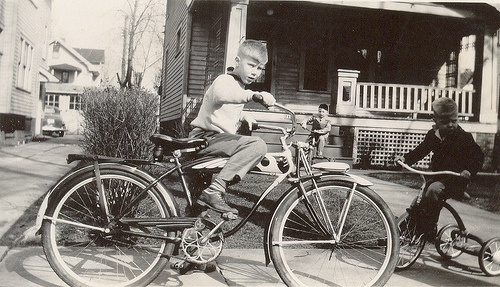
The rise of diesel and petrol prices has definitely not gone down well with the general public. To add to this, the entire world’s economy is in a state of meltdown. This inconvenience has led to some ditching their automobiles and taking up alternate modes of transport. With no solution from the automotive industry in sight, cycles and bicycles have grown in popularity. This popularity is fed by the fact that cycles do not require fuel to be used. Apart from that, they are masters at keeping a check on the health of its owner.
In return, the only thing that bicycle owners should give to their cycles is cheap bicycle insurance. Insurances like this protect your cycles from all the possible damages that it might suffer over time. Cycles, like their automated brothers are entitled to the harsh conditions whenever they are taken out. Over time, this would definitely have an impact on the performance of the cycle itself. Not keeping a check here means the owners would have to bear the impact of the cost in case of damages over time or accident. Thus, best cycle insurance makes sure that your investment in the bike is safe and convenient. Cycle Insurance is a reliable option if you are planning to get your bicycle insured.
Bicycle insurance is a true need for those cyclists who have to travel abroad regularly or even those who are passionate about taking their bikes for hiking and exploring the tough terrains and the hilly regions. If you are planning to go for adventure activities in the mountains, you should carry a copy of the insurance policy or get it dome instantly to avoid drain of cash in the case of danger.
Cheap bicycle insurance is offered by almost all the insurance firms all over the world; making it convenient for buyers to avail one for their own cycles. There are however, some things that should be kept in one’s mind before they commit to a particular insurance policy. They are mentioned below.
Choosing one among the thousands is not a simple task. However, it’s necessary to take efforts to compare bicycle insurance and choose the best one in order to obtain complete value for your money and gain attractive insurance benefits at the same time. When you compare bicycle insurance, make sure you have all the necessary information about the quotes. If not, contact the company through phone or email to obtain all the vital information that’s necessary for an effective comparison.
Best cycle insurance can be purchased from the company’s office or websites itself. However convenient it may sound, there are certain drawbacks that customers hardly know. These are the fact that, insurance companies always try to promote the policy that is not always cheap. On top of that, nearly all of them do not mention all the clauses of the cheap bicycle insurance. These hidden conditions can turn out to be real barriers to protection for your bicycles.
There are brokers, who are ready to any insurance policy available in the area. These brokers have a deep understanding about the various policies and their usefulness to the user as a whole. They are the next best thing to the internet.
***Photo courtesy of http://www.flickr.com/photos/24736216@N07/5103846910/sizes/m/in/photolist-8M1xSw-7WCpvY-baAutK-8pxbJi-81SWUy-81SX2d-g8Bktb-7KnrRt-e39tvP-bibPnn-99dMUR-farn9N-8oH5Y7-apLLzV-bj5Rev-fac7w6-8SRTk6-8pgmi7-fL8zk6-arYxM3-aWtbHk-97acip-8pcikk-9ZAu47-gtahJr-e58pZs-8wgUeX-9ukk67/