

- You are here:
- Home »
- Blog »
- Saving Money & Frugal Living »
- 7 Ways to Maintain the Value of Your Car
Groups I Am a Part Of


7 Ways to Maintain the Value of Your Car
 The following is a post by MPFJ staff writer, Kevin Mercadante, who is a freelance professional personal finance blogger for hire, and the owner of his own personal finance blog, OutOfYourRut.com. He has backgrounds in both accounting and the mortgage industry.
Even if you aren’t a car buff, you have a vested financial interest in maintaining the value of your car. At a minimum, you’ll need to either trade it in or sell it to provide at least part of the down payment on the next car that you will buy. You will want to keep the car in top shape, so that it will command its maximum value.
Age, condition, options, and mileage all figure significantly in determining the resale value of your car. You can even check how much impact each will have on your car’s value on websites such as Kelly Blue Book and Edmunds.com. You can run different value scenarios on either site to determine the value of your car, whether for trade-in or for sale to a private party.
With that in mind, here are seven ways to maintain the value of your car.
1. Keep to the Recommended Maintenance Schedule – and Keep Records
Your car owner’s manual should have a maintenance schedule, that will let you know when it’s time to change the oil, change the filters, have the brakes checked, and perform more serious maintenance. You should follow the schedule closely. Not only will it keep your engine running more smoothly, but it will prevent more severe repairs that can result from neglect.
In addition, the better the car runs, the more resale value it will have, particularly if it is more than a few years old. You should also keep a file with all of your maintenance records. A prospective buyer would be interested to know that the car has been well cared for.
2. Fix Whatever Is Broken as Soon as Possible
One of the unfortunate realities of automobile ownership is that problems don’t get better with age. Little problems can become big problems, and big problems can also have a negative effect on other systems in your car.
For that reason, fix whatever is broken as soon as possible. That will prevent the domino effect of car repairs that often causes the owner to sell the vehicle prematurely.
3. A Little Wash and Wax Goes a Long Way – And So Does Periodic Detailing
The appearance of your car will have a major impact on its resale value. All other things being equal, the prettier car will sell faster and for more money.
Much as is the case with buying a home, buying a car is largely an emotional decision. A person might make the choice to buy your car just because it has more curb appeal.
In order to have that curve appeal, it’s important to keep up appearances with your car throughout the time that you own it. Have the car washed and waxed regularly, so that with the paint job will get maximum protection from the elements. And having the car fully detailed at least once or twice per year will help prevent discoloration, wear and tear, and the accumulation of dirt that could make a car look a lot older than it really is.
And here’s another bit of maintenance advice I was given by a mechanic – if you live in a area that gets a lot of snowfall, have the undercarriage of the car washed a couple of times a year. Road salt can corrode the undercarriage in a few short years, causing serious damage.
4. Keep Your Mileage to a Minimum
In some cases, mileage plays a bigger role in the resale value of your car than the age does. For example, a 10-year-old car with 80,000 miles on it may have more market value than a seven-year-old car with 120,000 miles.
This creates a compelling reason to keep your mileage to a minimum. The average driver will drive between 10,000 and 15,000 miles per year. To the degree that your vehicle reflects higher usage, the value will drop according.
Get in the habit of consolidating trips, alternating vehicles, renting a car for long trips, and keeping casual cruising to a minimum. All of these habits can chop a couple thousand miles per year off your odometer. And that will make a big difference when it comes time to sell the car.
5. Drive It Easy
Cars have an uncomfortable habit of reflecting their owner’s driving patterns. Drive a car hard, and it will look the part. Drive it easy, and it will reflect more gentle ownership.
Let’s face it, not only does hard-driving cause parts and systems to wear out more quickly, but it often result in more dents, dings, cracks and scratches too.
Do your best to drive within speed limits, go easy on your brakes, and be careful where you park your car. All can have an impact on how well your car ages. You want to make sure that happens gracefully.
6. Give Your Car Periodic Facelifts
Maybe once a year, take a stroll around your car, and look at it as if you were going to buy it. Are there scratches or dents? Worn carpet or seats? Do the speaker buzz when the radio is on? Are the wheel covers cracked? Are any light bulbs out?
None of these items may bother you as the owner of the car. After all, none affect the driveability of the vehicle. But a buyer will look at each of those, and give them exaggerated importance. As the saying goes you are what you drive, and no one wants to think of themselves as tired and worn out, as reflected by the car they own.
Do this critical inspection once a year, and fix those small items that will likely infuriate a potential buyer. By doing it periodically, you can minimize the cost. But if you wait until just before you’re going to sell the car, it could cost hundreds more.
7. Use Your Garage for it’s Intended Purpose
I don’t have any hard and fast numbers here, nor do I know if a poll has ever been taken on this issue, but I’d be willing to bet that at least 50% of the people who have garages use them for some purpose other than storing their vehicles. Extra storage space is a common usage, as is a play area for children, or even use as a workshop. Some people even convert the garage into extra living space, which real estate agents always advise is a bad move (but that is a topic for another article!).
But if you have a garage, and you still park the car in the driveway or on the street, you are exposing it to the elements. That means scorching sunshine, whipping winds, rain, snow, hail, and even falling branches. At a minimum, that kind of exposure will gradually dull the paint job on the car. Worst-case scenario, it can result in very noticeable damage that will hurt the value of the car.
If you’re fortunate enough to have a garage, by all means, park your car in it. It’s a completely passive way to improve the value of your car.
Maintaining the value of your car is an ongoing activity. Put these strategies into use as early in your car’s life as possible. It will pay off in the end in the form of a higher resale value.
How about you all? Do you have another tip for maintaining the value of your car? What do you do to keep with the upkeep of your car?
Share your experiences by commenting below!
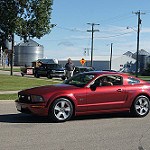
***Photo courtesy https://www.flickr.com/photos/greggjerdingen/14924958287/
About the Author J. Irwin
Popular posts
Session expired
Please log in again. The login page will open in a new tab. After logging in you can close it and return to this page.
Really very nice tips all are J.Irwin. And one more important thing I want to remind that certain times our car dealers announces free servicing camp for our cars. Just try to take advantages from those kind of workshops.
Great tips that I try to follow, and as our cars are 9 and 10 years old and doing great, I think we’re on the right path.
Money Beagle recently posted…Costco Is Shoving Organic Foods Down Our Throats
That’s good because most cars will last a lot longer than we usually think.
Kevin Mercadante recently posted…Why a $5,000 Used Car is Better than a Brand New One