

- You are here:
- Home »
- Blog »
- Invest & Retire »
- How an Emergency Fund Can Make You a Better Investor
Groups I Am a Part Of


How an Emergency Fund Can Make You a Better Investor
 The following is a post by MPFJ staff writer, Kevin Mercadante, who is a professional personal finance blogger, and the owner of his own personal finance blog, OutOfYourRut.com. He has backgrounds in both accounting and the mortgage industry.
When it comes to investing, talking about an emergency fund is just about the least exciting sub topic possible.
After all, an emergency fund mostly sits in the bank gathering interest – and not much of it at that. But few people realize the real importance of an emergency fund from an investment perspective, and how it can actually make you a better investor.
Better investor as a result of having an emergency fund? How is that possible? There are several ways…
Creating and maintaining a basic “grubstake”
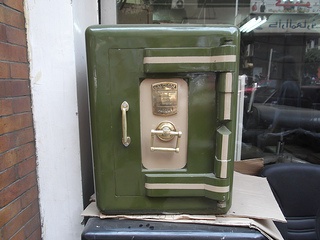
We can think of an emergency fund as something like “seed money”. It’s the money that you would use to rebuild your finances if you lost everything you had. Until the 20th century, this was often referred to as ”hocking the family jewels”. Since most of us don’t have a treasure trove of jewels safely hidden away in a strongbox, an emergency fund is really the next best thing. Having it well-stocked is a way of making sure that there are “jewels” that can be sold in the event of an emergency.
The safest of all safe investments
Every investor should have a certain percentage of their portfolio sitting in safe assets. Exactly how much you will have will depend upon your age, your risk tolerance, and financial factors beyond your portfolio, such as income level, expenses and debt. But no matter what those levels might be, it’s absolutely essential to have at least some money sitting in safe investments.
Emergency funds have the advantage of being the safest of all safe investments. You typically will invest them in nothing more exotic than a savings account or bank money market fund, or in certificates of deposit. It’s not that you can’t invest part of your portfolio in money market funds or certificates of deposit – or even U.S. Treasury securities – but an emergency fund has certain aspects the make even safer than those.
For one thing, since an emergency fund is typically held a local bank, you actually will have physical access to the money in the event of an emergency. It will also be fully covered by FDIC insurance. Similar safe investments held in brokerage accounts have neither the easy access nor the FDIC insurance.
This isn’t to say that an emergency fund will satisfy the need for safe assets in your investment portfolio. You should have some such assets in your basic portfolio, in addition to your emergency fund. But your emergency fund is that “cookie jar” that you keep outside your portfolio, and well beyond the potential for risk investments of any kind.
That kind of safety gives you an extra margin of protection against market shocks and less-than-perfect investment decisions.
Keeping your head in a short-term crisis
One of the silent benefits that an emergency fund has for investors is that it can enable you to keep a clear head at a time when you may be facing financial difficulties on the home front. Imagine you lost your job, but had no short-term savings to cover bills until unemployment checks started coming in? You probably would make some panic moves that you would live to regret later.
Just having an emergency fund available enables you to avoid that panic. That will give you the ability to maintain your long-term investment plans despite short-term disruptions in your income, or sudden spikes in your expenses. An emergency fund acts as a psychological insulator between you and your investments. And that is exactly what you need in order to successfully invest over the long haul.
Avoiding disturbing your investment portfolio for living expenses
On a more practical level, an emergency fund can keep you from having to raid your investment portfolio in the event of a crisis. If a crisis were to occur, and you have no emergency fund, you might be tempted to tap your investments in order to raise cash for survival purposes.
If you’re mostly or entirely invested in equity investments at the time, it could force you to liquidate those positions at a bad time. That can result in taking investment losses that you will lock in permanently as a result of selling your positions.
An emergency fund can provide you with the ready cash that you’ll need to meet short-term emergencies and avoid having to disturb your investments at all. At a minimum, the emergency fund will provide you with enough money to enable you to make rational decisions about how you get through the crisis at least in the near term.
“Sleeping money”
There’s much to be said for having your savings and investments arranged in such a way that you can get a good nights sleep on most nights. An emergency fund will help you to do that. Not only will it provide you with a margin of safety in the event of an income disruption or a large expense, but it can also be a welcome safe harbor in the event of market slide that brings down your investment portfolio.
A good nights sleep will enable you to have a clear head, which will make it easier for you to develop a strategy to deal even with problems within your portfolio. It does this by removing the prospect of immediate threats from your life by providing you with a cash cushion.
The next time you get annoyed at the low return you’re earning on your emergency fund, stop and think about the many ways that the fund enables you to be a better investor then you would be without it. Even if it doesn’t provide a good return on your money, an emergency fund is still a perfect investment in so many other ways.
How about you all? How much of an emergency fund do you like to keep on hand?
Aside from the direct benefit of using it to pay for short-term expenses in the event of an emergency, do you feel that having an emergency fund has enabled you to be a better investor?
Share your experiences by commenting below!
***Photo courtesy of http://www.flickr.com/photos/79818573@N04/8719057729/
About the Author Jacob A Irwin
Hi folks! My name is Jacob. I am the owner and operator of My Personal Finance Journey. I started this blog in January of 2010 and have enjoyed the journey ever since. Since finishing up graduate school in Virginia in 2014, I have been working in biopharmaceutical development in Colorado. You can read more about me and this site here. Please contact me if you have any questions!
Related Posts
Maximizing Your Nest Egg: How to Make the Most of IRA Investments
6 Tips on How You Can Manage by Not Getting a Lot of Debt While You Are a Student
Cash – Your Secret Weapon Against Debt
Buying A Car With Cash
8 Reasons To Always Carry Cash
Popular posts
Session expired
Please log in again. The login page will open in a new tab. After logging in you can close it and return to this page.
My emergency fund just gives me peace of mind. No matter what, if I lost my job and no one in the world was able to help me, I could survive – for a few months at least! Never thought of it as a cushion to protect you from making rash decisions with your investments though! Even more reason to have a substantial emergency fund!
Janine @ MoneySmartGuides recently posted…The Dangers of Credit Cards
Hi Janine – If it does nothing more than give you peace of mind, it’s done it’s job.
Kevin Mercadante recently posted…Most Americans Will Never Be Able to Retire
Yeah, we always need to put some space between ourselves and our investments, otherwise we risk emotional over-attachment. Thats never healthy!
Kevin Mercadante recently posted…Most Americans Will Never Be Able to Retire
I like your thought about it being a psychological investment insulator. It sounds technical! And useful! 🙂
MITM @ Nakedbudgeting recently posted…Self-insurance: It’s Not Just a Tool For Big Companies