
Category Archives for Make Money

Five Stay at Home Jobs For Moms to Earn Money
 The following is a post by MPFJ staff writer, Derek Sall. Derek is the owner of the blog, LifeAndMyFinances.com, where he teaches people how to get out of debt, save money, and become wealthy.
Women are becoming more educated, are getting paid more, and are rising stars in the workforce. While it is nice to see that workplace equality is finally catching on, working mothers are still having difficulty juggling both motherhood and their career. While some are enjoying their work in Corporate America, others are almost forced to work so their family can survive.
Many women, if asked, would rather stay home to take care of their young children than become a powerhouse at work. So what’s holding them back from ditching their job? What else? Money. But what if these women could find a source of income while staying at home? Would this be possible? Would the earnings be enough to cover the family expenses (with the help of the husband’s income of course)? After much research, I have discovered five jobs that women can do that will allow them to both mother and provide an income for their family.
1. Gardening/Farming
If you have just a little bit of property to work with, gardening is a wonderful tool to save money as well as earn some! By gardening and using rain water to nourish the plants, it can be a very cost effective way to produce groceries in your very own back yard. One simple garden can produce hundreds of dollars’ worth of groceries with only $20 worth of seeds.
If you wish to earn a little money, start looking into what plants are in high demand in your area. As a general rule of thumb, tomatoes are always a quality vegetable to plant and sell (perhaps at the local farmers’ market or to friends). House shrubs and trees also yield a hefty profit if you have the space. Best of all, the growing is mostly done by itself, so you can continue to parent like a pro even while you earn the money.
2. Craft and Sell on Etsy
My wife and I recently got married and decided to save money by making the table decorations ourselves. We saved our tin cans, spray painted them white, drilled designs in them, and made some pretty awesome candle holders. In addition to this, her mom figured out how to make some pretty realistic looking flowers out of fabric that matched our wedding colors perfectly. The entire display probably cost us $100 and looked phenomenal. And, in the end we sold the entire set-up for $600. Not only did we save money by doing the decorations ourselves, we made $500 in the process!
If you like to craft, check out Etsy and test a few products of yours. If they sell, you might just have a little business on your hands.
3. Babysit
If you’re a mom and have children that you’d like to stay at home with, why not offer to watch your friends’ children for them instead of having them sent to daycare? They know they can trust you and would likely end up paying you slightly less than the daycare for better, more personal care. This way, you can earn some cash, see your child all day, and provide them with the social interaction that they need as well!
4. Network Marketing Consultant
Network marketing often gets a bad rap. We’ve all had the friend that calls us over for a business opportunity and it’s what we refer to as a ‘pyramid scheme’, where people try to get their friends into business so they can make money on their product sales and become a millionaire. Most of the time the presentations are pretty cheesy and people are left eyeballing the door all night.
I’ve been involved in network marketing businesses. Some were bad, but some were not. For stay at home moms, network marketing can be a great way to earn the extra money that’s needed for their family. Avon, Tupperware, and Mary Kay are great examples of businesses that could earn you money without scaring your friends away. If you get involved in a business like this, you must first love the product, and secondly you must go in with the mindset of supplementing your income and not becoming a millionaire.
By selling product that you love, you can earn some extra dollars from the distributor. If some friends happen to love the product and want to sell it too, then sign them up. If not, then you don’t need to shun each other for life.
5. Photography
I have seen quite a few moms take to photography, and for good reason. By working a handful of hours on a couple of Saturdays and then editing photos on random days in between, a stay at home mom can earn over a thousand bucks a month and watch her kids for much of the time as well! If you have a talent for shooting photos, then consider photographing a couple of weddings, family portraits, or senior pictures. The money is good and for the most part you can make your own hours.
How about you all? Are you ready to ditch your job to become a stay at home mom? What jobs have you (or someone you know) have done to make a little money on the side while taking care of your/their children?
Share your experiences by commenting below!
***Photo courtesy https://www.flickr.com/photos/mararie/6405056867/

3 Money Scams To Watch Out For
 The following post is by MPFJ staff writer Travis, who blogs at Enemy of Debt where he candidly shares his family’s financial struggles, failures and successes. As a father and husband, he provides a unique perspective on balancing debt, finances, and family.
We all work extremely hard for our money. By the fact that you’re reading this blog I’d be comfortable in guessing that you also put an effort into managing your money as well. You may create a spending plan, be on a constant lookout for ways to get the most for your money, and save for retirement. But there’s something else we all need to pay attention to.
I’m talking about money scams. There are people out there that want to take your hard earned money instead of putting in an honest day’s work. Here are three scams that I’ve personally experienced .
Free/Cheap Vacation Scam
College kids are notoriously broke. Scam artists know that and try to take advantage of it. In January of my second year of college I got a call from someone that offered me a 3 day 4 night cruise for the promotional rate of $149 a person. All I had to do was get myself to Florida. I instantly envisioned using this trip for Spring Break for my girlfriend at the time and myself. I thought I was being careful, I asked several times if there were any additional fees, taxes or costs that he wasn’t telling me about. He emphatically denied it, until I gave him my credit card number. Then he said that there were a few things that I should know about, and started rattling off a long list of things that I would be responsible for paying. My heart sank.
I listened to the rest of his pitch, and hung up. I immediately called my credit card company, told them what had happened, and asked to stop the charge, which they happily did. The company offering me the cruise tried to call back a few times, but I simply didn’t answer the call.
Lesson Learned: If it sounds too good to be true, it probably is. The question you have to ask yourself is, “Why is this company calling me unsolicited wanting to give me a ridiculous price on a cruise?”
Computer Virus Scam
This one is going around right now; I’ve personally received this phone call several times. The caller claims to be from Windows support, and states that your computer is likely infected with a virus. They go on to tell you that they’ve been receiving error messages from your computer and want to verify that they are indeed calling the right person. They have you run a few commands that supposedly give you an identification number that is unique to your computer. What they’re really having you display is a simple version number of a piece of the Windows Operating System. It’s the same on every computer running the most recent version of Windows. But it sounds legit, and people continue on convinced that they are indeed infected with a computer virus.
My dad was one of these people. He followed their instructions to allow them access to his computer, at which time they actually infected my dad’s computer. Then they offer to help him by selling him their software for $100. My dad eventually caught on and hung on them. I’m glad he didn’t waste $100 on their product, but it took my brother and I a few hours to reverse the damage that these scammers did to his computer.
Lesson Learned: The thing that should instantly raise a red flag is that the caller used the term “Windows customer support.” They never used the company’s name, Microsoft. I’ve gotten this call several times, and asked them flat out if they were from Microsoft as I know they would be liable for a lawsuit if they said they were. They danced around the issue, continuing to repeat they were from Windows support. Never give someone access to your computer that you cannot verify their credentials.
Automobile Extended Warranty Scam
I recently received a postcard in the mail stating that a Technical Service Bulletin had been issued for my mini-van. TSBs are a real thing that auto manufacturers use to communicate to consumers defects or recalls to their vehicles, so I called the number on the postcard.
The man who answered the phone had me repeat the TSB number printed on the mailing and then asked me if I had purchased an extended warranty on my van. When I indicated that I had, he apologized for the inconvenience, said that he would update their database, and they would not be calling again. There wasn’t anything wrong with my van; they were simply using the term TSB to get me to call them in an attempt to sell me an extended warranty.
Lesson Learned: Look over any mailing that prompts you to call a number very carefully. If you get a mailing regarding an automobile you own, ensure it was sent from the manufacturer. Looking at the postcard again, there was no indication that it came from the manufacturer, nor was the number for my local dealership which is what has happened in the past when I was alerted to a TSB. Also, on the bottom of the post card was some print stating I received the postcard because I had requested to be put on the national do not call list. That in itself indicates that it is simply a solicitation.
There are people out there that are looking to prey on people’s lack of knowledge, or failure to pay attention to details. Guard your money closely!
How about you all? Have you come across any of these or any other scams? What other scams are out there that people should be aware of?
Share your experiences by commenting below!
***Photo courtesy Stuart Miles from freedigitalphotos.net

Stay at Home, Return to Work, or a Bit of Both? What To Do after Baby Is Born
 The following post is by MPFJ staff writer, Melissa Batai. Melissa is a freelance writer who covers topics ranging from personal finance to business to organics to food. She blogs at Mom’s Plans where she shares her family’s journey to healthier living and paying down debt.
Before you have a child, you may think that you’ll continue your career through retirement with no stops. For some, that is the exact path that they take. For others, once the baby is born, decisions become much more complicated.
Often, parents find themselves asking, should I stay home with the baby, or should I return to work?
Unfortunately, the decision in almost every case is variable. There are so many individual circumstances to consider.
When Staying Home Makes Sense
Low salary
If you make a fairly low wage, you may find that once you pay for childcare, work clothes, and transportation, you’ll be bringing home very little. (Even worse, some people find that they would actually be paying to work!)
Dislike for the job
Do you like your job? Does it energize you? Do you look forward to the upcoming work week? If the answer is no, you may find it makes more sense to quit your job. After all, why spend money putting your child in daycare if you’re just going to be miserable at your job?
Desire to stay home with your child
Children are only young once, and as the saying goes, “The days are long, but the years are short.” If you have a strong desire to stay home with your child (or your spouse does) and you can financially afford it, staying home can be very rewarding. There is nothing like being home to watch your child say his first words, take his first step, etc.
Ability to make money at home
More and more people are finding that with some hard work and ingenuity, they can make a good living right from home. Is there a skill you have that would be a way to make money from home? Could you be a freelance writer? A virtual assistant? Could you create crafts and sell them on Etsy? Could you tutor or sell lesson plans online? There are so many ways to make money from home that often the only limitation is your imagination.
When Staying Home Doesn’t Make Sense
Fast-track career growth
Are you on the fast-track for career growth? Would staying home for a few years set you back several years on your career track? If so, you may want to consider staying in your career even if paying for daycare causes a financial hardship for a few years.
Love of your job
Do you enjoy your job and find personal satisfaction from it? Does it energize you? In that case, you may be better off continuing to work. Without your job and the enjoyment you gain from it, you may not be happy as a stay-at-home mom.
Need for social interaction
Of course, stay-at-home parents can get social interaction from play dates and other activities with other parents and their children, but for some, that isn’t enough. I met a woman who experimented this year with being a stay-at-home mom, and she was miserable. She needed time during the day for herself. She also needed adult interaction without her children, which she found at work. Without time to herself and with other adults, she found herself snapping at her children and feeling less and less like a good mother than she did when she worked.
Matching retirement savings
Does your employer match your retirement savings? If so, how much is the match? Are you able to save at that level on your own? When I was employed full-time, my employer automatically took 8% out of my gross pay to invest in retirement, and then the employer matched my savings, so I was able to save 16% of my gross salary per year in retirement. After I quit my job, this retirement savings and match was one of the perks of my job that I missed most, especially because I have not yet been able to save at that rate on my own.
How to Have the Best of Both Worlds
The good news is, you don’t have to exclusively choose to return to work or stay-at-home. Sure, you can do the financial calculations to determine which decision makes the most sense, but you also can’t rule out the emotional side of the decision. If you find that financially you need to work, but emotionally you need to stay home with your child, there are ways this can be done.
Work opposite shifts
If you’d like to stay home, you and your spouse can work opposite shifts. One person may work the night shift and the other works the day shift, or one may work during the weekdays and the other works nights and weekends. While this situation isn’t ideal for your marriage, many couples make it work until their child is in school. The benefit is that you still have two incomes, but you don’t have to pay for childcare.
Work part-time
If you don’t want to leave the workforce entirely, a nice option is to work part-time. You’re still brining in money, yet you get to spend quite a bit of time with your child. Even better news is that a recent study, conducted at the University of North Carolina at Greensboro that examined women who worked full-time, part-time and stayed at home, found “the part-timers were less depressed, had better health, were more sensitive to their children and were better able to provide them with learning opportunities. That may be a function of employment, which improves people’s social skills and increases awareness of what’s going on in the community. ‘Maybe that translates to the experience they bring to their children,’” says lead author Cheryl Buehler, a professor of human development and family studies (TIME).
Work from home
Thanks to the Internet, the possibilities for work-at-home moms are endless. There are plenty of bloggers who’ve make a full-time living or even make enough that their husbands can quit their jobs. But blogging isn’t the only career available. There are job opportunities for tutors, teachers, writers, virtual assistants, graphic designers, accountants. The list goes on and on. If you have a skill (and we all do), there is a way to funnel that into a work-at-home job.
My Experience
My husband and I decided after our third child that I should quit my job. At the time, we had two children under two, so quality daycare in our area was going to cost $1,600 a month. In addition, we had to pay after school care for our oldest child. We decided that I should work from home to recoup the difference I would have made in what I would have brought home if I had stayed at work and paid nearly $2,000 in care costs for daycare and after school care.
We haven’t looked back from this decision. While I still work from home part-time, when our children get older and more independent, probably in the next five years, I plan to ramp up the amount of work that I do.
Deciding whether to keep your job or leave it to care for your child is never an easy decision. However, there has never been a better time to make that decision thanks to the many alternative ways there are to juggle work and family life.
How about you all? What affected your decision to stay home or to return to work after having a child?
Share your experiences by commenting below!
***Photo courtesy https://www.flickr.com/photos/26923422@N07/4068093834

How to Rake in the Dough at the Farmers Market
 The following is a post by MPFJ staff writer, Derek Sall. Derek is the owner of the blog, LifeAndMyFinances.com, where he teaches people how to get out of debt, save money, and become wealthy.
Have you ever walked through a farmers’ market and thought, “I could do this. I could easily grow something and sell it here.” But the next question is, what would you sell? What is it that you could easily grow at home and then sell for a hefty profit at the farmers’ market?
At my local market, there are about four different vendors that sell the normal veggies like strawberries, beans, and tomatoes, and they all seem to leave with more than half of what they came with. If I wanted to sell something, it surely wouldn’t be something ordinary like this, because there are simply too many people selling the exact same thing!
5 Plants to Grow and Sell at the Market
If you want to rake in the dough at the farmers market, then you’ll have to grow something that’s desirable but different. The five options below are a selection that almost anyone can grow, but perhaps could be unique to your farmers’ market.
1) Landscaping Shrubs
Now that housing values have been on the rise for a few years, people are really starting to improve their properties, and this most definitely includes the landscape. Find out what types of shrubs are most popular in your area and try your hand at growing a few dozen. They’ll likely take a couple of years to mature to a point where you can sell them, but the profit margins are enormous. Buy the seedlings for $1 or less and sell the nearly mature plant a couple of years later for $15 or more!
2) Flowers
Everyone loves flowers. People plant them, exchange them, and guys even by flowers after they’ve done something that require forgiveness. People of all ages and gender buy flowers from time to time. If your farmers’ market is currently without flowers on a regular basis, consider growing them (either inside or outside) and setting up a station at the market. Seeds can be purchased for pennies on the dollar, and an assortment of flowers will often sell for $5 at the minimum. The profit margins are good, and if the interest is there, you might just make a killing when you try to sell them!
3) Gourmet Mushrooms
Personally, I’m just starting to develop a taste for them, but there are a lot of people that are absolutely crazy about their mushrooms. They search for good flavors at the store, they ask their friends if they have any fresh ones, and some people even go out and hunt for wild mushrooms in the woods!
If you have some room in the house or outside to create a greenhouse space, with just a 10 foot by 10 foot space one can grow up to 2,500 pounds of mushrooms, which, at $7 per pound, you could potentially develop sales of $17,500. That’s not too shabby considering that the initial expense is minimal, as basically all planting options are.
4) Japanese Maples
Japanese maple trees are absolutely beautiful. They don’t grow so big that they’ll overtake your yard and they can be grown with a variety of different colors. Personally, I would start by growing a few full Japanese maple trees so you can give people a real live look at what they look like. Then, start growing them into 6 foot trees and sell them based on your photos (and of course, other online photos that could be helpful). Become an expert in what you’re selling and people will have confidence in buying from you.
5) Sweet Peppers
Finally, sweet peppers aren’t seen too often at any farmers’ market that I’ve been too (not when compared to strawberries anyway – those are everywhere!). Like mushrooms, many people love them, plus they are pretty easy to grow and preserve once you pluck them from the vine. Become the hit of your farmers market by providing your customers with sweet peppers!
Summary
If you really want to reap the benefits of selling at your local farmers market, you’ll have to find something that quite a few people are looking for, something that’s relatively easy to grow, and something that you can make a tidy profit on, even with competitive pricing from nearby venders or from your local garden center. The item you have in mind might not be in the list above, but if it fits these criteria, then give it a try. After all, what do you have to lose? A few bucks in seeds? This could become a $10,000-$20,000 a year business. I’d say it’s worth giving it a shot!
How about you all? Do you plan on selling something at your local farmers’ market soon? Have you been successfully selling items at a farmers’ market in the past?
Share your experiences by commenting below!
***Photo courtesy https://www.flickr.com/photos/nataliemaynor/2539111053/

Well-Known Franchises That Are Cheap to Start
 The following is a post by MPFJ staff writer, Derek Sall. Derek is the owner of the blog, LifeAndMyFinances.com, where he teaches people how to get out of debt, save money, and become wealthy.
Have you ever thought about going into business for yourself, but didn’t necessarily want to start from scratch? A franchise may just be what you need in your life. In its basic form, a franchise is a business that has already been formed and has a proven system that anyone can replicate.
One of the first successful franchises in the United States dates back to the 1960s when Ray Kroc (then a multi-mixer salesman) bought the rights to the restaurant, “McDonald’s” and sold the franchise over and over again to willing entrepreneurs. All Ray asked for was a portion of their sales volume. Many succeeded and the popularity of the franchise was born.
If you want to sign up as a McDonald’s franchisee today, you’re a little late to the party. Not only do you need millions of dollars to start one, you need to already be an owner of an existing franchise. So, since this obviously isn’t going to happen, what are your other options? There must be some well-known franchises that are cheap to start. Indeed there are. Take a look at the five successful franchises below that still have a reasonable price tag.
1) Chick-Fil-A
Chick-Fil-A is a fantastic franchise – so much so that there are over 20,000 applicants a year to become the next franchisee. Since the company cares more about the success of their business and their franchisees, they obviously do not allow every applicant to become an owner. Instead, they select between 75-80 new operators per year. Of those selected, 95% of them are a success and stick with the business for the long term.
The initial cost to the new owner-operator is $10,000 plus 15% of sales for the rent of the building, and then another 50% of the pre-tax profits. It sounds like a lot, and it is, but the start-up costs are next to nothing so almost anyone can become an owner of their very own franchise!
2) Subway
Subway has been a hot franchise ever since Jared shed hundreds of pounds on his “Subway diet”. In certain areas, there are almost too many Subway franchises and the market is becoming saturated, but if you can find a location that doesn’t have a Subway, then it could certainly become a great opportunity for you!
The franchise fee of a Subway is $15,000 and you have to foot the cost of the building (often $250k or more). They require you to pay royalties of 8% of gross sales and an advertising fee of 4.5%. The prices seem a little bit steep initially, but if you decide to call it quits, you will likely have equity in the building when you sell.
3) Cold Stone Creamery
Cold Stone Creamery opened their first store in 1988. The slow-churned ice cream became a hit quite quickly and the franchise was born.
If you want to start a Cold Stone Creamery today, you’ll need to have a net worth of $250,000. If you’re clear here, then you’ll have to come up with just $27,000 for the franchise fee, which is pretty meager compared to the costs of a full-fledged start-up. Of course, you’ll need a down-payment on the building (as is the case with most franchises), and you’ll have to pay 6% of your sales for royalties and 3% for national advertising.
4) Quiznos
The main rival to Subway, Quiznos offers subs that are considered less of a “fast-food” taste and more of a sandwich that would make your mouth water. Overall, the franchise is doing pretty well and offers its franchisees a pretty good deal to get started.
The initial cost of a Quiznos is $25,000 for the franchise fee and then they charge you 7% of sales for the royalty costs. And, as is typical, the cost of the building is yours too. But, even with that, the rates are quite cheap for an almost guaranteed business start-up!
5) Dairy Queen
Dairy Queen has been around for 75 years and is still a favorite today. The name is obviously recognizable, so if you want to start a franchise that is instantly known, then this is a strong possibility for you.
To start a Dairy Queen franchise, you’ll need to have $35,000 for the initial franchise fee and a down payment for the building. Once you open the doors and start earning all that cash, you’ll have to dish out 4% of gross sales for royalties and 6% for marketing expenses.
Summary
Each one of these options is feasible, but the absolute cheapest option is obviously the Chick-Fil-A franchise. Plus, notice where the royalty fees are pulled from: profits, not sales. That is a huge difference. With all other franchises, you could be losing money, but you would still owe money to the franchise because they take a percentage of your overall sales.
Chick-Fil-A on the other hand, wants to be sure that you earn money first and foremost, and then will accept half of your profits. If you want to put up very little money initially and have a very high success opportunity, then Chick-Fil-A would be the opportunity for you.
How about you all? Are you considering a franchise opportunity? What steps have you taken so far to move forward?
Share your experiences by commenting below!
***Photo courtesy: https://www.flickr.com/photos/informant/32974814/

Consider These Factors Before You Leave Your Job for a New One
 The following is a post by MPFJ staff writer, Derek Sall. Derek is the owner of the blog, LifeAndMyFinances.com, where he teaches people how to get out of debt, save money, and become wealthy.
Have you ever considered leaving the company you’re currently with to venture off into an exciting new career? I think we all have at some point. In the past couple of years, I have probably thought about working elsewhere four or five times. But, when I review the pros and cons, I ultimately end up sticking it out with my current employer.
When considering a new job, what are some of the most important factors to consider? In my mind, I have six important areas that I consult and that have ultimately kept me in my current job.
1) Salary
This is honestly the first thing everyone looks at – probably because it’s an easy comparison and it makes up the bulk of your work benefits. If the new job pays $150k compared to your current $50k salary, then an extra 401k contribution in your old job probably isn’t going to matter that much. But, if the new job promises to pay $55,000 compared to your current salary of $50,000, then you might want to take your comparison a bit further.
2) 401k Contributions
The 401k contribution is a wonderful perk that’s offered by many companies. Often, if you agree to contribute 3% of your salary into your company sponsored 401k, then they will likely match 100% of your contribution. So, by putting in $100 a month and getting a full match on that money, $200 is actually going into your account. Obviously, the higher the match, the better. If the new company does not offer a match on your investment contributions, then you might need to figure out how much this impacts your overall “pay” for the year.
3) Bonuses
As a means to incentivize their employees to work hard, some employers offer a performance-based bonus each quarter or year. If your company very regularly hits their bonus targets and pays out extra money because of it, be sure to factor this into your overall yearly pay. The same is true for the new company where you’re thinking about working. Toward the latter stages of the interview process, it would be an excellent idea to ask about the possibility of a bonus payout to see if that would alter your thoughts about taking on this new role.
4) Medical Benefits
Over the past few years, the costs of healthcare have soared – sometimes showing cost increases of 40% or more year-over-year. As these costs have continued to rise, the importance of checking into the medical benefits of the new company sometimes ranks right up there with salary. After all, if you’re left paying out $200 per paycheck compared to your last job where you only owed $20, that’s going to impact your life severely! Before you sign that contract, be sure to ask for the medical options and the amount that it would cost you per paycheck in premiums.
5) Atmosphere/Culture
During your interview process with that new company, do your best to scope out what the culture is like. It can be difficult, but ask anyone you can about how they like working the job they do, or better yet, ask them what the best aspect of their job is. If they stand there with a blank look on their face, then the culture is probably terrible.
Culture can mean a wide variety of things. It could mean flexibility, it could mean the number of hours that your boss expects you to work, it could even mean the mood of the place of employment. An excellent culture is hard to find, so if you sense that a place of employment has a good one, jump on it.
6) Location
I didn’t realize how important the location of my work was until I started interviewing with a company that was 45 minutes away (compared to my current 10 minute commute). The pay was about $20,000 better, but the drive-time would add more than an hour to every single working day! At 5 hours per week, and 52 weeks a year, this equates to over 250 extra hours “worked”. It just wasn’t worth it to me. I absolutely love living close to work. It clears up my mornings and my evening to do whatever it is that I want to do.
Before you hop into a new career with a new company, be sure to consider all of the factors above.
How about you all? Have you ever taken a new job without considering all the factors? What other factors should you consider before taking a new job that aren’t listed in this post?
Share your experiences by commenting below!
***Photo courtesy http://commons.wikimedia.org/wiki/File:Embl%C3%A8me_de_la_Justice.jpg

Cleaning Up Your Resume in Preparation For the Job Search
 The following is a post by MPFJ staff writer, Jeff. Jeff writes about sustainable living and finances at his website, Sustainable Life Blog. Jeff really enjoys traveling with his wife as much as he can, to wherever he can.
For all of you students, it’s spring break time, and that means one thing – it’s time to straighten up your resume so you can get a summer job. Even if you’re not a student but are someone looking to take that next step in your career, now is a great time to be searching for jobs. The economy seems to be on the upswing, hiring is increasing and the economy seems to have some tailwinds behind it. Even though it’s been a long bull market, hiring is finally catching up.
Over the years, I personally have found that my salary increases most with job hopping, not with staying with the same firm (this holds true for others as well). Here are a few things that you can do before you start putting your resume out there that will increase your chances of getting an interview.
Scrub your Online Persona
First, Google yourself. You’ll want to look through the first 3 or so pages and make sure there’s nothing untrue or untoward on those top three pages. If employers see anything is wrong there, they’ll toss your resume in the garbage can.
Do the same thing on Facebook, or better yet make sure your profile is private.
Lastly, clean up your LinkedIn profile. Update your skills, add new relevant experience, publications and anything else that will make you look good on paper. They’ll allow you to link to slideshows, so perhaps put a seminar or conference talk you gave on your LinkedIn profile. If you’re a programmer, link to Github. Make sure to put your best online foot forward when looking for new employment.
Buff up your Resume
Even though your online presence matters (a lot), you still need to make yourself look good on paper. Make sure that everything has been spelled correctly, that all of your updated contact information is on there (including a professional email, not something like soccerguy12@aol.com). Make sure you sound as good as possible, and make sure that you’re able to accurately describe what you’ve done thus far in your career – even if you’re a student. Use numbers and other real metrics that show a performance improvement or something else.
For a lot of people, this stuff is difficult to do and they feel uncomfortable doing it. If this is you (it’s me at times as well, but I’ve gotten better) then you should consider using a resume writing service. Honestly, I didn’t have any idea these existed before, but the value seems pretty solid. Of the ones that I looked at initially, Executive Drafts seemed like a great option. After a bit of back and forth emails with them, I almost hired them myself (though I don’t quite need a new resume – yet).
Network
Yes, this advice is tired and cliche, but it’s a cliche for a reason – it works. If you’re looking for a new job, you need to get out there and meet people and let them know! Consider going to chamber of commerce events in your town (they typically have a young professionals specific group) and introduce yourself. Chat with other people there and get to know them. Let them know that you may be in the market for something new, but most importantly, ask them how you can help them reach their goals.
Even if they don’t take you up on, they’ll remember you as someone always willing to help (which will come in handy when they are talking to others about you). Keep making new connections, and your network will grow and your position will improve in the long run, even if it doesn’t directly lead to a job now – it could in the future.
Finally figure out what your skills are, and what you have to offer an employer. Are you great at marketing, or are you better with sales? You want to figure out how your skills well help your future employer grow their business – not what you can do to earn a paycheck from them.
How about you all? When was the last time you switched jobs? How did it come about, and how did it work out?
Share your experiences by commenting below!
***Photo courtesy https://www.flickr.com/photos/124247024@N07/13903383190/

Six Inexpensive Ways To Get Your Yard Ready For Summer
The following post is by MPFJ staff writer Travis, who blogs at Enemy of Debt where he candidly shares his family’s financial struggles, failures and successes. As a father and husband, he provides a unique perspective on balancing debt, finances, and family.
I remember driving through a neighborhood with big houses when I was a teenager and admiring the immaculately manicured lawns, the perfectly shaped trees, and landscaping that looked so perfect I wondered if it was fake. My yard may not look quite as exquisite as the ones I remember from my childhood, but I take pride in the exterior of my home. It’s really not that difficult, and it isn’t even that expensive. To give myself the best chance of having a great looking yard this year, there’s one thing that I absolutely must do.
If I want a great looking yard, I have to start early.
Here’s my list of the top six things I will be doing in the next week or so to get my yard green and growing as quickly as possible, as well as how much it will cost me:
 1. Get A Rake

This is especially essential for me because I live in a cold weather climate where my grass gets matted down by 6 months of snow. Raking the yard will remove the dead grass, making it easier for the blades that remain to get the needed sunlight to start growing again. A good lawn rake can be had for about $15 from Walmart and will last for years.
2. Fertilize The Lawn
The first application of fertilizer is the most essential. The recommended application will not only give the grass the needed nutrients to start growing quickly, but it also contains crabgrass killer. Crabgrass cannot be killed during the growing season after it pops up in the lawn. When it comes to crabgrass, prevention is the only solution, and it must be done early in the spring. I picked up a bag of Crabgrass Halts plus fertilizer on sale at Costco over the weekend for $47.
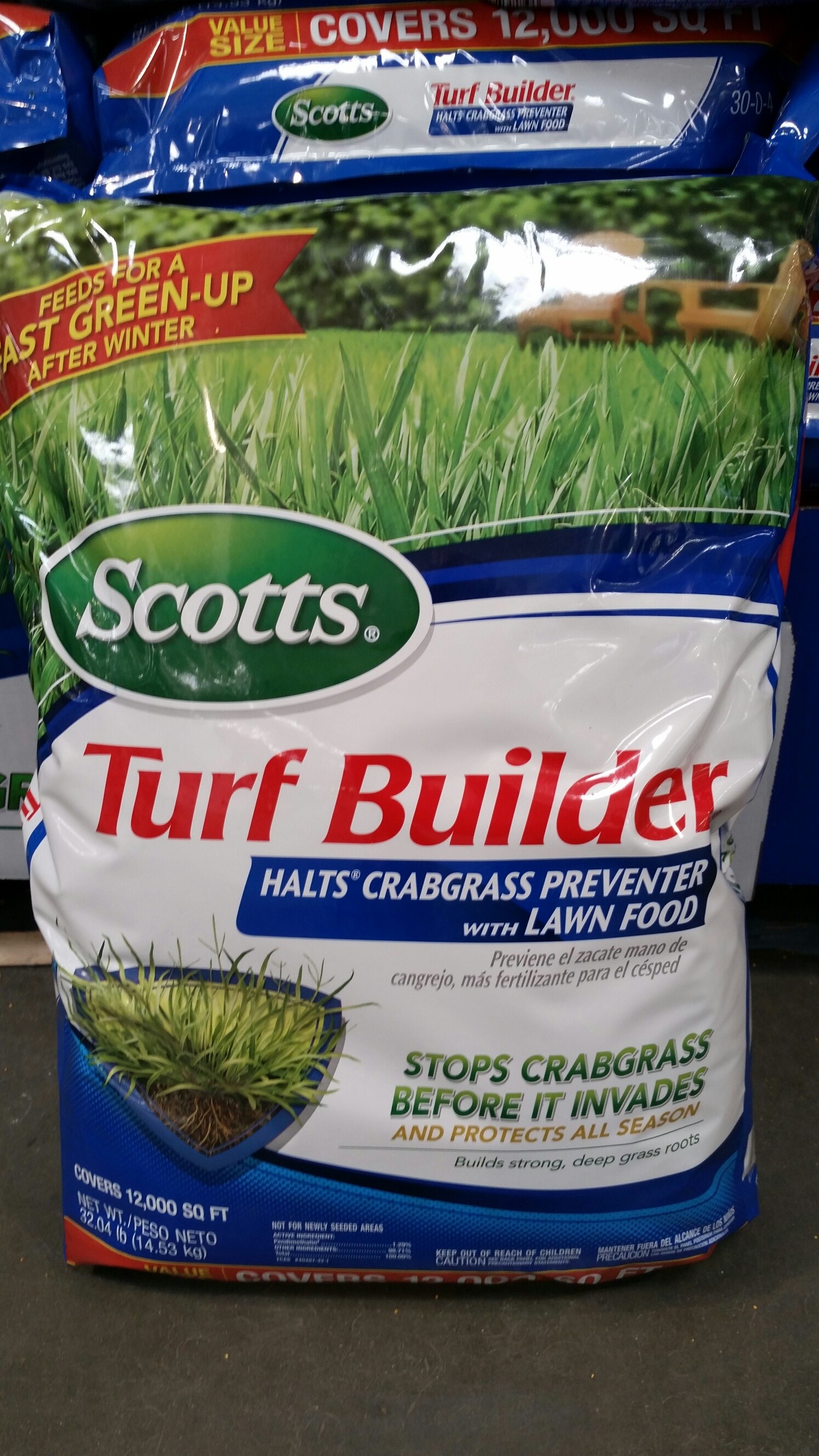 Note: To apply the fertilizer, I use my broadcast spreader. One of these costs $35, but it can be used for years. Mine is over 10 years old and still going strong.
3. Spike The Trees
One of my favorite things to do in Summer is to lay in the grass and listen to a warm breeze rustle the tree leaves. They give us shade, and they look majestic in our yard. Trees need food, so I give them some fertilizer spikes in the Spring and then again in the Fall. The spikes are put into the ground along the perimeter of the estimated root line. The bigger the tree, the more spikes you need. I can get by with one $10 package of tree spikes for my Spring application.
4. Trim The Bushes
When my wife and I bought our first house, I decided to trim the bushes in the front of my house in the middle of July. I cut off almost all the leaves, exposing the leafless, uninteresting branches of the infrastructure of the bushes. Guess what, friends? New leaves didn’t grow back and I was left wondering if I had killed my bushes. The next Spring all was good, but I’ll never forget staring at my dead looking bushes for months. Now I trim my bushes in the Spring before they start growing. There are more expensive electric trimmers, but I get by just fine with my $20 hedge shears I picked up at Home Depot.
5. Trim The Trees
As my trees grow, they sometimes extend towards the house, power lines, or just create a shape that isn’t nice to look at. Spring is a great time to take off those unwanted branches. I have a 14 foot Bypass Pruner that allows me to easily remove almost any branch I on my trees. I purchased mine for $40 a few years ago, and it still looks brand new.
 6. Replace Mulch



Some people have rock around their landscaping, and some have mulch. We have a combination of both solutions. The wood mulch discolors and disintegrates over the summer months so I like to refresh my mulch in the Spring. Mulch costs about $2 a bag, and I can get my job done for a total cost of $14.
Overall Costs
One Time Costs:
- Fertilizer Spreader: $35
- Hedge Shears: $20
- Bypass Pruner: $40
Total: $95
Yearly Costs:
- Rake: $15
- Fertilizer: $47
- Tree Spikes $10
- Mulch: $14
Total: $86
I used the phrase, “One Time Costs,” for items that can be used for years. Obviously they may break or eventually wear out, but they’re not an expense that will be incurred every year. The point is, given an afternoon of being outside in the sunshine and a relatively small amount of money I will get my yard in tip top shape for the coming growing season.
Maybe you’ve admired someone’s luscious looking yard wishing that someday yours could look like that. If you like working outside, with a little effort you can inexpensively make your lawn the envy of the neighborhood. The time to make it happen is now, so grab your tools and get to work!
How about you all? Do you like to work on your yard? Is there anything else you would add to this list to help make your yard look the best is possibly can? How much do you spend each Spring getting your yard ready for the warm season?
Share your experiences by commenting below!

Increase Your Net Worth with Education

 The following is a post by MPFJ staff writer, Derek Sall. Derek is the owner of the blog, LifeAndMyFinances.com, where he teaches people how to get out of debt, save money, and become wealthy.
Did you know that the more education you have, the higher you pay will likely be? I know it probably doesn’t shock you, but it’s absolutely true!
When I was in college for engineering, I was concerned that I would need to continue my education again and again in order to keep up with the changing dynamic of the engineering world. In fact, it was one of the reasons that I left engineering school.
Looking back, I was an idiot kid that didn’t realize that all occupations require continued learning. It’s expected that you continue to learn, grow, and improve in the working world. In fact, if done properly, it can actually be a great way to advance at your place of employment.
Feed Your Brain
So what is the best way to improve your knowledge and advance your career? As much as I hate to admit it, getting your Bachelor’s degree will probably provide you with the greatest degree of advancement. Just be sure not to spend too much on your degree. It might be easier to find a job coming out of an Ivy League college, but it will definitely cost you more money to receive that luxury (often two or three times more). Instead, look at going to an in-state university or a smaller college. The cost will be much lower, but your employer will likely still be impressed by the name of the school on your resume.
If you have your bachelor’s degree and work in an office setting, the next suitable degree would be a Masters. Again, focus on getting the education from the degree and don’t worry so much about the name of the school you are getting it from. Just having the degree will mean quite a lot to your employer.
Finally, if you are not interested in obtaining degrees then I would suggest being your own teacher. Take a hold of your own education and get yourself over to your local library. What are you interested in learning more about? Company financials? Leadership? Management? The library holds your answer to each of these topics and many more. Find out what you would like to learn, teach yourself through books and online courses, and then be sure to use your new-found knowledge in the workplace.
Prove Your Worth
Getting a degree is admirable, but if you apply none of your learning then you really don’t deserve to advance in the company. No matter where your education came from, if you expect to move up the career ladder to that next job, then you’ll certainly need to apply your learnings in your job.
A few years ago I sought out a mentor. This is the exact message he conveyed to me as well. Sure, a piece of paper from the University is nice, but it doesn’t do anything for the company if the education goes unused. Instead of just displaying my diploma in my cubical, he encouraged me to teach some of my knowledge to the rest of my department.
Within a couple of weeks, I discovered that many of my coworkers did not know how to use Microsoft Excel efficiently. Instead of using a function to transfer information from one file to another, they were copying and pasting information. To help them out (and to prove my worth to the company) I held a class for 14 people. I taught them how to use functions and I was immediately deemed “The Excel Guy”. It increased the company’s awareness of my skills (not just in Excel, but in teaching others) and it showed my increased value to the entire company. This simple action led to a promotion just four months later. If I hadn’t displayed my knowledge, I would likely be working that same menial job today.
Increased Knowledge Equals Increased Income
As you may have gathered, and improvement of knowledge will soon lead to an improvement in your income. As you learn and grow and display your skills to your employer, you will no-doubt be rewarded for the increased value you have brought to the company. Your knowledge will lead you to higher ranking jobs and will also increase your salary with each jump up the ladder. Education is almost certain to increase your salary, and therefore your net worth.
How about you all? Are you working to increase your knowledge? Are you displaying your new skills at work?
Share your experiences by commenting below!
**Photo courtesy http://www.flickr.com/photos/nottinghamtrentuni/14714286904

Practical Advice For Those Considering Law School

 The following is a guest post by Nick from Millennial Finances. Enjoy!
I graduated law school last May and wanted to pass along some practical advice to anyone considering law school.
Hopefully you read the news and know law school is not a safe route to a high-paying job. You should have significant concerns about about law school, and I’ll try to address them here:
Aren’t law schools producing more graduates than there are legal jobs?
Yes. Only 64.4% of recent law grads had jobs that actually required you to pass a bar exam. Median law graduate salaries (of those who reported their salaries) dropped to around $62,000, down from $72,000 in 2008.
The problem is law schools are cash cows – very inexpensive to run yet you can charge a lot of money thanks the ease of getting federal student loans. For-profit schools are especially predatory in leaving students with high debt, low bar passage rates, and even lower employment rates.
It’s crucial to scrutinize the data of the schools you want to attend. Where do their students end up employed? What are their areas of specialty? With how much debt, and at what salary? Many schools fight these important disclosures, or try skewing the numbers. Even prestigious schools magically increase their students existing GPAs to boost their employment numbers. Villanova’s dean resigned after a scandal involving doctored GPAs and LSAT scores.
So don’t just rely on whatever the law school tells you. Spend hours with Law School Transparency school reports. It’s a terrific resource that includes everything you should know your law school destination.
Will lawyers be as relevant in the future?
The legal industry is an arcane cartel doing its best to resist disruption. (It is illegal to practice law without being a member of the cartel, i.e. admitted to the bar.) The Supreme Court still refuses to allow its sessions to be videotaped. Laws and regulations are still bureaucratic mazes written by teams of lawyers that require even more lawyers to help others navigate them.
On the other hand, products like LegalZoom and FileRight and more are making inroads into the profession. Discovery work can be done more effectively by combining computers and outsourcing rather than having high-paid associates combing through paperwork.
I have no idea how rapidly things will change, but keep an eye on legal trends so you won’t be blindsided by them.
Is law school too expensive?
Absolutely. Paul Campos, a law professor at UC-Boulder, explains the skyrocketing tuition:
“Faculty salaries have doubled in real terms over the past 30 years. Administrative salaries have grown by much more, and the sheer number of administrative positions has exploded. Facilities are much nicer (this is known as the amenities race), and at law schools faculty-to-student ratios are much lower because of the pursuit of rankings. It’s just a crazy business model, all of which is enabled by no underwriting standards for student loans.”
The law school model is flawed, and even President Obama agrees three years is too long: “The third year [law students would] be better off clerking or practicing in a firm, even if they weren’t getting paid that much. [T]hat step alone would reduce the cost for the student.”
What can you do? Consider going only if you get a full or partial scholarship at a good law school. And look into graduating a semester early by taking on a busier course schedule.
I know that sounds extreme, but it’s also quite extreme to be out of the workforce for three years, then saddled with lots of debt, and not have a job. Take the time to read all the criticism of law schools. Everything Paul Campos has written on this issue, always backed up by reams of data, is good to know.
As for me, I went to a pretty good law school and passed my state’s bar exam. I was very fortunate to land a legal job in government as a third year student.
If you’re ready to apply, here is what I think every applicant should know about the admissions process:
Concentrate on your LSAT score and essays. Law schools care about their rankings, and LSATs play a big role. Most admissions committees won’t care if it took you two or three tries to get a high score, so consider sitting for multiple LSATs. 2nd time LSAT test takers score highest on average (mean improvement is 2.8 points). LSAT courses can be a great investment if your higher score gets you an extra $20,000 in scholarship money.
Customizing your essays are also critical to show the admissions committee you care about their law school and are a perfect fit. You can’t change your undergrad GPA, but you can still get a full scholarship with a great LSAT score and essay.
Study LawSchoolNumbers.com methodically. On this site, applicants self-report their data (GPA, LSAT score, demographic info, etc.) and show what schools accepted or rejected them. You get a rough idea of how likely you are to get into different schools, and more importantly, how much scholarship aid you can expect to receive.
Apply as early as possible. As you’ll see on LawSchoolNumbers, much more scholarship money is offered earlier compared to those applying near the deadline. Applying early can be difficult if you’re still waiting for better LSAT results, so try to take your LSAT well in advance of applying to law school.
Read the fine print of any scholarship. The classic scam is the unsavory law schools that gives 50% of the incoming class full rides, but rescind scholarships from those that don’t stay in the top 20% of the class. The ideal scholarship has no strings attached.
A legal career can be very rewarding if are able to avoid the ugliness of high debt and pervasive underemployment. I hope this has been helpful, and I’m happy to answer any questions in the comment section!
***Photo courtesy of http://commons.wikimedia.org/wiki/File:University_of_Notre_Dame_Law_Library.JPG