

All posts by Jacob A Irwin
The Cost of Replacing an Older Car
The following post is by Amanda Green. Enjoy!
While many American cities have excellent public transportation systems – take New York, for example – some places aren’t so lucky. People who live outside urban areas often need cars to get to work, or buy food, because the public transportation system is limited or unreliable. Even people who live within urban areas can have problems – Atlanta, Detroit, and Miami are all considered some of the worst cities for commuters. If you live in an area with less than adequate public transportation, you may have no choice but to own a car.
Unfortunately, cars don’t last forever. If you have an older car, you might be considering replacing it. However, doing so can be an expensive proposition – newer cars often require financing that means high interest rates, high monthly payment, and higher insurance costs. How do you know when it’s time to replace your older car, and how do you get another without going broke?
How to Tell it’s Time
The biggest sign that it’s time to call it quits is if your repair costs increase. All cars need some maintenance and repair as they age and the longer you have the car, the more likely you will need to spring for a big repair. However, there’s a big difference between having to replace the brakes one year, and then the alternator a couple years later, and having to make repairs on a quarterly, or even monthly basis.
For example, if you have to replace the brakes in the fall, then the alternator that winter, and the fuel pump dies the following summer, it’s probably time to replace the car.
While it’s true that the cost of repair could be less than the cost of buying a new car, the fact that the repairs are coming so fast and furious could mean that your car is on its last legs.
Another sign is if the cost of ownership is greater than the cost of a new car. For example, if you have an older car with low gas mileage, that only takes premium, you might be better off with a newer model with more flexible gas requirements and better mileage. If it has a lot of foreign parts and needs to go to an expensive specialty mechanic for routine oil changes, you might be better off with a less unique vehicle.
Tips for Picking Your Next Car
· Check consumer resources like Bankrate, Consumer Reports, Banking Sense or The Wall Street Journal, for up to date financial information on auto buying, insurance, and credit – all the things you will need when buying another car.
· Determine how much you can afford to spend on everything, including the car payment, insurance, gas, and maintenance.
· Determine the type of car you want. For example, if gas mileage is a concern, you might consider a hybrid or electric car.
· Determine its use. If you’re just driving alone to and from work, and running basic errands, a compact sedan could be fine. If you plan to take a lot of road trips, or do a lot of carpooling, a larger sedan or a van might be a better choice.
· Decide if you want to go with used or new.
With used cars you don’t have to deal with the huge rate of depreciation, and you can often find vehicles with lots of bells and whistles for less than you would pay for new. Unfortunately, used cars also have mileage, wear and tear, and hidden problems that only show up after you have driven it off the lot. Services like CarFax can tell you about the vehicle’s past, but you may still need to have a mechanic look at it.
With new cars you are less likely to inherit mechanical problems or encounter wear and tear. You can also pick the potions you want instead of taking whatever is available. Unfortunately, new cars are so expensive that most people have to take out financing to purchase them. To make matters worse, most cars depreciate by nine percent the second you drive off the lot. Within a year it could lose another ten percent, and by year two it could have lost almost thirty percent of its value. That means that car you financed for $20K in 2014 will only be worth about $14K in 2016.
After five years the rate of depreciation slows significantly, so your best option might be to purchase a used car that is between three and five years

How I Handle My Champagne Taste

 The following post is by MPFJ staff writer, Catherine Alford. Cat is a freelance personal finance writer who blogs at www.BudgetBlonde.com.
Despite the fact that I write about saving money and frugality all across the web, I do have just a touch of champagne taste. Basically, if I walked in a room with a bunch of purses or shoes or clothes, I would inadvertently always pick up the most expensive one.
This “skill” doesn’t always translate to budget friendliness and so over time I’ve had to find a system of sticking to a budget while still incorporating some of the pretty, champagne-y things that I come across in my life.
1. Save for Special Moments
I think one place where people get into money trouble is when they treat themselves whenever they want. They might walk through the mall after a hard day and buy a little pick me up. They might get a promotion and say, “I deserve this,” as they pick up a new bracelet.
Now, don’t get me wrong. There are those special moments where it’s definitely nice to give yourself a prize and to you, a promotion might be one of those things. To me, I really try to stick to birthdays and Christmas. Oh, and Mother’s Day now too. J Those are the occasions where I feel like it’s okay to get something nice or splurge.
Women are always talking about getting “just because” gifts from their husbands (or wanting to get just because gifts) and while those are nice, I’d much rather my husband save up all those “just becauses” for something nice at Christmas.
The truth is, when you constantly tell yourself no and deny yourself those impulse buys, it makes a birthday gift or a Christmas gift so much more special and worth it.
2. Look for Great Sales
Ever major designer has sample sales and online sales. You can also find great deals at consignment stores in nice areas. I just moved 40 minutes outside of Manhattan, and there are a lot of wealthy people in the area. Just the cars that drive around are enough to make my head turn, so it’s no surprise that the “consignment” stores here feature some of the most expensive designers and brands around, some that I’ve never seen in person before.
While the consignment prices are still out of my price range, it would be great for someone who works in a big Manhattan office and wants to wear certain things without paying the high prices.
I find most of my deals in “surprise” or “last minute” sales online. One of my favorite brands is Kate Spade, and I get things from there from time to time at factory outlet stores or online. It’s just such a bright and happy company, and I enjoy the things they make. I just can’t buy them whenever I want!
3. Eat Out Just Once
My husband’s love of food is probably akin to my love of Kate Spade. He’s such a foodie and really has a blast searching out new and interesting restaurants and other food experiences. He and I have discussed it many times, and we’d rather have one nice meal out every month instead of grabbing take out several times.
Now, this has been hard for us lately because we’re so exhausted taking care of two newborn babies. Take out has really been our friend. However, over time, once we get comfortable having people watch the babies, we’re going to go on one date night a month to a nice restaurant. Just think, one $100 meal equals getting takeout 4-5x in one month, which isn’t uncommon in my house. Whether it’s Chinese food or a quick pizza, we’re often making those orders at 8pm after realizing we’re both starving and have no energy to cook!
4. Fewer, Quality Pieces
The last way I combat my champagne taste is to commit to a few, quality pieces and leave it at that. So, if I’m going to buy a purse, I’m more likely to buy a brown one than a lime green one. Sure, the lime green one would look great with one outfit in the summertime, but the brown one would last me for years and would work all year round. The same goes for clothes. One high quality black dress would work for many occasions, from work to night whereas a flowery sundress might only be appropriate for spring.
Basically, once I got in the mindset that it was okay to spend some money on clothing as long as the style was timeless and the quality was good, I had way less clutter in my closet and clothes that lasted much, much longer.
All in all, it’s definitely possible for a frugal person to have champagne taste as long as you keep it in check. It only becomes a problem when you completely disregard your budget and treat yourself constantly. However, if you save up for special moments and buy only a few items, you can enjoy your champagne taste all year long.
How about you all? Do you have champagne taste too? How do you balance it in keeping up with healthy finances?
Share your experiences by commenting below!
***Photo courtesy of http://upload.wikimedia.org/wikipedia/commons/2/20/Strawberry_and_champagne.jpg

Get Rid of Clutter Once and For All and Stay Clutter Free

 The following post is by MPFJ staff writer, Melissa Batai. Melissa is a freelance writer who covers topics ranging from personal finance to business to organics to food. She blogs at Mom’s Plans where she shares her family’s journey to healthier living and paying down debt.
You’ve likely heard stories about adult children who spend weeks cleaning out their elderly parents’ home that is full of trinkets from the 1950s as well as old games and toys their now grown children used to play with. When the parents pass away, the kids are left to sort through decades of “stuff” their parents acquired and never disposed of once they no longer needed them.
My husband and I are moving 1,750 miles from Chicago, IL to Tucson, AZ, in just two weeks. I’ve never moved that far (my farthest move previously was 7 hours when I was a grad student with very few possessions). Even though my husband’s new employer is giving us a moving allowance, I don’t want to move stuff we don’t need.
Over the last six weeks, I’ve been packing and weeding out clutter we don’t want to take with us. I was shocked and surprised by all the stuff we no longer need that we’ve held onto.
Baby Stuff
We have three kids, but our youngest “baby” is now 4 years old. Yet, downstairs I found:
- a crib,
- playpen sheets,
- baby and toddler clothes as small as size 12-18 months up to 4T that my daughter just outgrew,
- baby gates,
- outgrown Halloween costumes
Why, oh why, was I holding onto these things? The crib was wobbly by the time our third child outgrew it, so we weren’t even comfortable selling it. It just needed to be put out in the trash, but instead, it sat down in our basement for nearly two years. Why?
I listed the other items on Craigslist and a local mom group that I belong to, and all of the items were out of my house within 2 weeks, and I made close to $200. Why did it take a semi-cross country move to motivate me to sell these things? I could have done this two years ago, and enjoyed more space in my house, not to mention the extra cash.
Books
Another surprising find around our house? Books that I’ve held onto, in some cases, since college 20 years ago. What’s funny is that I haven’t picked up any of those books in years. I still love to read, but now I do my reading on the iPad or with books that I borrow from the library.
All of the many books went right to Goodwill. I had over 10 grocery bags full of books to giveaway!
Why Do We Hold On To Things That No Longer Suit Our Lifestyle?
Susan Bali, M.D. argues that we hold on to things because, “It’s hard to clear out the clutter. It’s also hard to continue to keep life clutter-free even if you do clear it out because ‘nature abhors a vacuum'” (Psychology Today). In other words, if you have empty space, you’ll find a way to fill it.
Keeping Items for Sentimental Reasons
What I found is that I held onto many of the baby items because I was sentimental about my children’s baby years. They’re growing so fast, and by keeping the crib, baby blankets, and tiny clothes, I felt like I still had a piece of those baby years that went so quickly.
Of course, that thought is completely irrational, which is why I got rid of all but a few outfits like the one I brought the babies home from the hospital in.
My husband, meanwhile, is sentimental about all of their little drawings and art projects. We have three bags worth downstairs that I still haven’t convinced him to trash. Here’s hoping that in the next two weeks, he parts with most of the artwork.
Just In Case I Need It
Another reason I personally kept a lot of stuff that I no longer needed was because I was worried I might need it someday. Years ago, when I had a desktop computer, I bought an ergonomic keyboard. I never ended up using it, but we kept it just in case my old keyboard died.
About six years later, it’s still in the basement collecting dust. I don’t even use a desktop now, just a laptop, so there’s no need for the keyboard.
So many of the things we think we might need aren’t really necessary. For most items, it’s easy to simply borrow them from friends or family temporarily or to rent them out, in the case of rarely used items.
Laziness
Finally, while I knew that a lot of the items downstairs need to go, decluttering and selling your stuff is time consuming. Honestly, if we weren’t faced with the prospect of a looming 1,750 mile move, I wouldn’t have devoted the hours I have to emptying out our basement.
It is far better to keep from accumulating clutter in the first place than spending hours purging it all.
How to Keep Your House Clutter Free
Now that I’ve cleared out the clutter and will have a clean slate, so to speak, in our new home in Arizona, my goal is to not let the clutter multiply again. I’ve set some ground rules for myself to keep the clutter at bay:
1. Ask yourself, “Do I really need this, or can I borrow it from someone else?” Our basement also held some tools that we bought 10 years ago for my husband to complete a project. Instead of buying the tools, we should have just borrowed or rented them. From now on, I want to see if there’s an alternative way to get something I may only need once or twice rather than buying it and letting it sit, unused.
2. Keep an area of your house where you can put things you want to get rid of. Once a month, I plan to do a sweep of my house and look for stuff that we no longer use or haven’t used in quite some time. I’ll put them in a box for donation or garage sale. By doing this monthly, I’ll be able to keep the clutter down. (I’ll also have to hide the box somewhere so my husband won’t come and take things out of the box and put them back in our home. He’s sneaky that way.)
3. Practice being content. So many times, we buy things just because we think they’ll make us look better or feel better when what we have already is often plenty.
Stuff usually doesn’t make us feel better. In fact, the opposite can occur. We can feel worse after buying something because we have less money (or more debt) after the purchase and more stuff cluttering our lives.
I’m trying to practice being a minimalist with my as well as my kids’ wardrobes. We don’t need deep walk in closets with tons of clothes. I do laundry nearly every day. Surely 10 or 20 pieces that we each love is plenty for our wardrobes. Of course, in our culture of more is better, paring my clothing down this much is a bit radical.
In the last month and a half, we’ve easily gotten rid of 1/3 of our possessions, and as the stuff goes out, I literally feel lighter and freer. Our house has more room; we’re no longer drowning in a home full of possessions we no longer need. I can’t wait to move into our new house and see all the space we’ll have!
How about you all? What things are you holding onto that you no longer need? What’s your favorite way to stay clutter free?
Share your experiences by commenting below!
***Photo courtesy of https://www.flickr.com/photos/joeshlabotnik/227041790/in/

How To Save Money While Moving

 This is a post by MPFJ staff writer, Jeff. Jeff writes about Sustainable living and finances at his website, Sustainable Life Blog. Jeff really enjoys traveling with his wife as much as he can, to wherever he can.
The time in your life that you have been waiting for is finally here – you’ve just finished college, and you have secured what you hope to be an awesome job in your field.
You’re going to start not long after graduation, but there is just one catch. You’re still living in your university town, and the new job you just accepted is quite a ways away. This move isn’t going to be too much like the ones that you’ve done recently. You’re probably not going to be able to cram all your possessions into a Honda fit and drive the 800+ miles to the location of your new job.
You need to move, and it needs to be done on the cheap. Here are our best tips to help you get the most out of your new move for the lowest possible cost.
1. Get Rid of that JUNK
You will most likely be shocked at the amount of stuff that you have managed to accumulate since you started college, and it is probably worse if you were not moving to a new house or apartment ever year. If you are anything like most of the people in the US, you probably have many things that you have not used in quite some time. Get rid of the things that you don’t want to take with you. Sell or give away all that old furniture that you got from other college friends Toss that costume that you wore to that one party one time. The more stuff you have, the more space you’re going to need in your moving truck and in your new apartment. Sell the stuff that has some value on craigslist or eBay, offer what is left to friends and then give everything else to a local charity. Everyone will be happy, and you can prevent materials from getting wasted!
2. DIY
There are plenty of moving companies out there and I’m sure that most of them do an awesome job, but right now you need to save some cash everywhere you can. You’re going to be looking at putting down a security deposit for your new place and most likely first and last months rent – which will be a good chunk of change no matter where you’re moving. Skimping on the movers and doing it with your friends will save you quite a bit of money and create some great memories in the process. This isnt going to be totally free though. Depending on how far you’ve got to move you need to compensate your friends. If you’re moving cross country or more than 4 hours away, pick one or two people and ask them to help and offer some pizza/beer/wine/cheese or whatever after the move is complete, and offer to pay their expenses back to their place. If your move requires a return flight for helping you, I’d stick with just 1 person to help – mostly to switch shifts while driving. If your move is in-town or close by, just bribe your friends with food and a bit of booze and thank them profusely for helping you.
3. Skip the Fast Food
Moving long distances takes time, energy and money – who wants to think about what to eat during all that? It’s very easy to simply stop for one (or a lot, depending on how far you travel) of fast food meals, but resist the urge. Stop at your local grocery before you leave and stock up on stuff to nibble on while you’re in the moving vehicle – like trail mix. If you’re going to be on the road for a while, make sure to get a cooler ready and pack things for sandwiches or another easy to prep while driving food. You can have the passenger prepare the food and hand it over to the driver while the driver keeps focused. If you have a very long trip (>10 hours) make some time to eat out, but find a special place to eat at while you’re on the road. The country is full of great places to eat and many are not as popular as they could be. Check yelp reviews or my personal favorite, Diners, Drive-ins and Dives for some great locations to stop at during your move.
4. Find a Place
The time after college is one of the best times in your life. Take full advantage of it. If you have debt, work to pay it off – and one of the best ways to do this is to find a roommate when you move to your new city. Living situations can be very expensive in some cities, and a great way to share costs is by living with someone.
5. Keep Your Receipts!
This is probably the most important and often overlooked part of moving. You can write off your move if your move is more than 50 miles from where you used to live, and your move is around your job start date. This is a huge boon, as you can write off supplies, gas, food etc from your move and it will save you money come tax time. If you’re looking for more information, see the IRS’s website on Moving.
That’s all the tips we have to help you keep your costs down while moving.
How about you all? Do you readers have any helpful tips to save money when you are moving?
Please share your experiences by commenting below!
***Image courtesy of http://upload.wikimedia.org/wikipedia/commons/2/28/Duct-tape_Moving_Van.jpg

5 Money Tips I Wish I Knew Before I Had Kids

 The following post is by MPFJ staff writer, Catherine Alford. Cat is a freelance personal finance writer who blogs at www.BudgetBlonde.com.
I did as much preparing as anyone could for two new babies coming into the world. I saved a huge baby fund, I carefully selected the gear, and I had everything pretty much ready to go when they arrived, even though those sneaky little kids came five weeks too soon.
Even with all the preparation, there were about 5 money tips I wish I knew before I got pregnant and had them. Here they are:
1. Don’t Spend a Lot of Money on Newborn Clothing
I thought I was being really financially savvy by purchasing a big lot of newborn clothes on eBay. When I did this, I paid as little as $1 an outfit. The clothes were very high quality, and some still had the tags on them.
Well, now I realize why. In those early newborn days, my twins pretty much stayed in their pajamas 24/7. They were so small and seemed to be cold all the time. I kept them bundled up in those little footed onesies for weeks. The only time they really put on “real” clothes was to go to their doctor’s appointments. I had about 20 outfits for each one of them for that time frame, and they grew out of many of them before they could even wear them. Going back, I would purchase way more 3-6 and 6-9 month clothes, because that’s the time when you really start to get brave and bring them out and about to the world.
2. Expect to Buy Several Versions of Products
Every baby is different, and so when you sister swears by one type of blanket and your best friend swears by one type of bottle, it might not necessarily apply to your child.
Now, listening to their recommendations is good because at least you have somewhere to start, but don’t be surprised if you baby spits out the pacifier that your aunt said was the only one that ever worked for her kids.
Because of this little phenomenon, you might find yourself buying several versions of products. We were gifted bottles secondhand by a friend and they turned out to be way too hard for us to clean. Then we purchased another type of bottle that worked great until both twins developed severe reflux and then did better with yet a third type.
The same might happen with formula, diapers, wipes, and countless other things. The good news is that by about 3 months you should know many of the things your kids prefer.
3. You Won’t Get To Buy Everything
Unless you are very independently wealthy (and if you are, congrats), you won’t be able to buy your kids everything you want to buy them. It’s actually really hard because you want the best for them. You want them to have everything and more. You want them to have what you perceive to be the safest, healthiest, and best rated everything.
Yet, if you are anything like me, you’re going to have that moment in the store, the time where you just stand there staring at all the prices, and it breaks your heart a little to go with the store brand. You’ll remind yourself that it’s not a big deal. They wont remember it, and God knows what your parents fed you or bought you, but it is a terrible feeling knowing there might be something just a little bit better that’s not exactly within your reach.
I suppose the important thing to add to this is that it’s much better to walk away and not break your budget for these products, whatever they are. It’s far more important for your kids to grow up in a home that’s financially stable than one that is filled with the “best” toys and struggling to pay their bills.
4. Add Them Into Your Budget Ahead of Time
I knew that I was going to have to get used to a new category in my budget, and let me tell you, the “twins” category keeps growing from month to month. Even though I knew it was coming and saved up a big baby fund, the costs still really catch me off guard.
It’s mostly the random, unexpected things like reflux medicine and 8 million packs of wipes that have you wondering how you went through it all so fast. If I would have added a good $100-$300 in my budget ahead of time to get used to the costs and fluctuations, it would have been much easier than just knowing I had the baby fund. There’s just something about the act of having that section in your budget that would have made for an easier adjustment.
5. Strollers are Really Expensive
Have you ever looked at the cost of baby strollers? Well, why would you unless you had a baby on the way, right? Well, those things are expensive. Or, I should say the good ones are expensive.
Now there are a few things you can do. If you’re not picky about the brand or the style, you can really scour Craigslist and consignment stores for what you want. I had to find a double stroller, and the ones I found on Craigslist just weren’t exactly what I wanted, which was one with really big, sturdy wheels that made it easy to push around. With two babies who are growing like weeds, I’m so glad I stuck to my guns. Confession: My stroller was $600. Luckily, my parents gifted it to us. It really isn’t that expensive normally, but we had to get several extra twin attachments for the other baby! Yep, twins come with all sorts of extra costs too, but I’ll save all that for another post on another day.
How about you all? What were some of your unexpected baby costs?
Share your experiences by commenting below!
***Photo courtesy of http://upload.wikimedia.org/wikipedia/commons/b/b9/Baby_on_Back.jpg

Buy Only the Best Deals

 The following is a post by MPFJ staff writer, Derek Sall. Derek is the owner of the blog, LifeAndMyFinances.com, where he teaches people how to get out of debt, save money, and become wealthy.
Have you ever heard of the phrase, “Buy low, sell high?”
Typically, people only speak this phrase when they are referring to the stock market. Pretty much everyone knows that if you are going to buy shares of stock, you want to make your purchase when the shares are selling for a deal. Then, a few years later, you can eventually sell those shares at a much higher price and therefore earn a hefty profit from your investment.
“Buy low, sell high” only makes sense, so why not live out this phrase in every category of your financial life?
Buy Low Sell High Outside of the Stock Market
People absolutely love buying new things.
One of the most desired of all new things is a new car. For some, buying a new car is the epitome of the American dream. If they are able to drive that fresh smelling, absolutely mint vehicle from the car lot, then they believe that they have truly made it in life. However, from a financial perspective, they have just bought high and will eventually sell low.
Before they drive their new car off the lot, its value might be something like $30,000. Once you drive it off that lot, the value tanks immediately down to $26,000 or so (because it is now used). And, after approximately 4 years, you might be able to sell this car for $15,000. By purchasing this brand new car, you have just lost $15,000 (not to mention the steep cost of insurance on that sparkly new ride) in a short span of four years.
Now, I understand that it isn’t easy to earn money with a car, but I have made it my common practice to buy low and sell high with my vehicles. About 2 years ago, I purchased a car for $5,500 and sold it about a year later for $7,000. At that point, I purchased a truck for $4,500 and sold it 3 or 4 months later for $6,300. Rather than losing $15,000 over the course of four years, I have actually earned $3,300 over the last two years. I have been able to do this by keeping up with the values of a few different models of cars. When I see a deal, I am not shy to buy the vehicle (because I like to buy low), drive it for a short while, and then put it up for sale again. This way, I am able to buy low, sell high, and continue to add to my net worth.
This is obviously true with home purchases as well. Find homes that need a little fixing up and buy them for a deal. Put a little elbow grease into them and watch the value of your investment grow!
Think Outside the Box
By having a buy low sell high mentality, you tend to think outside the box a little.
Earlier this spring, I was thinking about what I might need to do to improve the value of my house. Two things came to mind: painting the exterior and landscaping. Rather than just heading out and hiring a painter and landscaper to do all the work, I have trained myself to buy low. Painting isn’t really all that difficult. It will take me about a week and will only cost about $500 vs. the $4,000 that the local painter would charge me. As for the landscape, I obviously don’t need a landscaper, but I actually don’t even need to buy any shrubs, flowers, or trees either. My girlfriend has a very large property and can easily find sprouts of different shrubs and flowers from her open field. My yard is going to look excellent (which will of course improve the value of my house) and my purchase price to do it is practically nothing.
Think “buy low, sell high” in all of your purchases. You won’t be sorry.
How about you all? Have you had a buy low, sell high experience lately?
Share your experiences by commenting below!
***Photo courtesy of http://pixabay.com/p-256312/?no_redirect

Don’t Forget About Liquidity

 The following post is by MPFJ staff writer, Grayson Bell. Grayson, who runs the finance blog Debt Roundup, is a fan of personal finance, brewing beer, and working on cars.
When I was paying off my debt, I was worried about getting it down to zero.
I was focused on my debt-to-income ratio and working to toward the optimal number. What I wasn’t focused on was my net worth. That has since changed since I paid off my last credit card.
I see many people talking about their net worth and how they have grown. They speak about their investments and their properties. All of their assets which go toward their net worth. The one issue I have found with some is they forget about one thing. Liquidity.
What is Liquidity
There are two forms of liquidity. There is what is used in accounting and what is used in economics. I am going to describe both, but for the purpose of this article, I will focus on accounting liquidity as it relates to your personal finances.
- Accounting Liquidity – This is simply the measure of ones ability to pay their debts when they are due. Basically, the ability to pay short-term obligations.
- Market Liquidity – This is a market’s ability to convert an asset to cash quickly. If in the market, it can be dealing with converting an asset to cash without affecting the price.
Based on these definitions, the most liquid asset is cash. It can be used to get goods and services quickly without affecting the value. When you have money socked away in bank accounts or savings accounts, then you have maximum liquidity. You can use that money quickly to get what you need, especially when paying bills.
Liquidity and Your Net Worth
When talking with people about their net worth, I get feedback about having property, cars, investments, and so on. What I don’t hear too often is money in their bank accounts or savings accounts. When you have net worth tied up in real estate, it means you don’t have much liquidity. You can’t convert your property into cash very quickly. If you needed to pay a bill in two days, you couldn’t get cash from your house in that timeframe.
Tangible assets are harder to sell when money is needed. This means they are less liquid. They can’t be easily converted to cash on the go. If you have investments, then you could have some liquidity to work with. Some investments, like retirement accounts, are harder to pull money out. While you can do it, it will cost you fees and sometimes taxes. This is especially true with 401(k), 403(b), and traditional IRA accounts.
I will always recommend people have some of their money locked up in investments. I think it is a great way to grow your net worth, but be cognizant of how liquid your money is. If you have an individual investor account, the understand how quick you can sell your assets and get cash. Are there any fees? How long does the money transfer take? The same can go with a Roth IRA account. While it is an investment account, you can take out contributions at any time without penalty. You cannot do that with the earnings though.
Maintain Some Liquid Assets
The main take away with regard to your net worth and how liquidity is to make sure you have some money available at all times for emergencies. You can call it your emergency fund, rainy day fund, or whatever you wish. No matter what you call it, just make sure you have some way to get cash out from your assets in order to deal with emergencies.
While growing your net worth is a great goal, remember to understand how diversity plays a part. You need to make sure to diversify your assets and have a mixture in cash, investments, real estate, and any other forms. The concept of liquidity is not hard to understand, but people often forget about it. If you want a well-rounded financial picture, then look at how liquid your assets are.
How about you all? Do you feel you have enough liquid, easily-accessible assets/cash if you needed it in a hurry?
Share your experiences by commenting below!
***Photo courtesy of https://www.flickr.com/photos/vox_efx/3577733056/sizes/m/

Costco Member Benefits You Didn’t Know About

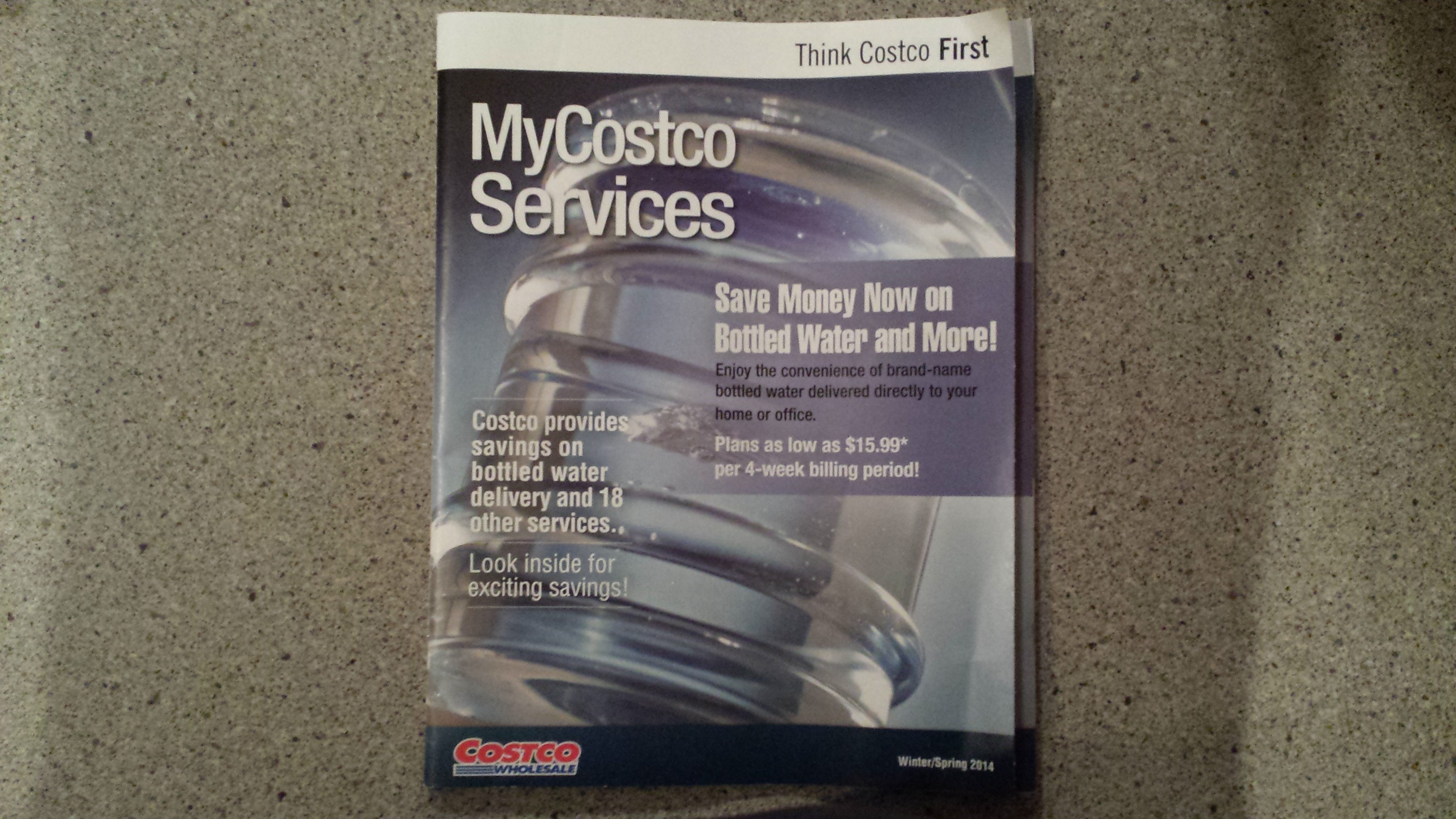 The following post is by MPFJ staff writer Travis. Travis is a customer blogger for Care One Debt Relief Services, and also appears weekly at Enemy of Debt. Travis candidly shares his personal journey to pay off $109,000 of credit card debt and the tips he’s learned along the way. As a father and husband he provides a unique perspective on balancing debt, finances, and family.
Almost every time I sign up for a new service, I get an arm-ful of documentation.
Whether it be a new cable package, an appliance protection plan, or even an upgraded auto insurance policy I seem to go home with a folder full of information I’ll never read. The same applies even to renewing our Costco membership and upgrading it to the executive membership. I knew that I would get 2% cash back on all my Costco purchases, I wasn’t aware of the additional benefits that are offered to members until a reader mentioned some of them in a comment to a different post.
The next time I was in the store, I stopped by the customer service desk and asked if they had any documentation that listed all the benefits offered to members. They happily handed me a small magazine mentioning that I should have received one when we signed up for our membership. I spent some time looking through the list and picked a few of the benefits that I could potentially take advantage of, comparing to my current service when applicable.
Personal Checks:
I don’t write a lot of checks these days, but I do find myself in a situation a couple of times a month where a check is the most convenient form of payment. Costco offers a deep discount on check printing to their members:
My Bank:
- Checks: 120
- Cost (including tax, shipping, and handling) : $18
Cost: $0.15 per check
Costco:
- Checks: 500
- Cost (including tax, shipping, and handling) : $20.55
Cost: $0.04 per check!!
Automobile Insurance:
Costco and Ameriprise have teamed up to provide discounted car insurance to Costco members. I went through the process to get an online quote through the link on the Costco website. Then, I went and got an online quote for the exact same insurance through the public Ameriprise website. Those two quotes, along with my current insurance through State Farm are listed below:
- Current State Farm: $120 per month
- Ameriprise through Costco: $108 per month
- Ameriprise through public website: $123 per month
The quote through Costco was discounted $15 a month from the public Ameriprise offering, and comes in at $12 a month less than my current insurance!
Homeowner’s Insurance:
Homeowner’s insurance is also provided through Ameriprise, and a quote can be obtained online. I filled in the information, and got a ridiculously high yearly quote:
- Ameriprise through Costco: $2815
- Current State Farm Policy: $1485
Investigating further, I could see that even though I was asked to input my estimated home’s value, the tool had filled in an amount that was over double what I specified. Even though it appeared the tool would let me alter the field, it gave me an error when I tried to do so. At this point, I lost interest in getting a quote, as would many potential customers. Hey, Ameriprise, fix your tool or you’ll continue to lose potential customers.
But, for those of you that have more dedication to comparing prices, you can call and talk to a representative and get a more accurate quote to compare with your current insurance policy.
Prescription Drug Discount:
You don’t have to be a member to purchase prescription drugs from the Costco Pharmacy, but members do receive a discounted price on prescription drugs through the Costco Member Prescription Program. The interesting thing here is that this program is a great option for those that do not have prescription drug coverage AND people that currently do have insurance. You can join the program and get discounts on prescription drugs that are not covered by your insurance as well as if you would receive no insurance benefit while you fulfill your deductible.
Auto Repair Discount Program:
A list of participating service centers near you can be found by plugging your zip code into this website. After selecting one, you are displayed (as well as emailed the link to) a coupon for 15% off new or factory remanufactured parts, services and accessories up to a maximum value of $500. I didn’t see any limitation on the number of coupons you could obtain or use. I need to keep this in mind the next time I need my radiator flushed, or any repairs done to one my vehicles as 15% could be a substantial savings!
Identity Protection:
Security breaches compromising personal customer data seems to be occurring more often these days. Target had one last holiday season, then we had the Heartbleed bug, and just recently I read that AT&T had customer information stolen as well. If you’re concerned about identity theft, you may be in the market for a credit monitoring service. One such service, Identity Guard, will cost you $19.99 a month if you go to their website. However, Costco members get it for $9.99 a month, a cool 50% off. Users get the following as part of their service:
- Monitoring of all 3 major credit reporting bureaus.
- Three Credit Scores
- Quarterly Credit Updates
- $1 Million Identity Theft Insurance
- Internet Surveillance
These were the top benefits that I found in the magazine I obtained from the service counter, but there are many more as well including:
- Personal Health Insurance (limited to certain states)
- Dental Plans (limited to certain states)
- Travel Insurance
- Home Mortgage and Refinancing
If you’re a Costco member, or are thinking about becoming one, make sure you take a good look through the member services magazine. You just might find other ways to save money with your membership.
How about you readers, are you a Costco member? Have you looked at, and taken advantage of the additional discounts offered to members?
Share your experiences by commenting below!

5 Steps To Get Out Of Debt Fast

 The following is a post by MPFJ staff writer, Derek Sall. Derek is the owner of the blog, LifeAndMyFinances.com, where he teaches people how to get out of debt, save money, and become wealthy.
Are you current in debt?
Do you consistently make payments on your student loans? Your car? Your furniture? Does it ever just feel like all of your money that comes in just immediately goes out again? If you are sick and tired of this phenomenon, then it’s probably about time that you get out of debt. Fortunately for you, I have the five steps that will get you out of debt fast.
1) Commit
I once heard a simple riddle about two frogs that resonated with me;
“Two frogs are sitting on a lily pad. One decided to jump off. How many frogs are left on the lily pad?”
Well, the answer is one of course…or is it? Just because the frog decided that he was going to jump off does not mean that he actually jumped off from that lily pad. So, quite likely there are still two frogs left on that pad.
The same is true for many of us as well. We decide to do something, and we really mean it, but quite often that task just never gets accomplished. In order to get yourself out of debt, you are going to need to commit yourself to getting out 100%. This alone will not get you out of debt fast though. There are still four other steps!
2) Find a Friend
While there are some truly stubborn individuals that have escaped debt without partnering up with anyone else, it is definitely easier to trudge through this journey with a like-minded individual. This could be your friend, your parents, your brother or sister; anyone that has been talking about getting out of the debt mess they are in. It can be difficult to find someone that will truly commit, but at the very least it will help you get started on your debt free journey.
3) Lower Your Expenses
Alright, now that you are committed and most likely have an accountability partner, it’s time to reduce your expenses so that you actually have a few bucks at the end of the month to put toward all of those debts!
The best place to start is by looking at your last few months of expenses (this should be easy to find through your banking transactions) and then creating a list with two columns, “Wants” and “Needs”. A need is something like heat, food, clothing, and your house payment. A want (that you are already paying for) is something like cable TV, cell phone service, lawn mowing service, eating at restaurants, vacations, and $100 haircuts.
Now, just because an item is listed in the “want” category doesn’t mean that you have to get rid of it. That is up to you to decide.
In addition to the list, you should also circle the items that you believe are costing you more money than they should. For instance, a car might be a necessity for you, but you don’t really need that brand new leased car that is sitting in your driveway. You might be able to get away with an older model Honda that still gets the job done.
Do your best to remove the unnecessary expenses and reduce the necessary ones.
4) Increase Your Income
This is a biggie. Yes, reducing your expenses does help tremendously, but there is always a limit that you are going to reach where you just can’t possibly save any more money. With income though, the sky is the limit.
To increase your income, you could find a part-time job, ask for a raise, or you could start a business of your own on the side. I decided to start a side gig three years ago and have earned over $40,000 with it. I was able to pay off all of my consumer debt and am now working to pay off my home loan!
5) Reward Yourself Along the Way
Paying off debt can be quite exciting at first, but after a while, putting an extra $300 toward a $35,000 debt just loses its luster. Sometimes it seems like your debt will never go away! In order to keep your hopes up and to remind yourself that you are making progress, it is important to set up little goals (with rewards) along the way.
When I was first starting to pay off my debts, I really wanted a Detroit Tigers baseball cap (the nice fitted ones, not the dufey looking ones with the strap) so I built it into my goals. I had $20,000 worth of debt and I told myself that if I would get this debt down to $18,000 by a certain date, then I would buy myself that hat! Well, long story short, I hit the goal and still have the hat today. It rejuvenated my spirits and made me want to keep paying down that debt to the next goal!
How about you all? Are you ready to pay off your debt fast?
Share your experiences by commenting below!
***Photo courtesy of http://upload.wikimedia.org/wikipedia/commons/c/c2/Running_Dachshund_at_the_beach.jpg

The Most Popular Way to Stay Broke

 The following is a post by MPFJ staff writer, Derek Sall. Derek is the owner of the blog, LifeAndMyFinances.com, where he teaches people how to get out of debt, save money, and become wealthy.
Do you know of anyone that has voluntarily signed a piece of paper that will keep them broke for the next 30 years? I know it sounds crazy, but I have many friends that have done this very thing!
They get all jazzed up about how they can look important to others so they sign up for a 30 year debt that they can barely afford, which then keep them in bondage for much of their adult life. Is this the American Dream that all of us are searching for?
Buying the House of Your Dreams
I have a friend at work that was brought up in a poor home. Instead of being thankful for what he has today, he seems to be on a mission to separate himself from his past by buying up all the nice things he can today. Just a few months ago, he rolled up in a nearly-new Audi and was so proud of himself that he always parked it outside of the window near his desk, just so he could look at it every day.
Well now the Audi isn’t enough. He has moved onto bigger and better things. Yup, he is looking at purchasing an executive home that will likely keep him broke forever. This is how he described it:
“Take a look at this house, Derek. It’s a 5 bedroom, 4 bath executive ranch house in the wealthy side of town. Sure, money will be tight for the first couple of years, but both my wife and I expect to get promoted soon, so it will get easier and easier to pay the mortgage as the years pass by.”
My jaw almost dropped to the ground. First of all, he and his wife have only one child and could easily live in a 2 bedroom, 1 bath house that is less than a quarter of the cost of this “executive” home. Secondly, if they were to buy this house, they would have to watch their spending for the next 30 years! Their cash flow would be next to nothing, and unless the house increased in value they would not be able to sell it and would be forced to live there, continuing to make that monstrous mortgage payment. And, with a cash flow of less than $100 a month (or less after they pay all of their bills), they would not have any opportunity to invest in their future and will still be broke when they turn 60!
My Simple Lifestyle
Many people decide to live their life from paycheck to paycheck, just barely getting by. They assume that it’s the normal thing to do, so they just keep making those big purchases on credit and living in the moment. It might seem like they are having fun on the outside, but I’m sure there are many money arguments and escalating stress levels going on behind closed doors.
For me, I would much rather live in a simple house and have a large amount of excess cash each month. I can either chose to spend it or maybe I’ll invest it in the future. It’s my choice. But I won’t be bound to a hefty mortgage payment and car payments. These loans will only bring you down and keep you down.
My friend will be living in a large house and will be driving nice cars, but he will be working until he is 70 years old. I will be completely debt free by the end of this year in my 3 bedroom, 2 bath house and will likely have the option to retire by the age of 35.
How about you all? Which option would you choose?
***Photo courtesy of http://pixabay.com/p-31085/?no_redirect