

All posts by Jacob A Irwin

Five Advantages of Renting a Car for a Long Trip
 The following is a post by MPFJ staff writer, Kevin Mercadante, who is a freelance professional personal finance blogger for hire, and the owner of his own personal finance blog, OutOfYourRut.com. He has backgrounds in both accounting and the mortgage industry.
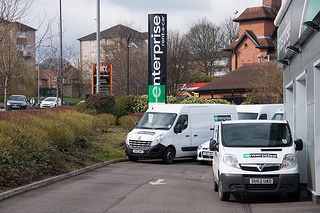
The next time you’re considering taking a long trip, put renting a car on your list of options for that trip. There are at least five advantages to renting a car for a long trip, rather than flying or driving.
1. Saving Air Fare on Short- to Mid-Range Trips
If you typically fly to a destination that is in the 250 to 500 mile range, renting a car and driving it direct to the location can save you a substantial amount of money.
Up to 500 miles, you’re basically talking about flight time of about an hour. But it can easily take you at least two hours on each side of that flight – two hours driving to the airport and going through security, then another two hours getting off the plane and booking a rental car. You’re looking at a time investment of at least five hours should you fly.
If you decided instead to rent a car and drive the distance, you can probably get there in about eight or nine hours. Yes that is longer than the five hours we just discussed for a flight. But as we all know, flights can be delayed, or you could be bumped to another flight, which can quickly get you up to eight or nine hours – or even more.
If you rent a car instead of flying for short- to mid-range trips, you have the following advantages:
- Your time of arrival at your destination is likely to be more predictable, since you will not have to rely on the airlines or conditions at the airport.
- You will already have your car rented upon arriving at your destination.
- You will save a substantial amount of money on round-trip airline tickets, especially if you would need to rent a car at the destination.
You certainly don’t want to do the car rental option much beyond 500 miles. But if it is within that range, you can save yourself a lot of money, as well as a lot of hassle, by avoiding the airport experience entirely.
The advantages of renting a car for a trip can be even more substantial if the other option is to drive your own car there.
2. Avoid Wear-and-Tear on Your Own Car
People often choose to drive their own car on a short- to mid-range trips as a way of saving money. But on deeper analysis, the savings are not as clear as it seems at first glance.
While it is true that you will save money by not renting a car, you are in fact adding deferred expenses to the cost of using your own car as a result of putting more mileage on it.
Let’s say that you decide to take your car to a destination that’s 500 miles away – that’s 1,000 miles round-trip. Adding that many miles will not only accelerate the need for certain car repairs, but it will also cause the resale value of your vehicle drop. According to some sources, it could be as much as 10 cents per mile, or about $100 for a 1,000 mile trip.
You can generally rent a car for as little as $200 for up to seven days. If you count the decline in resale value of your car, as well as potential deferred repair costs, it may actually cost more to drive your own car than it would to use a rental.
3. Dealing With Mechanical Breakdowns is a Snap With Car Rentals
If you are driving your car and it breaks down along way from home, not only will you have to pay the cost of having it repaired in a remote location, but your trip will also be delayed, possibly by as much as two or three days.
However, if you rent a car for the trip, and the car breaks down, you simply need to call the car rental company, and they will typically replaced it within an hour or two. You’ll then be able to resume your trip, having experienced only a slight delay as a result of mechanical breakdown.
It should also be worth noting that if your own car breaks down far from home, you’ll probably pay a lot more for the repair than you would if you were on your own home turf. This is because not only will you lack access to your preferred mechanic, but you may be forced into getting the job done as quickly as possible in order to maintain your travel schedule.
4. A Rental Car May Be Newer Than Your Own Car
If your own car is more than a few years old, you could be at substantial risk of a breakdown while you’re on a long-distance trip. This is more relevant than ever since the average age if a car in the US is now at a record 11.4 years.
That being the case, you can rent a car that is typically somewhere between brand-new and no more than two years old. Such a car would likely be much more reliable on a long-distance trip, not the least of which because the car rental company maintains a regular maintenance schedule on the vehicle.
In short, the rental car may be better able to weather a long-distance trip than your own car.
5. Choosing the Vehicle That You Need
Still another issue may be that your own car is not well suited to the trip that you want to take. For example, if you have a subcompact car, and a family of four, it may get more than a little uncomfortable on a long trip, particularly if you are packing luggage.
In that situation, you may be able to rent a larger vehicle, that will be better suited to the needs of your particular trip. Though the price will be significantly higher, you can even rent a van or a large SUV, if that’s what you happen to need.
If you do have to take a trip is not more than 500 miles away, give some serious consideration to renting a car for the purpose. It’s generally both less expensive and more flexible than driving your own car, and certainly than flying. And if the car can be rented with no mileage charge, it may be more cost effective even on much longer trips.
How about you all? Have you ever rented a car for a trip instead of flying or taking your own car?
Share your experiences by commenting below!
***PHOTO: https://www.flickr.com/photos/pauliospictures/13455468185/sizes/n/

5 Free Ways to Show Your Spouse You Love Them

 The following post is by MPFJ staff writer, Catherine Alford. Cat is a freelance personal finance writer who blogs at www.BudgetBlonde.com.
People always told me that marriage gets really tough when you have kids. I never knew what they meant until now of course. At first I thought, shouldn’t having children bring you closer together as you both soak in the amazing miracle of raising a little human (or two)? Well the answer is both yes and no, but at this point, mostly no!
With so many demands on both of us, the most time we spend together is when we’re side by side in the kitchen at 11 p.m. washing bottles and trying to squeeze in as many chores as possible before we both collapse in bed out of exhaustion. It’s a really hectic and crazy time for us, and sometimes we love it and sometimes we really miss sleeping in on Saturday mornings.
We know we’re lucky beyond belief to have two healthy and beautiful children, but I think it’s completely normal to go through a rollercoaster of emotions as a new parent. At least, that’s what I always tell myself.
So, whether you’re elbow deep in diapers like us, empty nesters, or blissful newlyweds, here are some ways you can show your spouse you love them for free and keep the love alive even when things get busy or downright crazy.
Let Them Sleep In
If there are tasks to do in the morning like taking the dog out, making breakfast, feeding tiny humans, or other chores in general, let your spouse sleep!
Whether you have kids or not, chances are as soon as you wake up, you probably have to at least make coffee right? Well, I can tell you from experience that it’s pretty much the best surprise ever to wake up and have all of these things already finished.
If you do this for your spouse I can promise you that when 9:00 rolls around, they’ll wake up so confused wondering how they were able to sleep so long. The bonus for you is that they’ll likely be in a good mood for the rest of the day. I know I always am when I can sleep a little more.
Write a Love Note
It doesn’t have to be sappy. It doesn’t have to be long. Just jot a quick, “I love you” on a scrap piece of paper and put it on the kitchen counter. It only takes a minute. You can even be funny or silly or witty. Write a joke or put down a funny memory. Just do it because it’s free and it will make them smile.
Make Them Their Favorite Meal
We tend to save favorite meals for birthdays or special occasions, but I think we should make our spouse’s favorite meal randomly and surprise them. Frankly my husband would be so happy and impressed if I planned and made dinner at all because I absolutely hate to cook. So, he’d probably love me forever if he walked in to steaks or a Thanksgiving style dinner. Actually, he’d probably think an alien spaceship came and took me and replaced me with some evil-yet-awesome-cook twin. Still, as I write this, I realize I should probably do this more!
Print Out a Picture
We never print out pictures anymore. Gone are the days when grandparents would take out a whole roll of pictures from their wallets. Now we have smart phones that we let people flip through. However, one of the best gifts I ever got from my husband was tiny little magnets that he had made from my Instagram feed. He picked several different photos that were taken during my pregnancy and with friends. They are all up on my fridge now and are actually a nice, flat, clutter free way to hold up important things on the fridge.
Give Them Some Affection
I was walking through the mall with my husband and twins, and suddenly it felt like every single couple was holding hands. Didn’t we used to hold hands all the time I thought. It took me about two seconds to grab his hand, but then we had to hold hands one on top of each other while we pushed the stroller. Ah, young married love when you have kids! Still, a little affection and attention goes a long way!
Ultimately, it doesn’t matter how busy you are. The above tips prove that you can easily show your spouse you love them in small ways that don’t cost a dime. There’s no need to buy a dozen roses or even make reservations at expensive restaurants. Just a little attention, a few thoughtful notes, or even a simple hug can go a very long way in the midst of our busy and chaotic lives.
How about you all? How do you show your spouse you care?
Share your experiences by commenting below!
***Photo courtesy of https://www.flickr.com/photos/epsos/6943704482/in/

5 Reasons Why You Should NEVER Own A Storage Unit

 The following is a post by MPFJ staff writer, Derek Sall. Derek is the owner of the blog, LifeAndMyFinances.com, where he teaches people how to get out of debt, save money, and become wealthy.
Do you realize how incredibly huge the self-storage industry is?
While it seems that no one talks about it, many of us own storage units to store stuff that doesn’t fit in our house very well. It seems logical until you begin to understand the mass of storage that is being funded each month. Believe it or not, there are over 2 billion square feet of storage units currently rented out in America, which is enough to fit each one of its citizens if they simply stood shoulder to shoulder in those very same units! Isn’t that just sick? Why on earth do we need so much storage space outside of what can fit in our house?
Here are my five top reasons why you should NEVER own a storage unit.
1) You’re wasting your money on rent
So what is the typical cost of one of these storage units? In my area (where everything seems to cost much less when compared to other parts of the country), a simple 5’ x 10’ space can cost $47 a month. This initially doesn’t sound like too much, but what if we extrapolated that out to a year? The yearly cost of this small storage space is $564. Over the course of a few years, this expense really starts to add up!
2) You’re wasting your money on stuff
A very small fraction of people are using storage units temporarily (many think their unit is temporary, but they soon become lifers as their stuff begins to pile up), which means that they simply have more stuff than they have room to put it! How is this even possible? How can we possibly accumulate more stuff than a typical house can hold? The very notion of this is ludicrous.
Did you know there is a movement going on called, “The Tiny House movement?” This is where people sell the majority of their stuff and scale down to a 150 square foot living space. Oddly enough, many people seem happier to live in that tighter space with less stuff than they did with their large house and storage units full of stuff.
You simply do not need all of that stuff and are therefore wasting your money.
3) You could be infesting your home
Supposedly, storage units are completely clean and you should have no worries when it comes to bringing those boxes back into your home. In my opinion, bugs are everywhere, and I am sure that there are plenty of people that brought some crazy stuff back into their homes when they opened up their storage box. You could be releasing spiders into your home, or maybe even mice or snakes. I think I’d rather just limit my stuff and reduce the odds of this from happening!
4) You’re wasting money on fuel
Storage units aren’t typically right around the corner. When you need something out of your unit, you have to hop in your car, drive a number of miles, and then return home. Each time you do this, you are burning fuel which is taking money right out of your pocket. If you could fit all of your stuff in your home like a normal human being, you wouldn’t waste any fuel at all! By renting a storage unit, you are increasing your expenses by more than just the unit rental fee.
5) You are wasting your precious time
I saved this reason for last, but it is (in my opinion) the most important reason to avoid renting out a storage unit. Do you realize how much time is wasted at these places? You first need to load up your stuff, then drive it over there, and then unload it. Then, at times you need to drive back to the unit to try to find something that you decided you actually need, and then good luck finding it amongst your boxes!
Each moment of our lives is valuable because once those minutes and hours are gone, there is no getting them back! Which would you prefer doing? Rummaging through boxes in a cold, damp, garage or hiking through the mountains, enjoying the beautiful scenery that will be etched in your mind for life? I could make a list of 1,000,000 things that I would like to do with my time, and sifting through a storage unit would still not make the list.
Before you go out and waste your money, fuel, and time on a storage unit, be sure to ask yourself if you really need it. Perhaps instead, it’s time to sell some of your stuff.
How about you all? Have you ever spent your money on a storage unit?
Share your experiences by commenting below!
***Photo courtesy of https://www.flickr.com/photos/jeepersmedia/14950689245/in/

Which Job Hunting Expenses Are Tax Deductible?

 The following is a post by MPFJ staff writer, Kevin Mercadante, who is a freelance professional personal finance blogger for hire, and the owner of his own personal finance blog, OutOfYourRut.com. He has backgrounds in both accounting and the mortgage industry.
Job hunting expenses are one of those tax deductions that are often forgotten, even at tax time. The problem is often either that the expenses are not particularly high, or that they’re not high enough to reach and exceed the IRS threshold beyond which they become tax-deductible. That’s why it’s good to review the tax deductibility of job hunting expenses from time to time.
Job hunting expenses can only be deducted if you itemize expenses on your income tax return. They are reported on Form 1040, Schedule A as a miscellaneous deduction (yes, you must itemize to deduct most job hunting expenses). You can deduct them even for jobs you don’t actually land.
If you have particularly large job hunting expenses, such as those related to an out-of-state job search, they could be significant and rise to the level of an important tax deduction.
Which job hunting expenses are tax-deductible?
Administrative Job Hunting Expenses
These are the more typical job hunting expenses, and can include:
- Third party resume preparation
- Printing and postage
- Paid phone calls
- Career counseling costs
As a rule, you will only be able to deduct expenses that are paid directly to a third-party provider. Unfortunately, this means that you will also be unable to deduct expenses for the pro-rata cost of making phone calls on your cell phone plan.
As is always the case with income tax deductions, make sure that you keep copies of invoices and payments for any expenses you incur. You can only deduct what you can prove, and that will require a paper trail.
Third Party Fees
Third-party fees are also deductible under job hunting expenses, although it is pretty rare for an employee to pay these. They would include job placement fees paid to recruiting firms, however these are customarily paid by employers, and not by employees. Though for the record, for my first job taken out of college, I did get stuck paying half of a placement fee due to the fact that I graduated into the middle of a wicked recession. So it is possible under certain circumstances you may end up paying for it.
There are also instances in which you as the employee will pay the placement fee, however it will be reimbursed by the employer if you remain employed with them for a certain minimum amount of time. If the employer does reimburse you, the fee will not be deductible by you. And if you do deduct payment of the fee one year, any reimbursement coming in subsequent years will need to be reported as income.
Travel and Transportation Expenses Related to the Job Search
This is where you are most likely to see the most significant – and deductible – job hunting expenses. You can deduct expenses related to the cost of travel, whether you are doing so locally or for out of town interviews.
Deductible expenses include:
- Travel expenses, like air fare
- Car rental fees
- Auto mileage (56 cents per mile for 2014)
- Baggage fees
- Hotel and lodging costs
- Connecting and local transportation (trains, subways, buses, cabs, etc)
When deducting these expenses, you must be sure that they are incurred primarily for job hunting purposes. If you travel to Orlando to go to a job interview, and then end up spending the rest of the week at Disney World, it is entirely possible that the IRS will overturn your deduction on audit based on the fact that the trip was primarily taken for pleasure and not for job hunting purposes.
Relocation Costs
Relocation costs can be the most significant income tax deduction that you can get as a result of a job search. In order to deduct moving expenses on your tax return you must meet three tests:
Your move is closely related to the start of work. Per the IRS, the move must be “incurred within 1 year from the date you first reported to work at the new location.”
Time. If you are an employee, you must work full time for at least 39 weeks during the first 12 months after moving to the new location. The requirement for self-employed persons is 78 weeks.
Distance. There is a 50 mile rule in order for you to be able to deduct relocation costs. The new location must be at least 50 miles farther from your former home than your old main job location was from your former home. For example, if you lived 20 miles from your old job, you will have to move at least 70 miles from your current home in order for the cost of the move to be deductible.
The advantage with moving costs is that you don’t have to itemize in order to deduct them, nor are they subject to the 2% of AGI reduction (that we’ll discuss below). You can actually deduct them on Page 1 of Form 1040, which will also lower your AGI for other deduction purposes.
Relocation costs can be a lot more complicated than time permits us to present here. Please see IRS Publication 521 for a more in depth description of what relocation expenses are allowed, as well as consideration of the many special provisions within the allowance.
Your Job Hunting Expenses Are Subject to Reduction!
According to IRS regulations, you can only deduct job hunting expenses to the degree that they exceed 2% of your adjusted gross income (AGI). If your AGI was $100,000 for the tax year, you will only be able to deduct job hunting expenses to the degree that they exceed $2,000, or 2% of your AGI.
The good news is that there other expenses that count toward the 2% threshold, including tax preparation fees, investment related expenses, and un-reimbursed employee business expenses. You may find yourself exceeding the threshold very easily if you have other such expenses, or if you are unemployed for much of the tax year, so the threshold will be an extremely low number.
Per the IRS:
You cannot deduct these expenses if:
- You are looking for a job in a new occupation (more on this in the next section),
- There was a substantial break between the ending of your last job and your looking for a new one, or
- You are looking for a job for the first time
Sources: IRS Publication 529, and Job Search Expenses Can be Tax Deductible
And that isn’t the only limit either…
You Can Only Deduct Job Hunting Expenses Related to a Job in the Same Career Field You’re Already In
If the 2% of AGI limit doesn’t seem fair, it gets even worse. You cannot deduct job hunting expenses if they are for the purpose of moving into a different career. The deduction applies only if you are moving to a job within the same career field.
This doesn’t make a whole life sense, considering you are more likely to occur large job hunting expenses if you are looking to move into a different field. After all, that would likely involve sending out more resumes, going on more interviews, and a greater likelihood of extending the job search to other states.
But perhaps that’s the reason why this restriction exists – the government is looking to minimize the loss of tax revenues related to the more costly job hunt that would be involved if you are moving into an entirely different career.
It gets worse still. If you are a recent graduate searching for your first job, the expenses you incur will not be considered deductible because – technically speaking – you are moving into a new career.
Despite the limitations, job hunting expenses may be worth paying close attention to in the event that you have a very low income in the year that you’re claiming them, or they are mostly comprised of moving expenses, or if the total amount is substantial.
How about you all? Have you ever been able to deduct job hunting expenses in the past?
Share your experiences by commenting below!
***PHOTO: https://www.flickr.com/photos/ftmeade/14675342103/sizes/n/
Lazy Guide to Building Credit

The following post is by Amanda Green. Enjoy!
It is easy to end up with poor credit. Far easier than people realize. The good news is, even if you are lazy you can still build up and repair your credit.
Don’t know where to start? That’s okay. I’m here to give you a few good tips on reviving your poor credit score and scoring those awesome credit cards no matter how lazy you are.
1) Address Outstanding Debt
I think we all know I’m not talking about wonderful debt, because there is no such thing. Hey, we’re all a little lazy when it comes to this, especially if we have a lot of outstanding debt. The truth is, if you have a lot of outstanding debt (particularly from medical bills or credit cards) you have to address those debts to have any hope of improving your credit score.
If you don’t feel like dealing with this yourself (and it can be overwhelming), don’t worry. You can hire out a company who specializes in reducing debt and credit repair services. It takes the trouble and puts it in someone else’s hands. It’s the perfect solution if you know you can’t (or won’t) deal with it on your own.
2) Get Secured Credit Cards
Whoever came up with this idea was brilliant. A secured credit card is a card for people who have poor credit and are looking to build their score back up again. The idea is pretty simple.
- You apply for the secured card and establish a credit limit.
- You put down the deposit based on the credit limit (usually 50-100% of the limit).
- You use the card with the deposited balance.
- You reload the card just like any other pre-paid card.
The bank that holds the account reports to balance to the credit bureaus to establish a stable credit card that is controlled. There can be a fee associated with these cards, so find out for sure and read the fine print.
3) Join a Credit Union
Credit unions are like banks, but they are owned by the customers. That means that the credit unions aren’t out for profits like regular banks. As a result, they are able to offer higher return on interest, and lower interest rates on their credit cards and loans. The beauty is that credit unions still report to the credit bureaus, so you can build your credit and increase your chances at getting better rates at the same time.
Once you have established yourself with the credit union, find out if you can qualify for a low interest personal loan or a home refinance. By using a personal loan through the credit union to pay off credit card debt, you are ensuring that you will have it all paid off by a certain date.
4) Budget
Sounds like a no-brainer. The truth is a lack of budget is one of the main reasons people find themselves in this mess to begin with. If you ever want to climb out of debt you have to create a budget and stick with it. Make it reasonable and effortless, and you are more likely to succeed at sticking to it.
Try to avoid using credit cards as much as possible. They will only throw you further into debt.

Do Country Club Memberships Make Financial Sense?

 The following is a post by MPFJ staff writer, Sally, the blogger behind TinyApartmentDesign.com, a blog about design, living well, and simple, tiny spaces. Enjoy!
My first introduction to country clubs was the classic Simpsons episode “Scenes from the Class Struggle in Springfield”, when Marge buys a discounted pink Chanel suit and soon ends up spending time with the idle rich of Springfield Country Club.
I’ve since spent lots of time around the “clubs”, whether I was working there (as a hostess one summer) or visiting for work and alumni functions. In California, there are a number of prestigious clubs, which may not be as old as East Coast clubs, but are still heavyweights with big price tags for memberships, like the La Jolla Beach and Tennis Club, the Jonathan Club, and the Bel Air Bay Club, to name a few. There are also plenty of yacht clubs and country clubs with hefty admissions fees (usually a one-time fee) and ongoing annual dues. Some of these clubs have the added social clout that require one or two current members to “sponsor” or nominate the potential member into the club’s ranks. If it all sounds very exclusive, well, it was designed to be that way. Country clubs and other private clubs are pretty much know for exclusivity, promoting a homogenous membership (if not racially, then socioeconomically) and associating among themselves. Think “Not Our Kind, Dear” and other heavily entitled phrases used flippantly.
So, why would you ever want to join a country club? Well, there’s the golf, tennis and swimming facilities. Many have a club restaurant, and it can become a place for all of your social gatherings. One acquaintance who’s been a country club member since birth explained why he and his wife are now becoming full members into the same club: they have all of their family gatherings at the club, celebrate lots of holidays at the club, many of their friends are members of the club. It’s not a lifestyle I can relate to exactly, but I understand the comfort factor, and the convenience factor.
The actual cost varies wildly. Some clubs in Southern California have a smaller initiation fee and annual dues, like $10,000 and $3,000, respectively. Others are known for $60,000+ fees for a full member plus $10,000 in annual dues. On top of that, some clubs may require you spend a certain amount each month in the restaurant and pro shop. This is definitely a luxury expense unless the cost of playing tennis or golf in your area is much higher on a per-use basis than joining a club. But I’ve never seen an area that doesn’t have at least one public tennis court and a public golf course with reasonable fees. Personally, while the idea of belonging to a club is appealing, and I like the thought of taking friends and out of town guests to my club, I don’t think I would ever join any club just because of its long history of exclusion and segregation.
How about you all? What do you think, would you join a country club or are you already a member?
Share your experiences by commenting below!
***Image: http://www.freeimages.com/photo/1369498

Six Things To Know Before You Shop Online

 The following post is by MPFJ staff writer, Travis. Travis is a customer blogger for Care One Debt Relief Services, and also appears weekly at Enemy of Debt. Travis candidly shares his personal journey to pay off $109,000 of credit card debt and the tips he’s learned along the way. As a father and husband he provides a unique perspective on balancing debt, finances, and family.
Online shopping is big business these days.
It’s even inspired a new phenomenon in recent years called Cyber Monday when savvy online shoppers start their holiday shopping the Monday after Thanksgiving. I’ve done my share of online shopping, and can’t disagree with the convenience of searching, price comparing, ordering and having the item delivered to your doorstep all without leaving the comfort of your own home.
However, as my son found out recently there are things consumers need to be wary of when they shop the cybermall.
Last summer, my son saved his lawn mowing earnings and bought an entry level gaming computer. Over the last year, he’s continued to save his money in order to upgrade his system with items such as a new monitor, headset with microphone, and upgraded graphics adapter. All of these items he researched himself and ordered online so I didn’t think much of it when he approached me asking to order a gaming mouse.
The specially designed mouse cost $59.99 with an additional $9.99 tacked on for shipping. Once it arrived, I could tell immediately as he started using it that he didn’t like it. It was bigger than a standard mouse, and he found it uncomfortable. After a weekend of using it, he was sure he wanted to send it back. I opened up a support ticket with the manufacturer, and received authorization to send it back. The return authorization was good for three weeks, so we decided to order a replacement mouse that he was sure would be better, ensure that he liked that one, then send the original mouse back.
We ordered the new mouse, which also cost $59.99, plus $6.98 for shipping. Thirty minutes after getting mouse #2, I knocked on his bedroom door to see how he liked it. Seeing the mouse unplugged laying on his bed answered my question. “I think I’ll keep the first mouse, Dad. This one feels weird. Plus I’ve gotten used to the first one anyway.”
The next day I shipped the second mouse back to the manufacturer.
When I returned home, my son and I had a discussion about the lessons learned from our great mouse adventure.
Make Sure You Know What You’re Getting
The initial complaint my son had with the first mouse was that it was too big. The complaint about the second mouse was that it was an odd shape. It’s reasonable to believe that he may not be able to tell 100% whether the mouse would be comfortable in his hand until he was able to physically hold it. However, I also doubt that he looked at the dimensions or specifications of the mouse to see how truly big it was before he ordered it. He was more enamored with the button placement, and the fancy lights on the product. I suggested that before we order anything else online we do as much research on the product as possible to give us the best chance of being happy with the product.
Shipping Isn’t Always Free
Many retailers will offer free shipping when your order exceeds a certain amount. During the holiday season, free shipping is even more common. Unfortunately, the two retailers we dealt with here made no such offers. Because my son was not satisfied with the product he ordered, he had to pay multiple shipping charges for multiple items to be shipped to our house.
Beware Of Restocking Fees
Both manufacturers boasted a money back guarantee. However, once we started down the path of returning the second mouse, we found that there was a 15% restocking fee. That’s $9 that we just flat out lost.
Return Shipping Fees
In addition to the restocking fee, the shipping fee to return the product came out of our pocket. Shipping the mouse through the United States Post Office with insurance and tracking cost $12.95.
First Impressions Aren’t Always Right
My son didn’t like either product right out of the box. He didn’t give the second product a chance, but after two weeks of using the first mouse, he became used to it. In fact, now that it’s been almost two months he actually likes it a lot and is glad that he decided to keep it.
Know The Return Policy
Had we known that the return shipment was our responsibility, as well as the restocking fee, we may have been more diligent in our product research before ordering anything.
Finally, I totalled up for him the extra fees that he had to pay for due to ordering two products and returning one:
- $6.98 to ship the second mouse that we ended up returning
- $9 restocking fee of the second mouse
- $12.95 return shipping cost
Total: $28.93
I could see the wheels turning in his head, as we both realized that due to the fees of ordering and returning the second mouse, he ended up paying almost $100 for one he kept.
That’s an expensive rodent.
Shopping online definitely has it’s benefits. Not only is it convenient, but products can be purchased that may not be available locally to some consumers. But there are still pitfalls that consumers need to be aware of, or they may end up dropping their hard earned cash down a mouse hole.
How about you all? How much shopping do you do online? Have you ever had to return something, only to find out it was going to cost a significant amount of money to do so?
Share your experiences by commenting below!
***Image courtesy of marin at FreeDigitalPhotos.net

Why You Should Payoff Your Car Loan Ahead Of Your Credit Cards

 The following is a post by MPFJ staff writer, Kevin Mercadante, who is a professional personal finance blogger, and the owner of his own personal finance blog, OutOfYourRut.com. He has backgrounds in both accounting and the mortgage industry.
There are different ways to prioritizing the payoff of debt and no one method is right for everyone. As long as you’re paying off debt, you’re headed in the right direction.
The most common advice on paying off debt however usually centers on tackling credit card debt first. But we’re going to focus on a different approach and suggest that she should payoff your car loan ahead of your credit cards.
There are at least five reasons why paying off your car loan first will work to your advantage:
1. A Car Loan Payment is Usually Bigger than Any Single Credit Card Payment
One of the most compelling reasons to pay off your car loan ahead of your credit cards is that a typical car payment is much larger than any single credit card payment. In fact, it’s probably is big as several credit card payments. By paying it off first, you achieve the greatest budgetary relief.
One of the reasons why people often fail at paying off their debt is because they simply don’t have enough room in their budget. By paying off your car loan first, you knock out a big chunk of your monthly debt service, that will make your progress obvious much earlier in the game.
2. A Car Loan is a Fixed Payment
Though most people will see the fixed payment feature of a car loan as a positive, the flipside is that you’ll get no relief on your car loan payment until the loan is paid in full. That should provide the motivation to pay it off as soon as possible.
By contrast, monthly credit card payments drop as the balance owed is paid down. But that can be both good and bad. Sure, the prospect of lower credit card payments will improve your cash flow in the short run. The bad side however is that as your monthly payments decline you may start to get comfortable with them again and decide that paying them off isn’t quite as important as it seemed at the beginning. You might even get lazy and start running them up again.
Once a car loan is paid, it’s gone. With credit cards – well – they don’t call them “revolving” for nothing!
3. Freeing Up Your Budget to Concentrate on Your Credit Cards
In #1 we focused on the fact that a car loan payment is typically much bigger than even the largest credit card payments. But the budgetary freedom you’ll gain from paying it off will free up a lot of cash flow that can be used to pay off your credit cards.
For example, let’s say that you manage to carve an extra $600 per month out of your budget to use toward reducing your debts. If you concentrate the extra cash flow on paying off your car loan first – because the car loan payment is an uncomfortable $400 per month – you will have an extra $1,000 per month to throw at your credit cards once your car loan is paid (the $600 budgeted for debt payoff, plus $400 from the now paid off car loan).
Using $1,000 per month to payoff your credit cards will make the process a lot faster than trying to do it with $600.
Paying off debts with big monthly payments – like a car loan – makes the biggest difference in your cash flow.
4. Paying Off Your Car Removes the Likelihood of Repossession
This is a factor that never gets discussed in the debt payoff priority debate, but it certainly needs to. If you reach the point where paying off debt becomes necessary, it’s most likely because your financial situation has long since begun to experience stress. If you are walking the financial edge in life, the last thing you need to have happen is having your car repossessed.
That’s exactly what will happen if you’re unable to make your monthly car payment. It’s unlikely that you will experience an outcome nearly as dramatic should you fail to make the payments on one or more credit cards. That’s because credit cards are entirely unsecured loans.
No matter what happens with your debts, you will still need to earn a living, which you may not be able to do if you lose your car. By paying it off, you will remove the possibility of that disastrous outcome from happening.
In a real way, your car is a business asset if it is used in connection with earning an income in any way, even if it’s only to commute back and forth to work. That makes it an asset worth protecting.
5. Paying Off Your Car Will Give You More Options When You Need to Replace It
Cars are no respecter’s of your debt payoff plans. They can crap out at any time, and require repairs so expensive that either the car will need to be replaced, or your debt payoff efforts will be thrown for a massive loss. For that reason, you should want to keep your self in the best possible position to be able to replace your car on short notice, should it be necessary.
Having a loan on your car always complicates replacement efforts. This is especially true if you have little equity in the car over and above the loan amount, and even more so if you owe more on the car than it is worth.
By paying off your car loan, you remove this is a potential problem. And if you do have to buy a new car, the absence of a loan will improve your ability to do that immensely.
Keeping your car free and clear of debt is the best possible way to keep your options wide open – whether you plan to keep the car, and especially if you need to replace it.
How about you all? Can you see the logic in paying off your car loan ahead of your credit cards?
Share your experiences by commenting below!
***Photo courtesy of https://www.flickr.com/photos/lendingmemo/11442079145/sizes/n/

How To Give Your Kids A Well Rounded Education For Less

 The following post is by MPFJ staff writer, Catherine Alford. Cat is a freelance personal finance writer who blogs at www.BudgetBlonde.com.
Although my children are only four months old, I have been thinking about their education for many years before they even came into existence.
I’ve always ascribed to the typical idea that “being educated” means, of course, going to college. However, now that college has become an overpriced industry, I’m becoming more flexible on what I expect out of my kids.
Mostly, I am open to them pursuing their college education in a variety of ways, and I hope at least they will become independent above all else and learn to make a successful life for themselves. Nothing would make me happier than raising kids who are self-sufficient and who are willing to find ways to get their degrees for less.
However, when I think of a well-rounded education especially, I think of more than just school and books.
Here are some ways I plan to educate my twins for less and ensure they are well rounded along the way:
1. Encourage Community College
I wish I had gone this route. Both Jacob and I went to highly competitive schools in the great state of Virginia. However, did you know that if you complete two years of community college in Virginia and maintain above a 3.5 GPA, you are eligible to get accepted to schools like UVA and William and Mary?
Many people I met in college went this route. Not only did they have two years of cheaper tuition, but also they got the same diploma I did along with all the perks of attending a top tier school.
I will definitely be encouraging my children to take as many community college classes as possible during their high school years and college years. The education is good, the classes might be easier to get better grades, and you can go to college with a semester or two of classes already under your belt. I’m not sure why people don’t take advantage of this more.
2. Take Them New Places
I believe that travelling is an amazing way to give your children a well-rounded education. When you travel, you can show them different parts of the world and how people navigate their lives through different experiences and traditions. When you travel and let your children lead the way, you are also teaching them how to use airports, how to behave in public, how to be level headed in stressful situations, and how to find their way quickly in a new place.
All of these skills are extremely valuable in life, and as long as my income allows it, I plan to have a smaller house and more modest cars so that I can take both my kids traveling with us as much as possible. This might not be getting an education “for less” but when you think of the price of college these days, a trip here or there hardly seems extravagant by comparison.
3. Take Them Out to Eat
If you want your children to succeed in life or learn how to interact with other people, make sure you include them in your dinners out.
In order for your kids to be well rounded, they should know how to order dinner at a restaurant and know how to sit there without an iPad entertaining them. I doubt Donald Trump let his kids play with their phones or act out while out to eat dinner, and while that’s a big example to give, it goes to show kids are capable of sitting still and having a conversation at the dinner table without gadgets keeping them quiet.
I’m sure there will be many times when I’m embarrassed by something my kids do in public. They’re kids after all. However, I think with enough exposure and training, they can come to know what’s expected of them when they are out and about.
Ultimately, I think parents get caught up in the idea of college and making sure their children get the “right” opportunities in the “right” places. However, I don’t plan on over-extending my kids, over-scheduling them, or paying $20,000 a year for high school just so they can get a chance at an ivy-league education.
I believe with the right tools, with the right exposure, with the right level of independence, they can do anything they want whether it’s attend a fancy school, start their own business, or take a year off to travel the world. In this day and age with the rising cost of tuition, I think it’s important to be flexible and open when it comes to education and realize that being education is so much more than a college degree.
How about you all? How do you ensure your kids get a well-rounded education? Do you plan on sending them to a 4-year college or university or are you flexible in your expectations of them?
Share your experiences by commenting below!
***Photo courtesy of https://www.flickr.com/photos/jblndl/1413647425/in/

What Do You Devote Your To Money Once You Are Debt Free?

 This is a post by Staff Writer Jeff, who blogs about sustainability and finances at Sustainablelifeblog.com and blogs about his efforts to earn a (semi) passive income online at Online Side Income.
In mid July, me (and my wife) hit a target we have been aiming for since 2009 – we are now debt free except for the house. I had one last student loan of mine that was hanging around like an annoying sibling, and after changing jobs and cashing out what was left of my vacation time, I used all those banked days to knock out the student loan once and for all.
We are very excited about this, as we know we are one step closer to freedom, and we have started working that much harder to earn it and make that day come even quicker. Previously, we were paying $400 a month to the student loan, and now we have gotten that all back – it’s time to invest, and here’s what we are going to do with it.
1. Max Out Both Roth IRAs for 2014
We have both been contributing monthly to these accounts, but we were not at the level to hit a yearly max. Each one of these accounts needs approximately $1,750 to reach the IRS limit of $5,500 for 2014, and we will be able to hit that now that we have freed up all this cash.
2. Pay down our Mortgage
While our mortgage isnt that large (it’s approximately 1 year of earnings for both of us) we would like to pay this down sooner rather than later as our mortgage payments eat up a very large chunk of our monthly nut – almost 80% of our monthly fixed expenses are from the mortgage alone, so once this is gone it will be nice in terms of cash flow. To pay this down, we will be increasing our payment frequency and our payment amount.
3. Ride Out Lower Paychecks
I switched jobs in June to a position where I was getting about 15% less in base pay, and paying approximately 750 more per month for health insurance. This has resulted in a take home income of almost $1,100 less on my side per month, which we have been able to manage fine (mainly because we have very little debt). However, since my wife and I had a child earlier this year, she will only be going back to work part time come fall, and income from her side of the equation will go down about 33%. All told, we are going to see an income reduction of about 25k per year starting in 2015.
4. Invest the remainder in a Tax Advantaged Account
We continue to save diligently for our goals and have a 3 month emergency fund that we are slowly building as well. We are going to start putting money into a tax advantaged account (probably my wife’s 457 plan) as well.
This is our plan to build our savings and investments, fund our retirement and pay down our mortgage now that we are out of debt. All of these small goals will help us fuel our larger goals in life, which we are talking about pretty much on a daily basis at this point, and I will reveal on my blog soon.
How about you all? What are your plans for when you become debt free except the mortgage? If you have already reached that point, what are you doing with your money?
Share your experiences by commenting below!
***Image Source: Flickr