

All posts by J. Irwin

Raising Kids on the Cheap
 The following post is by MPFJ staff writer, Laurie Blank. Laurie is a wife, mother to 4 and homesteader who blogs about personal finance, self-sufficiency and life in general over at The Frugal Farmer. Part witty, part introspective and part silly, her goal in blogging is to help others find their way to financial freedom and to a simpler, more peaceful life.
According to the latest numbers, the average cost to raise a child in the U.S. is just over $245,000. This is how much it costs just up until age 18, not including college costs. Or so the experts say.
But we’re raising our four kids on MUCH less than that. I’d be willing to bet that we spend less than half of the average to raise our kids. So, what’s our secret? Is it really necessary to spend a quarter million dollars to raise a kid?
Here’s how we reign in kid-raising costs and save more money to put toward building our future and our kids’ futures as well.
Keep a Lid on Grocery Costs
The average family of four spends a lot of money on groceries. Whereas the low-cost meal plan for a family of four is said to cost $786 a month, the liberal-cost meal plan for a family of four comes in at $1195 a month.
Our family of six keeps grocery costs to no higher than $450 a month. Here’s how we keep grocery costs low, thereby effectively reducing the amount of money it costs to raise our kids:
- We meal plan. By mapping out a weekly meal plan each week and shopping only according to what’s on the meal planning list, we avoid the rush of take-out meals and restaurant trips that happen because “there’s nothing in the house”.
- We avoid pop, chips and other processed foods. By purchasing mostly whole foods we avoid the costly purchase of pop, chips and the like and save those things for special occasions.
- We avoid random trips to the grocery store. We get what we need for our weekly meal needs, and then stay out of the stores until the next week.
- We cook from scratch. By planning meals that we can make from scratch, we save the extra cost that often comes with processed foods. We make many of our meals on the weekend and freeze them so that we can just pop a meal in the crockpot or oven to make for a quick dinner meal.
Learning to keep grocery costs low goes a long way in reducing the amount of money it costs to raise a child.
Be Choosy About Extracurricular Activities
Too many extracurricular activities can overwhelm your child and your pocketbook. In order to save both time and money, pick 1 or two extracurricular activities per year that your child really loves, and enroll your child in those activities only. By allowing your child to focus on a limited number of activities, you’ll give them the ability to focus on and learn what they truly like and don’t like to do. And you’ll save tens of thousands of dollars in the process.
Be Smart About Clothing Purchases
Yes, it’s important for kids to have name-brand clothing that’s “in”, especially in the junior high and high school years. However, that “in” clothing doesn’t have to break the bank. Work to find quality used clothing for your kids, and to pick one or two expensive items that are important to your child. Older children can be allowed to have more say in what clothing is purchased.
When I entered middle school, my mom started giving us kids a small yearly clothing budget. Whether we wanted to buy one item or a thousand items with that money, the choice was ours. This helped us to think carefully before we bought clothing and to find a balance between fashion and frugality.
Go Easy on the Gadgets
It wasn’t too long ago that I heard someone complain that their child’s $600 iPhone really put a strain on the family finances. Your kid may need a phone, but does he really need a $600 phone? Work to be frugal when deciding on electronic purchases for your kids. Set an affordable and reasonable budget for electronic purchases instead of buying your child “the best of the best”.
Or work out a plan where you pay half of the cost of a gadget but your child has to save up the cost of the other half so that you can spend less and help your child get a first-hand understanding of the value of a dollar.
Don’t Teach Your Child That Money Grows on Trees
Just because your child asks for X dollars a week so that they can have unlimited fun with friends doesn’t mean you have to give it to them. Even the ultra-rich Donald Trump gave his kids a minimal weekly spending allowance.
Assign your kids chores around the house for which they can earn spending money, or set a small weekly spending allowance for them so that they can learn to be choosy about purchases and to live within their means.
Consider Day Care Costs
Working doesn’t just bring in money – it costs money to work as well. Transportation, clothing expenses and oft-expensive lunches out can eat up a good chunk of one’s income. Another thing that can eat up a good chunk of one’s income is daycare expenses.
If daycare, transportation and other work costs are eating up too much of your income, consider having one parent stay home with the kids if it’s possible in order to avoid day care costs.
While staying at home doesn’t work for every family, in some cases it’s truly more cost-effective for one parent to stay home.
What kids need most from their parents isn’t a never-ending stream of cash; they need love, support and healthy boundaries. “The best” for your kids has very little to do with how much money you spend on them. And as a bonus, a financially healthy household will help ensure your child isn’t burdened with supporting you financially as you get older.
How about you all? How have you been able to save money while raising children? What other tips or tricks do you have on the subject?
Share your experiences by commenting below!
***Photo courtesy https://www.flickr.com/photos/calliope/1776265241/

How to Go to Grad School without Taking out Student Loans

 The following post is by MPFJ staff writer, Chonce. You can read more articles by Chonce over at her personal blog, My Debt Epiphany. Enjoy!
Have you wanted to go to graduate school but put the idea off due to the cost? According to FinAid.org, the average cost of a master’s degree for students can cost anywhere between $30,000 to $120,000. With the average student loan debt balance from undergrad being $30,000 (sometimes more), it’s no wonder graduates don’t want to add to their burden even if more education could help their job prospects.
If you’re serious about pursuing a graduate degree and have a specific program and career path in mind, there are a few ways you can pay for your education without having to take out student loans.
Start Saving Up Ahead of Time
This method is simple. If you have a specific idea of which program you’d like to study and at which institution, you can estimate how much it will cost per semester and start saving up and preparing to pay for your education in cash.
It may take longer going this route but you won’t accumulate extra debt and you can go at your own pace. For example, if three classes cost $900 each, you can set aside $350 per month or whichever amount you feel comfortable with and enroll when you feel ready if you’re not in any rush.
You can also pick up an additional job to increase your savings so you can take courses at a faster rate.
See if Your Employer Offers Tuition Reimbursement
Some employers will actually pay for you to go back to school. This is common for MBA candidates and students who can earn their degree for little to no out of pocket expenses. There are a variety of programs your employer may help you pay for so your first step is to ask.
In order to receive the aid, you may need to meet certain requirements like having a high GPA, maintaining your status as a full-time employee, and agreeing to stay with the company for a certain amount of time after you complete your program.
While you’re more likely to receive assistance from your employer if your program of study directly relates to your job, up to $5,250 of funding they supply qualifies as a tax-free benefit.
Apply for an Assistantship or Work at the School
If you don’t have an employer who offers tuition reimbursement or assistance, you can try applying for a graduate assistantship or apply to any openings at the school if you are fine with working there. The typical GA works in a specific department of the school often doing work related to their program of study and they receive free tuition for the most part.
At my particular university, the GAs received free tuition as long as they were attending school at the main campus. If they decided to take a class at a different campus, they would have to pay an extra delivery fee that would not be covered by their tuition wavier. GAs also don’t earn much since the role is sort of a step up from an internship, but most do receive a stipend along with the tuition wavier so if you aren’t employed or are willing to try the position out in order to save money on your education costs it may be worth it.
If there aren’t any GA positions available, see if you can work in another department of the school as a regular employee. Employees often receive a tuition discount at minimum which can significantly cut the amount of money you’ll have to spend on classes.
Apply for Scholarships
Finally, you can apply for scholarships. This is something I wish I would have done more of in undergrad. If you want to avoid student loans and the negative affect they can have on your finances, it’s worth it to go the extra mile and submit a few essays and applications in order to get some scholarships. You just need to know where to look.
There are many scholarships available just for graduate students and you can start your search by looking on your college’s website or seeing if they have a scholarship office. There may be a few opportunities you qualify for based on your grades or program of study. You can also search for private scholarships online on sites like Scholarships.com, Petersons.com, DoSomething.org, FastWeb, and CollegeBoard.
If you’d like to take your search a step further, reach out to your employer or private organizations in your area to see if they offer any scholarships for graduate students. If your employer doesn’t offer tuition reimbursement, they may be willing to offer you a scholarship instead. The more scholarships you apply for, the better the outcome will be.
Explore All your Options
Student loan debt can be a hassle to pay back. Therefore, your best option is to avoid it at all costs. If you are eager to go back to school, set a timeline detailing when you’d like to enroll in classes, explore all your options to save money on tuition, and start setting aside money now.
How about you all? Have you gone to graduate school? How did you pay for it?
Share your experiences by commenting below!
***Photo courtesy https://www.flickr.com/photos/donkeyhotey/6304808136/

My Saving Psychology

 The following post is by MPFJ staff writer, Marie. You can read more of Marie’s articles over at her own blog, Family Money Values. Enjoy!
I’m a saver. I have been for years. It is a habit I learned from Mom and Dad growing up and never lost.
But saving is hard, especially when you are first starting out. Persistent saving – year over year is very difficult. People get tired of saving, scrimping and wanting. How can you psych yourself up to continue to save? What steps can you take to make it easier to save than not?
I have used the few tips in this post during my many, many years of saving. My saving habit is now so ingrained that it is sometimes hard to spend!
Convince Yourself That Saving Is A Need, Not A Want
Make a list all of the reasons you need to save. Condition yourself to view saving as a way of life and not a short term ‘diet’. Think about how a relatively small and short period of time of saving will allow you the life you want in just a few years.
Make Saving Part Of Your Self-Image
You can be proud of your (future) ability to be financially stable and not reliant on the government, charity, family or friends to make your way. Knowing that saving is one of the steps to being financially self-reliant makes it psychologically easier to save.
Trick Yourself Into Saving
Close your mind to any overages in the budget you may have in one period. You didn’t spend as much as you thought on lawn care? Don’t spend the extra, save it.
Allocate money in the budget and your mind to meet those periodic bills (like insurance or Christmas gifting). When I first started out, I tried hard not to forgot about the non-recurring bills.
Subtract a little extra out for savings before you buy that extra bag of candy at the grocery.
When I was dirt poor and living paycheck to paycheck back in the late 1970’s, I used to pencil the expected bills into the check register and subtract out those amounts up front, when the paycheck was deposited. That way, I didn’t feel that we had all that money free to use. This helped me (and my spouse) psychologically realize that, no, I couldn’t afford that steak from the grocery store – get the hamburger and make it stretch instead.
In other words, make a budget! If you hate to budget, develop your own method as I did.
Automate Saving
Even if you can only afford to save $5 or $10 a payday, set up an automatic payroll deduction to your account Even a dollar a week over time is better than nothing. This is the tried and true, pay yourself first mentality.
Pay Yourself First. Period. Always.
When we have money we feel flush. Put away your savings first thing and you won’t feel so flush! Once you have that emergency fund built and your high interest rate debt paid off, start an automated investment program (sometimes called systematic investment) where in you set up an automatic payroll deduction to an investment account and an automatic investment into the fund or stock or bond of your choice each period.
Make That Savings Account Off Limits!
Train your self to consider that account sacrosanct. It is dead to you, you can’t spend it. What if the refrigerator breaks down you ask? Shouldn’t I use my savings to get a nice new one? Nope. Look for other alternatives. Alternatives would be to use that emergency fund; fix the old one (at least temporarily); set up a special fund for a new refrigerator; or find a free or inexpensive used one.
Maintain Your Standard Of Living When Your Income Increases
Put aside at least part of any raise you get as part of your saving program. Now is not the time to add to the cost of your lifestyle. Now is the time to make sure you can continue your chosen lifestyle by becoming financially free!
It is psychologically important to celebrate success. So instead of buying a new smart phone with your raise amount to celebrate, take the family on a picnic on a nice summer day and toast yourself with a bottle of local wine.
Set Goals And Check Progress Frequently
Track your savings account weekly or monthly so you can get satisfaction from watching it grow. Figure out your net worth at least yearly as well. Success breeds success. Knowing that your program is working will give you incentive to continue (and maybe even add to) your savings program.
I still do this, at least once a month.
Imagine Future Pleasure
Project what your savings can become in the future. For instance, saving your $1 a week for a year will get you $12 ahead, in 10 years you would have $120 you don’t have now. Of course, you are probably saving more than $1 a week (or will be), so your totals will be much more.
Think about all the different things that money can get you. As long as you have the money you can spend it many ways in your head! Once it is spent all you have is old stuff, worth less than what you paid and potentially a case of buyers remorse.
Set small savings goals and celebrate when you reach each.
Recognize yourself and your family with an inexpensive special celebration or reward. You will be at this for years, it is important to mark some milestones along the way.
You Don’t Need To Be A Dull, Boring Person
Putting aside every spare nickel can be tiresome. You may find a need for change, excitement or different activities.
I used to get really tired of our little house. Instead of re-decorating, I would re-arrange the furniture.
I used to long for fun activities. Instead of going to the movies and spending a bunch, I’d grab the kids and go to the public beach for the day with a friend.
Help Yourself So You Can Help Others
It is laudatory to donate money to causes you feel are important or to help friends or family out of a tight spot.
Many times life will present opportunities to you to help others with their problems. When those others are family or close friends it is tempting to share everything you have to help their situation. In fact, in some families and cultures there are strong expectations that you will do so.
In my opinion (and practice), it is often better to care for yourself and your immediate family before attempting to solve other people’s problems. Otherwise, you may become a problem for someone else!
Caring for yourself first can mean putting aside money for retirement BEFORE saving for your kids college. It may mean helping your grandparent find social aide rather than trying to pay for their Alzheimer’s nursing home yourself. It may mean saying no to a sibling or friend requesting financial assistance. Who will take care of you and yours if you don’t put yourself first?
How about you all? How have you developed your savings psychology?
Share your experiences by commenting below!
***Photo courtesy https://www.flickr.com/photos/68751915@N05/6736135095/

3 Financially Motivating Tips to Learn from the Irish

 The following is a guest post by Savanna O’Conner. Enjoy!
In 2015, it was assessed that no less than 4.6 billion dollars would be spent on St. Patrick’s Day. Of course, that’s not as much as Americans planned to spend on Christmas – but it’s still a pretty large chunk of cash to invest in a celebration associated with the Irish alone.
Is this big-spending just a way in which they take pride in their ancestry and culture, or is there something bigger we could learn about the way the Irish handle their finances?
We’ve gathered three important financial lessons from them – so read on to find out how they can motivate you to save more, live happier and become debt-free.
The Irish Debt
The majority of Ireland isn’t necessarily full of great money-savers. However, considering Ireland as a whole (and, in general, Europeans), they aren’t suffering from as much debt as the U.S. is. While the average household debt in America is approximately $129,500, in Ireland, it’s just over $37,700. What’s more, the Irish household debt has dropped to its lowest since 2005, while it’s grown by 26% since 2003 in the U.S.
Of course, numbers alone aren’t enough to understand the huge gap between the two countries’ debts. The social security, financial, health and educational systems are completely different in the United States – in this sense, it makes sense that Americans would borrow more money than people in Ireland.
However, the point is that people can and should live with less. It’s doable!
The Irish Dream
The American dream is of a house, a job and a car; encouraging entrepreneurs and hard workers to achieve their dreams.
The Irish “dream”, is simply a pot of gold at the end of a rainbow – or, better yet, having three wishes granted by a mythological leprechaun.
Sure, it’s make-believe. But the lesson we can draw from it is that dreams should allow you to aim high. You may not stumble across a pot of money that solves all your problems any time soon – but sprinkling your financial endeavors with a bit of humor and “magic” is definitely a great idea.
Saving money doesn’t have to be a chore. Think of your end goal as the leprechaun and his gold, and remember, your efforts will pay off.
The Irish Courage
Last year, more than 50% of Americans said they would celebrate St. Patrick’s. Plus, the Irish ancestry is the second-most reported in the U.S. (right after German) – so that’s a big community taking part in St. Patrick’s Day festivities.
Despite their well-known folklore about good luck and fictitious fairies being so widespread, the Irish also know how to take luck in their own hands. They know how to get out of their comfort zone and make the best possible life for themselves.
We can certainly learn a lot from this courageous trait and sense of adventure. Your finances may not be stable right now, but once you decide to take action against your financial issues, you’ll be starting out in the right direction.
Today, Irish nationals living America win more money than American households do (almost $61,000 vs. $52,250). They also have a home ownership rate of just less than 70%. And they’ve even made their mark by naming a total of 16 places in the U.S. after Dublin.
In one way or another, the Irish’s leprechaun wasn’t located at the end of the rainbow. It was often just across the Ocean.
Although for others staying in their home country was the better option, the conclusion is still this: the Irish know how to make their own luck – and anyone in monetary distress should do the same to start seeing healthier finances!
How about you all? What other financially motivating tips can you think of?
Share your experiences by commenting below!
***Photo courtesy https://www.flickr.com/photos/infomatique/179122558/

Why I Chose a Health Sharing Ministry over Traditional Medical Insurance

 The following post is by MPFJ staff writer, Chonce. You can read more articles by Chonce over at her personal blog, My Debt Epiphany. Enjoy!
Landing my first professional job out of college was exciting. I was more than ready to work at a real full-time job and earn real money just like other adults. On the other hand, I wasn’t fully prepared for what came with earning real adult money – real big expenses. Healthcare was one of my huge expenses.
Normally, your employer offers a healthcare plan and they pay a portion of the premium while the rest of the payment gets deducted from your paychecks along with taxes. However, within the past decade, more and more employer sponsored health insurance plans have declined leaving employees with the responsibility of obtaining their own healthcare.
My first big job at a start-up paid decent money, but I quickly found out I’d be responsible for obtaining my own healthcare or facing a tax penalty.
The Burden of Medical Expenses
Medical expenses can be quite a burden. While the Affordable Care Act helped medical insurance plans become more accessible to everyone, the law didn’t help ensure that medical coverage would be affordable for everyone. Younger adults have the option of staying on their parent’s insurance plan until they turn 26. I didn’t have that option.
I was prepared to insure myself when my employer started offering health insurance plans a few months after I started working. The premiums were astronomical and would take a large chunk out of my check. I expressed my concerns with my boss and he advised me to look into the marketplace to see if I could get a tax credit, since the plans he offered employees were the best he could do since our staff was small.
The marketplace didn’t seem any better even with the tax credit. The only low rates were HMO plans with picky restrictions. Not being able to afford health insurance can put you in a tight spot. You’ll not only owe the federal government money the following year as a penalty, but you’ll risk getting sick and not having any coverage to reduce your medical bills. Unpaid medical bills can be one of the most crippling forms of debt in this country. With all the odds against me, I decided to do something untraditional and try a healthy sharing ministry.
I Opted out of the Affordable Care Act
I was talking to a co-worker about my frustration with obtaining medical coverage that I could afford and he ended up sending me a link to a popular health sharing ministry as an alternative option. Health sharing ministries are faith-based programs that are community driven and can help fund a member’s medical expenses by sharing monthly dues of other members.
Members of health sharing ministries pay a monthly fee or ‘premium’ which can go toward another member’s medical expenses. Then, when you have medical expenses that need to be covered, other members’ monthly payments will go toward your expenses.
Health sharing ministries are not traditional insurance, but they are often compared to insurance policies because they help provide coverage for various different medical expenses. There are several valid health sharing ministries to choose from including: Liberty HealthShare, Samaritan Ministries, Medi-Share, and Christian Healthcare Ministries. Most of these organizations have an annual unshared amount or ‘copay’ that each member is responsible for.
I choose to look into Liberty HealthShare and realized I would pay $131 per month for up to $125,000 in coverage per medical incident with a $500 annual unshared amount that needed to be met before Liberty shared or ‘covered’ my medical expenses.
After speaking with a rep on the phone, I decided to give it a try and opt out of the Affordable Care Act and the expensive premiums I was being matched up with.
Health Sharing Ministries vs. Traditional Health Care
I chose to give a popular health sharing ministry a chance because I figured it was better than having no type of medical coverage at all. I’ve been with my particular organization for over a year now and there are quite a few things I like about it:
- I can join and leave at any time (there is no open enrollment period)
- By choosing a health sharing ministry, I was able to avoid the penalty fee around tax time for not having medical insurance. Health sharing ministries fall in the gray area between being insured and being uninsured. Hospitals and clinics will still accept my membership card and bill the organization just like with traditional insurance.
- I can visit any doctor I like and don’t have to worry about them being in-network.
- The annual unshared amount I pay, which is comparable to a deductible is relatively low. It’s much easier to set aside $500 for medical expenses, instead of a $1,000-5000 deductible.
While my health sharing ministry allow me to see any doctor I want and protect me from accumulating thousands of dollars of medical debt through their coverage, there are quite a few aspects I don’t like.
- Even though I can be seen at any hospital or clinic of my choice, that doesn’t stop the staff there from being reluctant to expect my health share membership card. Most clinics are super strict and picky about not dealing with patients who don’t have insurance that is in their network. I find it a little frustrating that more healthcare facilities don’t do their homework and become more flexible and accepting of patients who have a health share membership, but the alternative option I usually go with is to be a self-pay patient for the visit, then submit my receipt to Liberty HealthShare for reimbursement within 30 days.
With Liberty HealthShare I also like the fact that they are working on generating a list of providers throughout the country and if you have a particular doctor you would like to see, you can ask them to call their office ahead of time in an attempt to get them to accept your membership card for billing purposes.
- Another disadvantage to choosing a health sharing ministry is that most of them do not share expenses for pre-existing conditions during the first year of membership. If you have any conditions or have been treated for something in the past, this could be a red flag.
- You also can’t deduct the monthly payments from your taxes each year since it’s not actual insurance and you won’t be eligible for an HSA (health savings account) if you choose to use a health sharing ministry.
While there are clear pros and cons of this option, it’s safe to say that no solution for medical coverage in this country will be absolutely perfect so you need to determine your wants and needs so you can choose the best option for you.
As someone who’s pretty healthy and can’t afford to pay high premiums and deductibles right now, a health sharing ministry was worth it for me and the benefits outweigh the disadvantages.
How about you all? What do you think about health sharing ministries? What has been your experience with health sharing ministries?
Share your experiences by commenting below!
***Photo courtesy https://www.flickr.com/photos/130100316@N04/16161362110/

The History of Debt in America

 The following post is by MPFJ staff writer, Laurie Blank. Laurie is a wife, mother to 4 and homesteader who blogs about personal finance, self-sufficiency and life in general over at The Frugal Farmer. Part witty, part introspective and part silly, her goal in blogging is to help others find their way to financial freedom and to a simpler, more peaceful life.
Although the idea of credit in some form has been around for centuries, never has America been in such a state concerning credit and debt as it has been these last ten years or so.
During pioneer days, credit would be given out by individual stores based on the debtor’s relationship with the proprietor and their history of repayment.
This type of debt was accrued most often by farmers who received most of their year’s income in a lump sum at harvest time. Farmers would “buy” things on credit with the local merchants in the nearest town, promising to pay the balance in full at harvest time.
Defaults were rare, as most merchants had a strict rule that any default on debt owed meant no credit would be extended again. As such, people worked hard to pay their credit balances due, no matter what they had to sacrifice to do it.
As farming jobs decreased with the industrial age, store credit at local merchants was offered to more people, but the rules were still the same: pay your bill in full or lose your option for credit.
It was in the mid-1940’s that different individual businessmen started dabbling with the idea of a credit “card”.
The first official credit card was the Diners Club card, which entered the scene in 1950. The Diners Club company’s target audience was traveling businessmen with the goal of making paying for meals and entertainment while on the road easier for them.
In 1960, Bank of America issued the first credit card that mimicked what we see today, called the BankAmericard. As with all things progressive, competitors soon opened up and the “big three” of credit cards – Visa, Mastercard and American Express – were running the show by the time we entered the 1970’s.
Consumers and Credit Card Debt
When credit cards first made an appearance on the scene, those who were approved for cards like the Diners Club card were few and far between.
I remember that in the 70’s my parents – and many other parents that I knew – simply didn’t own a credit card because they couldn’t get approved for one. One had to show a proven higher income and propensity for repayment in order to get approved for a credit card.
In 1977, the Equal Opportunity Credit Act was finalized, making it illegal for credit card companies to deny a credit card application based on gender, race, national origin and marital status. The act also required that applicants who were denied credit be told in writing the reasons why.
While this was a great law on many fronts, it also dramatically broadened the ability of the average person to obtain approval for revolving credit.
The Beginning of the Consumer Debt Boom
When the 1982 recession ended, interest rates plummeted, people started to feel more secure in their financial situations and the use of credit began to rise dramatically.
The chart below shows the history of outstanding consumer credit card balances in billions.

(Link for chart: http://www.mybudget360.com/credit-card-withdrawal-banks-pull-financial-plug-bankruptcy-on-rise-bankruptcy-up-credit-down/ )
The ease of getting a credit card, the increase of marketing and advertising, and America’s increasing love affair with instant gratification meant people were spending more – whether they had the money to do so or not.
It soon became “normal” to have credit card debt.
These three facts from Wikipedia give hardcore numbers showing the increase of America’s comfort with using debt as a way to fund life without the cash to do so:
- Household debt as a percentage of disposable income rose from 68% in 1980 to a peak of 128% in 2007, prior to dropping to 112% by 2011
- S. household debt rose from nearly zero in the 1950s to $13.8 trillion in 2008, before declining to $12.9 trillion by Q2 2012
- Consumer credit outstanding includes credit cards, auto loans, student loans, and other types of household debt, but excludes mortgages. It rose from 14.0% GDP in January 1990 to 18.0% GDP by January 2009. It fell to a trough of 16.4% GDP in July 2010 and was back up to 17.5% GDP by January 2013
As is evident, in spite of economic scares in the last decade, America’s love affair with credit is far from over. Proof of this lies in the fact that the average credit card balance of those who carry a balance is over $15,000.
As long as we as Americans continue to be comfortable carrying large amounts of consumer debt, we continue to put ourselves at risk for financial trouble down the road. However, there are things that you can do to help protect yourself from future economic downfalls.
- Get a handle on your true financial goals. Figure out what you really want from your money and begin thinking long-term about your future financial security.
- Design a workable budget for yourself and/or your family that helps you to achieve your financial goals – and stick to it.
- Cut spending wherever necessary so that you can dump your debt as soon as possible. Keep your long-term financial goals in mind as you work to get out of debt.
- Persevere through setbacks and temptations to buy. Keep in mind that the more financially secure you are, the more choices you’ll have about how to live life and the easier it will be to handle personal and external economic downfalls.
Carrying consumer debt balances has now become an acceptable way of life for many people, but it doesn’t have to be that way for you.
Join the growing number of people working to become debt free once and for all. I’m willing to bet you’ll find the end result well worth the effort.
How about you all? What debt fact in this article surprised you most?
Share your experiences by commenting below!
***Photo courtesy https://www.flickr.com/photos/smemon/12696360474/

What is House Hacking and How to Start

 The following post is by MPFJ staff writer, Jeff. Jeff has been writing online about finance related issues since 2009, and after a lot of soul searching in 2015 has crystallized his goal of financial independence and blogs about his journey to freedom at zerotofi.com.
If you’re like most people, the biggest expense that you’ve got on a regular basis is your mortgage or rent. The standard rule of thumb on this expense is no more than 33% of your monthly gross income, but think about what it would do for your budget if you could reduce it to 15% of your monthly gross income or 7.5%, 0% or even turn what used to be an outflow of money to an inflow of money. If this sounds good to you, you might be interested in house hacking.
Note: House hacking is not for everyone, as it requires making some sacrifices. Read on to see where you fall.
What is house hacking?
House hacking is simply trying to get your rent or mortgage line item as low as possible or turn it into a positive number. You can do this in a handful of ways, but the most popular are done by purchasing a home and renting out your spare rooms, or purchasing a multi unit property and renting out one of the units.
Getting started house hacking
First, you’ll need to make sure that you’re comfortable with everything that house hacking requires. Being a landlord isn’t for everyone, and not everyone feels like living with roommates when they are almost 30. If you dont mind those things and are interested, read on.
Multi Unit Property House Hacking
If you’re looking to go this route, the basic premise is the following: you buy a duplex or tri-plex (both of which you can do on an FHA loan if needed). You’ll live in one of the units, and rent out the other of the units. The renter(s) will cover most or all of your mortgage and that will leave you with either a small amount to chip in to top off your mortgage payment, or potentially money left over. You can fix up the unit that you’re living in and then move into the other unit and fix it up and rent out your old unit or move into another place all together, and increase your cashflow.
Once you’re out of the first property, you can rinse and repeat, or just keep that for extra cashflow as time goes on. Let the renters build the equity in your home and you can use the profits to pay your own rent in a new place or for whatever you please.
The key here is to get a good multi unit that will have the renter(s) covering most/all of the mortgage when you are living in it, so when you move out that unit that you were occupying will be bringing in rents that are pure profit.
Lets take a look at some make up numbers here:
- Duplex Purchase Price: 110,000
- Loan Amount: 100,000
- Interest Rate 4.25%
- Monthly Payment (Including PMI) 575
- Unit 1 Rent: 600
- Unit 2 Rent: 0 – you will be living in it.
As you can see, once you move out of that second unit, you’ll be able to make some major progress in terms of free cash flow and really drive your housing costs into positive territory from the near 0 that they are while you’re living in one of the units.
Renting Rooms
This works the same as a multi unit, though it’s only one house. You buy a larger house than you need, and rent extra rooms out. If you price them well, you should be able to easily cover your mortgage payment with the rent income that you should be collecting.
Of course, this means that you’ll have to be living with roommates and not everyone is interested/willing to do that.
For the right person however, house hacking can really throw rocket fuel on any financial goals that you have such as paying off debt, saving extra money or anything that you want to do in the future financially.
How about you all? What do you think of house hacking? Are you willing to give it a try?
Share your experiences by commenting below!
***Photo courtesy https://www.flickr.com/photos/dejavu_/23189113561/
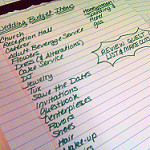
How to Stick to your Budget when Planning a Wedding

 The following post is by MPFJ staff writer, Chonce. You can read more articles by Chonce over at her personal blog, My Debt Epiphany. Enjoy!
The average cost of a wedding in the U.S. is $26,444 but some couples have spent way more on their special day. I personally couldn’t imagine spending $50,000, $30,000 or even $12,000 on just one day even if it was a special life changing event.
When I got engaged last year, my fiancé and I decided to have a semi-big wedding to celebrate our marriage with our family and friends, but we didn’t want it to put us in the poor house. We both have debt and little savings, but wanted to live in the moment when it came to our wedding and enjoy the present instead of delaying our gratification like we usually do.
The wedding is now just two short months away and we are still within our budget. If you’re in the process of planning a wedding or believe you will be planning one in the future, here are some tips to help you stick to your budget no matter what.
Be Honest with Yourself
This is the first and most crucial step when planning your wedding. You need to determine how much you can spend realistically right off the bat so you can plan your big day around that amount.
For us, we decided a budget of $7,000 for the ceremony and reception would be ideal. We would split that amount so we’d each be responsible for coming up with $3,500. That amount doesn’t include any extra gifts or funding from our parents who only pitched in on the venue.
Yes, that $7,000 could have been used to put toward our debt, or in a savings account for a down payment on a home, but we chose to share this special event in our lives with our friends and family and were comfortable with spending that amount and still being able to work toward our other financial goals.
When you sit down with your partner and assess your goals, expectations, and budget constraints for the wedding, it will provide you with an honest idea of what you can and can’t afford so you don’t end up broke or get into debt.
Commit to Having a Small Event
If you want your wedding to be an intimate event, then you’re already on the right track to save money. The less people you invite, the more money you can save. The cost of a wedding rises as you add people to the guest list because you often have to pay for their seating, food, cake, favors, a big enough space and so on.
If you only invite close friends and family and keep the guest list under 25 people, you can probably find some great deals on venues that will be less than $1,000 and you can always reserve a private room at your favorite restaurant for the dinner and dessert portion. You may even be able to have a backyard wedding or utilize a free space with a smaller wedding.
Having a smaller wedding just wasn’t an option for us since we come from larger families and have lots of long-time friends, but it is a great option if you want to share your special day with others and stick to your budget.
Choose a Time and Location that Saves your Money
When and where you have your wedding is very important. One of the highest wedding expenses is the venue. If you plan on having lots of guests like we do, you can try choosing an all-inclusive venue so your reception hall rental and dinner will all be covered in one price. It’s much cheaper with this solution and you won’t have to worry about dealing with a caterer and other vendors to coordinate everything.
Another option you should consider is having your wedding during an off-season like the fall, winter, or early spring and choosing a less popular day like a Sunday. Basically, as long as you don’t choose a Saturday for your wedding date, you will save quite a bit of money.
Also, choose the time of your wedding wisely since food is another big expense and you might be able to get away with serving lighter foods and appetizers if you have a morning wedding.
Skip the Traditions
Traditions are great to cherish, but when it comes to weddings, if something isn’t going to offer value to you and your partner, it’s best to skip it despite what anyone else is doing or what they say. If having something old, something new, something borrowed, and something blue doesn’t really matter to you, you need to voice your opinion to your friends and family and let them know that you are skipping certain traditions.
For example, since my fiancé and I have a short engagement, we opted out of sending out save-the-dates to save money and just sent out regular invitations. I figured anyone who was really close to me and interested in coming to my wedding would make the effort to attend without a fancy heads up arriving in the mail. Plus, I think people just throw that stuff in the trash after a while anyway.
Some couples opt out of having a wedding cake – which can be $3 to $4 per slice on most occasions – and do something different like serving pies or cookies instead. More recently, brides are finding unique ways to replace their traditional bouquet of flowers to save money on expensive and short-lived flower arrangements.
Planning a wedding while adhering to your budget can seem stressful at first. But when you become honest about how much you can afford and determine what factors are truly important to you and what isn’t, you’ll be able to prioritize expenses and cut the ones you can do without.
How about you all? How did you save for your wedding? What tips do you have for someone trying to save money on their wedding day?
Share your experiences by commenting below!
***Photo courtesy https://www.flickr.com/photos/sinksanctity/2800806402/

Building a Professional Wardrobe on a Budget

 The following is a post by MPFJ staff writer, CJ, who blogs at thesingledollar.com about personal finance, budgeting, frugality, and debt repayment.
When I got my first grown-up job, I was really excited; it was the middle of a recession and professional employment was pretty hard to come by. I wanted to do a good job and make a good impression on my new colleagues. Only problem: it had taken me several months to find the job and I was flat broke. What was I going to wear?
If you’re in a similar situation and your college wardrobe of jeans and tank tops isn’t going to cut it, you can still build a professional wardrobe on a budget. Here are some ideas to help you get started.
Thrift Stores
An oldie, but a goodie. Thrift stores are the basis of many a great budget wardrobe, because you can find quality name brands for only a few dollars. The clothing you buy should be cleaned already, but it can’t hurt to run it through the wash (or dry clean it) for good measure.
The cheapest clothes will be at places like Goodwill and the Salvation Army, but other options worth considering for professional used clothing have sprung up. Check to see if your area has a Clothes Mentor or Plato’s Closet branch. Both buy and sell used professional clothing.
Online Options
If the thrift stores in your area aren’t great, try going online. It can be a little tricky since it’s difficult or impossible to return used clothing that doesn’t fit, but especially if you know what brands you like, it can be really helpful. ThredUp carries high-quality and cheap used clothing, and searching for a brand on Ebay can also turn up some great and very inexpensive stuff.
Clothing Swaps
If you’ve got friends who’ve been in the working world for a while, they will probably already have some decent professional clothes. Organize a clothing swap (if you don’t have much to contribute yourself, you can always provide the snacks!) and you might pick up some great clothing. I’m still wearing a sweater and a pair of pants that I got at a swap ten years ago. And the only thing better than inexpensive professional clothing is free professional clothing!
Wear a Work “Uniform”
A lot’s been written in the last year about the virtues of having a professional “uniform” that you wear to work every day. Steve Jobs’s black turtlenecks are famous (and they were pretty expensive, being designed by Issey Miyake just for him) but you can do it too. Maybe your uniform is a white shirt and a black suit, or maybe it’s a blouse, cardigan, and skirt — it depends on what you like to wear and on your industry. Choose something durable, comfortable, simple, and classic, and then buy multiple versions of it. You never have to worry about what to wear, and since the work uniform cuts way down on impulse shopping, it will also save you a lot of money in the long term, though it does require some investment up front.
Work From Home
If you do that, you will have a very cheap professional wardrobe — because your pajamas will do double duty!
How about you all? How do you keep your costs for ‘work clothes’ down? Do you buy used?
Share your experiences by commenting below!
***Photo courtesy https://www.flickr.com/photos/barkbud/4171183856/

How to Help Your Children Cut College Costs

 The following post is by MPFJ staff writer, Laurie Blank. Laurie is a wife, mother to 4 and homesteader who blogs about personal finance, self-sufficiency and life in general over at The Frugal Farmer. Part witty, part introspective and part silly, her goal in blogging is to help others find their way to financial freedom and to a simpler, more peaceful life.
Does the idea of helping your children with their college expenses bring thoughts of fear and intimidation?
If it does, you’re not alone. According to this Gallup poll, college funding worries were parents’ top money concern in 2015, with a staggering 73% of parents admitting the fact that they are indeed concerned about how they’re going to help their children pay for college.
College funding is a serious issue these days. This Forbes article tells us that the average cost for a 4-year public college is $28,000 a year.
Got your sights set on a private school? If so, you can plan on spending an average of $59,000 per year for your child to attend.
So how can parents help ease the burden of college costs for their children? Here are some ideas that can help parents contribute to their kids’ post-secondary education without compromising their own financial futures.
Enroll Your High-Schooler in a Dual Enrollment Program
Many states offer dual enrollment programs for high school students. Dual enrollment programs allow high school students – generally juniors and seniors – to take college courses as a replacement for similar high school level courses.
These courses help students earn college credits during their high school years. The best part about these programs is that the courses are usually paid for by the state in which the student resides.
Taking advantage of dual enrollment courses can help your child to cut down significantly on college costs and graduate with completed college courses already under their belt.
For more information on dual enrollment courses in your state, check out this website.
Utilize a Community College
Many students these days are completing their first two years of college at a local community college. This allows them to get a couple of years of college completed at a lower cost, while still graduating from the public or private college of their choice.
Here’s a tuition cost comparison in our state (Minnesota) for community, public and private colleges:
- Community College: $179.71 per credit
- Public/State School: $470.77 per credit (for residents)
- Private College: $1,195 per credit
As you can see, the costs to go to a public or private college in comparison to a community college can vary greatly.
Therefore it’s easy to see that thousands of dollar per year can be saved for those who choose to complete their general courses at a community college and then transfer over to a public or private college for the remainder of their college education.
*Note: It’s important to remember that not all community college credits transfer to all public and private colleges. Therefore parents and students should research the transferability of community college credits to the public or private college of their choice before enrolling in a community college for completion of their general courses.
Get Educated on Financial Aid Options
There are thousands of financial aid and scholarship options available for students eager to earn a college degree.
Most colleges have departments specifically devoted to helping students track down financial aid options and scholarship options, however it’s important that parents and students do some research on their own as well.
This U.S. News article shares the 5 best places to find college scholarships and grants.
Let Your Kids Live at Home During the College Years
By offering to let your kids live at home rent-free during the college years, you open up a world of money-saving options for them.
First, they can avoid the heavy cost of dorm fees or housing rental. Second, they’ll have on-site meals available free of charge.
Third, they can take online courses from home that are generally much less expensive than on-site courses.
“But what about the ‘college experience’?” you might ask. Although the college years can be great years for personal growth on-campus, you can also help your child to grow personally when they live at home during the college years.
By making house rules clear (even dorms have house rules) but allowing your child some personal and financial independence and responsibility, you can ensure they experience personal growth even while living at home.
By taking advantage of the four options above, you can work with your children to get creative about reducing the college cost burden yet still give them the benefit that a college degree brings to their working world.
How about you all? What are your tips for reducing college costs?
Share your experiences by commenting below!
***Photo courtesy https://www.flickr.com/photos/76657755@N04/7027599019/