

Category Archives for Make Money
Don’t Let a Salary Raise Get in the Way of Hustling
 The following post is by MPFJ staff writer, Sally. Sally is the blogger behind TinyApartmentDesign.com, a blog about design, living well, and simple, tiny spaces. Enjoy!
A couple years ago, I finally decided to turn my finances around.
I was in debt and always thinking about the next bill I had to pay. It was nerve-wracking. The changes came slowly but surely. A big part of it had to do with finally finding ways to make money consistently that didn’t come from a job. I did a few things to make money. I bought a very small vending machine business. I had an online business that sold a physical product. And I had three paid writing gigs, as well as being an on-call copywriter for a company that created small business websites. I was on track to clear out all of my debt in mid to late 2013.
Then something unexpected happened.
I was offered a new job that came with a very nice pay raise from my previous position. I took the offer and started a job that was challenging, rewarding and exciting. I stayed on track and paid off my debt right around the time I had expected to, but also wanted to streamline some of my side gigs. I sold the vending machine business (with the move, it no longer made sense to drive to the location to collect less than $100 each month). I walked away from my writing gigs, needing a change of pace and feeling the pressure to write rather derivative posts. The only gig I kept was my online business, which has always been consistent and promises to grow in the future. I no longer needed the little gigs to sustain me, I had a salary for that!
But, this line of thinking was temporary. The truth is, as much I am excited about this job, I have to keep my bigger purpose in mind: which has always been to be a business owner, to make my own income and to generate income (through investments) without working, hourly or salaried. So I’ve gotten back on the horse. I am writing again, but this time on my terms and on the topics I care about (they’re not always this first-person oriented, promise!). There are always more ways to make money, and I may even look at another vending business closer to my new home. My online business is steady, but I am ready to branch out and try selling new products too. My new salary has been a great boost for my finances, but it also made me complacent a little too quickly. Learn from my mistake and don’t let a salary boost get in the way of hustling. There are always new opportunities out there and ways to diversify your income. There is nothing permanent except change, and there is no reason to stop looking for new opportunities, especially when that’s half the fun of hustling!
How about you all? Have you ever stopped or taken a break from your side income or side hustle? Was it the right move or did you feel like something was missing?
Share your experiences by commenting below!
***Photo courtesy of http://www.freedigitalphotos.net/images/Business_People_g201-Lady_Looking_Through_Binocular_p89551.html
How To Learn More About Finance Without Boring Yourself to Tears

 The following post is by MPFJ staff writer, Catherine Alford. Cat is a freelance personal finance writer who blogs at www.BudgetBlonde.com.
Don’t get mad at me for saying this, but for most people, finance is kind of boring.
I mean, I like it (and presumably if you’re reading this blog you like it), but I only came to enjoy finances and learning more about it in my 20’s. It wasn’t something I got really excited about as a kid or a teenager. It wasn’t something that I thought was particularly important until recently.
However, now that I have my own kids on the way, I want them to like finance. I want them to understand it, and I want them to be interested in learning more about it. The only problem is, how do you impart that kind of knowledge without boring them to tears? How do you get them pumped about saving and encourage them not to go into debt?
Furthermore, how do you encourage anyone to get on the right path when it comes to money? How do you teach someone about investing without it being boring?
1. Make it a Game
When I first told my husband that I wanted to learn more about the stock market, he cautioned me that I had to watch the market for three months before investing. He didn’t want me jumping into the game without making an informed decision.
I didn’t know the best way to “watch” the market though. Did I just read the Wall Street Journal every day and keep track of stocks I liked? Did I just keep an excel spreadsheet of how certain companies were doing?
After a little bit of searching, I came across an online game called Wallstreet Survivor, which exists for the sole purpose of increasing financial literacy. On this game, you create a fake stock portfolio. They give you about 100k of fake money to play with, but I only “invested” $1,000 of it since that was a more realistic number for us.
A few months into “playing” (which really meant I bought some shares and watched it), and the stocks were so erratic that I’m not comfortable buying them. Still, it’s been fun to check in on the portfolio and see how it’s doing. It’s a pretty detailed game, and if you want to learn more about the stock market, I’d suggest it.
2. Talk to Someone Your Age
I’ve learned a lot about finance from my father in law. He’s seriously a genius when it comes to the markets. At the same time, he knows so much that I really have to pay attention to follow along. I don’t feel like I have quite the knowledge yet to have a full fledged conversation with him about finance. I mean, he has at least 50 more years of experience of reading the business news, and I feel almost inadequate sometimes trying to get a solid understanding of a lesson from him.
My husband, on the other hand, is maybe 5 years ahead of me in terms of his understanding of the way the finance world works. He doesn’t know as much as his dad, but he knows more than I do. For that reason, I feel like we are more on the same page, and when he gets excited about a topic, I get excited about it too.
Learning more about finance is something we can do together that benefits our family. I would encourage anyone who wants to know more about money to find someone their age to talk to about it first, and once you get comfortable with the terms and get some basic knowledge down, then go ahead and approach your parents or grandparents for some more detailed discussion.
3. Read Fun Books
There are some really great finance books out there. Some are really dry and boring and others are incredibly well written. Of course, not everyone likes the same financial gurus. It really just depends on your personality.
Some people love Dave Ramsey. Some people love Suze Orman. It really just varies from person to person, so my advice is to pick up a few of the top selling finance books at your library and flip through them to see who has the best writing style that speaks to you. I really love reading personal finance books, and I want to make it one of my 2014 goals to read them a lot more!
Ultimately, learning about finance and good money management doesn’t have to be boring. As long as you can talk to someone or play a game or read a book that gets you pumped and excited about learning more, you’re on the right track. If you try one method and it doesn’t get you interested, go for plan B. Watch some videos on You Tube about money management. Talk to you friends about it. Look up your favorite companies.
Just doing one of these tasks per day will increase your financial literacy dramatically, and suddenly, it won’t be boring anymore!
How about you all? How did you increase your knowledge of finance?
Share your experiences by commenting below!
***Photo courtesy of http://www.flickr.com/photos/binusarina/3889528397/sizes/m/in/photolist-6VGRhr-6XMJb5-735pS4-7k
How Networking Can Change Your Life


The following post is by MPFJ staff writer, Shondell of Call Me What You Want, Even Cheap. She blogs about her recent car loan and mortgage pay off and a whole bunch more. Check out her blog right here.
Networking is an amazing concept that can change your whole way of thinking about what it truly takes to succeed in business and your career.
Networking is a practice that will introduce you to knowledgeable and stimulating allies you didn’t even know you had. Networking is also a complex process of developing and using contacts for advice, information, and moral support as you pursue your business and career goals. In the end, networking with like-minded individuals can trigger a chain of events that can ultimately lead to a large-scale phenomenon.
Unconditional Support
Networking can change your life in so many ways you would not even begin to imagine.
When you network with people who share your dreams and ideas, you benefit from much more than meaningful conversation. You enjoy the support of people who understand what it takes to realize your aspirations and where and why you might need support. You get this unconditional support that can urge you to become a published author or a successful retailer, it doesn’t really matter.
All that matters is that networking can help you follow those career and business paths that you may have otherwise abandoned out of fear of failure. Many established professionals and business owners credit networking for their success and appreciate the encouragement they’ve received from like-minded individuals. They are aware that they might have not flapped their wings and arrived where they are today without that support.
Shared Knowledge
Networking is the best activity that one can indulge in as an entrepreneur or career person. It is the activity that promotes shared knowledge and ideas, which allows you to see things from a different perspective whether you discuss your point of view or ask for feedback. Networking is the motor for expanding your knowledge and learning from those who have already been where you are today. In this respect, networking facilitates connections with people who have once shared the same drive and passion that you have today and are willing to help you overcome and avoid the pitfalls they have already experienced. That eventually helps you pursue your goals with even more passion and realize your dreams faster.
Valuable Source of Information
Networking has changed the life of many individual professionals who have benefited from getting the right information at the right time. The course of many careers has been positively altered by networking that brings people together willing to share valuable information with other like-minded persons. Networking enhances a high percentage of new jobs, a lot higher than that generated by formally applying online or through some other venue. Networking is synonymous to new professional and business opportunities.
It is a practice very similar to brain storming where the spirit of competition complements a friendly ambiance. By the way of networking, new businesses are born and new jobs are created. It remains the best way to receive the right information at the right time and build a business or a career on it. How many times have you wondered what would your life have been if you had known about a certain business opportunity at the right time? You would have probably known about it if you had been networking with the right people.
Raising Your Profile And Confidence
Networking is a wonderful process that encourages talking to people you don’t know and putting forth your best efforts to make a good impression constantly. That ultimately increases self-confidence, which is one of the most important attributes of a successful business owner or professional individual. It is the quality that helps you make connections and talk to people, essentially enhancing business growth. On the other hand, networking propels your profile in the right circles where your constant and visible presence builds your reputation as a reliable, supportive, and knowledgeable person. As you offer advice, information, and support yourself, you establish and nurture ever stronger relationships that will generate more leads and referrals. When people see you as a supportive and helpful person, you become the one person that comes to mind when they need what you offer.
Networking is a key activity for all business owners but it is crucial and vital for small business owners, new entrepreneurs, or professional individuals. It is an activity that enhances personal growth as well as business development while remaining fun at the same time. After all, small business and careers are all about networking, establishing and growing relationships, and eventually taking action. Climbing the career ladder or building a successful business takes a lot of time, energy, and drive. It is just wonderfully beneficial to have a network of like-minded people, friends, and associates that can keep you going and offer you the energy, information, and advice you need to pursue your dreams. As you surround yourself with people who share your vision, ambition, and drive, you stand more chances of having your entire life changed and move forward not only as a person but also as a group.
How about you all? What has networking done for you? What is your favorite strategy for networking?
Share your experiences by commenting below!
***Photo courtesy of http://www.callmewhatyouwantevencheap.com/wp-content/uploads/2013/11/networking-300×200.jpg
How to Spot Money Making Opportunities

 The following post is by MPFJ staff writer, Catherine Alford. Cat is a freelance personal finance writer who blogs at www.BudgetBlonde.com.
Money making opportunities are in front of us every single day. We just have to be open to recognizing them. Whether you want to make some extra side cash or change careers altogether, its time to put your antennas up and find a way to make it happen.
Here’s how:
1. Be Open to Opportunities All the Time
When I say be open “all the time” to opportunities, I mean that sometimes ideas and interesting contacts come to you outside of normal business hours. If you are the type of person who strictly works 9-5 and then switches directly into “off of work” mode when you walk in the door, it can be hard to grab up opportunities when you see them.
I can’t tell you how many times I’ve secured different business contracts because I was in the right place at the right time, happened to see a tweet for a job opening at the moment it posted, or just happened to be sitting next to an interesting person on a flight.
You have to make it your mindset that you are looking for new ideas and new business opportunities constantly, and the more open you are, the more they will come.
I know it doesn’t sound great from a family perspective, but I’m not advocating that you’re on your phone constantly looking for ways to make money instead of spending time with your kids. What I am saying is that next time you drop off your son at a playgroup and talk to the other moms or dads, be open to having conversations about your business or interests because you never know where it will lead or who knows who in your community.
2. Recognize a Need
If you work with people every day, whether online or in the “real world” as I call it, chances are you are going to get the same questions a lot and hear about the same problems.
For example, if you are a teacher and a parent asks you, “Where can I find a really good tutor for my son?” there’s a money making opportunity for you right there. If you own a local store and a customer says, “I wish I could buy your products online so I don’t have to come in the store,” there’s another. If you talk to a group of stressed out parents and all they want to do is find a way to have a date night in peace, think of how that can translate to a business opportunity for you or your teenage daughter, if she’s interested in babysitting.
Conversations with people and normal everyday complaints often point to a wider problem that can be solved with a little ingenuity and elbow grease. Find the problem, brainstorm about the solutions, and you could find yourself in an entirely new career.
3. Continuously Hone Your Skills
One of the big issues with all professionals is that we get kind of stuck in what we know. We like the comfort of our own industries and our own business contacts and our own lives. I’m guilty of the same thing.
Yet, if you’re feeling a desire to make more money or to make a change in general, it’s time to hone your skills. What is one thing that you’ve been wanting to learn? What is one program that’s always interested you? Are you a blogger who finally wants to learn how to program (me! me!)? Are you a small business owner who wants to expand but doesn’t know how? Have you always wanted to go back to school?
All of these changes and all of the new ideas that you can gain from them can lead to an incredible number of money making opportunities. If you go back to school and get your MBA, you could get a great education and make important contacts with your professors and fellow students. If you want to learn more about personal finance, just getting a stack full of new books at the library can be invigorating and fun and bring all sorts of unique perspectives about how to make the most of your money.
Regardless of what path you take and what you do, just remember to constantly hone your skills and stay aware of the types of skills that are desirable in your industry or the new industry you want to be in. Hirable skills mean more money making opportunities in the future.
Ultimately, I think that money making opportunities are around us all the time, every day. We just need to know our path and have a bit of direction so we’re open to finding them.
I’m interested in new money making opportunities. Are you? Please share your thoughts in the comments below.
***Photo courtesy of http://www.flickr.com/photos/68751915@N05/6757871357/sizes/m/in/photolist-biaRHp-d8Zd
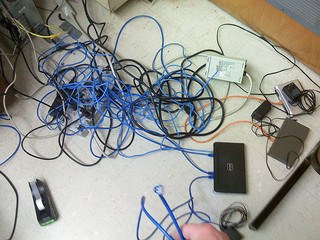
De-Tangling Your Life – It‘s the Key To Everything Else

 The following is a post by MPFJ staff writer, Kevin Mercadante, who is a professional personal finance blogger, and the owner of his own personal finance blog, OutOfYourRut.com. He has backgrounds in both accounting and the mortgage industry.
You ever feel that your life is just too…complicated? That you have no time to do what it is you really want to do with your life? These days, that’s probably true for more people than not. The pace of life is just faster than it’s ever been.
We can blame television, computers, cell phones, and a host of other factors – and all of them will be true. But, none of that actually fixes the problem. You may need to work on de-tangling your life. It could be the key to everything else.
There’s no question, complexity is creeping into every aspect of life. That means that you have to look at each area of your life and make decisions as to what you will do in order to simplify your life so that you can focus on what it is you really want to do. That will be the beginning of both greater productivity and more enjoyment of your life.
Your finances
Finances alone are an area of immense complexity. The more financial involvement you have, more tangled your life is. This is an area where you have to separate what’s really important from what is simply desirable or convenient. Try these:
Live on less than you earn. Life can become more complicated simply by the fact that you spend more than you earn. It can be a tough adjustment, but if you reach the point where you have a little bit extra in your budget every month, your finances will unwind quite a bit.
Paying off some debts. The amount of debt that you carry can be intimidating, but complication often comes from the number of debts that you have. If you have 11 debt payments that you have to make every month, try using the debt snowball method to knock them off one at a time. The debt snowball simply has you starting with paying off your smallest debt, then moving up to pay the next smallest. Your life will begin to untangle as the number of debts that you need to pay drops.
Building a cushion. If you can learn to live on less than you earn, you should have extra money available to put into a savings account. This is not money that you invest, but peace of mind money that keeps you from feeling overwhelmed by your finances. A savings account may be boring, but it can lead to many nights of peaceful sleep. That should definitely help de-tangle your life.
Get out of investments you really don’t understand. If you’re having difficulty understanding or keeping up with certain investments, you probably don’t need to be in them. Invest in what you understand, and you feel comfortable with. At the same time, having too many separate investment accounts can also be a life complicating factor. Cut down to no more than you can easily manage.
Your kids
Sometimes, in an effort to raise “perfect kids”, you burn yourself out. You’re running here, running there, and worrying about every aspect of their existence. Worrying about your kids is a natural part of parenting. But you can cut down on the number of side shows that are going on in their lives, and complicating yours.
Limit extracurricular activities. Some people allow (or even encourage) their children to participate in two, three and even four extracurricular activities personal school semester. You’re running here, driving there, participating in multiple fund raisers – and burning out while you do. A teacher at my son’s high school even referred to this as “a recipe for mediocrity”, because the kids can never concentrate on one activity at a time. Try limiting their activities to just one per semester, which should simplify their lives and yours.
Let them handle more of their own issues. Are you a helicopter parent? That’s a type of parent who hovers over their children waiting to jump in and fix every problem in their lives – even as they get older. But this is a very complicated way to live. You can’t protect your children from everything that happens, and sometimes the best life experience they can get is facing problems head-on. As they get older, they should handle more, and you should handle less.
Learn to say “no”. Do you sometimes feel as if you are crushing your children because you are saying “no“ to them? Sometimes for your own peace of mind, you need to do just that. There is only so much you can do as a parent, and sometimes the best thing is to save your energy for the big stuff, and start saying no to more of the smaller stuff.
Your work
Today if often seems that you need to do the work of two or three people just to keep your job. But there may be a few steps you can take to de-tangle even that seemingly intractable area of your life.
Get to work a little bit early. If you have more than you can handle at work, try getting in 15-20 minutes early each day. That will give you extra time to do what you need to do, or at least to create a viable “to do” list that will keep you on track all day. It will also make traffic less of a factor, and that has to help.
Delegate more. If you are simply overwhelmed with work, you may need to talk to your superiors about delegating at least some of it to free yourself up so that you will accomplish your primary tasks. If you can explain to your boss that delegating some work will increase your productivity, you may get a sympathetic ear.
Seriously determine if you’re doing the right work. Sometimes the complication at work comes from the fact that you are not doing the right work for your personality and preferences. If your job seems to be beyond you, you might need to consider a career change into work that better fits who you are. It can go a long way toward removing much of the complication in your life.
Your hobbies and past-times
Sometimes even hobbies and pastimes entangle your life. It may be that you are taking on too much, even though that seems absurd considering these are activities that you participate in for recreational purposes. But sometimes you don’t have enough time and energy because too much time has been devoted to hobbies and past-times.
Limit TV and web surfing. Studies have shown that the reason that people don’t have enough time for what they want to do is often because they watch too much TV pf spend too much time web surfing. Keep these activities to an absolute minimum, that way you have time for whatever else you want to do.
Drop activities that you don’t particularly like. Do you participate in activities that you don’t particularly like? Maybe you’re trying to maintain certain friendship through the activity. But if the friendship is strong, it should survive your decision not to partake in a mutual activity. And if it isn’t, the friendship may not have been worth keeping. After all, you can only spread yourself so thin.
Don’t be a “habitual joiner”. If you’re the kind of person who always participates no matter what the activity is, you could be complicating your life needlessly. You can say no to becoming a committee chairman, or even decline to join the committee at all. You don’t have to be coaching several sports team all year-round, nor do you need to participate in every activity at school, work, or church. Pick what you feel most passionate about, and stay with that.
Life is complicated today, but sometimes we do our part to add to the complication. Figure out what it is you don’t really like or need to do, and get rid of it. Then think about what you want and need to do, and carve out time to do it. That’s taking control. And any time you do, life will become more satisfying and less complicated.
How about you all? Do you find that complication is leaving you drained and confused? What can we do to de-tangle our lives?
Share your experiences by commenting below!
***Photo courtesy of http://www.flickr.com/photos/helfer/3326948370/sizes/n/in/photolist-64ZtQN-6nTQB5-6p3njq-6qdTC1-6tKRiP-6Yqdej-6
Financial Pros & Cons of Working From Home

 The following post is by MPFJ staff writer, Kelly Gurnett. Kelly runs the blog Cordelia Calls It Quits, where she documents her attempts to rid her life of the things that don’t matter and focus more on the things that do. You can also follow her on Twitter and Facebook.
Many people dream of working from home—where “working from home” means “watching TV in my PJs while the rest of the world is suited up in cube land.”
But, the realities of telecommuting (if you work for a company) or freelancing (if you work for yourself) are, as with any dream, never quite as lovely as you imagine them. Granted, working from home has its fair share of perks. But a job is still a job, and any major life change will have its pros and cons.
For anyone considering making the switch, here’s an overview of both sides, from someone who’s done it for the past few years.
Since this is a financial blog, I’ll take a look largely at the monetary implications of working from home, but I’ll also cover some other considerations which can sometimes play just as important a role in your decision as the financial ones.
Savings
Commuting costs. If you take public transit to work, you’ll save a pretty penny. If you drive, you’ll save lots and lots of pennies. In addition to the cost of a car in general (we went down to a one-car household when I started working from home full-time), you also save on related costs like gas, parking, tolls, and extra wear and tear.
Clothing. When you report to an office 5 days a week, you’re going to want a decent-sized wardrobe to keep you from recycling outfits too often. You also need the various add-ons that go with it, like bags, shoes, accessories, etc.
When you work from home, you can pare your closet down drastically. All you need are a couple go-to power outfits for video conferences and the occasional trek into an office for a face-to-face meeting. Depending on how high-maintenance your work clothes are, this could also save you a bunch on dry cleaning.
Food. Many of us succumb to convenience food when we’re doing the 9-5 grind. We grab a coffee at Starbucks when the office coffee is sub-par. We grab lunch out with coworkers because we didn’t have time to pack something that morning. We take part in things like Happy Hour because darn it, we’ve earned a few nice cocktails after putting in a week on someone else’s clock.
When you work from home, you have much more say over your own hours, giving you the freedom to explore things like making a fresh salad or wrap for lunch and brewing your own cents-a-cup coffee. (Eating healthier can also add to the long-term savings of less medical bills!)
Office parties, fundraisers, and other peer pressure purchases. You may have no idea who Mabel in Accounting is, but when she retires, you’ll look like a heel if you don’t contribute to her farewell gift and cake. You may have more wrapping paper than you’ll go through in a lifetime, but when Bob comes around with a picture of his daughter’s softball team in their adorable little uniforms, you feel compelled to buy a roll or two just to be nice.
No more when working from home. The only people you have to worry about buying gifts for are your own friends and loved ones.
Childcare costs. While working from home with little ones isn’t easy by any means, telework is a staple of stay-at-home moms for a reason: it saves the astronomical cost of daycare, lets you spend more time with your family, and lets you earn some money on the side (while still getting your laundry and errands done).
Costs
Taxes. If you work remotely for a company and enjoy “employee” status, you can skip this one. But many work-from-homers are self-employed freelancers or subcontractors, and they face the wrath of the employer/employee double-tax (you’re your own boss and your own worker, now) and the stress of quarterly tax payments.
Here’s a good rundown of what you can expect tax-wise, but I highly recommend you seek the help of a CPA, especially when you’re just starting out. Mine helped me realize that for every dollar I bring in as a freelancer, a full 1/3 of it should be stowed away in a savings account to cover those quarterly payments when they’re due. Had he not warned me at the start of my first taxable year, I would have been very unpleasantly surprised come payment time.
Health care. As with the above, this won’t apply if you’re lucky enough to be covered by a company. Otherwise, bear in mind you’ll now be responsible for your own healthcare costs. At the time of writing, the state healthcare exchanges are still new enough it’s hard to tell how they’ll impact health care options, but the bottom line is, you’ll still be paying out of pocket for coverage you may have once gotten through an employer.
Operational costs. Higher utility bills from being home all day. A nicer computer, faster internet connection, and maybe a webcam for those video conferences. When your home is your business, your monthly bills are going to be higher than they’d be if you were away at the office 40 hours a week. You’ll also likely wrack up some startup expenses to get yourself up to speed.
The good news is that many of these things can be written off on your taxes, especially if you have a dedicated room at home that serves as your office (not your office/kids’ playroom/den). Again, consult with a CPA for your specific situation.
Non-Monetary Considerations
No commuting time (or pain and suffering). Imagine instead of fighting your way through rush hour traffic twice a day, you could spend that time working away at your computer so you could get more done by lunch time. Imagine also that you live in a wintry city like my own hometown of Buffalo, New York, and the thought of not having to scrape off 3 feet of ice and snow at 7:00 in the morning takes the sting out of quite a few of the above costs.
Increased concentration/efficiency. Away from chatty coworkers and overbearing bosses, many people find that working from home lets them enjoy a level of productivity (and peace and quiet) they could never achieve in an office environment.
This means you may be able to get a full day’s work done by 3:00 instead of 5:00, giving you two more hours for whatever you please. It means you can structure your day around your usual 3:00 slump so you can tackle tougher tasks when you’re at your best. It also means you can potentially bring in more income by being able to get more done in those 40 hours than you would have at the office.
Less personal contact/accountability. If you’re a social butterfly who gets bored and lonely after a few hours by yourself, working from home may not be for you. You also need to be disciplined and dedicated to get your work done on time with no one peering over your shoulder to see how it’s coming along. It takes a certain type to work from home, and if those two warnings make you nervous, you may not be that type.
More flexibility. If your kid gets sick and has to stay home from school, it doesn’t derail your day completely. If you get sick and need to make a doctor’s appointment, you don’t have to worry about squeezing it in before or after work (or having to make up time for leaving early)—you can happily accept whatever the next available appointment is.
If you are disciplined and dedicated, you can pretty much structure your days however you please, which, for many who choose the work-from-home path, is worth more than money could buy.
How about you all? Do you work from home? What others pros/cons have you experienced?
Share your experiences by commenting below!
***Photo courtesy of http://www.flickr.com/photos/benmcleod/116671073/

4 Ways To Make Secret Shopping Worth Your Time

The following post is by MPFJ staff writer Travis. Travis is a customer blogger for Care One Debt Relief Services, and also appears weekly at Enemy of Debt. Travis candidly shares his personal journey to pay off $109,000 of credit card debt and the tips he’s learned along the way. As a father and husband he provides a unique perspective on balancing debt, finances, and family.
Most people are very interested when I tell them I am a secret shopper. They are intrigued by the possibility of making some easy money.
But, when I tell them that the average secret shopper job pays about $15, their eyes glaze over with disinterest.
The most frequent complaint from people when they first look into secret shopping or have even tried it once or twice is that it’s not worth the time and effort. Sure, there is the occasional financial institution visit that pays $45, or the very infrequent free night in a hotel, but most of the jobs are pretty low paying. There are some tricks, however, that can make secret shopping very much worth the time and effort.
1. Don’t Drive Out of Your Way
Almost all the shops I do are in close proximity to places I visit often anyway such as my place of employment, the mall, or the Walmart where I shop for groceries. When I first started, I would drive all the way across town to do a job at a fleet and farm store. Between the 90 minutes it took out of my day, and the gas needed to drive there and back it just wasn’t worth it. I never make a special trip to do a secret shop.
2. Group Shops Together
The services I use give me several dates to choose from for each shop. I will coordinate several shops (even across different services) in the same area on the same day. For example, last month I did a shop at a nutrition store and a medical scrubs store on the same day that were in the same shopping plaza. It’s right next to my place of employment, so I just did them on my way home from work. Two shops, one location, zero extra drive time.
3. Seek Bonuses
When shops are not picked up, some services will offer bonuses. Recently there was a job at a cell phone store that paid $18. When it didn’t get picked up by the due date, a $2 bonus was offered. After a few days it was increased to $5, then $10, then came the Holy Grail of secret shopping: the “make me an offer” email. My offer to do the job for a total fee of $35 was accepted. I could have gone higher, as I saw the last location increased to a total pay of $60 before it got picked up!
4. Incorporate Shops Into Your Life
There’s a buffalo wing restaurant and sports bar near our home that my wife and I like a lot. They also happen to be registered with one of the secret shopping services I use. If I see a shop available, I’ll schedule it for a Friday and make it part of a date night. Time with my gorgeous wife AND get the dinner for free? It doesn’t get any better than that!
This month I will be paid $105 for the four jobs I did last month. I spent about an hour in the stores, and another hour entering the shop data into their website.
That’s over $50 an hour.
How about you all? How does Secret Shopping sound to you now? Have you ever tried it?
Share your experiences by commenting below!
***Photo courtesy of https://www.flickr.com/photos/149902454@N08/34587191230/sizes/l

How To Make Extra Money As a Part-Time Tutor

The following is a post by MPFJ staff writer, Kevin Mercadante, who is a professional personal finance blogger, and the owner of his own personal finance blog, OutOfYourRut.com. He has backgrounds in both accounting and the mortgage industry.
If you need to make extra money, one of the best ways to do it is as a part-time tutor.
This is a business you can start that will require no upfront capital, in addition to the fact that it plays into your natural skills and talents.
The income that you can earn as a part-time tutor can be very generous too. Where I live, tutors who work with high school students charge anywhere from $30-$50 per hour. You wouldn’t have to work too many hours, in order to make a decent part-time paycheck with that kind of hourly rate.
What to teach
This is probably the single biggest obstacle to anyone who is considering tutoring. But, it is best resolved by choosing the subject were you have the most aptitude and interest.
Choose a subject where you are particularly strong. Math, science, and writing seem to be the perennial favorites. In fact, there will be a stream of students that you can tutor in those subjects. Others include foreign language, history and even certain specialty subjects.
Music is another popular subject area for students. This can involve everything from singing to the various musical instruments. If you have any talent with a particular instrument, you can tutor students who are learning to play, and need help beyond the training they are getting in school.
Moving beyond academic subjects
When it comes to tutoring, don’t think strictly in terms of school-age students. There are adults looking for training in a variety of different subjects. Many adults learn better in a one-on-one situation, than in a group setting like a classroom. And they will be willing to pay you to provide that one-on-one training.
Subject areas can be vocational. If you can teach business topics, like bookkeeping, administration, bill collecting, basic computer usage, public speaking, sales, and the various popular software programs for business, you may find clientele in the business world.
There can also be a market for personal tutoring. Teaching English as a second language is one very large possibility. An entire industry is building up based on this very subject. You can also teach a foreign language that you know – French, Spanish, Korean, German, or any one of a number of Asian languages.
Music and musical instruments are another area where you can become a tutor for adults. Many adults begin learning a musical instrument late in life, and need someone to work with them closely in order to master it.
What to charge
Earlier, I provided the pay range for tutors in my area, but you’ll have to test your local market to determine exactly what the range is. Check websites for tutors in your area, as well as the classified ads and Craigslist. You may have to call in on some ads in order to find out what their rates are, as many will not list them in the ad itself.
You can also check with local schools and ask for flyers that could provide more information. Once again, it will be worth making a few phone calls speaking to tutors themselves to find specifically what they charge and also what services they provide.
Where to find clients
If you are looking to tutor students, finding clients can be as easy as contacting the schools in your area. Decide what age group you will specialize in – elementary school students, high school students, or even college students. Contact each of those schools to let them know you are available for tutoring. Prepare a one-page flyer that will explain your services, and even your rates. You may decide to leave your rates out, and have the issue discussed when a prospective student calls you.
If you’re going to tutor in the adult/business market, finding clients will be more complicated. Definitely advertise on Craigslist – the ads are free, and a lot of people go to that site now that local newspaper classified advertising is fast disappearing.
You may also want to create flyers that you can place in senior citizen centers, grocery stores, Laundromats, apartment complexes or anywhere that will allow you to post them. If you’re looking specifically to provide services for businesses, you may have to find a way to contact them directly. This may mean contacting them through their websites, or even calling to offer your services.
If you are prepared to invest some money on the marketing side, you can even do a direct mail campaign. Mail your flyer out to businesses in your area that are likely to need your services. It will cost you for stationary and postage, but you will be approaching a very specialized market with a relatively high level of response.
Converting it to a full-time venture
If you can begin building a business as a tutor on a part-time basis, there really is potential to convert it into a full-time venture. This can be particularly true if you can tutor into a business niche. It’s often just a matter of finding enough clients, and increasing the number of billable hours that you spend each month tutoring.
Once you get your marketing going, you can begin getting a substantial amount of referral business if clients are satisfied with your work. Between continued marketing efforts and ongoing referrals, you may be able get enough business to start doing it full-time. And since the marketing will be running essentially on automatic pilot, you’ll be free to perfect your craft as a tutor, and to concentrate your efforts in giving the best performance that you can. That will lead to still more referrals.
Not everyone is cut out to be a full-time teacher in a school, but many people have the qualifications and talent to become a personal coach – which is really what a tutor is.
If you have a passion for being a tutor, jump in and get started. Push it hard, and you could be launching an entirely new career for yourself, as well as a business venture that would give you much greater control of both your time and your income.
How about you all? Have you ever considered tutoring as a business venture?
Share your experiences by commenting below!
***Photo courtesy of http://www.flickr.com/photos/tulanesally/3349979270/
Why Having Multiple Income Streams is More Important than Ever

 The following is a post by MPFJ staff writer, Kevin Mercadante, who is a professional personal finance blogger, and the owner of his own personal finance blog, OutOfYourRut.com. He has backgrounds in both accounting and the mortgage industry.
Having multiple income streams has always been desirable, but it does seem as if it’s more important now than ever? Not only are jobs less secure than they’ve ever been, but the cost of living is rising faster than increases in pay.
What are multiple income streams? Actually, they can be any source of income over and above your primary occupation. That can include a part-time job, a side business, passive portfolio investment income, or even active investment income, such as rental real estate.
There are at least five advantages to having multiple income streams…
Extra income
This is the most obvious reason for having multiple income streams. Sooner or later, everyone needs an extra source of income, or at least wants one. Some of the reasons extra income could help include:
- Paying off debt
- Helping to put your kids through college
- Building up savings, especially an emergency fund
- Saving for a vacation or other special event
- Saving to buy a new car, especially if you can buy it for cash
Sometimes, it is hard to save money out of your regular paycheck, and if you have multiple income streams, you don’t need to. You can continue to use your regular paycheck to pay for living expenses, while allocating an extra income source or two to any purpose you choose.
But not all, or even the most, of the reasons for having multiple income streams are purely financial…
Income diversification = greater financial freedom
Apart from making and having more money, multiple income streams represent a form of investment diversification. If we know that diversification is important when it comes to investing, so we should be able to appreciate that it is equally valuable when it comes to earning a living.
Simply put, the more sources of income that you have, the greater the amount of financial freedom that you’ll enjoy. That freedom comes from never being completely dependent upon a single source of income. Your “income eggs” are stored in several baskets. By itself, it can take away the fear of losing your job, and that’s a whole lot of freedom right there.
Learning new career or business skills
You may be working in a career that you are not particularly happy with. But because it is your full-time occupation, it might be extremely difficult to retool yourself for a different line of work. Developing multiple income streams could be a way of transitioning yourself into an entirely new career, but on a part-time basis.
You could even consider dabbling in two or more different directions at the same time. This will enable you to experience various businesses and careers without ever having to make a full-time transition. And sometimes the skills you learn in side ventures can help you do your primary job even better.
Preparing for retirement
From nearly every point in the financial universe, we’re being told to increase retirement savings. This is especially true in light of the fact that defined benefit pensions are now a rarity, and the future of Social Security seems to be in perpetual doubt. Having multiple income streams can help prepare you for retirement in two very significant ways.
1. Providing extra income to fund your retirement plan. As a source of extra income, you can direct the extra cash flow into your retirement plan, or even create a new plan based on your extra income source. For example, if you have a side business, you can create a SEP IRA that will enable you to save up to 20% of your business income each year. If you are already covered by a 401(k) plan on your job, this arrangement will enable you to fast-forward your retirement savings, and even make early retirement possibility.
2. Extra income when you retire. In addition to enabling you to save more money for retirement, multiple income streams can also represent valuable additional income when you actually retire. Many people reach retirement age and realize that don’t actually want to retire, at least not on a full-time, permanent basis. If you have already set up multiple income streams, you can simply shift over to managing them a more active basis when you retire from your primary occupation.
Creating what could be your next career following a job loss
In today’s job market, no one can know for sure how long they will keep their current job. And over and above job concerns, some careers are quickly becoming outdated. But many people continue to hold on to jobs until they come to a sudden and unceremonious end. Wouldn’t it be better to face a job loss already having income sources in place?
If you did, not only would you have income, but you may also have the start on your next career. Nearly any source of additional income might be converted into your next full-time job or business. If you already have it up and running, once you do lose your job, you will have all the time you’ll need to ramp it up and make it something more substantial.
How about you all? Do you have any income sources other than your primary occupation? Are there any that you could suggest to others that you’ve had success with?
Share your experiences by commenting below!
***Photo courtesy of http://www.flickr.com/photos/95499138@N03/9487302917/sizes/m/in/photolist-fsmUCe-fzDy
5 Tips For Turning Your Home Into A Vacation Rental

 The following post is by MPFJ staff writer, Shondell of Call Me What You Want, Even Cheap. She blogs about her recent car loan and mortgage pay off and a whole bunch more. Check out her blog right here.
If you live in an area frequented by tourists and vacationers, then it may not be a bad idea to turn your house into a vacation home.
Vacation rental is a huge industry and offers you the opportunity to supplement your income during the holiday seasons. In fact, many people with a home (or homes) in tourist areas make a major portion of their annual income from renting out their homes. This allows you to attend to your other businesses while your house quietly makes money for you. However, not every house can be profitably turned into a vacation rental; therefore, you have to do some research and may have to carry out a few modifications before turning your house into one.
Here are 5 tips for turning your home into a vacation rental:
1. Determine if your home is suitable:
Your home should be in or near a tourist area for it to be suitable for a vacation rental. It should provide easy access to all the things vacationers come for, such as the beach, landmarks, theme parks and great outdoors. It should also have modern amenities such as a telephone, internet, a fully equipped kitchen, air conditioner (for hot weather) and heating system (for cold weather). A house that is not in the right place and doesn’t have any comfort features will find very few takers, if at all.
2. Prepare your house:
Once you have determined that your home is suitable for a vacation rental, you should prepare it for the same. This requires some money, but you can quickly recover your investment once your house is rented. First, clean the house thoroughly. Hire a cleaning service if you are not up to the task. Repair or replace the furniture, carpets, doors, windows and electrical fittings if they are broken or worn out. Paint the walls and ceilings with attractive colors if necessary. Your home should be neat, clean and attractive before you can show it to any would-be tenants.
3. Set a suitable price:
After you have prepared your home for rent, research the market to find the right price for your home. Find out the amount charged by similar-sized homes in your area and determine whether you can set the same or a slightly different price. When setting the price, you should consider your home’s location, size, accessibility, amenities and the kind of people you want to have as guests. If you are targeting affluent vacationers, then you can set the price a notch or two higher than the average price, but that should be backed by a great location and plenty of amenities.
4. Advertise:
If your home is in a busy location, then vacationers will come looking for you. Otherwise, advertising is the only way to find tenants quickly. You can advertise either in the local papers or on the internet or both. Word-of-mouth is also a good idea if you have a small budget. Whatever you decide to do, you need to create an attractive ad with beautiful photos of both the interior and exterior of your house. Also, do not forget to mention the amenities and your home’s proximity to parks, malls, diners and other places of interest.
5. Screen the tenants carefully:
Although money is important, you don’t want to invite trouble by renting your home to the wrong people. The worst thing you can do is harbor criminals and terrorists, which can easily land in trouble with the law. So do not hurry to rent your house out to the first people who come knocking on your door. Screen every would-be tenant carefully. Ask them where they are from, what they do for a living, why they wish to rent your place, who they will be living with and whether they will be having parties. If you are doubtful, you may also ask for a small security deposit, which is quite the norm.
Ideally, you should be able to leave everything to the tenants’ care after they move in. But that is often not the case as problems relating to things like water, electricity, telephone and security often arise. The first thing you should do after handing over the keys to your home is give the tenants your telephone or cell phone number so they can contact you if any emergency occurs. You should also inform your neighbors and relatives so they will know what is happening. If your tenants have any complaints or concerns, you should attend to them immediately. Once the word spreads that you are a great landlord, you will get good tenants every holiday season.
How about you all? Would you consider renting out your home to vacationers?
Share your experiences by commenting below!
***Photo courtesy o fhttp://farm2.staticflickr.com/1230/4724901591_0400dc3e99_o.jpg