

Category Archives for Invest & Retire

An Investors’ Guide To Investing In Peer-To-Peer Loans
 The following is a post by MPFJ staff writer, Toi Williams, who is a professional personal finance blogger of Fine Tuned Finances. She has backgrounds in personal finance, sales, and real estate.
Many investors are being drawn to investing in peer-to-peer loans as a passive investing method that provides higher than average returns. For conservative investors, the least risky notes on the lending platforms offer substantially better returns than bank certificates for slightly higher risk. For investors that are comfortable taking on more risk, the platforms also include notes with correspondingly higher risk profiles.
Peer to peer loan platforms categorize their loans into different investment grades based on the amount of risk inherent in the loan. Each peer-to-peer loan platform has a minimum credit score requirement for borrowers to reduce the risks of investing in loans on the platform. Loans requested by people with high credit scores receive higher investment grades than loans requested by people with average credit scores.
For many investors, the best thing about investing in peer-to-peer loans is how easy it is. In many cases, the minimum investment amount for a single peer-to-peer loan is around $25. Some investors use services that use proprietary algorithms to pick their notes for them. Others choose to use the reinvestment programs of the lending platform to reinvest their returns from the platform.
It is important for potential investors to remember that they will be holding on to their investments for a period of three to five years. Once money has been invested in a loan, the investor must keep the investment until the end of the term. The notes that the investors are investing in are unsecured, so if a borrower defaults on the loan, the investor could be out of a considerable amount of money. Many investors mitigate this risk by diversifying their holdings by investing small amounts into a large number of loans.
These peer-to-peer lending platforms are considered to be the best ones for investors due to their vigorous underwriting processes and returns for investors.
Lending Club
Lending Club is currently the largest of the P2P platforms, arranging about 56,600 loans totaling $791 million in the first quarter of 2014. Lending Club loans range from $1,000-$35,000 with the average loan amount reaching $13,913. The platform has some of the most stringent underwriting standards in the industry, with over 80 percent of applicants rejected for not meeting the criteria. To be approved, the applicant must have a FICO score higher than 660 and a debt-to-income ratio of not more than 30 percent.
Applicants that are approved are grouped into seven loan grades assigned a letter from A through G and further categorized into five sub-grades numbered 1 through 5 based on an assessment of their credit history. Applicants graded A1 get the lowest interest rates, currently 6.78 percent APR for 36-month notes and 7.3 percent for 60-month notes. G5 rated borrowers pay the highest interest rates, currently 29.99 percent APR for 36-month notes and 28.69 percent APR for 60-month notes.
Investors can also invest in Lending Club through private investment funds. There are two funds that are proving to be very popular for investing in Lending Club – the Conservative Consumer Credit Fund and the Broad Based Consumer Credit Fund. The Conservative Consumer Credit Fund has a minimum investment of $500,000 and invests in only the two least risky grade notes on the platform. Returns for the fund have averaged a 5.69 percent trailing 12-month net fund return. The Broad Based Consumer Credit Fund also has a minimum investment of $500,000, but it invests in all loan grades. The fund has invested in more than 16,000 36-month and 60-month consumers loans and returns for the fund have averaged a 9.36 percent trailing 12-month net fund return.
Prosper Marketplace
Launched in February 2006, Prosper was the first peer-to-peer lending company operating in the United States. Prosper is allowed to offer loans in 47 of the 50 states and in Washington, D.C. Investors must invest in a minimum of $25 per note, but any investment amount of at least $25 is allowed. Prosper has a Quick Invest feature that allows investors to choose the loan grade or other filtering criteria and invest with just four clicks.
Prosper offers loan terms ranging from 12 months to 60 months and allows borrowers with credit scores as low as 600 to use their platform. Prosper charges even higher rates than Lending Club for borrowers with lower credit scores, with interest rates ranging from a low of 5.65 percent up to a maximum of 31.99 percent. The average interest rate for loans on the site is 19.2 percent.
Peerform
Founded in 2010, Peerform is a newer peer-to-peer lending platform. Investors can invest in whole loans or fractional loans on the platform. Peerform offers personal loans with 3-year terms ranging from $1,000 to $25,000. Borrowers must have a minimum credit score of 600 and a debt-to-income ratio below 40 percent. They also cannot have any current delinquencies or judgments on their credit history.
Borrowers are sorted into 16 risk grades ranging from AAA to DDD. AAA graded borrowers have credit scores of 720 or above when they apply for their loan through Peerform. AAA graded borrowers are offered interest rates of about 6.4 percent while DDD graded borrowers pay an interest rate of about 24.2 percent.
Additional Resources For Investors
- Interest Radar – www.interestradar.com – Analytical tools for peer-to-peer loan investors
- Lend Academy Investments – www.lendacademy.com – Introduction to investing in peer-to-peer loans by Peter Renton
- LendingRobot – www.lendingrobot.com – Automated investment tool for peer-to-peer loan investors
- Nickel Steamroller – www.nickelsteamroller.com – Risk management tools for peer-to-peer loan investors
How about you all? Do you have any experiences with peer-to-peer loans? Do you have any resources not listed above that have worked well for you in the past?
Share your experiences by commenting below!
**Photo courtesy http://pixabay.com/en/executive-businesswoman-world-510513/

How Will Insurance Impact Your Early Retirement?

 The following is a post by MPFJ staff writer, Derek Sall. Derek is the owner of the blog, LifeAndMyFinances.com, where he teaches people how to get out of debt, save money, and become wealthy.
Have you ever thought about retiring early? With the proper savings and build-up of passive income, it is entirely possible! But, what about benefits like health insurance? What about the company 401k contributions? Is it realistic to walk away from these benefits and still retire early?
These are questions that I have been asking myself lately, and if you have ever thought about early retirement I bet that these questions have you curious as well. Let’s dive in and see what the impact might be of an early leave from your job.
My Extreme Early Retirement
My plan for financial independence started a couple of years ago. I first decided that I would get rid of all of my debts including my home mortgage, and then start to build up some passive income in real estate. At this point, I am 100% debt free and am ready to try out my luck with land lording.
I originally had a plan to purchase one or two rental houses per year with cash. By following this plan I could accumulate about 8 rental houses by the time I reach the age of 34. After factoring vacancies and general expenses, I figure my before tax earnings would be about $70,000 per year. If I could achieve this income per year, I would actually be making more money than my current salary! Surely I would be able to retire from my day job with an increase in salary, right? Unfortunately, the math isn’t quite that simple.
There are a few issues with my plan though. I did not factor in how much it would cost to insure myself, and I also didn’t figure how much I would lose in company 401k contributions. How much would it cost to buy my own health insurance? And how much money am I leaving on the table by forgoing those 401k payments?
The Cost of Medical Insurance
In my current company, medical insurance is pretty cheap. For just myself, I pay $54 a month for some pretty decent high-deductible coverage ($1,500 deductible). Based on the research I have done, my cheapest insurance option would be $148 a month for a $5,950 deductible. In other words, I am paying three times the cost for some pretty crappy coverage.
Realistically, in five years I probably won’t be single. I plan on being married and will probably have a child. In this case, my total cost of insurance through work would be $156 per month vs. $450 on the exchange (again, for a crappy deductible of $5,950). Plus, by leaving work I am forgoing $1,000 of HSA money from the company.
With the HSA contribution, my total yearly insurance cost within the company is $872/year. If I decided to retire early, my insurance costs would be $5,100 each year, and would certainly increase with age. This is a massive difference! So what about the 401k contribution?
The Cost of the 401k Contribution
My company currently matches 401k contributions up to 3% and also contribute an additional 7% for our benefit. For me, this totals about $6,000 per year. If I retired 30 years early, I would be throwing away all of those contributions. With interest, these $6,000 deposits would total $734,000! Yikes! That’s quite a lot of money to give away!
The New Total for Early Retirement
Instead of earning my current salary with my passive income, I figure that if I still want to retire early I will need to earn much more.
If we consider only the increased cost of medical insurance, one should earn about $10,000 more than their current salary in order to fund a respective medical insurance plan, and that’s if you’re young and healthy! If you are older and have health issues, then early retirement might not be in your best interest.
It is a sad realization, but one must factor in all of the increased costs that come with early retirement.
How about you all? Do you think you’ll retire early? Have you considered the increased costs of insurance?
Share your experiences by commenting below!
**Photo courtesy http://www.flickr.com/photos/120360673@N04/13856188134
Is Starting A Silver IRA A Good Idea?

The following is a guest post. Enjoy!
When looking at your retirement portfolio, it’s important to ask the following question…How are my investments protected?
The harsh reality is that most people don’t think about protection with regard to their retirements. Instead, when markets tumble, they take losses and do their best to make up for down time when things pick back up. However, it is possible to purchase investment vehicles designed to protect your funds should something happen in the stock market. One of those investment vehicles is a silver IRA.
How Can A Silver IRA Protect My Retirement?
The basic concept of silver being a protective investment is tried and true through history. The strategy here is really based on supply and demand. The laws of supply and demand tell us that when demand goes up, or supply goes down, the price for the product must go up as a result. Well, when the stock market starts to generate losses, it prompts a sell off. Investors who have decided to sell their stocks look around for the best safe haven investments out there. One of the most common is precious metals including silver, gold and platinum.
When investors become more interest in silver, the demand for the product increases; as they buy silver, the supply decreases. As a result, over a short period of time, silver increases in value. Therefore, the gains from your silver investments can offset any losses you may experience in the stock market if you’ve diversified your portfolio properly.
The Stock Market Looks Great…Why Is This Even A Topic?
Have you ever heard the term “Don’t judge a book by its cover”? While the stock market may look great from the outside, digging into the details can bring up some pretty startling concerns. First off, we have a major valuation issue in the stock market right now. Over the past several years, the bulls have increased the values of stocks almost on a non-stop basis. The only problem with this movement is that corporate profits haven’t been able to keep up. As a result, stocks today are grossly overvalued. When investors start to see this overvaluation reach a certain level, it could prompt a sell off.
Aside from stock valuations, there are also geopolitical, economic, and market concerns around the globe. To give you a few examples, think about the Russia and Ukraine dispute, ISIS and other terrorist organizations, the struggling Eurozone economy, and the falling oil prices. Any one of these issues could be devastating to the stock market, but all of them combined is a sign that something big may be on the horizons.
Final Thoughts
While the market continues to climb for now, it’s never too early to start thinking about protecting the retirement dollars you’ve worked all of your life to save. Silver, gold, and platinum can all act as a great way to hedge against losses!

Time For A Real Education

 The following is a guest post by Ivan Serrano. Ivan is a personal finance, business, and social media journalist living in the Bay Area in California. Enjoy!
It turns out the goal of your college career was just getting to the starting line.
Most college graduates agree; the real education starts when you graduate. That might be why it’s called commencement.
Now that you are at the starting line, where do you start? It’s a big crazy world out there, and it’s nothing like college. In fact, it’s more like high school in some ways. But, in other ways, it is like an alien world from a post-apocalyptic fantasy novel with dragons on every roof-top. Maybe that was a bit of an exaggeration…
The game has changed, and yet it hasn’t changed at all. You’ve always had to prioritize, and that’s still the name of the game. Focus on what matters most. If you’re paying your own way now, budgeting is as good a place to start as any and is better than most.
So, let’s begin with your first post-graduate course; A Survey of Budgeting Best Practices.
The big riddle you need to solve with your budget exercise is how to stretch those limited dollars and still be comfortable. Will there be compromises? Absolutely! Will it be easy? Well, it depends.
Here are some guidelines to help you develop a budget that works. The first two priorities may have to be juggled for your particular needs, but they are still the top two priorities that will have long-term impact on your quality of life. Let’s look at the top two and then take a closer look at the adjustments in priority you may have to do for your situation.
Save
Top priority. Saving. This is like paying yourself, and it’s something just about everyone, in business or employees, ignore to their detriment.
Do not think of saving as saving; think of it as paying yourself. Everyone else is going to get a piece of the pie you carve up every month, and unless you pay yourself first, you are going to wind up with none of it. Only you can make you a priority. No one else is going to do it. Who do you think their priority is? You got it. If you don’t prioritize yourself, you’ve already started losing.
Make yourself a priority, put that money away in an investment vehicle of some kind, and forget about it. You may want to leave a portion of it accessible for emergencies, but the bottom line is make sure a portion of your wages every month is accessible by you alone and that it is not spent.
If your employer offers a 401K plan with some kind of matching incentive, contribute the maximum.
Finally, don’t tinker with your savings. Put it away and do your best to forget about it unless you have an emergency.
That leads me to priority two.
Get out of debt
Stop digging the debt hole deeper. Because of the nature of compound interest, just having debt is digging the hole deeper. The minimum you should be paying every month should make sure that the total you see owed next month is less that it was in the current month.
One strategy for getting out of debt is to get it all into one place so you can work on it all at once. Another strategy is to pay off the largest debt first. Yet another strategy is to pay off the loan with the highest interest rate.
All these strategies have worked for people, and you will have to do some calculations to figure out which will be the best option for you.
However, one long-term approach you should adopt, regardless of which of the above strategies you select, is called the Snowball Strategy. This means to keep paying the same amount on your debt every month until it is all paid off. Pay one credit card off and then, use the amount you were paying on the retired debt to accelerate paying off other debts.
In general, pay off revolving debt first because it usually has higher interest rates and can negatively impact your credit score to a greater degree.
Juggling Debt and Savings
Here’s where the analysis gets a little tricky. If your debt has really high interest rates; rates that make the cost of the borrowed money much higher than the rate of accrual on your savings or investments, it may make more sense in the long run to focus on retiring the debt first.
Another bit of juggling you may want to consider, too, is how much do you need for emergencies like a potential job loss. If you lose your job, for example, you still have to pay rent and pay your credit card bills. So, you may want to target contributions to a reasonable rainy day fund while still paying off as much debt as possible every month.
Living the good life
Those are the really tough decisions and the ones you want to get out of the way first. How much you can allocated to paying off debt is often dictated by how much you have to spend every month for essentials like rent, food, utilities, clothing, insurance and other required spending.
Balancing a serious approach to your future with a reasonably comfortable quality of life today is why budgeting is an art and not a science; a series of judgment calls and not a formula.
Obviously, keeping your required monthly spending as low as possible is going to give you the greatest flexibility in discretionary spending.
Here are some approaches to keeping those pesky monthly bills as low as possible.
Sharing rent and utilities-Roommates may be part of your life a little longer, so don’t burn any bridges just yet. There are plenty of advantages and disadvantages to having a roommate, and you probably know them all by now. Just hang in there for a little longer.
Cooking at home-Sure you have to eat, but eating at home is definitely a lot cheaper than eating out, especially if you like to have a beer or a glass of wine with your dinner. Learn to cook.
Brown-bag lunches-Going out with the gang to grab a sandwich or soup at lunch may seem like the thing to do until you add up how much it is costing your every month. There are some great apps (check out mint.com for example) for smartphones that will help you keep track of expenses. How much you are spending for lunches is one you will want to keep close tabs on.
Movies at home-Entertainment should be part of your spending. Recharging, reenergizing and refreshing your perspective are essential to pacing yourself and maximizing your productivity at work. However, you can keep these costs down though by reading more and watching movies at home.
Mix-and-match clothing-Clothing is not a luxury item. You have to look your best. When you look better, you feel better, and this, too, affects your productivity and overall attitudes. One way to maximize your clothing budget is to make sure every purchase can be worn in more than one way or with more than one outfit.
While budgeting is an art, it is also a skill, and skills can be improved with practice. The more you think about and practice your budgeting skills, the better at it you will become… and the better you quality of life will be. Embrace budgeting and get good at it. It’s a skill you can use for the rest of your life. Go ahead and get good at it now. It just takes practice.
How about you all? What sort of financial trouble do you run into the most? What financial tips do you find most useful?
Share your experiences by commenting below!
***Photo courtesy of http://www.flickr.com/photos/gtalan/5304315230/in

Can Buying a House Make You More Financially Responsible?

 The following post is by MPFJ staff writer, Melissa Batai. Melissa is a freelance writer who covers topics ranging from personal finance to business to organics to food. She blogs at Mom’s Plans where she shares her family’s journey to healthier living and paying down debt.
My husband and I have been married nearly 14 years, and throughout our entire marriage, we always rented. We lived in the suburbs of Chicago and simply couldn’t afford to buy a house or pay the property tax, which could range in price from $10,000 to $20,000 a year depending on the home and neighborhood. Mind you, I’m not talking about fancy homes but rather homes that were 1,500 to 2,000 square feet homes 75 to 100 years old.
When we moved to Arizona this summer, we were finally able to afford to buy a home. We debated whether or not we should purchase a home because we weren’t in perfect soon-to-be-homeowners shape. We didn’t have a nine month emergency fund. We still have student loan debt to pay off.
In the end, though, we decided to buy a house. We’re both happy with the decision, even though we both feel a bit like tight rope walkers since we don’t have a large emergency fund yet.
However, one surprising result of home ownership is that it has made us more financially responsible.
Let me clarify that we weren’t financially irresponsible before. We always pay our bills on time and have a great credit score. However, we’re not savers by nature.
I have to admit, when we rented, always in the back of my mind was the thought, if my husband lost his job and we got desperate, we could always break the lease and move somewhere cheaper. Sure, breaking a lease does have some financial penalties, but they’re finite. When we made the decision to own a home, well, we also lost the possibility of an easy out.
Perils of Earning a Variable Income
My husband is a post-doc researcher, and I’m a freelance writer. As you know with freelancing, some months are great, and others, well, others are painful because not enough cash is coming in. In Chicago we used all of our money–my husband’s income and mine–to meet our bills and responsibilities. During the months where my income was small, our budget was insanely tight. I hated the wild swings in income and the budgeting difficulties that go with it.
When we moved to Arizona and bought a house, we decided to do things differently.
Making the Decision to Live on One Income
Since my income varies so wildly, we decided once we bought the house to try to live on my husband’s income alone. We slashed expenses and are now living on the tightest budget we’ve had since we were newlyweds. We still couldn’t make it work to live entirely on my husband’s income, but now my income is only making up 12% of our monthly budget versus the 25% it used to.
What We’re Doing with the Extra Money
Depending on the month, this type of budget can leave us with quite a bit of surplus or just a small amount. Since we’ve bought the house, I’ve been very busy with work, so we’re careful to manage the surplus wisely.
Created a $1,000 emergency fund. Our first order of business was to create a liquid, $1,000 emergency fund. We did this within the first month of owning our house. (Moving cross country and paying for the down payment for the house nearly wiped out our meager savings.)
Grow a 9 month emergency fund. We put the bulk of the extra money in a savings account. This is where we are growing our emergency fund until we reach nine months of living expenses.
Put aside money for home repairs. I’ve heard horror stories about big home repair bills that people just didn’t have money to pay. My husband and I planned, once we bought a house, to set aside money every month for home repairs. We’re doing that now.
Our first week in the home, our water heater went out and flooded part of our pantry. (Welcome to home ownership!) Luckily, we had a home warranty, and our realtor hired her contractor to handle the water damage pro bono. Still, we had to pay nearly $400 out of pocket. I know this is small change compared to some home repairs, so we’re diligently setting aside money every month for the unexpected. This is money outside of our emergency fund.
Put aside money for home improvements. Our house was built 18 years ago, and while it’s fine on a functional level, there is definitely room for improvement cosmetically. Our realtor mentioned some fairly inexpensive updates we could make such as painting the kitchen cabinets white (the cabinets have never been updated, and in some places the coating has completely worn away leaving the wood exposed), replacing the outdated light fixtures, and painting the living room (which is sponge painted in shades of brown a la the 1990s). These repairs won’t cost more than a few thousand dollars, if that, but we’re setting aside the money every month so we can pay out of pocket rather than using credit. Of course, having had all the changes made before we moved in would have been easier, but I’d rather be patient and financially responsible.
Save for annual expenses monthly. Another strategy we’re using is to save for annual expenses monthly. For instance, our HOA dues are $300 a year. Each month, we set aside $25, so when we get the bill, we simply clean out the designated savings fund and pay the HOA fees with no impact to our budget that month.
Contributing to our retirement fund. My husband and I have always benefitted from employer matches. When I was the primary breadwinner for 10 years, I set aside 8% of my salary for my retirement fund, and my employer matched it, giving me 16% of my salary per year saved for retirement.
Now my husband is the primary bread winner. He’s contributing 7% of his salary, and his employer is matching it. Even better, his new employer immediately vested him, so even if he leaves the job in less than five years, he’ll be able to walk away with his employer’s contributions.
We have never contributed more than 7 to 8% to our retirement (not including the employer’s match), but now that we’ve tightened the budget so much, we’re starting to invest a small amount in our Roth IRAs. Though the amount is small, the important thing is that we’re taking the step to invest in a Roth. As my husband’s salary increases, we’ll contribute more.
Since we finally took the leap to buy a home, we’ve become even more financially responsible. Unlike renting, there is no easy out from home ownership. Buying a house has caused us to seriously tighten our budget and set aside more for savings than we ever have before.
This first year, while we’re growing our savings will be financially tight, but the rewards are worthwhile.
How about you all? What do you think? Do you think home ownership can make people more financially responsible? Or do you think owning a home can more often lead to financial ruin, especially if the new homeowner does not have his finances in order and a large emergency fund? What is the minimum emergency fund you’d recommend someone have before they buy a home?
Share your experiences by commenting below!
***Photo courtesy of http://www.flickr.com/photos/jwthompson2/139445633/in/

Your Retirement or Your Stuff?

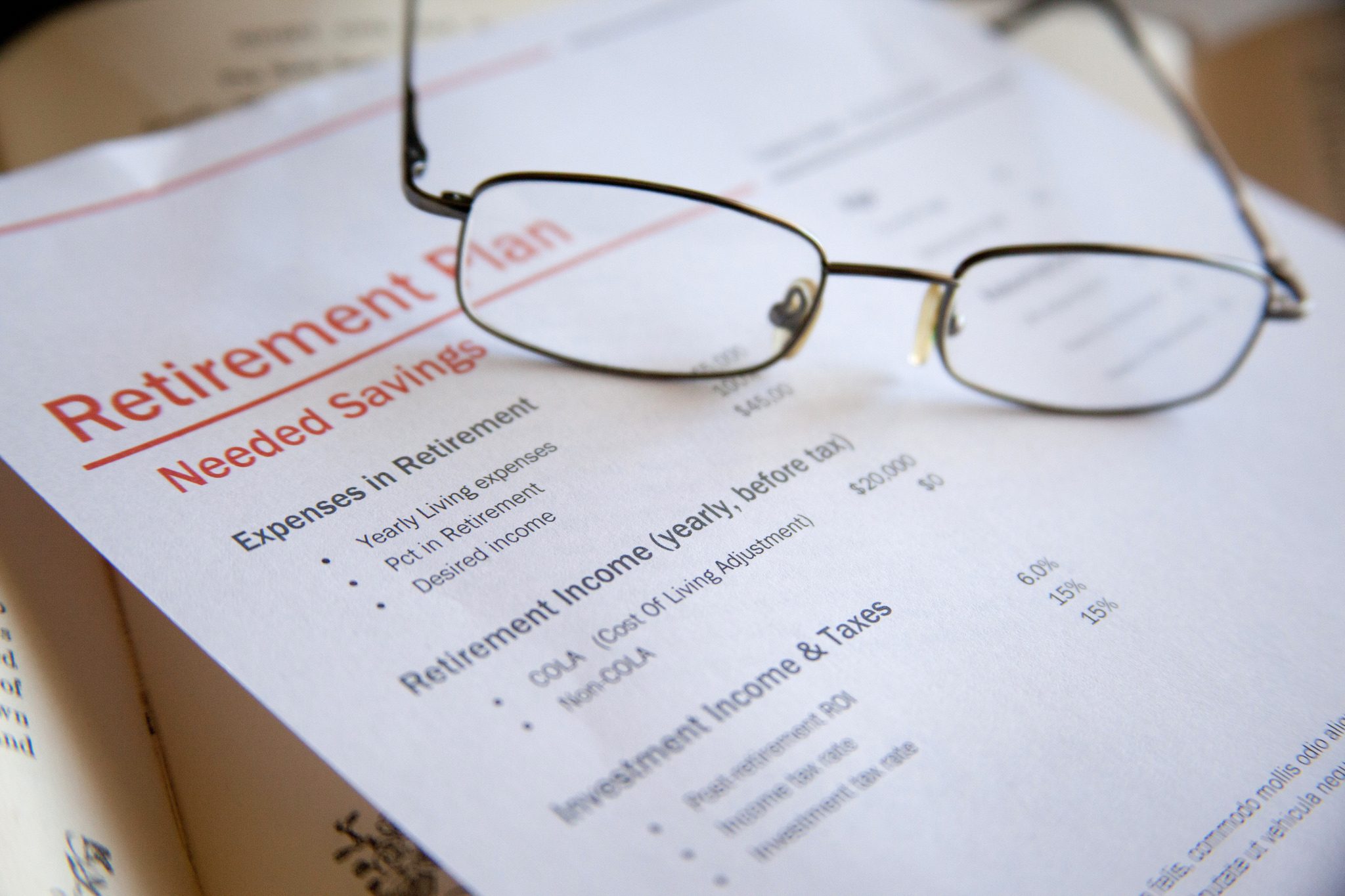 The following is a post by MPFJ staff writer, Derek Sall. Derek is the owner of the blog, LifeAndMyFinances.com, where he teaches people how to get out of debt, save money, and become wealthy.
I think about retirement all the time. I ask myself questions such as:
- When will I be able to retire?
- How much money will I need to have stashed away before I quit my job?
- What if I work to develop a passive income to retire instead of a big nest egg?
- What about medical insurance? Will I have to keep working just to have insurance?
With all of these questions swirling around in my mind, I tend to talk about retirement a lot. But guess what happens when I publish these articles?
Crickets.
Nobody really cares about retirement, that is, unless they are 60 years old and are finally starting to think about it. When young adults see an article with the word, “retirement” in the title, they breeze over it and think, “I’ve got so many years before retirement. I don’t need to think about that now.” That might seem logical to many, but this way of thinking is dead wrong!
Two Decisions: Your Retirement or Your Stuff
Every single financial decision you make in life impacts your retirement years. Since we will all make a finite number of dollars in our lifetime, that dress purchase, surround sound buy, and that car loan will impact whether you live well in retirement or whether you live on TV dinners in a 600 square foot condo.
If you work with somebody that has a similar job as you and therefore earns $45,000 a year (or whatever it is that you make for a salary), but they somehow live in a house that is bigger than yours, drive cars that are newer, and go on more exotic vacations than you, then they will most likely be flat broke in retirement. Do not envy them.
When we all talk about how keeping up with the Jones’s can be detrimental to one’s retirement fund, it only makes sense, but yet people are still begging the bank for money and are spending well beyond their means. Somehow people are not understanding the translation that their constant purchases are impacting their future retirement. If you purchase more stuff in your lifetime, then your retirement is going to be worse. If, however, you live on less, then your retirement years might actually be golden as they should be.
So, What is the Happy Medium?
I tend to be a saver, so I am content with saving almost every single penny I earn. But, this also means that I typically don’t have any fun. I don’t dine out, I don’t go see live concerts, and I typically don’t go on vacation. By many people’s standards, my life is boring and would be a prison sentence for them.
Others tend to be spenders. They spend money everywhere they go. They go out to lunch every day, they buy things for their friends at the mall, and they always drive the newest model luxury car. They are living high on the horse today, but their debt will soon catch up to them. Not only this, but by contributing very little into their retirement fund, they will have to dramatically change their lifestyle when they are older.
I, as a saver, will have a ton of money when I retire, but I likely won’t spend it since I am prone to never spend money on anything. The spender will get rid of all their money early in life and will need to live on breadcrumbs when they are older. Neither situation is ideal, so it is best to find a balance between the two lifestyles. We must intentionally save, but must also allow ourselves to splurge once in a while (within reason that is).
If you want to retire well, but also want to have fun today, don’t focus on buying big houses and fancy cars. Instead, put a large amount of money away into your retirement fund each year, and at the same time put some money aside for some kick-butt trips as well. You will be happy because you are experiencing life today and will have the means to do so in the future as well. Just never forget that there is a trade-off with every decision you make. It’s either your retirement or your stuff.
How about you all? How is your retirement shaping up? Do you think you’ll have enough to live well in your retirement years?
Share your experiences by commenting below!
***Photo courtesy of http://www.flickr.com/photos/120360673@N04/13856204644/in/

Preparing Your Portfolio for Greater Volatility

 The following is a post by MPFJ staff writer, Kevin Mercadante, who is a freelance professional personal finance blogger for hire, and the owner of his own personal finance blog, OutOfYourRut.com. He has backgrounds in both accounting and the mortgage industry.
If the recent volatility in the stock market has you concerned, that’s probably not a bad thing. After all, equity investments are not fixed investments, which means they can go down as well as up. Every now and again, we need to be reminded of exactly that. But the proper response is not to panic, but rather to prepare your portfolio for greater volatility.
There are various ways to do that, but it’s important that you take steps while things are relatively calm. Should the market decline in a major way, there won’t be time to react once it does.
Here are five ways that you can prepare your portfolio for greater volatility.
You Don’t Need to Sell Everything
Unless you are concerned about a complete market collapse (something along the lines of 1929), you don’t need to do a complete liquidation of your stock portfolio. A better approach may be to simply reduce your exposure to the market.
There are several ways to do this, short of selling off everything that you have:
- Stop putting fresh investment capital into stocks, at least until the market settles down
- Sell off positions that are making you especially nervous – if an investment has not reaped rewards in one of the biggest bull markets in history, you could be in for a rough ride in a bear market
- Move some of the capital from your sales into stocks and funds that you believe will better weather a decline
- Don’t make a complete exit out of stocks – you never know exactly when a new bull market will begin
You don’t need to exit stocks entirely, but you may need to lower the temperature a bit.
Accumulate Cash
Rather than selling off stocks, you could simply accumulate cash from any new investment proceeds that you put your portfolio. This will not only prevent you from increasing your exposure to stocks, but it will also allow you to build up a cash reserves so that you can begin buying stocks when the market bottoms out.
This will be a critical component of your overall investment strategy should a volatile market turn into a certified bear market. The best time to buy stocks is usually after a major sell off. That’s when stocks “go on sale”, and can be purchased for a fraction of what you would’ve paid at the top of the market.
Eventually, all bear markets turn into bull markets, and when that happens the stocks that you bought at the bottom are likely to be your best performers.
You can’t know when the market will bottom out, but if you have sufficient cash reserves, you’ll be prepared for when the moment does come. In a real way, accumulating cash is a way of preparing for the next bull market.
Invest for Income
This is a tough maneuver in an environment where it’s difficult to get much more than 1% on your money, especially in short-term investments. But there are certain stocks, mutual funds, and exchange traded funds that do provide above average dividend income. Since dividend stocks tend to weather market volatility better than pure growth stocks, you could favor these among your new stock purchases, or shift some of your money out of growth and into income.
The safe play of course is fixed income securities. Even though the rate of return on money market funds, certificates of deposit, and US Treasury bills is pathetically low, the principal values are fixed. That’s the best kind of protection in a volatile market environment.
When equity markets become volatile, the emphasis should shift from making money to preserving capital. Not only will that minimize the amount of losses you will sustain in a down market, but it will also provide you with the investment capital that you will need to invest in stocks later on.
Look Into Alternative Investments
You might also take a look at alternative investments. This can include real estate (particularly real estate investment trusts), commodities, and even precious metals.
The factors that cause stocks to fall could have the opposite effect on alternative investments. This is particularly true if market volatility is caused by or creates economic or financial disruption.
You don’t necessarily want to load up on alternative investments, but a small position could offset declines elsewhere in your investment portfolio.
Stay On Top of Your Career!
I just touched on how stock market volatility could result in economic or financial instability. This often happens because market volatility makes it difficult for public companies to raise capital, which can either end expansion plans or cause them to scale back operations.
This will have a material effect on the job market. For that reason, market volatility is an excellent time to sharpen your career skills and get more involved in your job than you’ve ever been. The idea is to increase your value at a time of increased competition for fewer jobs.
Though few people think of it this way, your occupation is actually one of your biggest investment diversification’s. It will provide you with income and capital at a time when your portfolio doesn’t. Market volatility should be viewed as a wake up call to refocus on your career.
How about you all? In this suddenly more volatile market, are you making any changes to prepare yourself and your portfolio for a less predictable environment?
Share your experiences by commenting below!
***PHOTO: https://www.flickr.com/photos/psycho-pics/2952050268/sizes/n/

Are You Two Financially Compatible?

 The following is a post by MPFJ staff writer, Derek Sall. Derek is the owner of the blog, LifeAndMyFinances.com, where he teaches people how to get out of debt, save money, and become wealthy.
It was about 6 years ago now that my fiancé and I attended a class and took a test to see if we were compatible. Basically, the test told us that we were not all that compatible and should reconsider our marriage to one another. I brushed off the test as a faulty result because we were most certainly in love and there was nothing that was going to break us apart.
After getting married, I soon realized that the test may have had more validity than I thought. We constantly had arguments about trust, respect, and of course, money. She was a spender and I was a saver, and the difference in our financial personalities was driving us apart. And, indeed, it did end up killing our relationship. We should have seen the signs and taken them more seriously.
How Do You Know If You Are Financially Compatible?
So how do you know if you and your girlfriend/boyfriend are financially compatible? What questions should you be asking yourself as you try to objectively study your relationship? Start out with the basics. Ask yourself these questions:
- Would I rather have money in the bank or would I rather spend my money as I receive it?
- Does my partner tend to buy things for short term happiness or do they like to stock money away for emergencies or investments?
- When talking about money with your partner, are you typically talking about what you can buy today, or how you should handle the money for the long-term?
- Do either of you typically have money in your bank accounts? Or do you tend to spend everything you make?
When I started college, I had $6,000 in the bank, owned my own vehicle, and already covered all of my own expenses like insurance, food, my cell phone bill, and gas for my car. My partner often had about $10 (or less) in her bank account, drove a car given to her by her mom and dad, and basically had no expenses because they were covered by her parents. She enjoyed eating out, buying clothes, and having fun at the bar. I enjoyed earning money through my side business, learning how to invest, and dreamt about how compound interest would grow my money in the future years. I don’t think we could have been any different financially, and it hurt us dearly. I thought my way of handling money was right, she thought her way of handling money was right, and we often fought about it. Don’t let this happen to you.
Are you a saver, but your partner is a spender? Before making that life-long commitment, talk with him/her about money and review how you both tend to save and spend. As awkward as it may be, look at each other’s bank accounts together and go over different transactions. If you think your partner is wasting money, talk with them about it. It’s better that you discuss these differences now than when it’s too late.
My friend Kevin was engaged to a beautiful woman a few years ago and she was fed up with her old car. She wanted a new one and was willing to finance it. Kevin believed that vehicles should never be financed and told her that if she went through with this purchase, he would likely break up with her (since it basically meant that they were financially incompatible). She did not take him seriously and went ahead with her $25,000 purchase, even though she only had about $500 to her name. He was disappointed because he liked her very much, but still went through with the break-up. As difficult as that was, I was proud of Kevin and very impressed with his decision. Today, Kevin is married to a woman that shares many of his beliefs (including financial) and they are incredibly happy together.
If you are in a situation where your partner is your financial opposite, you have a difficult decision to make. Either you believe that they will change (which often doesn’t happen – not for the long term anyway), or you should make a clean break because your future is destined to have a lifetime of financial arguments. Choose your mate carefully and be sure that many of your major beliefs align. If they do, you will likely have a very happy and rewarding life together.
How about you all? Are you and your partner financial opposites? Do you plan on continuing the relationship?
Share your experiences by commenting below.
***Photo courtesy of http://www.flickr.com/photos/26023255@N03/8612002388/

Five Reasons to Buy Less House Than You Can Afford

 The following is a post by MPFJ staff writer, Kevin Mercadante, who is a professional personal finance blogger, and the owner of his own personal finance blog, OutOfYourRut.com. He has backgrounds in both accounting and the mortgage industry.
The American Way to buy a house seems to be to buy as much house as your income and financial circumstances will allow. We are nothing if not a nation of optimists! The assumption is always that income will rise in the future, enabling us to more easily afford that which we can barely cover right now.
I’m going to suggest something that may be downright anti-American – that you resist the predominant trend, and buy less house than you can afford. Here are five reasons why you should consider doing exactly that.
1. To Allow Breathing Room So You Can Enjoy Life
The idea of buying a house at the upper limits of your ability to afford one, then making up for it by furnishing it with wooden boxes and eating canned beans for food every night to make up for the difference, is a romantic hoax. It’s the equivalent of living like a homeless person so that you can afford a house.
Rest assured, that once you buy a house, you will still have most of the same preferences that you did before you were a happy homeowner. You must leave room in your budget to accommodate those preferences!
Most people overestimate their ability to go on a financial diet, particularly after buying a house. And even somewhat ironically, buying a house usually triggers a series of major non-housing purchases. This could include new furniture, window treatments, minor (and not so minor) improvements to the property, landscaping, and often a new car to go in the driveway of the new house. None of that is conducive to successful budget.
The point is, don’t overestimate your ability to live on less money once you buy a house. You’ll still want an occasional dinner out, a shopping spree, and a night out on the town. You need to be prepared for all of that.
2. To Take a Step Back – If That’s What You Need to Go Forward
If you’re looking to change jobs, or to make a career change, that often involves taking a reduction in salary. If your budget is already tightly stretched by an outsized house payment, you probably won’t be able to give up the extra income to pursue what could ultimately be a better opportunity.
And that’s an important point. There’s a saying – sometimes you have to take a step back to go forward – that applies to a lot of career situations. In order to take a position that will ultimately prepare you for a major advance, you sometimes have to first accept a lower paying job. It is there that you will gain the experience necessary, or even transition over to a more successful organization.
The situation will be magnified the event that you want to start your own business. A high house payment will be a major obstacle to starting a business. Becoming an entrepreneur often means starting out with little or no income. But that’s a step you may never be able to take because of your high house payment.
Make sure any house you buy affords you some level of economic flexibility, just in case you decide to make a major career change. Your house should be an asset, not an obstacle to your progress.
3. To Leave Yourself More Money For Savings and Investments
While most people think of owning a home as being an investment, we also know that it’s important to have non-housing type investments. This includes not just tax-sheltered retirement plans, but also investments in mutual funds, certificates of deposit, and stocks that are held outside of a retirement plan. In addition, life is always better, easier, and more secure if you have a well-stocked emergency fund.
But if too much of your income is being eaten up by your house payment – and by other expenses related to your home – you’ll have little if any money available for any of these investments.
Savings and investments should be a line-item in your household budget, even and especially when you’re planning to buy a house. Owning a home and paying down the mortgage is one type of investment, but you also must have financial investments in order to achieve any level of financial independence. Buying too much house will close the door on the independence.
4. To Enable You to Better Withstand Financial Crisis
When you buy a home at the maximum level of your affordability, you’ll be effectively removing any flexibility in the event that you will face a financial crisis.
What might that financial crisis involve? It could be the loss of a job, a medical catastrophe, or the sudden need to take care of an extended family member. In all of our plans, including the purchase of a home, we need to leave room in the budget to cover such a contingency.
5. To Give Yourself More Room to Payoff Your Mortgage Early
Now that real estate appreciation is no longer a given, the pay down and payoff of your mortgage becomes a critical component of the success of your housing investment. But if your budget is too tightly stretched by your basic house payment, it will be very difficult to come up with extra money to accelerate the payoff of your loan.
By buying less house than you can afford, your basic house payment will be well below your income, and that will allow you extra funds to pay the mortgage off more quickly.
In today’s housing market, that can be more critical than ever. By paying your mortgage down ahead of schedule, you’re creating more equity in your home. That will make it much easier for you to sell the property in the event that you need to take a job in another city, or to move for some other reason.
If you’re facing the decision to buy a home, take the unconventional approach, and buy less house than you can afford. Though it may be a blow to your ego, it will be a boon to your financial situation. Having more money will give you far more options than owning the nicest house you can possibly afford.
How about you all? When you purchased a home, what % of your pre-tax income did the mortgage payment represent? Did it allow you to meet your various other savings/investing/retirement goals?
Share your experiences by commenting below!
***Photo courtesy of http://www.flickr.com/photos/usdagov/6383550119/in/

Divorce and Your Finances

 The following is a post by MPFJ staff writer, Derek Sall. Derek is the owner of the blog, LifeAndMyFinances.com, where he teaches people how to get out of debt, save money, and become wealthy.
Divorce is running rampant throughout the U.S. and in other parts of the world as well. It no doubt affects us emotionally, and we struggle with the fact that our young love is now an adult hatred. But, divorce can also have a terrible impact on our finances.
I should know, since my wife divorced me two years ago.
The Hurt, the Pain, and the Debt
There is no such thing as a clean and neat break. Divorce is hardly ever mutual and it is hurtful for both the divorcer and the divorcee. There is often a lasting pain and scarring from these terrible relationships, but the scars do begin to heal after a while.
The pain that hardly anyone talks about after a divorce is the financial difficulty. Without a doubt, there is typically one person that benefits greatly from the divorce, and one person that suffers (and may even lead them into bankruptcy). I, unfortunately, did not benefit emotionally or financially from my divorce. I didn’t want to separate, and I certainly didn’t want to owe my ex money after the split. But, that wasn’t for me to decide.
My Divorce Experience
When my ex-wife said the words, “I just want out – I want a divorce,” I knew she meant it. There was no going back. After meeting with the mediation agency, I learned that she expected to receive half of our net worth. Since she was the spender and had nothing to do with the money we had saved up (I practically had to hide it in order to keep anything in our account) this really burned me up inside. But, if I would have tried to fight it, I would have spent just as much money paying a lawyer to fight on my behalf, so the even split was agreed on.
At the time, our estate basically comprised of two paid-for vehicles and some equity in the house, which gave us a net worth of approximately $60,000. Not too shabby for a 27 year old and a 24 year old. Since she was going to keep the $10,000 VW Beetle, this meant that I still owed her $20,000, and she wanted it in six months. Yikes!
I didn’t necessarily have to agree to her short time-frame, but I honestly didn’t want to think about this divorce any longer than I had to. The sooner I could get this payment over with the better.
To earn the necessary funds, I did nothing fun, cut back on my expenses, and did everything possible to earn more money. I flipped two cars, wrote hundreds of articles, worked hard at my job, and accepted many advertisements on my website to earn the short-term dollars. To make a long story short, I made it. I scrounged up $20,000 in six short months and was completely free from my venomous ex.
Divorce and the Financial Impact
If you are currently going through a divorce, I am terrible sorry. It is probably one of the worst things I have ever encountered and it still messes with my emotional decisions today. If your finances are negatively impacted, then I am doubly sorry. Not only do you have to suffer through the emotional heartache of losing someone you once loved so dearly, but you also have to live like hermit to have any chance of paying your ex half of your estate. Or, worse yet, you might have to sell your home in order to divide the assets evenly. Your world will be flipped upside-down in every way imaginable, and it will seem like hell for quite some time. But, there is a light at the end of the tunnel.
After I got through paying that $20,000, I realized just how quickly I could earn a substantial amount of money. And, I now knew of many ways that I could earn even more! This allowed me to boldly set a goal for myself in 2014. I wanted to pay off my mortgage completely within the year – all $54,500 of it. So far, I have paid off about $28,000 and I’m actually still on pace to pay off the remaining balance by December 31st.
Once the mortgage is paid off, I have a goal to buy a rental property with cash in 2015. From there, financial success is certain to come my way!
If you are currently struggling through the financial sorrows that come with divorce, pick your head up and try to look at the bright side. It may leave you happier and more wealthy than ever before!
How about you all? Have you gone through or are you currently going through a divorce? What sort of financial impact did it have on you?
Share your experiences by commenting below!
***Photo courtesy of http://www.flickr.com/photos/superstrikertwo/4079339001/in/